
 Suro Senen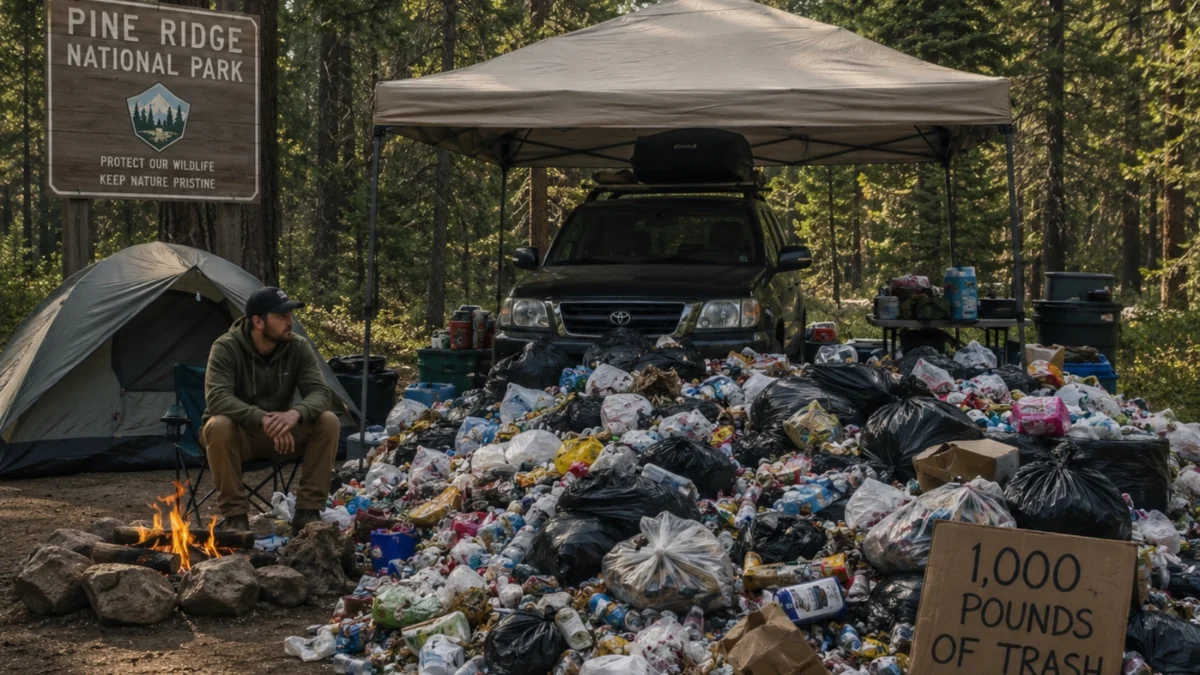
PHOENIX, Arizona — After nearly a decade of evading authorities and ignoring repeated warnings, a 65-year-old Arizona man has been arrested and now faces significant federal prison time for establishing an unauthorized, semi-permanent residence deep within the pristine wilderness of the Tonto National Forest. The case, which authorities have described as an egregious violation of federal land-use regulations, highlights the growing challenges land managers face in balancing public access with the preservation of natural resources.
Mark Gatz, 65, was taken into custody on June 25 following a protracted investigation by the U.S. Forest Service (USFS). He is now facing multiple federal charges related to the illegal occupation of public lands, improper disposal of refuse, and fire safety violations. If convicted on all counts, Gatz could face up to five years in federal prison.
The Scope of the Encampment: An Environmental Blight
The arrest of Gatz followed a series of reports from hikers and mountain bikers who discovered a sprawling, unauthorized campsite located off a two-track dirt trail—an area typically frequented by outdoor enthusiasts. What officials found upon arrival was not merely a transient campsite, but a significant, semi-permanent residential structure that had caused measurable damage to the surrounding ecosystem.
The site, spanning roughly an acre of protected forest, contained approximately 1,000 pounds of accumulated trash. According to USFS incident reports, the encampment featured several large, man-made structures, multiple fire pits, and a makeshift canopy serving as a dedicated vehicle parking area. Investigators also discovered a crude cooking station equipped with multiple frying pans and, perhaps most concerningly, five gallons of abandoned motor oil, which posed a direct contamination risk to the local soil and watershed.
A veteran U.S. Forest Service officer, speaking on condition of anonymity, described the scene as "one of the worst residential cases he has seen," noting that the level of environmental degradation and the sheer volume of household items scattered throughout the forest floor indicated a long-term, systematic disregard for public land regulations.
A Chronology of Non-Compliance
The legal proceedings against Gatz were not sudden; they were the culmination of a year-long effort by federal agents to bring him into compliance with forest regulations.
- 2016–2024: Gatz allegedly began his residency within the Tonto National Forest, moving between different locations before settling into his final spot approximately two years ago.
- Early 2023: USFS officers began documenting violations at the site, issuing initial warnings regarding illegal campfires and unauthorized residential use.
- Late 2023: Following continued non-compliance, federal citations were issued. Gatz failed to appear in court for these initial infractions, leading to the issuance of federal arrest warrants.
- June 25, 2024: After a period of surveillance and repeated attempts to serve warrants, federal authorities apprehended Gatz at his encampment. During his interrogation, Gatz admitted to residing in the forest for "about eight years," effectively turning a public recreational area into his private domain.
- July 6, 2024: Gatz is scheduled to make his initial appearance before a federal judge, where he will face charges including the illegal occupation of federal land, construction of unauthorized structures, dumping of refuse, and failure to properly extinguish campfires.
Regulatory Framework: Why the 14-Day Limit Matters
The Tonto National Forest, like most federal lands managed by the U.S. Forest Service, operates under strict "dispersed camping" policies. To ensure that public land remains accessible to all citizens and to minimize environmental impact, the USFS limits camping stays to a maximum of 14 days within any 30-day period.
These regulations are not merely bureaucratic hurdles; they are essential environmental safeguards. When individuals overstay these limits, the cumulative impact of human waste, soil compaction, and the introduction of non-native materials can be devastating to local flora and fauna. By erecting structures and dumping refuse, Gatz shifted from being a "visitor" to an "unauthorized resident," a distinction that carries severe legal penalties under federal law.
The presence of hazardous materials, such as the motor oil discovered at the scene, presents a particularly acute danger. In arid environments like the Arizona desert, soil health is delicate; chemical leaks can permeate the ground, affecting local water sources and the health of native plant species such as the Penstemon parryi, which is native to the region.

Official Responses and Public Safety
The USFS has emphasized that while they encourage public enjoyment of national forests, they maintain a "zero-tolerance" policy regarding long-term, destructive encampments. "Our mission is to protect these lands for future generations," a spokesperson for the Tonto National Forest district office noted. "When individuals treat federal property as a private homestead, they are not only breaking the law but actively destroying the experience for the millions of visitors who come here to enjoy the wilderness as it was intended."
The arrest of Gatz has reignited discussions regarding the visibility of such encampments and the difficulty of patrolling the millions of acres under federal jurisdiction. While many campers are transient, the discovery of a site that had been occupied for two years—within a larger eight-year stint—suggests that authorities face significant challenges in monitoring remote areas.
Local outdoor advocacy groups have praised the Forest Service for their persistence in the case. "We want our trails to be safe and clean," said a representative from a regional hiking alliance. "The presence of trash and illegal structures ruins the wilderness experience and creates potential fire hazards, especially in a state as fire-prone as Arizona."
Implications for Public Land Management
The charges facing Gatz—which include the construction of unauthorized residences and the leaving of refuse—are prosecuted under the Code of Federal Regulations. These laws are designed to deter the "privatization" of public assets. By failing to appear in court and continuing to build on federal land, Gatz moved beyond the category of a transient camper and into the category of a willful offender.
The implications of this case extend beyond the individual. It serves as a stark reminder of the legal consequences for those who disregard the rules of the commons. As the U.S. Forest Service continues to deal with budget constraints and limited staffing, cases like this highlight the necessity of public reporting. The authorities rely heavily on reports from hikers and bikers to identify sites that have been neglected or misused.
As the legal proceedings move forward, the focus will likely shift to the cost of site remediation. The Tonto National Forest will be required to fund the cleanup of the site, a process that includes the removal of the 1,000 pounds of debris, the restoration of the soil, and the decommissioning of the makeshift structures. This cost is ultimately borne by taxpayers, further underscoring the severity of the damage caused by illegal long-term residency.
Conclusion: A Cautionary Tale
Mark Gatz’s case serves as a poignant reminder of the fragility of public lands and the strict legal boundaries that keep them functional for all. As he prepares to face a federal judge on July 6, the outcome of his trial will likely be viewed as a signal of the federal government’s commitment to protecting its forests from long-term, unauthorized encroachment.
For the hikers who traverse the trails of the Tonto National Forest, the removal of the encampment marks the restoration of a small, but significant, portion of the wilderness. It is a win for conservationists and a clear message to those who might consider treating public property as their own: the law, and the protection of the environment, remains paramount.
The public is encouraged to continue reporting suspicious activity or environmental hazards within national forest boundaries to their local district ranger stations. By working in tandem with federal authorities, the public remains the best line of defense in protecting the natural treasures that define the American landscape.



 Pevita Pearce




