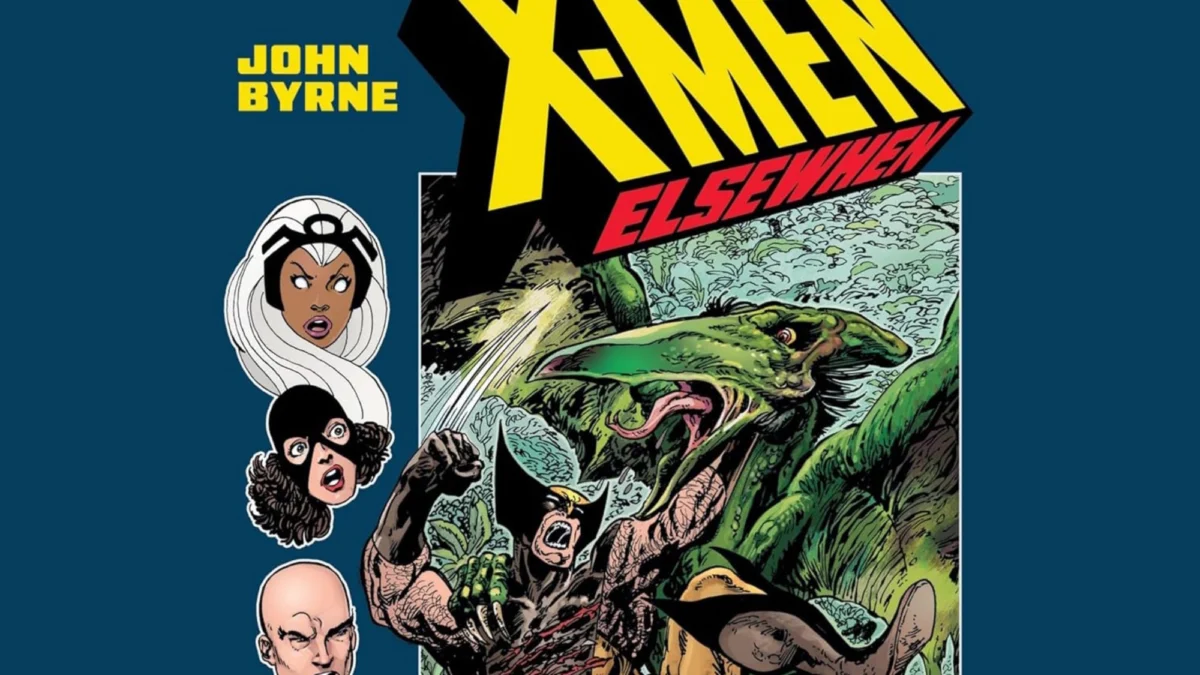
In the world of comic book collecting, scarcity often dictates value, but rarely does a story about "fan fiction" become the most sought-after commodity in the industry. Yet, that is precisely what has happened with X-Men: Elsewhen Vol. 1, the inaugural release of legendary creator John Byrne’s passion project, now officially published under the Abrams Marvel Arts imprint. As the first print run of 25,000 copies evaporated from retailer shelves almost instantly, the secondary market has erupted. Copies that carried a modest cover price of $39.99 are now consistently fetching between $80 and $100 on eBay, signaling a massive surge in demand for what is essentially a "what-if" scenario written by the man who defined the X-Men for a generation.
The Genesis of an Alternative Timeline
To understand the fervor surrounding X-Men: Elsewhen, one must look back to 2018. John Byrne, a titan of the medium whose late-70s and early-80s run on The Uncanny X-Men with writer Chris Claremont is widely considered the gold standard of superhero storytelling, began an ambitious endeavor. He started posting "lettered pencils" of a new, unofficial X-Men story on the Byrne Robotics forum.
The premise was elegant in its simplicity: what if the X-Men’s history had unfolded differently from the point where Byrne departed the book? Titled X-Men: Elsewhen, the project served as a creative sandbox where Byrne could indulge his own narrative instincts. Over the years, the project grew from a series of sketches into a sprawling, multi-chapter saga. He invited fans to ink his pencils, fostering a unique community-driven creative process that remained largely tucked away on a niche message board.
The story quickly became a cult phenomenon. It included bold narrative choices—such as a radical reimagining of Wolverine’s origin—that diverged sharply from established canon. For years, this was a private labor of love, a testament to a master craftsman continuing a conversation with his own legacy long after he had left the building.
Chronology: From Forum Post to Graphic Novel
The road to publication was far from linear. Following the appointment of C.B. Cebulski as Editor-in-Chief of Marvel Comics, rumors swirled that the publisher had approached Byrne to bring Elsewhen into the official canon. However, the deal never materialized. Byrne famously remained cryptic about the breakdown of negotiations, advising his fans at the time to "let loose the dogs of war" while refusing to offer speculation on why a partnership with Marvel failed to launch at that juncture.
Despite the lack of an official imprimatur, the story persisted. Month after month, Byrne continued to update the saga, turning Elsewhen into an expansive epic. It wasn’t until the announcement of the Marvel Arts line—a prestige-format collaboration between Marvel and Abrams Books—that the project finally found its permanent home.
When it was announced that Elsewhen would be released as a three-volume graphic novel series, the response was immediate. Pre-orders surged, and the first volume arrived in stores to a marketplace hungry for classic-style X-Men storytelling. The result was a total sell-out of the initial 25,000-copy run, a feat that has left many comic book stores scrambling for stock while a second printing is currently being fast-tracked through production.

Secondary Market Frenzy: The Economics of Nostalgia
The scarcity of X-Men: Elsewhen has created a "perfect storm" on platforms like eBay. As of late 2025 and early 2026, the volume has become a speculative darling. With major retailers like Amazon showing "out of stock" status and international distributors like Amazon UK quoting a six-week lead time for new copies, the impatient collector has turned to the secondary market.
Evidence of this demand is clear: multiple listings have closed at the $80 price point, with several "Buy It Now" transactions hitting $90 and even $100. This is an extraordinary markup for a recently published trade hardcover, reflecting the unique intersection of "John Byrne completism" and the perceived historical importance of the book.
Interestingly, this surge has acted as a rising tide for other Byrne-related material. The secondary market has seen a marked increase in interest for older, out-of-print collections, such as the Dark Phoenix Saga trade paperbacks, which are now fetching upwards of $75. Even individual, raw, ungraded copies of classic issues like X-Men #131, #133, and #135 are selling as a set for over $200. It is clear that Elsewhen has re-energized the "Byrne-era" market, prompting collectors to fill gaps in their longboxes with original issues from the late 1970s and early 1980s.
The Content: What Lies Inside Elsewhen?
The allure of the book is not merely due to scarcity; it is fueled by the content itself. X-Men: Elsewhen is presented as a direct, 50-years-later spiritual successor to the title Byrne first illustrated in the 1970s.
Volume 1 sets a compelling hook: the Dark Phoenix Saga has concluded, but instead of the tragic end readers remember from 1980, Phoenix remains alive. In this divergent timeline, Jean Grey’s powers and intellect have been significantly diminished, forcing the X-Men to navigate a world where their most powerful member is fundamentally altered.
The scope of the narrative is massive. Byrne has promised—and delivered—the return of classic tropes, including trips to the Savage Land, high-stakes battles with Sentinels, and guest appearances from the Avengers and the Fantastic Four. By writing and penciling every page himself, Byrne has achieved a level of consistency that is rare in modern comics. The book feels like a "lost" artifact from 1981, providing the exact experience that long-time fans have been clamoring for since the early days of the internet.
Implications for the Industry
The success of X-Men: Elsewhen carries significant implications for the future of the publishing industry.
First, it validates the "Marvel Arts" strategy. By positioning these works as high-end graphic novels rather than standard monthly pamphlets, publishers can tap into a market of older, affluent collectors who prioritize quality and legacy over serialized "event" comics.
Second, it underscores the enduring power of the creator-brand. Even in an era where Marvel’s modern output is heavily focused on interconnected cinematic universes and rapid-fire crossovers, there is a massive, untapped appetite for singular, creator-driven visions. John Byrne’s name alone carries enough weight to drive tens of thousands of sales, proving that the "auteur" model of comic book creation is still a potent financial engine.
Finally, the secondary market surge suggests that the comic book industry may be facing a supply-chain issue regarding "must-have" legacy content. When a book as significant as this sells out in pre-orders, the resulting price gouging on eBay can alienate casual readers. Moving forward, publishers may need to adjust their print runs for high-profile projects to ensure that supply better aligns with the reality of fan demand.
Conclusion: A Testament to a Legacy
As the dust settles on the initial release of X-Men: Elsewhen Vol. 1, the message from the readership is clear: the history of the X-Men, as defined by John Byrne, is not just a relic of the past—it is a living, breathing entity.
Whether the price point remains at the $100 level will depend largely on the availability of the second printing. However, the cultural impact of the book is already cemented. For a generation of readers who grew up with Byrne’s specific vision of the mutants, Elsewhen is more than just a graphic novel; it is a long-awaited reunion with characters they thought they knew, now seen through a lens that is both familiar and startlingly new. As we await Volumes 2 and 3, one thing is certain: the "dogs of war" have indeed been let loose, and they are hungry for more.