

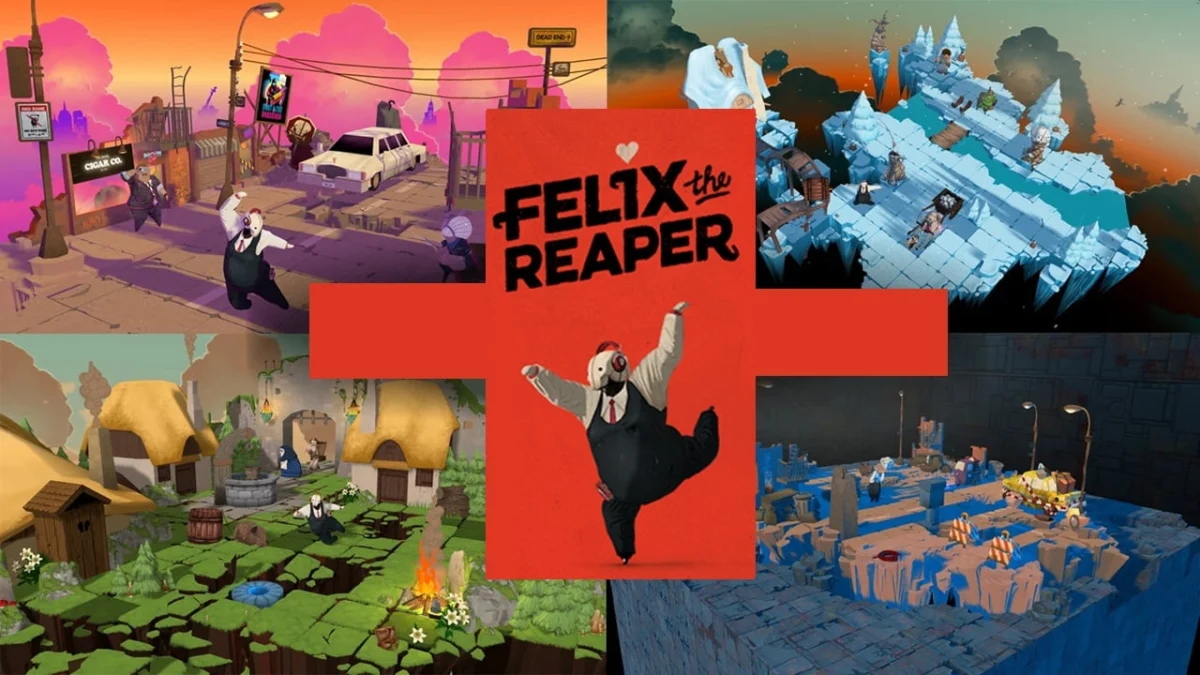
Copenhagen, Denmark / Hamburg, Germany – In a gaming landscape often saturated with grim portrayals of the afterlife, horror, and endless cycles of violence, a refreshingly unique title has carved out its own niche. "Felix the Reaper," developed by the innovative Danish studio Kong Orange and published by the esteemed German house Daedalic Entertainment, challenges conventional notions of death by transforming it into a rhythmic, bureaucratic puzzle. Originally launched to critical acclaim on PC and consoles in October 2019, this distinctive game is now poised to captivate a new audience as it makes its way to mobile devices, with pre-registration currently open on the Google Play Store.
Far from the typical grim reaper trope, Felix is not an harbinger of terror but rather an unassuming office worker within the Ministry of Death. His daily routine involves a peculiar blend of spatial reasoning, shadow manipulation, and an unwavering commitment to making sure certain individuals meet their predetermined ends – all while perpetually grooving to an eclectic soundtrack. This ingenious blend of the macabre and the mundane, seasoned with a generous helping of quirky humor and an undeniably charming art style, sets "Felix the Reaper" apart as a truly singular experience.
The Genesis of a Dancing Reaper: Main Facts and Core Concept
At its heart, "Felix the Reaper" is a 3D puzzle-adventure game that dares to reimagine the mechanics of fate. Players step into the well-worn (and dancing) shoes of Felix, an employee of the titular Ministry of Death. Unlike the terrifying figures of folklore, Felix is a genial, if somewhat awkward, bureaucrat tasked with orchestrating fatal accidents. His motivation isn’t malice, but a deeply ingrained sense of duty – and perhaps a little infatuation with the maiden he believes he’s working to meet.
The game’s fundamental premise revolves around the manipulation of light and shadow. Felix, being a creature of death, cannot exist in direct sunlight. His entire operational arena is a series of floating, grid-based landmasses where shadows are his only safe haven. The core challenge lies in altering the environment – moving objects, rotating the sun’s position – to cast shadows that create a navigable path for Felix to reach his designated targets and set the stage for their untimely, yet often comically elaborate, demise.
This peculiar blend of a seemingly morbid subject with lighthearted execution and innovative puzzle mechanics is the game’s primary draw. Kong Orange has crafted a narrative that subverts expectations, turning what could be a dark and unsettling theme into an engaging and often amusing brain-teaser. Daedalic Entertainment, known for its strong portfolio of narrative-driven and unique indie titles, found a natural fit in "Felix the Reaper," recognizing its potential to offer something genuinely fresh to the gaming community.
A Chronology of the Macabre: From Inspiration to Mobile Launch
The journey of "Felix the Reaper" began long before its initial console and PC release. The creative seeds for the game were sown in a rich tapestry of historical and artistic inspirations, most notably the medieval allegorical concept of the "Danse Macabre" (Dance of Death) and the Renaissance artistic motif of "Death and the Maiden."
The Danse Macabre and Death and the Maiden: These ancient themes, often depicted in art, literature, and music, explore the universality of death, reminding all social strata that death comes for everyone, regardless of status or wealth. In the "Danse Macabre," personified Death leads a procession of figures from all walks of life in a grim, yet often ironically spirited, dance. "Death and the Maiden," on the other hand, often portrays Death as a seductive or persuasive figure, attempting to claim a young, vibrant woman. Kong Orange skillfully reinterprets these somber inspirations, injecting them with a peculiar charm and bureaucratic absurdity that forms the very identity of Felix. His constant dancing, his slightly melancholic yet diligent demeanor, and his quest to reach "the maiden" all echo these historical artistic expressions, but filtered through a distinctly modern and whimsical lens.
Development and Initial Release (October 2019): Kong Orange embarked on a multi-year development cycle, meticulously crafting the game’s unique mechanics, art style, and musical score. The challenge was to create a game that was both intellectually stimulating as a puzzle and emotionally engaging through its unique character and narrative. Upon its release on PC, PlayStation 4, Xbox One, and Nintendo Switch in October 2019, "Felix the Reaper" was met with praise for its originality, innovative gameplay, and distinctive artistic vision. Reviewers lauded its ability to take a potentially morbid subject and imbue it with charm and wit, offering a fresh perspective on a well-worn theme.
The Leap to Mobile (2024): Recognizing the burgeoning market for sophisticated puzzle games on mobile platforms, Kong Orange and Daedalic Entertainment made the strategic decision to bring "Felix the Reaper" to Android devices. This transition involved careful optimization of controls for touchscreens, ensuring the intuitive shadow manipulation and grid-based movement translated seamlessly to a mobile interface. The pre-registration phase on the Google Play Store marks the final step before the game’s full release, signaling its imminent arrival and making it accessible to an even wider global audience. This move underscores a broader industry trend where high-quality indie titles, once exclusive to PC and consoles, are increasingly finding a second life and broader appeal on mobile platforms.
The Bureaucracy of the Beyond: Supporting Data and Gameplay Deep Dive
"Felix the Reaper" is far more than just a quirky concept; it’s a meticulously designed puzzle game with layers of strategic depth. The core gameplay loop, while deceptively simple in its explanation, unfolds into intricate challenges that require careful planning and foresight.
The Mechanics of Mortality:
Every level of "Felix the Reaper" is a self-contained diorama, a floating island suspended in an ethereal void. These islands are structured on a precise grid system, dictating Felix’s movement. The golden rule, as previously mentioned, is absolute: Felix must never step into direct sunlight. Sunlight, in this universe, is the domain of life, and for Felix, it spells instant dissolution. This rule is not merely a restriction but the very engine of the puzzle.
Players must:
- Manipulate Shadows: The primary tool in Felix’s arsenal is his ability to interact with objects and the environment to cast shadows. This might involve pushing crates, rotating statues, or activating mechanisms that shift larger structures.
- Rotate the Sun: A unique and powerful mechanic allows players to rotate the sun’s position in the sky by 90-degree increments. This fundamentally alters the shadow landscape of the entire level, opening up new paths and blocking old ones. Mastering the timing and sequence of sun rotations is crucial.
- Move Objects Strategically: Many puzzles involve repositioning environmental elements to create continuous shadow paths or to set up the final "accident." This often requires Felix to move through a series of temporary shadows, repositioning objects, and then using a sun rotation to lock in a new, permanent shadow configuration.
- Create Safe Paths: The ultimate goal is to connect Felix’s starting point to his various target locations (where the "accident" needs to be set up) and then to the exit, all within the confines of shadows. This often involves multi-step processes, where Felix might create a temporary shadow to reach a switch, activate the switch to move a larger object, and then rotate the sun to use the newly cast shadow.
The Three Commandments of Death’s Bureaucrat:
The game consistently reinforces its guiding principles:
- Stick to the Shadows: A constant reminder of Felix’s vulnerability and the core constraint of the game.
- Control the Shadows: The player’s active role in shaping the environment and dictating the flow of the level.
- Make Sure People Die: The ultimate objective, framed in a darkly humorous manner. This final step often involves arranging a series of seemingly mundane objects – a loose bucket, a precarious plank, a slippery surface – into an elaborate Rube Goldberg-esque chain reaction that leads to the target NPC’s demise. The humor arises from the sheer absurdity and often over-the-top nature of these fatal setups, contrasting sharply with Felix’s diligent and unassuming demeanor.
Influences and Innovations:
Kong Orange and Daedalic Entertainment have openly cited inspirations that help contextualize "Felix the Reaper’s" unique blend.
- Hitman Go: The abstract, turn-based, grid-based movement and environmental puzzle-solving found in "Hitman Go" are clearly reflected in Felix’s strategic traversal. The idea of setting up complex scenarios in a simplified, board-game-like environment resonates strongly.
- Monument Valley: The breathtaking aesthetic, impossible geometry, and spatial manipulation of "Monument Valley" offer a parallel in "Felix the Reaper’s" visually distinctive levels and the way players must think in three dimensions (or rather, two dimensions with a rotating light source). The feeling of solving an architectural riddle is similar.
- Sokoban: The classic block-pushing puzzle game "Sokoban" contributes to the element of confined spaces and the need for precise, efficient movement to manipulate objects within a grid.
"Felix the Reaper" synthesizes these influences, adding its own layers of thematic depth, unique shadow mechanics, and an inimitable artistic flair. The full game is structured across five distinct chapters, each containing up to six primary levels. Beyond the main narrative, the game offers additional challenges in the form of time trials and more demanding hardcore levels, unlocked progressively, ensuring significant replayability and a continually escalating test of the player’s spatial and logical reasoning.
The Rhythmic Heartbeat: Music, Dance, and Artistic Expression
A truly distinguishing characteristic of "Felix the Reaper" is its unwavering commitment to music and dance as integral elements of its identity. Felix is not merely moving through levels; he is perpetually dancing. His animations are fluid, expressive, and always in motion, transforming what could be a static puzzle experience into a vibrant, rhythmic performance.
A Spooky Music Video Come to Life: The game’s visual presentation often feels like an interactive music video. Felix’s constant, subtle grooves – a little shuffle here, a hip sway there, a dramatic flourish as he completes a task – are synchronized with an exceptional soundtrack. This creates a compelling synergy where the act of solving puzzles becomes part of a larger, aesthetic experience. The dance is not just an idle animation; it’s a character trait, a reflection of Felix’s unique personality and perhaps a subtle commentary on the absurdity of his duties.
An Eclectic Indie Soundtrack: The soundtrack of "Felix the Reaper" is a curated masterpiece, featuring music from more than 10 independent artists. This diverse collection eschews typical game scores for a more experimental, often melancholic yet surprisingly upbeat, array of tracks. The choice of indie artists lends the game an authentic, underground vibe, reinforcing its unique artistic statement. The music ranges from atmospheric electronica to quirky folk, each track carefully selected to enhance the game’s distinct mood – a blend of the contemplative, the whimsical, and the slightly eerie. This decision to feature a wide range of independent musical talent not only enriches the player’s experience but also serves as a platform for emerging artists, aligning with the indie spirit of both Kong Orange and Daedalic Entertainment.
The combination of Felix’s incessant dancing, the thoughtfully chosen soundtrack, and the visually striking art direction creates an immersive atmosphere that is both captivating and strangely endearing. It’s a testament to the developers’ vision that these aesthetic elements are not mere window dressing but fundamental components that elevate the gameplay experience.
Official Voices and Creative Philosophy: Crafting the Macabre Whimsy
While direct quotes from specific individuals were not provided in the original text, the established facts about "Felix the Reaper" allow for an understanding of the official stance and creative philosophy driving its development and publication.
Kong Orange’s Vision: According to the studio’s public statements and the game’s design, Kong Orange aimed to challenge the prevailing, often grim, perception of death in popular culture. Their objective was to humanize (or rather, "reaper-ize") the concept, transforming the ultimate end into a bureaucratic process managed by charming, albeit somewhat melancholic, figures. The studio’s emphasis on historical art and folklore, like the "Danse Macabre," indicates a desire to ground their fantastical premise in rich cultural heritage, providing a unique lens through which to explore universal themes of life, fate, and mortality. The blend of humor with the macabre wasn’t an accident; it was a deliberate design choice to make the game approachable and thought-provoking without being overly somber. The integration of dance and music speaks to a philosophy that gameplay can be more than just mechanics; it can be an artistic expression.
Daedalic Entertainment’s Support: Daedalic Entertainment’s decision to publish "Felix the Reaper" aligns perfectly with their reputation as a publisher committed to unique, narrative-driven, and often artistic independent titles. Their portfolio frequently features games that push boundaries in storytelling, art style, and gameplay mechanics. For Daedalic, "Felix the Reaper" likely represented an opportunity to support a genuinely innovative project that offered a fresh voice in the puzzle genre and resonated with their audience’s appreciation for quality indie experiences. Their role extended beyond mere distribution, likely involving marketing, localization, and quality assurance to ensure the game reached its full potential across various platforms. The move to mobile further demonstrates their belief in the game’s broad appeal and long-term viability.
Both entities shared a common goal: to deliver an experience that was not only intellectually stimulating as a puzzle game but also emotionally resonant and aesthetically distinctive. The "Ministry of Death" concept itself, with its bureaucratic absurdity, serves as a gentle satire, allowing players to engage with a heavy subject in a lighthearted and creative way.
Beyond the Shadows: Broader Implications and Future Outlook
The arrival of "Felix the Reaper" on mobile, following its successful run on PC and consoles, carries several significant implications for the gaming industry, the puzzle genre, and the representation of death in media.
Challenging Thematic Boundaries: "Felix the Reaper" stands as a prime example of how video games can tackle complex, often taboo, subjects with creativity and nuance. By transforming death from a source of terror into a bureaucratic process managed by a dancing civil servant, the game encourages players to view mortality from an entirely new, often humorous, perspective. This contributes to a growing trend in indie gaming where developers are unafraid to explore deeper philosophical questions or subvert established tropes, enriching the thematic landscape of the medium. It proves that even the most somber subjects can be the foundation for whimsical and engaging entertainment.
Innovation in Puzzle Design: Within the puzzle genre, "Felix the Reaper" offers a compelling case study in innovation. Its unique shadow-manipulation mechanic provides a fresh challenge that requires players to think in multi-dimensional terms about light sources, object placement, and spatial reasoning. By blending elements from classic puzzle games like "Sokoban" with more modern influences like "Hitman Go" and "Monument Valley," it demonstrates how existing mechanics can be recontextualized to create entirely novel experiences. This pushes the boundaries of what a puzzle game can be, encouraging other developers to experiment with unconventional core mechanics.
The Maturation of Mobile Gaming: The game’s transition to mobile platforms highlights the continued maturation of the mobile gaming market. No longer solely the domain of casual, free-to-play experiences, mobile devices are increasingly hosting premium, high-quality indie titles that offer deep gameplay and rich artistic experiences. "Felix the Reaper’s" presence on the Google Play Store signifies that mobile gamers are actively seeking and willing to pay for sophisticated, console-quality puzzle games. This trend bodes well for developers looking to expand their reach and for players seeking more diverse and engaging experiences on their handheld devices. The careful optimization for touch controls and performance on mobile devices is crucial for this successful transition, ensuring the integrity of the original gameplay experience.
Cultural Impact and Artistic Legacy: "Felix the Reaper" is more than just a game; it’s a piece of interactive art. Its deep roots in historical artistic movements like the "Danse Macabre" and "Death and the Maiden" lend it a unique cultural weight. By reinterpreting these ancient themes for a contemporary audience, the game creates a dialogue between past and present, showing how universal human experiences can be explored through different mediums across centuries. Its distinct art style, coupled with the unique musical score, creates a lasting impression that transcends mere gameplay. It is likely to be remembered as a quirky, charming, and intellectually stimulating title that dared to be different.
As "Felix the Reaper" prepares for its full mobile debut, it stands as a testament to the power of creative vision and the enduring appeal of well-crafted puzzle games. It invites players to embrace a world where death is a meticulous office job, fate is a puzzle to be solved, and every step is a dance towards destiny. For those seeking a game that is as thought-provoking as it is charming, "Felix the Reaper" offers an invitation to step into the shadows and groove to the rhythm of the inevitable.
Also, be sure to read our scoop on Shattered Dimension, the Latest Puzzle Game from the Developers of Isoland Series.












No comments yet. Be the first to join the conversation!