

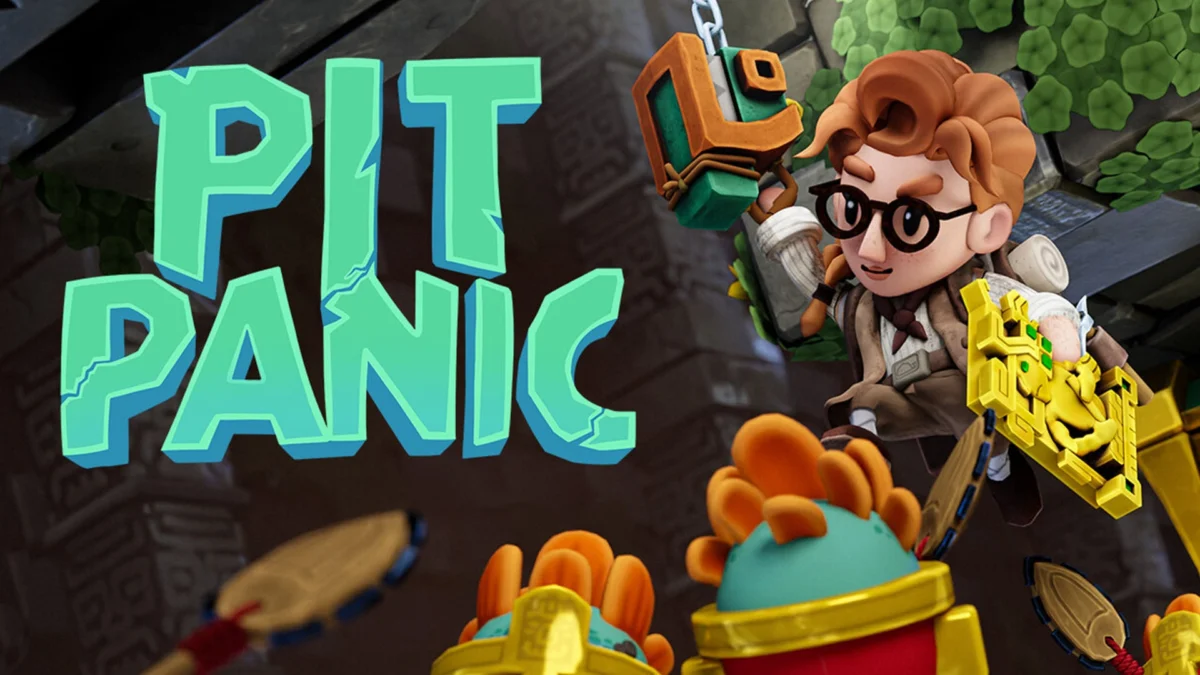
LONDON, UK – [Date of Article Generation] – Flying Rat Studio, an emerging name in the independent game development scene, has officially announced Pit Panic, a fast-paced and challenging roguelike 2D platformer poised to launch in July. The highly anticipated title is set to bring its unique blend of exploration, combat, and environmental puzzle-solving to a broad audience, with releases planned for PlayStation 5, Xbox Series X|S, the upcoming Switch 2, and PC via Steam, Epic Games Store, and GOG. This multi-platform launch underscores the studio’s ambition to reach a wide player base from day one.
The announcement was accompanied by an official gameplay trailer, showcasing the game’s vibrant art style, dynamic movement, and the frenetic action that players can expect. While the trailer tantalizes with glimpses of the game’s world and mechanics, Flying Rat Studio has also confirmed that a demo is "coming soon," offering players an early opportunity to delve into the treacherous pits before the full release.
Main Facts
A New Contender in the Roguelike Arena
Pit Panic is positioned as a significant entry into the ever-growing roguelike genre, specifically targeting the 2D platformer sub-segment. Developed by Flying Rat Studio, the game promises a challenging experience defined by its rapid pace, distinctive gameplay elements, and intricate environmental puzzles. The choice of the roguelike genre is a strategic one, tapping into a market segment that highly values replayability, emergent gameplay, and a demanding learning curve.
The game casts players in the role of a "curious archaeologist," an intriguing premise that hints at a narrative woven through ancient ruins and forgotten civilizations. This protagonist will navigate "handcrafted levels," confront "ancient bosses," and perform gravity-defying maneuvers described evocatively as "jumping up like your pants are on fire." This colorful language suggests an emphasis on fluid, high-octane platforming that demands precision and quick reflexes.
The decision to launch on current-generation consoles (PlayStation 5, Xbox Series X|S), PC, and notably, the yet-to-be-released Switch 2, speaks volumes about Flying Rat Studio’s forward-thinking approach and the technical scalability of Pit Panic. The inclusion of the next-generation Nintendo console indicates a long-term vision and perhaps a confidence in the game’s graphical fidelity and performance across diverse hardware. The simultaneous release across three major PC storefronts further solidifies the studio’s commitment to accessibility and broad market penetration.
Gameplay Loop and Core Mechanics
At its heart, Pit Panic is a roguelike 2D platformer, a genre known for its blend of persistent progression and temporary, run-based challenges. The "challenging" descriptor implies that players should anticipate a significant degree of difficulty, likely featuring permadeath, resource management, and ever-evolving threats. Each run is expected to present unique obstacles, encouraging players to adapt their strategies and master the game’s mechanics.
The "fast pace" suggests a constant impetus for movement and action, eschewing slow, methodical exploration in favor of dynamic traversal and combat encounters. This aligns well with the "jump up like your pants are on fire" idiom, painting a picture of a protagonist constantly on the move, dodging hazards, and executing acrobatic feats. The fluidity of movement and responsiveness of controls will be paramount to the game’s success in delivering this high-speed experience.
"Unique gameplay" is a broad claim but in the context of a roguelike 2D platformer, it could refer to a variety of innovative elements. This might include novel movement abilities, a distinctive combat system that goes beyond simple attacks, or perhaps a unique interaction between the archaeologist’s tools and the environment. The "environmental puzzles" are a particularly interesting component, suggesting that raw platforming skill and combat prowess alone won’t suffice. Players might need to manipulate the environment, decipher clues, or utilize specific items to progress, adding a layer of intellectual challenge to the physical demands of the game.
The role of the "curious archaeologist" could extend beyond a simple skin for the player character. It might imply a focus on uncovering lore, collecting artifacts that grant temporary or permanent boons, or even utilizing specialized archaeological tools as part of the gameplay mechanics. This thematic integration could provide a compelling backdrop for the procedurally generated (or uniquely structured) runs, giving players a sense of purpose beyond mere survival. Confronting "ancient bosses" suggests epic encounters that will test players’ mastery of the game’s systems, requiring pattern recognition, precise dodging, and strategic offense. These bosses will likely serve as significant milestones within each run, rewarding successful players with valuable upgrades or access to new areas.
Chronology
From Concept to Announcement
While specific details about Flying Rat Studio’s inception remain limited, the announcement of Pit Panic marks a significant milestone in their journey. It’s common for independent studios to begin with a small team, driven by a shared passion for a particular genre or a unique game concept. Pit Panic likely started as a passion project, evolving from initial prototypes and design documents that sought to blend the addictive replayability of roguelikes with the kinetic satisfaction of 2D platforming. The archaeologist theme, environmental puzzles, and fast-paced action likely emerged from a desire to differentiate the title within a crowded market.
The development timeline for a project of this scope, especially for an indie studio, typically spans several years. This would involve initial concepting, core mechanic prototyping, art style definition, level design, enemy AI development, and iterative playtesting. The mention of "handcrafted levels" within a roguelike structure suggests a deliberate design choice, possibly involving the creation of distinct "rooms" or segments that are then procedurally assembled, offering both curated challenges and dynamic layouts.
The decision to target multiple platforms, including the yet-to-be-released Switch 2, indicates that the studio has likely been in development for a considerable period, allowing them to optimize for various hardware specifications. This strategic choice also suggests a long-term vision for the game’s lifespan and potential expansions.
The current announcement in [Month of Article Generation] with a July launch window indicates that the game is in its final stages of development, likely undergoing rigorous testing, bug fixing, and polish. The simultaneous release of the announcement trailer and the promise of a "Demo Coming Soon" are key steps in a well-orchestrated marketing campaign designed to build anticipation and gather early community feedback. A pre-launch demo serves as an invaluable tool for developers, allowing them to stress-test their game, identify unexpected issues, and gauge player reception before the final release. It also acts as a powerful marketing asset, giving potential players a tangible taste of the gameplay experience.
Supporting Data
The Thriving Roguelike Landscape
The roguelike and roguelite genres have experienced an unprecedented boom in recent years, propelled by critically acclaimed titles such as Hades, Dead Cells, Slay the Spire, and The Binding of Isaac. These games have demonstrated the immense appeal of procedural generation, permadeath, and persistent meta-progression, offering players hundreds of hours of unique gameplay experiences. Pit Panic‘s entry into this landscape comes at a time when players are hungry for innovative takes on established formulas.
The 2D platformer roguelite subgenre, in particular, has proven fertile ground for creativity, combining the precision and flow of platforming with the unpredictability and strategic depth of roguelikes. Dead Cells, for instance, is a prime example of how fluid combat and challenging level design can be synergistically blended with roguelite elements to create a highly addictive experience. Pit Panic‘s promise of "fast pace" and "challenging" gameplay aligns well with the expectations set by these successful predecessors, suggesting a focus on skill-based play and rapid decision-making.
Design Philosophy: Handcrafted vs. Procedural
The phrase "handcrafted levels" within a "roguelike" context presents an interesting design challenge and opportunity. Traditionally, roguelikes are defined by procedural generation, where levels are created on the fly, ensuring endless variety. However, "handcrafted" implies a more deliberate, curated approach to level design, allowing for intricate layouts, specific environmental puzzles, and carefully placed challenges that might be difficult to achieve with pure procedural generation.
Flying Rat Studio’s approach likely involves a hybrid model. This could mean that while the overall structure of a run might be procedurally assembled, the individual "rooms," "chunks," or "biomes" that make up the levels are meticulously designed by hand. This allows the developers to inject specific narrative elements, environmental storytelling, and complex puzzle mechanics that might be lost in fully randomized environments. Such a design can offer the best of both worlds: the replayability and unpredictability of a roguelike combined with the polished, intentional design of a handcrafted platformer. The "environmental puzzles" mentioned in the description strongly support this hybrid model, as complex puzzle design often benefits from fixed elements and intentional placement.
Visuals, Audio, and Player Experience
While the full scope of Pit Panic‘s artistic and auditory design will become clearer with the upcoming demo and full release, the genre and studio name (Flying Rat Studio) might suggest a certain aesthetic. Many indie 2D platformers opt for pixel art, hand-drawn styles, or vibrant cartoonish graphics to stand out and manage development resources. The "ancient bosses" and "curious archaeologist" theme hints at a world rich with forgotten lore and potentially striking visual contrasts between natural caverns and decaying artificial structures. The "fast pace" will demand clear visual feedback for player actions, enemy tells, and environmental hazards.
Sound design will be crucial for a fast-paced platformer. Satisfying jump sounds, impactful attack effects, distinct enemy audio cues, and a dynamic soundtrack that adapts to the intensity of the action will all contribute significantly to the player’s immersion and overall experience. The music could range from adventurous and upbeat during exploration to tense and dramatic during boss encounters, enhancing the emotional impact of the gameplay.
Replayability, a cornerstone of the roguelike genre, will be achieved through a combination of elements. Beyond the potential procedural arrangement of handcrafted levels, Pit Panic will likely feature a robust progression system. This could include a wide array of weapons, tools, and abilities that players can unlock and upgrade across multiple runs, allowing for diverse character builds and playstyles. Unlockable characters, modifiers, or new game modes could further extend the game’s longevity, encouraging players to return to the pits repeatedly. The "challenging" nature ensures that mastery is a continuous process, rewarding dedication and skill improvement over time.
Platform Strategy and Accessibility
The decision to launch Pit Panic across such a wide array of platforms is a bold and calculated move. Targeting PlayStation 5, Xbox Series X|S, and PC covers the majority of the hardcore gaming audience, ensuring broad reach. The inclusion of three major PC storefronts—Steam, Epic Games Store, and GOG—maximizes accessibility for PC players, catering to different preferences regarding digital rights management (DRM) and platform ecosystems.
The most significant strategic choice, however, is the inclusion of "Switch 2." This indicates a clear expectation from Flying Rat Studio regarding the timing of Nintendo’s next-generation console release. Developing for an unannounced console typically means working with development kits under strict NDAs, or at least targeting a performance profile that is anticipated for the new hardware. This move positions Pit Panic as a forward-looking title, potentially being one of the earlier games available on the Switch 2, which could provide a significant marketing advantage and exposure to a new console’s launch audience. It also implies that the game is being developed with scalability in mind, capable of running smoothly on current-gen systems while potentially leveraging enhanced capabilities of the next Switch.
This multi-platform strategy is aimed at maximizing sales and building a strong community from day one, rather than staggering releases. It allows players to choose their preferred platform without waiting, a common desire in the modern gaming landscape.
Official Responses
Flying Rat Studio’s Vision
While no direct quotes from individual developers are provided at this stage beyond the game overview, Flying Rat Studio’s public statement through the game’s description outlines a clear vision for Pit Panic. Their emphasis on a "challenging roguelike 2D platformer with fast pace, unique gameplay, and environmental puzzles" speaks to a commitment to delivering a deep, engaging, and innovative experience within a beloved genre.
The studio’s choice to highlight the player’s role as a "curious archaeologist" suggests an intention to blend thematic depth with mechanical execution. This is not just a platformer about jumping; it’s about discovery, overcoming ancient dangers, and perhaps piecing together a forgotten history. The call to "take down ancient bosses" and "jump up like your pants are on fire" indicates a focus on exhilarating combat and fluid, expressive movement, which are often key differentiators in the crowded 2D platformer space.
The implicit message from Flying Rat Studio is one of ambition and dedication. As an indie studio, they are striving to carve out their niche by offering a game that is both familiar in its genre roots and fresh in its execution. The "Demo Coming Soon" further underscores their confidence in the product and their desire to engage with the player community early, gather feedback, and build a relationship with their audience. This proactive approach is typical of independent developers who rely heavily on community support and word-of-mouth to succeed.
Community Anticipation and Developer Engagement
The announcement trailer serves as the primary "official response" to the gaming public at this initial stage. It’s the studio’s visual statement of intent, showcasing the game’s aesthetic, core mechanics, and overall tone. The title of the trailer, "Pit Panic – Official Gameplay Trailer | Demo Coming Soon," is a deliberate call to action, building immediate hype for a playable experience.
Developers often use demos as a critical touchpoint for community engagement. They allow players to experience the game firsthand, fostering genuine excitement and facilitating constructive feedback. This feedback loop is invaluable for indie studios, enabling them to refine gameplay, address bugs, and ensure the final product meets player expectations. Beyond the demo, Flying Rat Studio will likely leverage social media platforms, community forums, and potentially developer diaries or livestreams to maintain a continuous dialogue with their burgeoning player base. Active engagement helps to cultivate a loyal community, which is vital for the long-term success of any roguelike title, often supported by post-launch content and updates.
Implications
Impact on the Indie Game Scene
The announcement of Pit Panic reinforces several key trends within the independent game development scene. Firstly, it highlights the continued innovation within established genres. While roguelikes and 2D platformers are not new, studios like Flying Rat are constantly seeking to inject fresh ideas, unique thematic elements, and refined mechanics to keep the genres vibrant. Secondly, it showcases the increasing technical ambition of indie studios, capable of developing for multiple high-end platforms simultaneously.
The explicit mention of "Switch 2" has broader implications for the industry. It signals that development for Nintendo’s next console is actively underway among third-party studios, even before its official unveiling. This suggests a relatively smooth transition for developers to the new hardware, and that the console’s specifications are likely robust enough to attract a diverse range of titles. For indie studios, being an early adopter on a new platform can provide a significant visibility boost, potentially allowing Pit Panic to stand out in a less crowded launch window.
Player Expectations and Market Performance
For players, Pit Panic‘s July launch offers another promising title in a busy gaming calendar. Given the "challenging roguelike" label, expectations will be high for deep mechanics, satisfying progression, and a fair but demanding difficulty curve. Players will expect tight controls, engaging level design (whether procedural or handcrafted), and a compelling reason to embark on repeated runs. The "curious archaeologist" theme could also lead to expectations of rich lore and environmental storytelling, adding depth to the action.
The game’s market performance will hinge on several factors: critical reception, community buzz generated by the demo and subsequent marketing, and its ability to differentiate itself from other acclaimed roguelikes. A strong launch, positive reviews, and sustained post-launch support with new content and features will be crucial for its long-term success in a competitive market. The multi-platform release strategy inherently increases its chances of reaching a larger audience, but also puts pressure on the studio to deliver a consistent, high-quality experience across all versions.
The Future of Flying Rat Studio
As a potentially new or relatively unknown entity, Pit Panic will be the defining project for Flying Rat Studio. Its reception will largely determine the studio’s future trajectory. A successful launch could establish Flying Rat Studio as a credible and innovative indie developer, opening doors for future projects, potential partnerships, and the growth of their team. It would validate their design philosophy and technical capabilities.
Conversely, challenges during launch or in post-release support could provide valuable learning experiences, albeit at a cost. The success of Pit Panic will not only shape the studio’s reputation but also influence its ability to attract talent and funding for subsequent titles. The commitment to a multi-platform release, including a next-gen console, suggests a long-term vision and an ambitious outlook for Flying Rat Studio, positioning them as a studio to watch in the independent gaming landscape. The journey of the curious archaeologist in Pit Panic might well mirror the exciting, challenging, and potentially rewarding journey of Flying Rat Studio itself.










No comments yet. Be the first to join the conversation!