

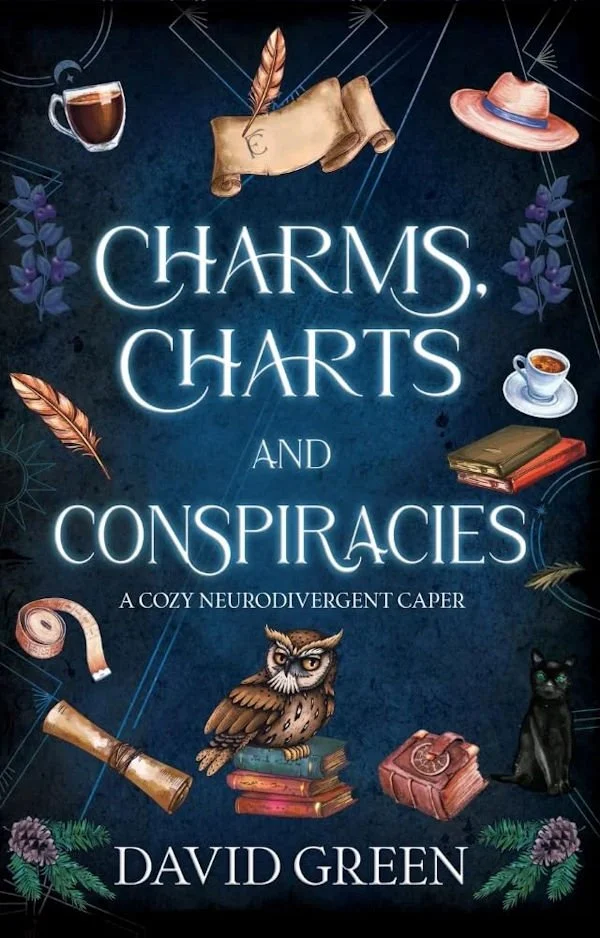
The landscape of modern fantasy is undergoing a profound shift. Moving away from the high-stakes, blood-soaked battles of traditional grimdark, a new movement—the "cosy fantasy" subgenre—has captured the imaginations of readers seeking solace, connection, and gentle intrigue. At the vanguard of this movement is the return of Greton of Willow, the beloved, autistic map-maker of Barrow’s Hill. With the upcoming release of Charms, Charts, and Conspiracies on July 7th, author Green has delivered a sequel that not only expands the horizons of its predecessor, Magic, Maps, and Mischief, but deepens the emotional resonance of the genre itself.
Main Facts: The Stakes of a Cozy Life
In the idyllic, rolling geography of Barrow’s Hill, life is defined by routine, craftsmanship, and the quiet comfort of a chosen family. For Greton, an elderly, autistic cartographer, his map shop is his sanctuary—a place where his meticulous nature is not a burden, but a superpower. However, as the title suggests, the serenity of his existence is about to be punctured by a series of unwelcome intrusions.
The central conflict arises from an unexpected professional threat: a new map-maker has set up shop in town. For a man who navigates life through the predictability of charts and the comfort of his familiar owl companion, this sudden injection of competition serves as a catalyst for a deeper internal crisis. Greton’s struggle is not merely professional; it is existential. As he grapples with the pressures of social obligations—extravagant dinner parties and the bewildering rules of fashion—he finds himself entangled in a web of mounting conspiracies. The Cartographers’ Guild, fueled by suspicious new investment, appears to be operating with nefarious intent, while mysterious mages and forbidden ruins beneath the hill suggest that Barrow’s Hill is far more than a quaint village.
A Chronology of Conflict
The narrative trajectory of the series has undergone a deliberate evolution. Where the first installment, Magic, Maps, and Mischief, ventured into darker, more foreboding territory before finding its footing in comfort, Charms, Charts, and Conspiracies embraces the warmth of its premise from the very first page.
- The Catalyst: The arrival of a rival cartographer triggers a period of deep self-doubt for Greton, leading him to dismantle his own sense of belonging.
- The Rising Action: As the Guild’s influence expands and the ruins beneath the hill become off-limits to "undesirables," Greton discovers he is being systematically framed for local mysteries.
- The Internal Crisis: Greton’s predisposition toward catastrophizing turns inward, leading to the devastating realization that he has begun to suspect his own involvement in the crimes.
- The Resolution (Climax): Through the unwavering support of his found family, Greton must confront the conspiracy, clear his name, and ultimately accept that his worth is not defined by professional competition or societal approval.
Supporting Data: The Craft of Neurodivergent Representation
One of the most significant aspects of this release is the author’s commitment to authentic representation. The depiction of autism in Charms, Charts, and Conspiracies is widely regarded as some of the most insightful writing in contemporary fiction.
Green moves beyond the common tropes of autism to explore the sensory and emotional reality of the experience. The novel vividly captures moments of sensory overload—where thoughts "rage like a blizzard in the Northern Wastes" and physical discomforts, such as tight boots or itchy fabrics, become insurmountable obstacles. More importantly, the text challenges the myth of the "unemotional" autistic person. Through Greton’s journey, the reader learns that his stoicism is a learned survival mechanism—a defense against a world that has historically told him his depth of feeling was "wrong."
Furthermore, the book treats LGBTQIA+ themes with a refreshing lack of fanfare. The inclusion of asexual representation is handled with grace, framing Greton’s past loves and current status as a matter-of-fact reality rather than a political statement. This "woven-in" approach to identity mirrors the real world, where diversity is a facet of existence, not a signposted exhibit.
Official Perspectives: The Found Family Dynamic
The strength of the narrative rests heavily on the relationships Greton maintains with his "found family." Characters like Aria and Petra provide a template for healthy, radical interpersonal dynamics.
In a departure from standard literary tropes that rely on dramatic misunderstandings to drive the plot, the characters in Charms, Charts, and Conspiracies possess the rare capacity for introspection and accountability. They demonstrate an ability to apologize without performative drama and to love unconditionally, provided the individual is acting in good faith.
A pivotal scene in the book involves a heart-to-heart between Greton and Aria. Rather than a confrontation, it is a masterclass in emotional labor. Aria’s validation of Greton—"Please do not let your doubts curb your instincts. You are who you are. And who you are is wonderful"—serves as the emotional anchor of the novel. It underscores the theme that in a healthy community, support is not a transaction. There is no ledger of debts; there is only the consistent, quiet act of showing up for those one loves.
Implications for the Cosy Fantasy Genre
The release of this book carries significant implications for the future of the genre. Charms, Charts, and Conspiracies proves that "cosy" does not mean "low stakes." By grounding the mystery in the protagonist’s personal sense of worth, the stakes feel more urgent and tangible than many traditional high-fantasy epics.
Thematic Takeaways:
- The Death of the Transactional Mindset: The book dismantles the idea that one must "earn" their place in a community. Greton’s journey toward realizing that he is deserving of help simply because he is loved is a profound lesson for readers.
- The Importance of Atmosphere: By integrating characters like the owl, Roger, and Jasmine the cat, the world-building transcends background decoration. These companions are integral to the emotional landscape of Barrow’s Hill.
- The Normalization of Growth: The novel highlights that personal evolution—even for an elderly protagonist—is a lifelong process. Greton’s ability to move from self-doubt to self-acceptance is a powerful arc that defies ageist tropes in literature.
Conclusion: A Must-Read for the Discerning Reader
As we look toward the July 7th release date, it is clear that Charms, Charts, and Conspiracies is poised to be a benchmark for the genre. It succeeds because it manages to balance the weight of a genuine mystery with the restorative power of kindness.
The book is an invitation to inhabit a world that feels both fantastical and deeply human. It asks the reader to consider their own connections—their own "found families"—and to reflect on the ways they offer and receive support. For those who felt the loss of Barrow’s Hill upon finishing the first volume, this sequel is not just a return; it is an expansion of the heart.
Whether you are drawn to the intricate puzzle of the Cartographers’ Guild or the quiet, tea-steeped moments of human (and owl) connection, this novel offers a rare combination of intellect and empathy. As the narrative suggests, the answers to our most pressing questions are often at our fingertips—provided we have the courage to reach for them, and perhaps, a cup of tea to steady our hands.
For those ready to return to the Hill, pre-orders are currently available, offering a gateway to a world that you will undoubtedly miss the moment you turn the final page.









No comments yet. Be the first to join the conversation!