

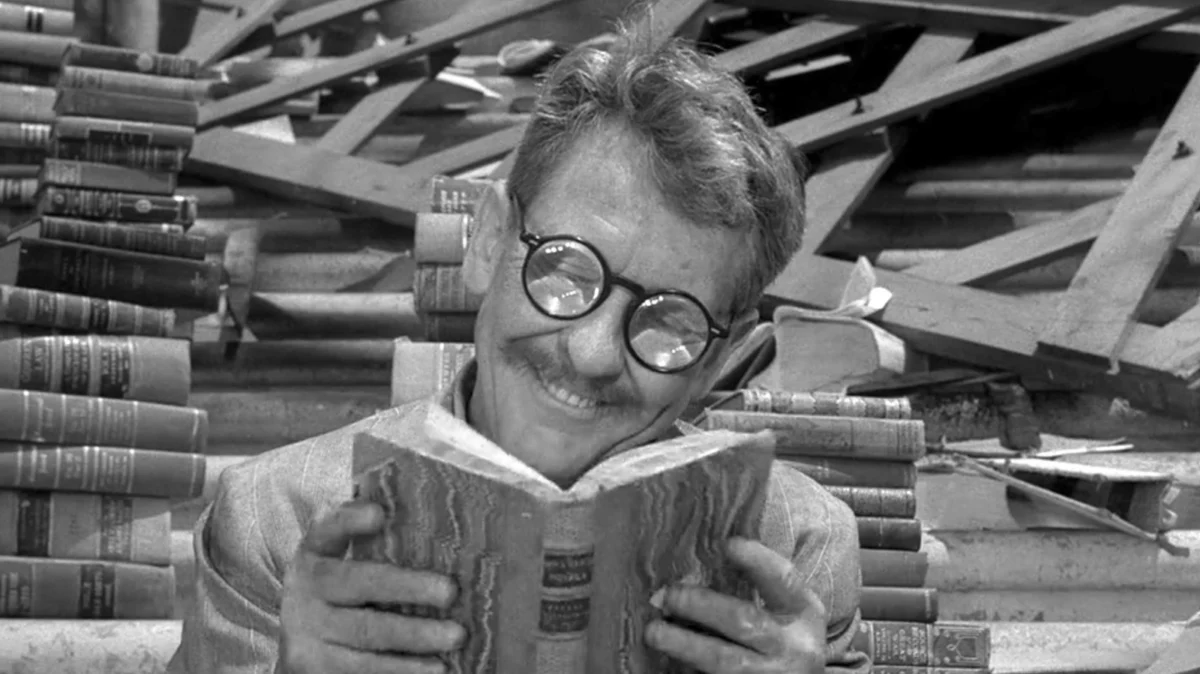
For over six decades, The Twilight Zone has stood as the gold standard of speculative fiction, a masterclass in social commentary wrapped in the eerie skin of science fiction. Among its sprawling catalog of 156 original episodes, one stands taller—and more polarizing—than the rest: "Time Enough at Last."
Starring the legendary Burgess Meredith as Henry Bemis, a beleaguered bank teller with an insatiable appetite for literature, the episode serves as a haunting exploration of human obsession, societal rejection, and the capricious nature of fate. While it is frequently cited as the quintessential Twilight Zone experience, it has become a lightning rod for debate. Is it a profound tragedy about the human condition, or is it a narratively flawed story about a man who simply gets what he deserves?
The Narrative Arc: A Chronology of Despair
To understand the enduring controversy surrounding "Time Enough at Last," one must first examine the trajectory of Henry Bemis. The narrative is deceptively simple, which perhaps contributes to the intensity of the discourse.
Henry is a man living in a world that refuses to accommodate his intellectual needs. His wife, Helen, is portrayed as a cruel antagonist, actively sabotaging his reading time by destroying his books and forcing him to participate in a life he finds stifling. His boss at the bank is equally dismissive, viewing his preoccupation with reading as a defect.
The turning point occurs when Henry, sequestered in the bank’s vault during his lunch break to finish a book, survives a catastrophic H-bomb attack that obliterates civilization. Emerging from the rubble, Henry discovers that he is, quite literally, the last man on Earth. He finds the local public library intact, its shelves overflowing with the very literature he has spent his life yearning to consume.
In a moment of pure, unadulterated joy, he organizes his reading material for years of uninterrupted solitude. However, as he prepares to begin his first book, his glasses slip from his face and shatter. The episode concludes with Henry, effectively blind, weeping among the ruins of his paradise.
The Philosophical Divide: Victim or Villain?
The divide among fans is rooted in how one perceives Henry Bemis. For the sympathetic viewer, Henry is a tragic figure—a "gentle soul" crushed by a conformist society. The irony of his situation—finding all the time in the world, only to lose the ability to see—is seen as a metaphor for the universe’s indifference to human desire.
Conversely, a vocal contingent of modern viewers sees Henry not as a victim, but as a deeply flawed individual. Critics point to his marriage as the primary source of contention. In this interpretation, Henry is a neglectful, selfish spouse who prioritizes the escapism of literature over his interpersonal responsibilities.
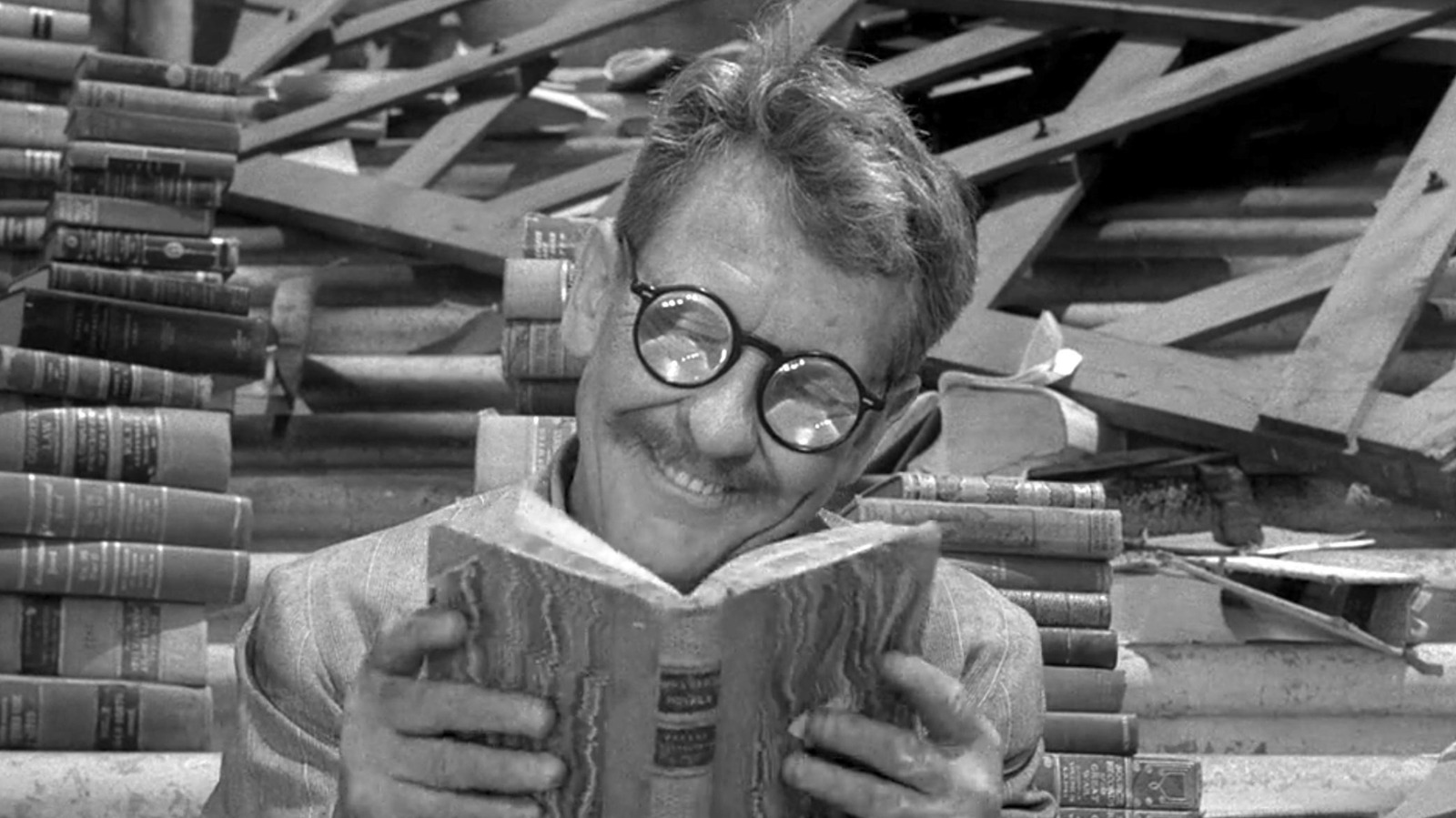
"This woman is trying her hardest to save their marriage, and this asshole does not care," one popular Reddit analysis posits. "She clearly has put up with this for years and is fed up. This dick got what he deserved."
This reading of the episode suggests that Henry’s isolation in the post-apocalyptic wasteland is not a cruel twist of fate, but a logical conclusion to a life spent ignoring the human beings around him. This perspective shifts the moral weight of the episode entirely, transforming it from a tragedy of bad luck into a cautionary tale about emotional detachment.
Examining the Logic: The "Plot Hole" Controversy
Beyond the moral debates, there is a persistent technical critique that has dogged the episode for years: the plausibility of the ending.
In the age of hyper-critical analysis and "plot hole" hunting, the final sequence of the episode has come under fire. Critics argue that a man of Henry’s intelligence, having survived an atomic blast, would not be rendered helpless by a pair of broken glasses. The argument is that in a world where Henry has unlimited time and access to the entirety of human knowledge, he could easily locate a spare pair of glasses—either by scavenging local opticians, raiding homes, or looting department stores.
As one skeptic noted: "It treats the broken glasses as an unfixable tragedy, but couldn’t he just walk to an optometrist shop and steal some, or take a pair from someone’s house?"
This critique speaks to a fundamental tension in television history. The Twilight Zone was never intended to be a hyper-realistic survival manual; it was an allegory. The broken glasses are a narrative device—a symbol of the cruelty of the universe. To demand that the episode account for the logistics of finding new eyewear is to misunderstand the intent of Rod Serling and writer Lynn Venable. The point is not the physical impossibility of seeing; it is the psychological collapse of a man who realizes his singular purpose has been snatched away at the eleventh hour.
The Legacy of Rod Serling’s Vision
The endurance of "Time Enough at Last" is a testament to the brilliance of Rod Serling. Serling often used the genre to bypass censors and address the social anxieties of the Cold War era. By placing Henry Bemis in a post-apocalyptic landscape, Serling was able to tap into the era’s collective dread regarding nuclear annihilation.
However, the episode’s longevity is perhaps better explained by its adaptability to modern sensibilities. Whether one views Henry as a victim of societal oppression or a man who failed his social contract, the episode remains a Rorschach test for the viewer. It forces us to ask: What do we value? What happens when our dreams are finally within reach, only to be denied by the absurdities of life?
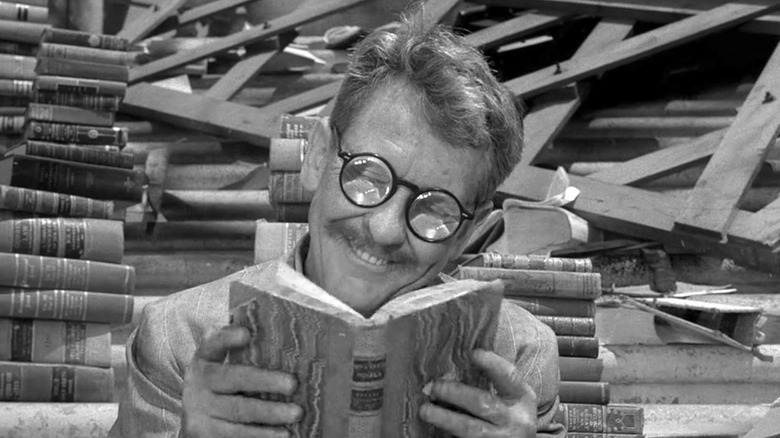
The episode has been parodied across pop culture, from The Simpsons to Family Guy, effectively cementing its status as a cultural shorthand for "ironic disappointment." While some fans may feel that these parodies have rendered the original "overrated," the sheer frequency of these references serves as proof of its impact.
Implications: Why We Still Care
Why does a 1959 television episode still command such heated debate on internet forums? The answer lies in the nature of The Twilight Zone itself. As a show, it functions as a mirror. The episodes are intentionally open-ended, lacking the moral didacticism of lesser science fiction. They offer scenarios, not solutions.
"Time Enough at Last" survives because it hits on universal truths that are independent of the era. We all have "books" we want to read—goals, ambitions, or quiet desires—that we feel are being blocked by the "H-bombs" of our daily lives: work, relationships, or social obligations. The fear that we might finally find our "time" only to find ourselves ill-equipped to enjoy it is a primal anxiety.
Furthermore, the shift in how we view characters like Henry reflects our changing social values. In the 1950s, the "neglected wife" trope was a standard, often unquestioned narrative element. Today, audiences are more likely to scrutinize the gender dynamics and the emotional labor of the characters involved. This evolution in critical thinking ensures that The Twilight Zone never feels stagnant.
Conclusion
Whether you view the final scene as a heartbreaking injustice or a karmic correction, "Time Enough at Last" remains an essential pillar of television history. It is a work that demands engagement, refuses easy answers, and highlights the fragile threshold between our dreams and our reality.
As long as there are people who cherish books, people who struggle with the demands of society, and people who look at the stars and wonder about their place in the universe, the story of Henry Bemis will continue to divide, frustrate, and fascinate. It is, in every sense of the phrase, a timeless entry in the annals of science fiction—even if the main character never got to read a single page.











No comments yet. Be the first to join the conversation!