Basiran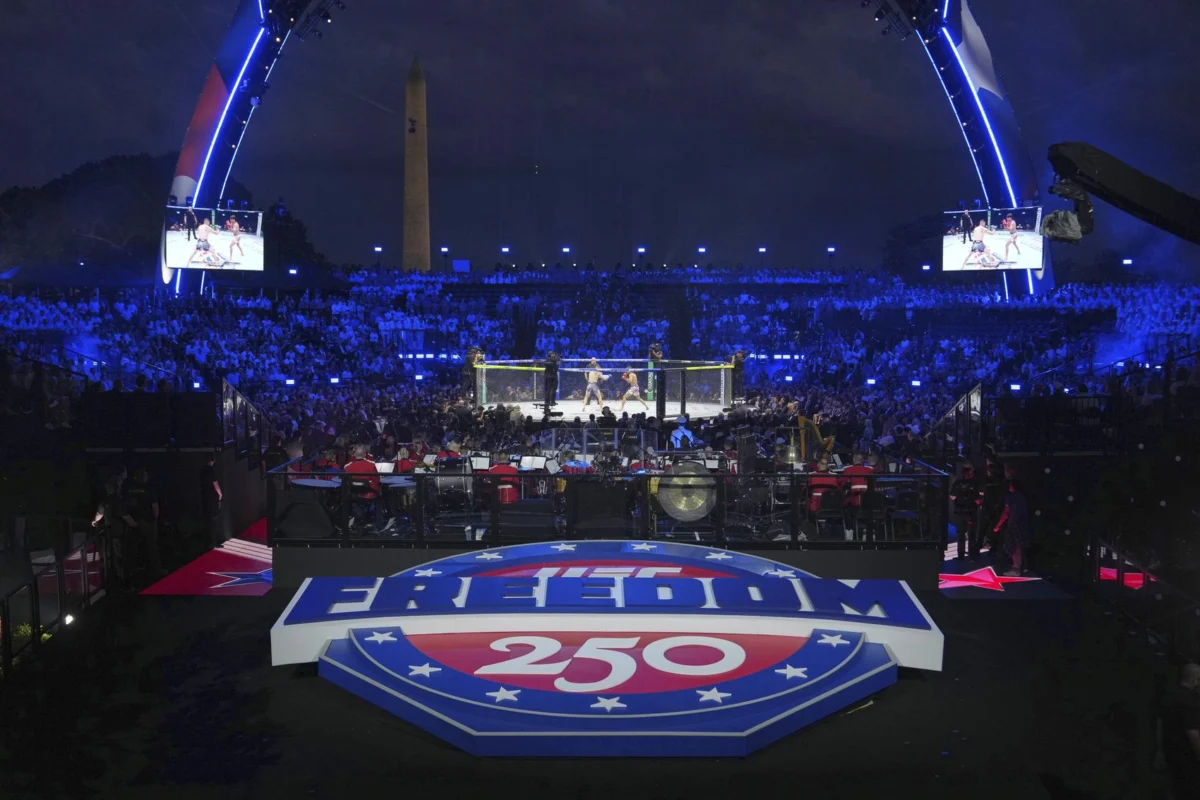
By Editorial Staff
In an unprecedented collision of political pageantry and professional combat sports, the Ultimate Fighting Championship (UFC) staged an event that will likely remain etched in the annals of American pop culture as the most surreal spectacle of the decade. Dubbed "Freedom 250," the event transformed the South Lawn of the White House into a battleground of blood, sweat, and national pride, ostensibly to celebrate both the 80th birthday of President Donald Trump and the 250th anniversary of the signing of the Declaration of Independence.
Yet, as the dust settled and the echoes of the Marine Band faded into the D.C. night, UFC CEO Dana White offered a sobering post-script. Despite the staggering commercial success and the historic nature of the evening, White was resolute: the White House will never host a fight card again.
The Spectacle: A Historic Backdrop for Modern Gladiators
The setting for Freedom 250 was, by any measure, impossible to replicate. For the fighters, the experience transcended the typical pre-fight jitters of a professional bout. Throughout the day, the all-male roster was treated to an exclusive tour of the nation’s most hallowed halls. Fighters strolled through the West Wing, marveled at the Oval Office, navigated the Roosevelt Room, and stood in the shadows of presidential portraits that have overseen centuries of American policy.
For Justin Gaethje, the night’s main event star, the proximity to history was profound. Before walking to the cage, Gaethje spent a quiet moment in the Oval Office, observing the original copy of the Declaration of Independence.
"Usually, I kind of blank out when it comes to getting ready to walk to the cage," Gaethje remarked after his victory. "It was pretty crazy, looking at the Declaration of Independence. The original one. Their language was different. I’m not smart enough to read that."
The atmosphere in the arena—a sprawling, custom-built outdoor structure on the South Lawn—was electric. As the night progressed, the synthesis of visceral violence and patriotic fervor became the event’s defining characteristic. The card featured tributes to first responders and active military personnel, with the Marine Band providing a pulsating, high-fidelity soundtrack to the carnage.
Chronology of a Night Under the Stars
The evening was a logistical marathon. From the early afternoon tours of the Cabinet Room to the final bell that sounded in the early hours of Monday morning, the event was a masterclass in event management—and a nightmare of operational complexity.
- 14:00 EST: Fighters begin their exclusive tour of the White House, meeting with President Trump and taking photos in the Oval Office.
- 18:00 EST: The seven-card show begins. The crowd, a mix of political elite and die-hard MMA fans, watches as the first bouts commence.
- 20:30 EST: President Trump takes his seat, donning a white "USA" baseball cap, and remains engaged throughout the duration of the fights, noticeably enthusiastic during the more high-stakes exchanges.
- 22:45 EST: The main event. Justin Gaethje enters the cage, having just come from the Oval Office, and delivers a masterful performance against Ilia Topuria.
- 00:00 EST: Gaethje secures the lightweight title, finishing the fight with a flurry of strikes that left his opponent bloodied. He celebrates with a signature backflip off the top of the wire-mesh cage before shaking hands with the President and fist-bumping Melania Trump.
- 01:30 EST: Dana White holds a post-fight press conference that stretches into the dawn, boasting of record-breaking metrics.
Financial and Commercial Data: The Numbers Behind the Show
While the event was steeped in the gravitas of American history, Dana White’s primary focus remained the bottom line. By every objective metric, the event was a triumph for the UFC brand. White crowed about the surge in streaming subscriptions, the high volume of merchandise sold, and the global viewership figures that surpassed the company’s internal targets.
Justin Gaethje, the night’s biggest winner, secured a massive financial windfall, taking home $825,000 in bonuses alone for "Performance of the Night" and "Fight of the Night" honors.
However, the cost of this success was exorbitant. White revealed that the UFC footed a $60 million bill to host the event on federal grounds. Between the construction of the custom, outdoor, high-tech cage, the logistical requirements of securing the South Lawn, and the sheer unpredictability of D.C. weather, the project pushed the limits of the company’s budget.
"I can’t afford it," White said plainly during his press conference. "I’ll never do the Sphere again and we’ll never do this again."
The Blemishes: Friction on the Fringe
Despite the event’s polished aesthetic, the night was not without its controversies. The UFC’s reputation as a promoter of "problematic" personalities was on full display as two fighters made headlines for the wrong reasons.
UFC middleweight champion Sean Strickland was escorted out of the Ellipse watch party by local law enforcement following a disruptive incident. More damaging, however, was the conduct of heavyweight Josh Hokit, who engaged in a public, unfounded verbal attack against former First Lady Michelle Obama, rooted in right-wing conspiracy theories.
These incidents served as a stark reminder of the volatile nature of the sport and the difficulty of controlling the narrative when the venue is the doorstep of the American government. While the event’s organizers attempted to frame the night as a symbol of unity, these outbursts highlighted the persistent cultural friction that surrounds the UFC.
Implications: A One-Off in the Capital
The decision to host Freedom 250 at the White House was, according to Dana White, an attempt to bridge the gap between the sport and a new demographic of fans. "Hopefully tonight created some unity," White said, donning his promoter’s hat. "Even for the people that thought this was going to be some big political statement or something, this wasn’t. This was Americans, all Americans, celebrating the birthday."
However, the implications of the event suggest a move toward consolidation rather than a long-term shift in strategy. The UFC is currently gearing up for International Fight Week, with the highly anticipated return of Conor McGregor at UFC 329. That event will return to the familiar confines of a traditional arena in Las Vegas, signaling a return to the company’s "home turf."
The lasting legacy of Freedom 250 will likely be its status as a "one-of-one" event. It proved that the UFC has the commercial power and the political clout to command the attention of the highest office in the land. Yet, the physical and financial demands—the "headaches" of federal logistics and the volatile weather—have effectively disqualified the White House as a repeat venue.
As the UFC looks toward the future, it appears content to move away from the "human cockfighting" label of its past, while simultaneously acknowledging that some places are simply too complex to serve as a recurring stage. Freedom 250 was a high-wire act, a moment where the most intense sport in the world met the most iconic symbol of American democracy. For one night, the experiment worked, but as Dana White concluded, some spectacles are meant to be witnessed once, never to be repeated.
The sport continues to grow, its reach expanding into the mainstream, but the South Lawn will return to its quiet, grassy purpose. The Octagon is, and will remain, a creation for the arena, not the Oval.


 Neng Nana
 Asro
Asro