Ammar Sabilarrohman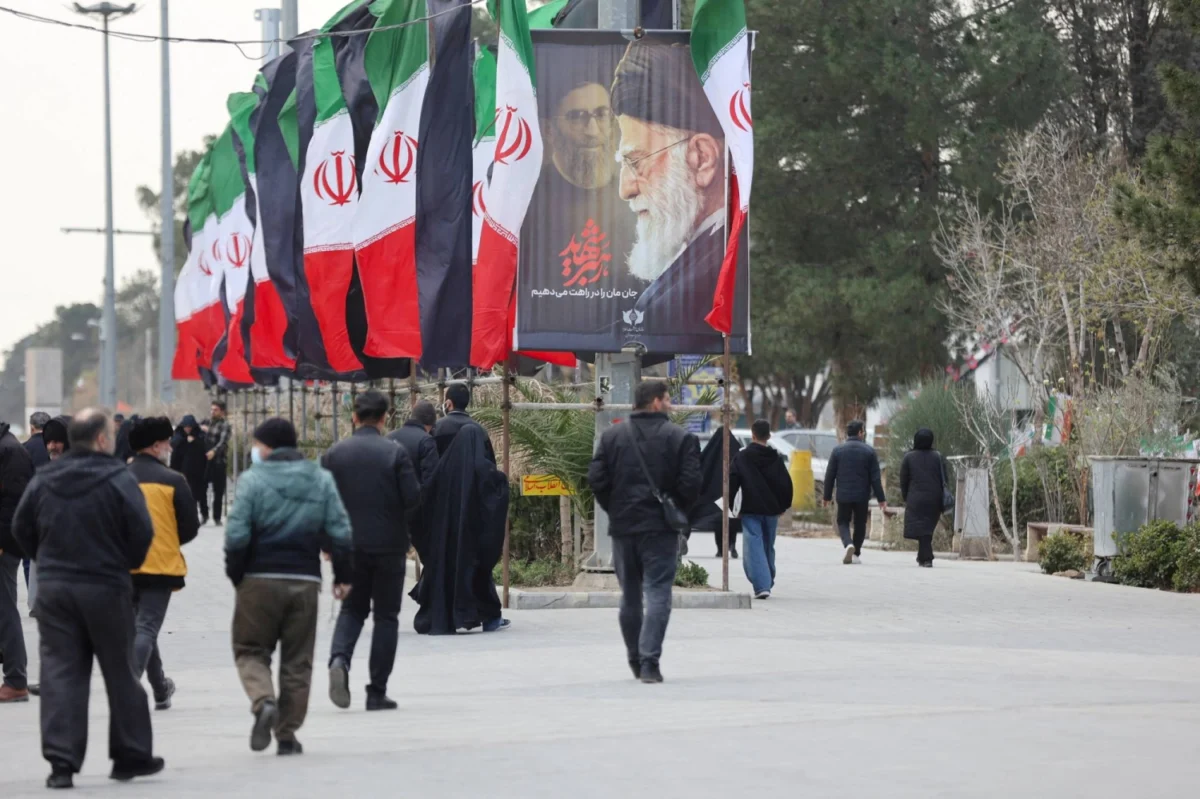
DUBAI/LONDON — As the smoke clears from the three-month military confrontation between the United States and the Islamic Republic of Iran, the theocratic leadership in Tehran finds itself in a paradoxical position. Having successfully weathered a direct military campaign that threatened the very foundations of the state, the regime now faces an existential challenge far more complex than external bombardment: the management of a polarized nation and a shattered economy.
For the clerical establishment, the cessation of hostilities is not a moment of respite, but the beginning of a high-stakes balancing act. They must now navigate the competing demands of emboldened hard-line factions, who view the survival of the regime as a mandate for further aggression, and a war-weary, impoverished populace whose patience for ideological austerity has long since evaporated.
The Crucible of Conflict: A Chronology of the Crisis
The recent escalation, which brought the Middle East to the brink of a regional conflagration, was defined by a rapid deterioration of diplomatic norms and a subsequent pivot to direct military engagement.
- Early Phase: The crisis began with a series of tit-for-tat escalations involving the control of the Strait of Hormuz—the world’s most critical maritime energy chokepoint.
- Military Escalation: Tensions boiled over into a three-month kinetic campaign. U.S. forces targeted key Iranian defensive infrastructure, while Iranian proxies and conventional forces responded with asymmetric strikes.
- The Humanitarian Toll: Throughout the conflict, the Iranian domestic front suffered. Widespread infrastructure damage, combined with existing sanctions, crippled supply chains, leading to acute shortages of food and medicine.
- The January Unrest: The conflict was punctuated by a brutal domestic crackdown in January, where authorities suppressed mass protests with lethal force, resulting in thousands of deaths—a trauma that continues to cast a long shadow over the current political landscape.
- The Path to Diplomacy: Exhausted by the fiscal and military drain, both Washington and Tehran signaled a willingness to negotiate. The resulting memorandum, set to be signed this Friday, serves as an interim de-escalation measure, promising limited financial relief in exchange for the reopening of the Strait of Hormuz.
The Dual-Front Pressure: Hard-Liners vs. The Street
The political atmosphere in Tehran is currently defined by two diametrically opposed camps.
On one side, the powerful hard-liners, including elements of the Islamic Revolutionary Guard Corps (IRGC), have emerged from the conflict with a sense of ideological triumph. They argue that the state’s survival against a superpower validates their "resistance" doctrine. This group is aggressively lobbying for the leadership to adopt a defiant stance in upcoming comprehensive talks with the U.S., while simultaneously prioritizing military rearmament. They maintain that any internal dissent can be effectively silenced through the same coercive apparatus that quelled the January uprisings.
Conversely, the broader Iranian public is reaching a breaking point. Years of "maximum pressure" sanctions, compounded by the recent war, have decimated the middle class and pushed the working class into destitution. For the average citizen, the end of the war is not a victory to be celebrated; it is a desperate plea for a "peace dividend." They expect the government to pivot from military spending to immediate financial relief, infrastructure reconstruction, and the restoration of a viable standard of living.
"The moment the war ends, and as this interim deal is shaky, the actual problems for Iran’s clerical establishment will start," explains Hamidreza Azizi, a visiting fellow at the German Institute for International and Security Affairs in Berlin.
Economic Ruin and the Cost of Survival
The economic reality facing Tehran is staggering. The Iranian rial continues to trade at record lows, inflation has eroded the purchasing power of even the most stable households, and unemployment remains at systemic highs.
According to four current Iranian officials and one former official, the government is acutely aware that the "double-edged sword" of the peace deal—which offers some financial reprieve—may trigger a backlash if those funds are not visibly translated into economic recovery.
"The people are weary of war and economic hardship," one senior official remarked under condition of anonymity. "The state’s priority must now be the injection of liquidity into the banking sector and the mobilization of funds for critical industrial reconstruction."
However, the fiscal reality is that the government’s coffers are bare. The financial relief provided by the pending U.S. deal is expected to be incremental, contingent upon further concessions later in the summer. If the government fails to manage public expectations, the "peace" could prove as volatile as the war it replaced.
Official Responses and Strategic Calculation
Tehran’s leadership, though publicly maintaining a posture of strength, is clearly engaged in a defensive maneuver. The decision to sign the memorandum to end the war was, according to a former reformist official, a strategic concession born of necessity.
"The risk of a total collapse in social stability is understood at the highest levels," the former official stated. "The regime knows it cannot fight a war on two fronts—against the U.S. military and its own population—simultaneously."
By choosing to reopen the Strait of Hormuz, the leadership is attempting to secure a baseline of revenue to mitigate the worst of the economic catastrophe. Yet, this decision risks alienating the hard-line base, which views any concession as a betrayal of the revolution.
Implications: A Limited Window for Reform
The current situation presents a narrow, treacherous window for the Islamic Republic. The United States and its regional allies are watching closely, aware that Iran’s domestic instability could either lead to further regional concessions or a sudden, unpredictable lurch toward total internal collapse.
1. The Stability Risk
If the regime allocates the incoming financial relief toward its military apparatus rather than social welfare, the probability of a resurgence of mass protests is high. The January crackdown, while effective in the short term, has left a legacy of deep-seated resentment that is not easily suppressed a second time.
2. The Economic Vicious Cycle
Reconstruction will require significant foreign investment and technical expertise, both of which remain locked behind the walls of international sanctions. Unless the "wider deal" mentioned in the memorandum comes to fruition, the interim relief will be insufficient to jumpstart the economy, leading to a potential repeat of the current crisis.
3. The Shift in Power Dynamics
The tension between the clerical establishment and the military elite is likely to intensify. If the government fails to deliver on economic promises, the hard-line factions may attempt to consolidate power further, potentially leading to a more authoritarian, isolationist state that is even less likely to engage in productive diplomacy with the West.
As the ink dries on the Friday memorandum, the true test for Tehran will not be its ability to withstand the U.S. military, but its ability to survive its own people. The regime has survived the fire of external conflict, but it is now entering the much more unpredictable furnace of domestic expectation. Whether it emerges as a reformed, stable entity or fractures under the weight of its internal contradictions remains the central question of the post-war era.


 Neng Nana
 Asro
Asro