

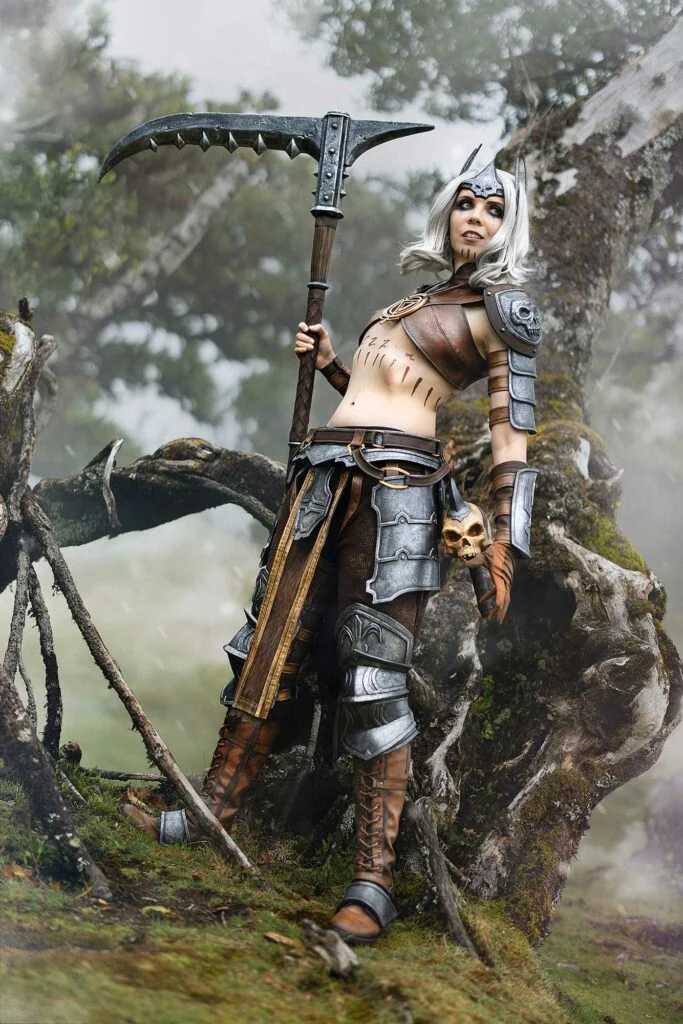
In the world of high-end professional cosplay, two weeks is typically the time frame reserved for minor prop repairs or basic tailoring. For renowned artisan Kamui Cosplay, however, it became the deadline for a total transformation. When Blizzard Entertainment approached her to celebrate the highly anticipated launch of Diablo IV, the challenge was clear: bring the dark, intricate aesthetic of the Necromancer class to life.
Against the backdrop of an international relocation and a ticking clock, the project evolved from a standard promotional task into a masterclass in efficiency, material manipulation, and artistic endurance.
The Genesis: A Collaboration of Dark Proportions
The Necromancer has long been a centerpiece of the Diablo franchise’s gothic identity. With the release of Diablo IV, Blizzard sought to capture the visceral, bone-chilling aesthetic of the class in a way that resonated with the community. Having spent two decades building over 20 distinct armor sets and characters from Blizzard’s intellectual properties—ranging from World of Warcraft to StarCraft—Kamui was the natural choice for the collaboration.

The Blizzard Partnership
The advantage of working directly with the game’s developers provided a unique luxury: high-fidelity reference assets. Before the game was even available to the public, the studio provided detailed renderings, allowing the artist to meticulously select armor configurations, tattoos, and character styling. This level of access provided a blueprint that allowed the team to bypass the usual "guesswork" involved in interpreting in-game models, ensuring that the final cosplay would be a screen-accurate representation of the digital Necromancer.
Chronology of a Two-Week Sprint
The project was defined by its punishing schedule. Balancing the construction of a full suit of armor and a massive scythe while simultaneously managing a household move to a different country required a level of logistical discipline that would overwhelm most professionals.
Phase 1: Foundations and Patterning (Days 1–3)
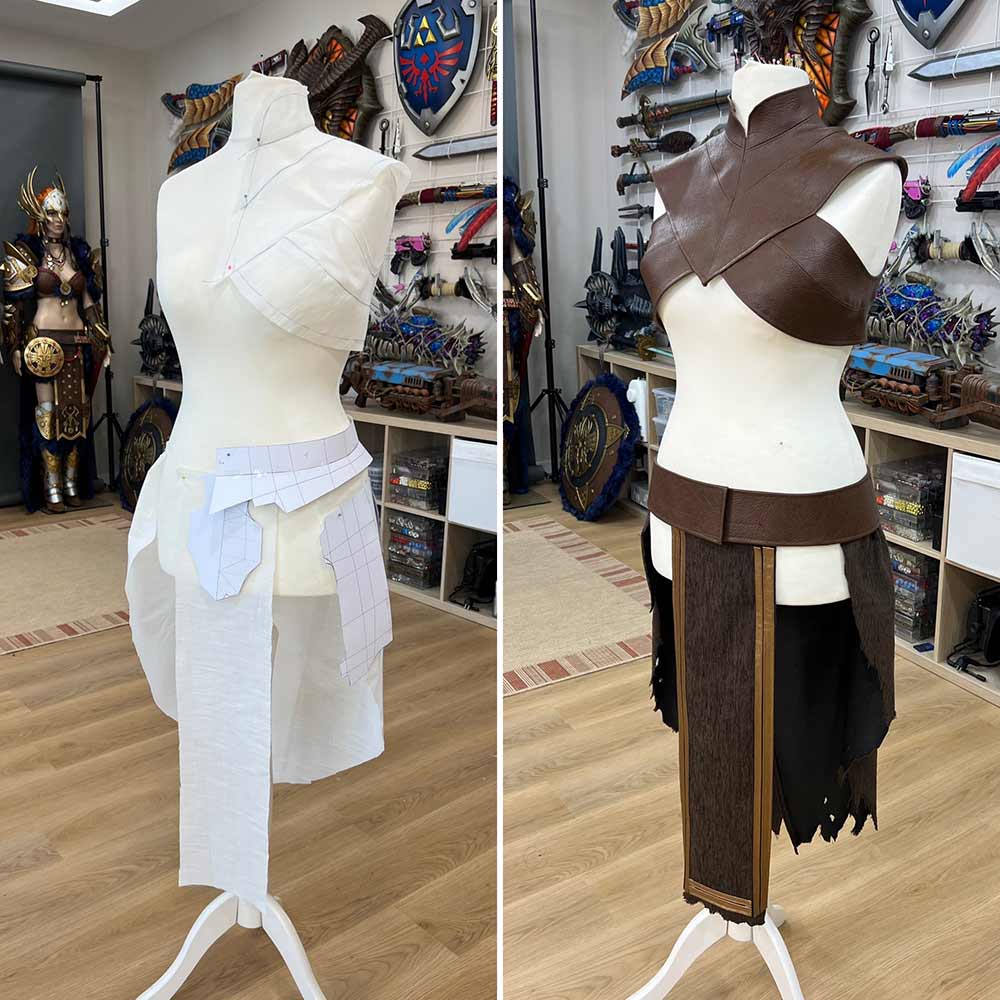
The work began with physical mapping. Utilizing traditional methods, the torso was molded using duct tape to ensure a custom fit, while the skirt was draped in linen to establish the silhouette. Paper dummies were constructed for every individual armor plate, a critical step that allowed for rapid prototyping. By treating these paper shapes as modular templates, the team could scale and adjust the armor’s geometry before committing to more expensive materials like furniture pleather and heavy-duty curtain fabric.
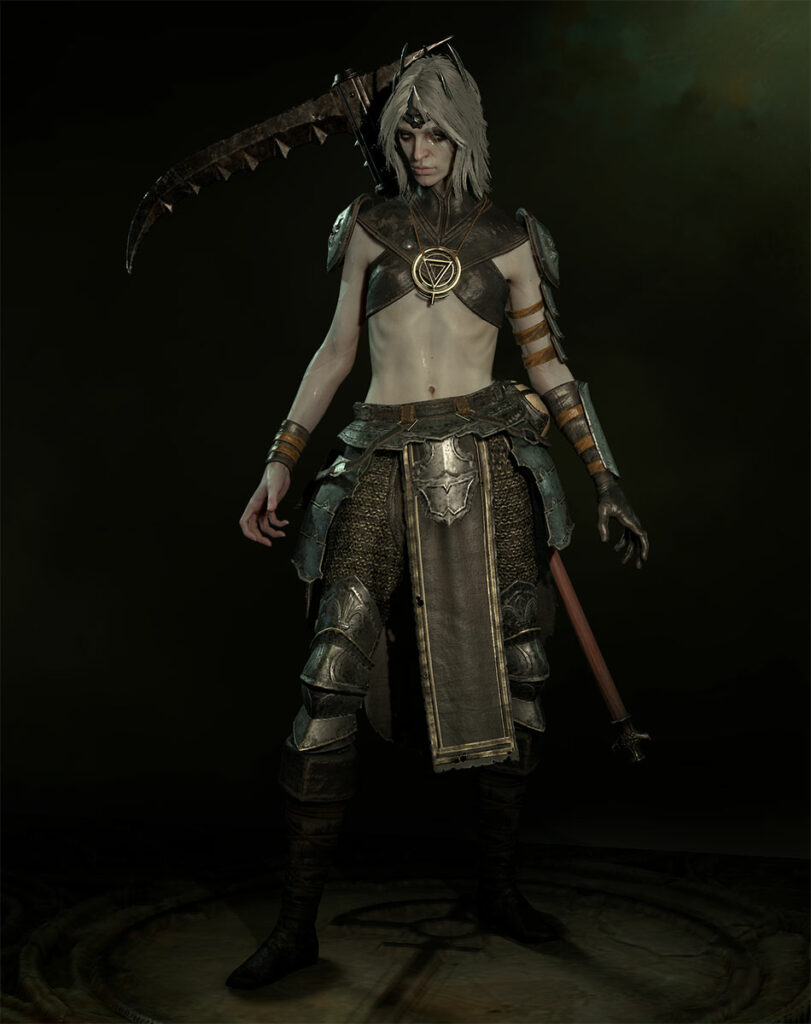
Phase 2: The Armor Fabrication (Days 4–8)
The armor’s structure relied on 5mm EVA foam for the base, layered with 2mm foam details to create the necessary relief and depth. The choice of materials was dictated by accessibility and durability; by sourcing high-quality pleather and foam locally, the build team maintained momentum.
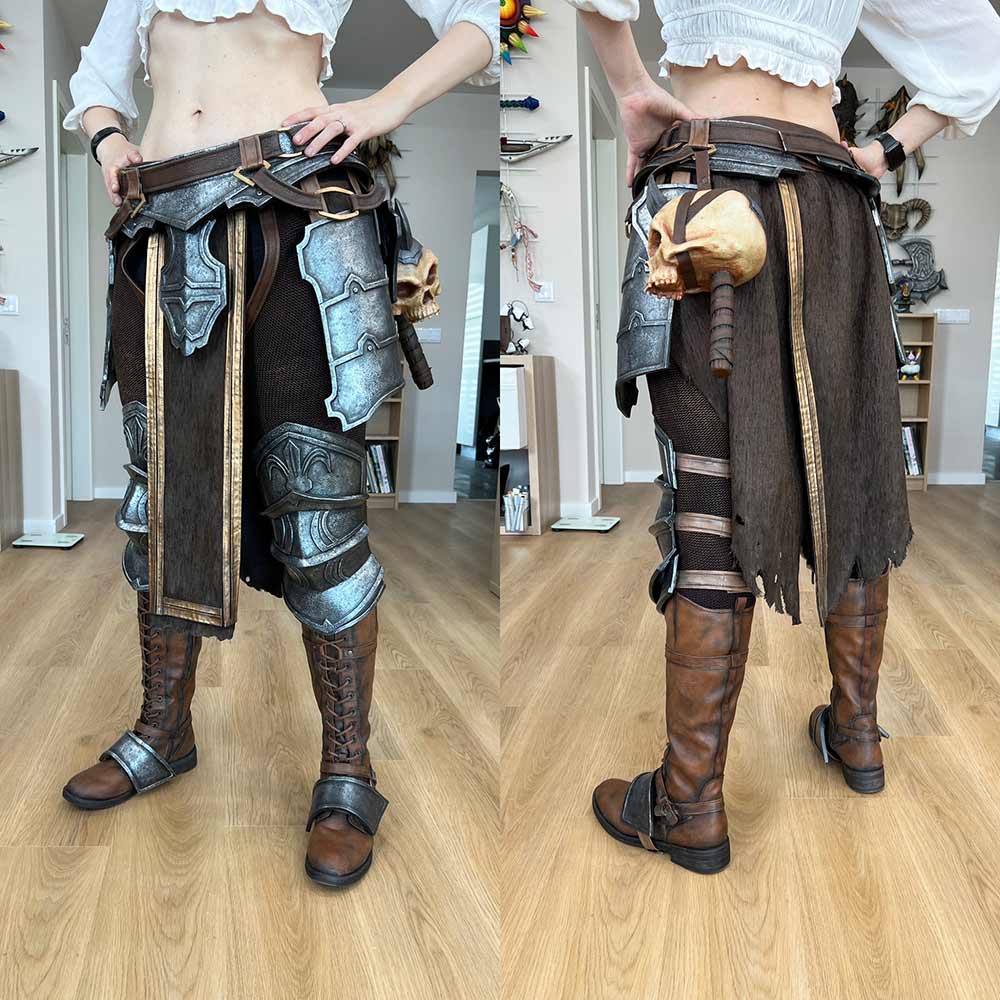
A standout technical achievement during this phase was the leg armor. Working in Blender, the team generated 3D patterns that mirrored the in-game assets perfectly. This digital-to-physical workflow not only ensured accuracy but also created a reusable template for future projects.
Phase 3: Texturing and The Scythe (Days 9–14)
The final week focused on surface finish and the construction of the Necromancer’s signature weapon. To achieve a realistic, worn metal appearance, the foam was primed with a mixture of Flexbond and black acrylic, then dabbed with texture to break up the smooth surface of the foam. The application of "Rub ’n Buff" provided a metallic sheen that simulated authentic, battle-hardened steel.
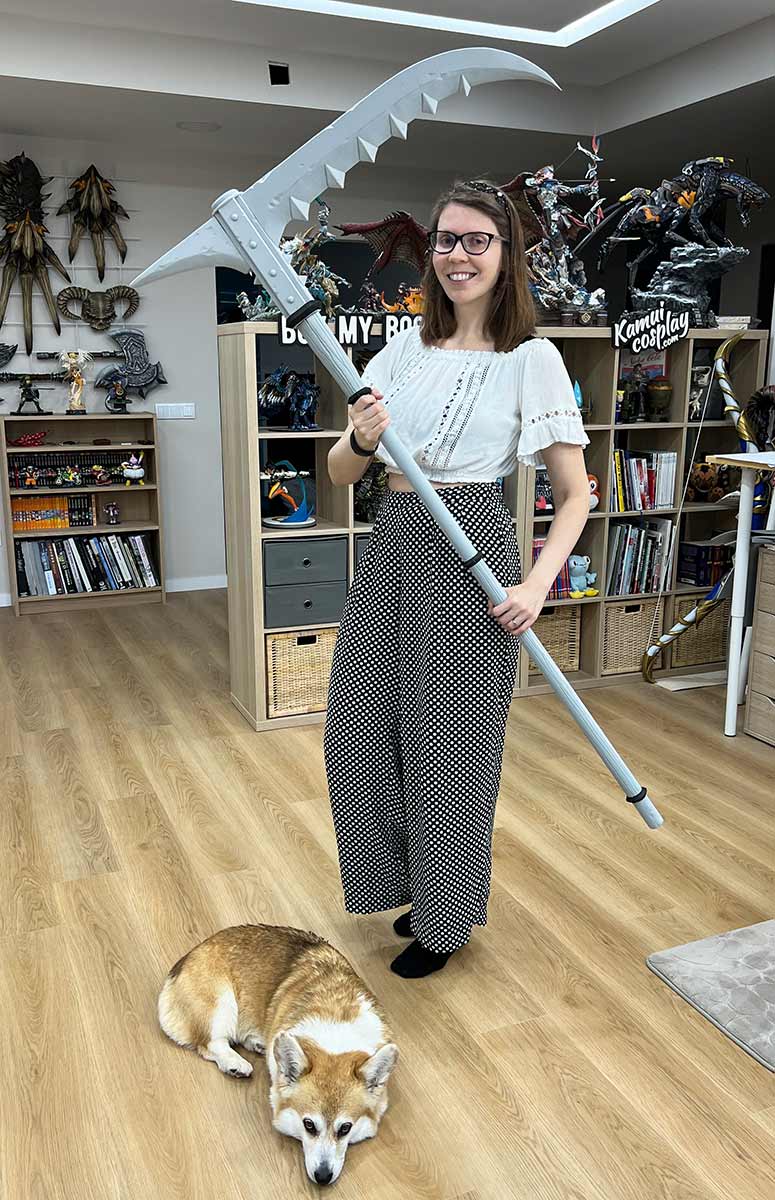
The scythe was constructed in a whirlwind 24-hour window. By utilizing PVC piping as a modular base, the team connected three segments with high-strength magnets, ensuring the weapon could be dismantled for transport. This structural choice highlights a core tenet of modern professional cosplay: designing for travel without sacrificing visual scale.
Technical Specifications and Material Insights
For those looking to replicate the build, the construction utilized a combination of industry-standard materials and clever, cost-effective substitutions.
Primary Material List
- Base Structure: 5mm and 2mm EVA foam.
- Fabrication: Furniture-grade brown pleather and heavy linen/curtain fabric.
- Finishing Agents: Flexbond, black acrylic paint, and Rub ’n Buff (Silver).
- Connectivity: Velcro and faux leather straps for modular attachment.
The "Wilson" Factor: 3D Printing
Not all elements were foam-based. The iconic skull accessory, affectionately named "Wilson," was designed, sculpted, and 3D printed by Benni. The integration of 3D printing into foam-based costumes represents the current gold standard in the industry, allowing for the inclusion of complex, asymmetrical shapes that are difficult to carve by hand.
The Final Presentation: Capturing the Dark Aesthetic
The final stage of the project was not merely the completion of the costume, but its contextualization. To capture the spirit of Diablo IV, the team traveled to the Fanal Forest in Madeira. This ancient, fog-shrouded laurel forest provided a natural backdrop that felt as though it had been pulled directly from the game’s Sanctuary.
Photographic Execution
The shoot utilized the Canon EOS R5 paired with a 50mm f/1.2L lens. This equipment choice allowed for the shallow depth of field necessary to isolate the Necromancer against the gnarled, 500-year-old trees of the Fanal. While the forest provided the atmosphere, the lack of real-world mist required post-production intervention, with the team using advanced compositing to layer in the iconic, haunting fog associated with the Diablo series.
Implications for the Cosplay Industry
The success of the Necromancer project serves as a case study for the evolving relationship between game studios and the cosplay community.
- Direct Integration: By providing reference assets, studios can ensure that high-quality, professional-grade cosplay is ready for launch day, effectively acting as a form of "living" marketing.
- Efficiency as a Skill: The project demonstrates that professional cosplayers are increasingly adopting rapid-prototyping workflows, including 3D printing and digital patterning, to meet the demands of modern content cycles.
- Modular Design: The emphasis on detachable components (like the magnetic scythe) signals a move away from static costumes toward functional, transportable gear that can withstand the rigors of convention travel.
Closing Thoughts
"It was very stressful, and it would have been easier to just build one weapon," reflects the creator. However, the willingness to undertake a full-body transformation under duress highlights the dedication required to excel in the current landscape of professional costume design.
By merging traditional craftsmanship with modern digital tools—and having the fortitude to work through a relocation—the resulting Necromancer costume stands as a testament to the fact that when passion meets professional-grade logistics, the results can be truly legendary. For aspiring crafters, the project proves that while foam and paint are the tools, it is the ability to adapt to extreme time constraints that truly defines a master of the craft.










No comments yet. Be the first to join the conversation!