Iffa Jayyana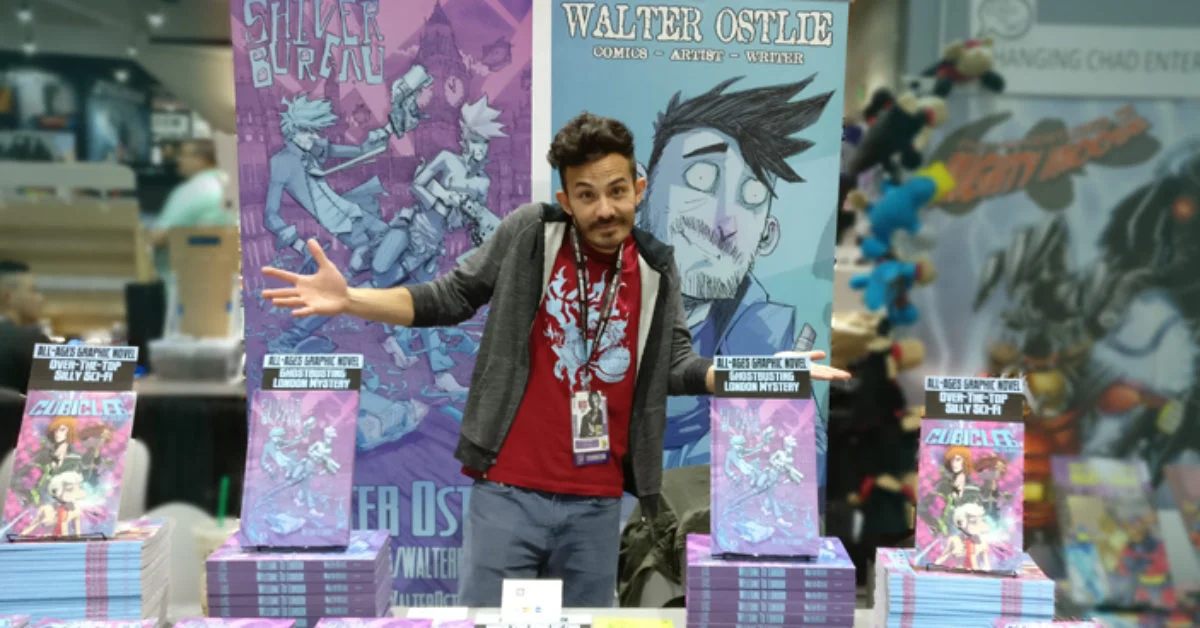
In the rapidly shifting landscape of modern comics, few creators have navigated the transition from traditional print to the digital-first Webtoon era as adeptly as Walter Ostlie. A full-time writer and artist whose career spans over a decade, Ostlie has become a case study in how to pivot from independent, crowdfunded graphic novels to becoming a staple of the global Webtoon platform. Through projects like Cubicles, Shiver Bureau, and the viral sensation Metalshark Bro, Ostlie has built a career defined by artistic versatility, technical efficiency, and a deep-seated commitment to the craft of storytelling.
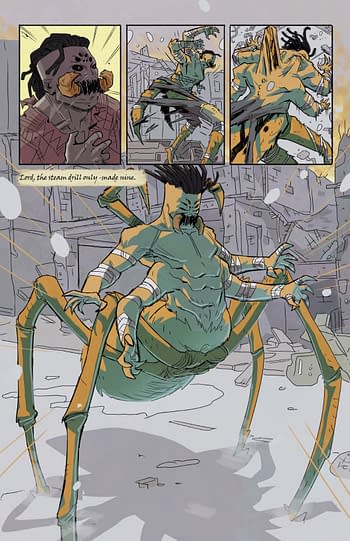
This profile explores the trajectory of a creator who has successfully balanced his own intellectual properties with collaborative projects, most notably his work with Greg Anderson Elysee on the award-winning Is’nana: The Were-Spider.
A Chronology of Creation: From 2008 to the Present
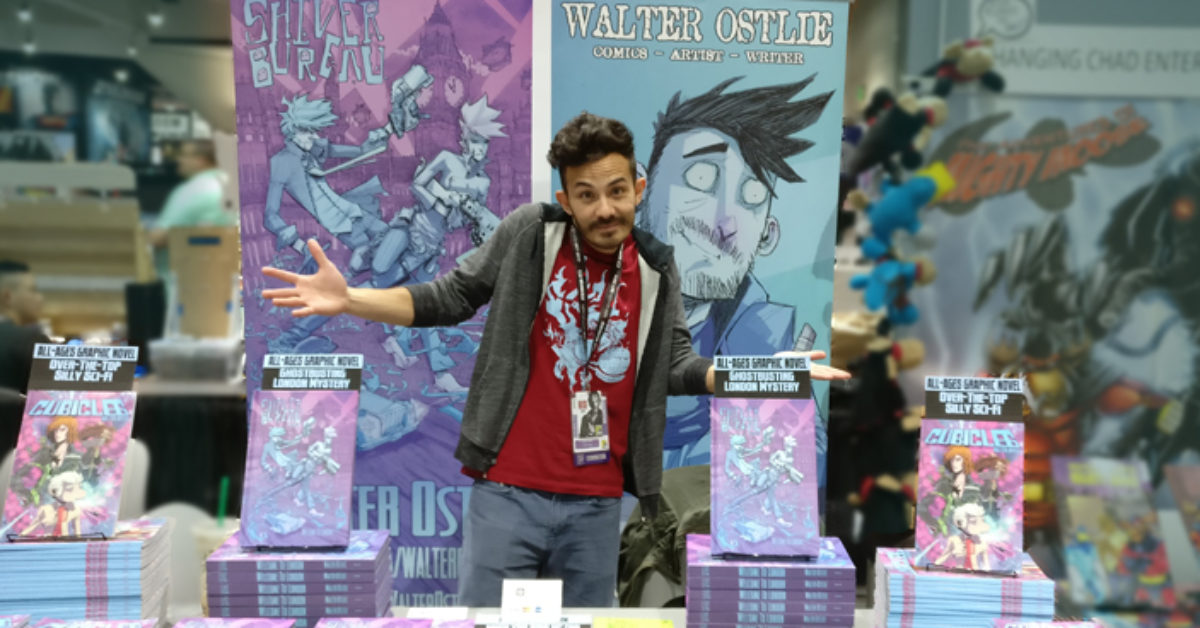
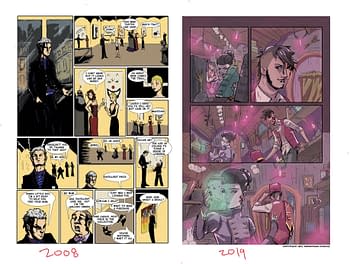
Walter Ostlie’s journey into the comic book industry was not a linear path but a disciplined evolution. He began his journey in 2008, teaching himself the fundamentals of writing and visual narrative. By 2011, this dedication culminated in the publication of his first graphic novel, Cubicles, released through Red5 Comics.
Following this initial success, Ostlie sought to test the waters of independent publishing. His sophomore project, Shiver Bureau, a supernatural investigation series set in an alternate London, demonstrated his ability to cultivate a loyal audience, raising over $13,000 on Kickstarter. The project’s quality was high enough to attract the attention of Scout Comics, which eventually picked it up for wider distribution.
The year 2016 marked a significant turning point in his professional trajectory. Collaborating with Greg Anderson Elysee on Is’nana: The Were-Spider, Ostlie gained exposure to the convention circuit, a pivotal experience that introduced him to the burgeoning Webtoon community. This exposure, combined with his growing technical proficiency, eventually led to the creation of Haxor, a featured series on the Webtoon platform.
The Webtoon Catalyst and the Leap to Self-Employment
The most radical change in Ostlie’s career occurred when he made the decision to quit his 9-to-5 job to pursue comics as a full-time profession. This decision was largely driven by the logistical demands of the Webtoon format. As Ostlie explains, the platform’s requirement for weekly episodes—each containing the equivalent of six to eight traditional American comic pages—created a workload that was impossible to manage alongside a traditional career.
"The schedule for Webtoon is pretty intense," Ostlie notes. "That’s writing, drawing, coloring, and lettering every single week. I had to decide: do I pass on this opportunity, or do I take the plunge?"
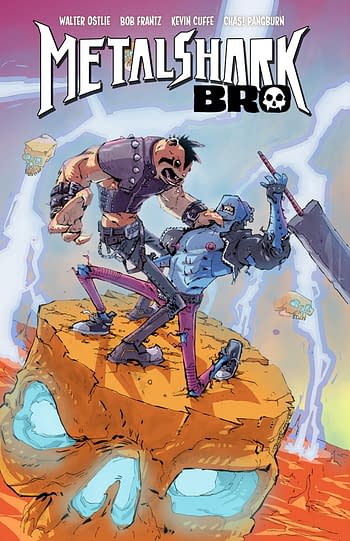
Since taking that leap in 2017, Ostlie has been self-employed for nearly three years. During this time, he has produced two volumes of Metalshark Bro, a project that raised over $50,000 on Kickstarter and gained significant traction as a cult hit. The transition has not only allowed him to focus exclusively on his artistic output but has also enabled him to refine his process to meet the grueling demands of modern digital distribution.
Technical Versatility and the "Obstacle Course" of Comics
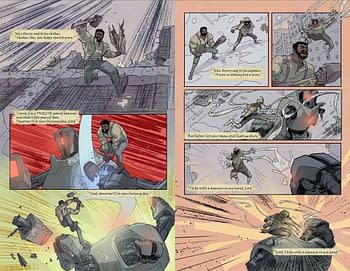
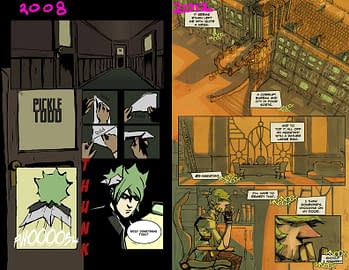
A defining feature of Ostlie’s work is his distinct, stylized aesthetic. Over the last 12 years, he has moved away from the hyper-realistic styles of the Image Comics era, gravitating instead toward artists like Skottie Young, Ben Templesmith, and Bryan Lee O’Malley.
Ostlie describes the process of creating a comic as an "obstacle course." He argues that because a comic artist must be proficient in drawing everything from hands and faces to architecture and vehicles, the medium serves as an accelerated training ground. "You can’t walk away from a 100-page comic without having grown in some way," he states.
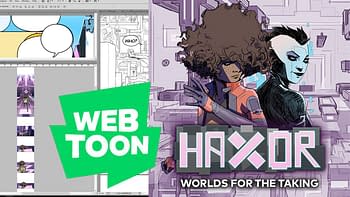
Furthermore, his adoption of the Webtoon platform—which utilizes an "infinite vertical scroll"—has forced him to rethink the fundamentals of visual storytelling. While traditional splash pages and complex wide-angle establishing shots are effective in print, they often lose their impact on a phone screen. Instead, Ostlie has leaned into character-focused pacing, using the vertical space to manipulate expression and timing, such as showing a character’s slow descent from confusion to horror over the course of several panels.
The Metalshark Bro Phenomenon
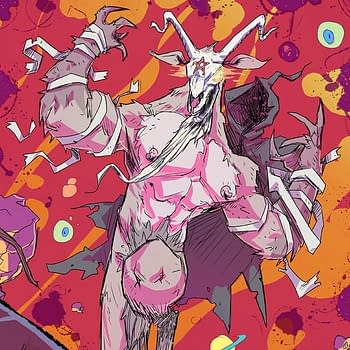
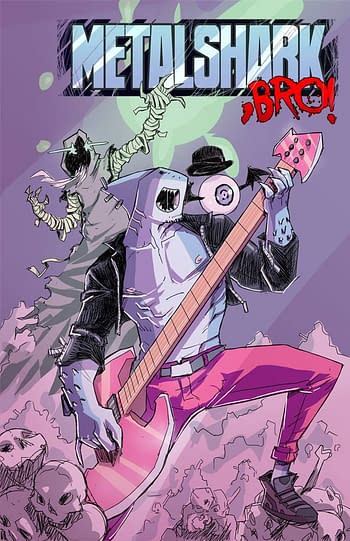
Perhaps the most curious entry in Ostlie’s portfolio is Metalshark Bro, a project that he admits is inherently ridiculous. The premise—a shark-man battling possessed donuts and demons—sounds like an exercise in absurdity, yet it has proven to be a financial and critical success.
"I think we’re still asking ourselves what Metalshark Bro is," Ostlie jokes. "It’s a project that doesn’t really make sense. It’s just a fun, ridiculous story, completely stupid in all the best ways."
The success of the project is a testament to the power of crowdfunding and niche community engagement. By working with writers Bob Frantz and Kevin Cuffe, and editor/letterer Chas Pangburn, Ostlie was able to experiment with a "free-reign" artistic approach. This creative freedom allowed him to translate a bizarre script into a cohesive, high-energy visual experience that defied the expectations of what a "bro-focused" comic might look like.
Educational Outreach: The YouTube Channel
Beyond his own creative work, Ostlie has dedicated significant time to mentoring the next generation of creators through his YouTube channel. With over 4,500 subscribers, the channel provides a behind-the-scenes look at the technical aspects of comic production, from script formatting to lettering and file management.
Ostlie’s motivation for this educational work is twofold: efficiency and empathy. Having been overwhelmed by the technical hurdles of the industry himself, he aims to simplify the process for others. He notes that the technical, mundane aspects of comic creation are often the most stressful, and by removing those barriers, he hopes to allow newer artists to focus on their storytelling.
Implications for the Future of Comics
Walter Ostlie’s career reflects a larger industry trend: the democratization of comic creation through digital platforms. His ability to move seamlessly between Kickstarter-funded print projects and the structured, corporate-backed model of Webtoon illustrates that the "traditional" path is no longer the only route to success.
However, the strain of such a high-volume output is evident. Ostlie admits that after a major project, he enters a period of "idling," and that maintaining a strict, almost military-like schedule is the only way to avoid burnout. "It’s an old person schedule," he admits, "but I’ve learned that not getting enough sleep puts my productivity into the crapper."
As he looks toward 2021 and beyond, Ostlie remains cautious about his capacity. With new, high-profile contracts already signed, he has made a conscious decision to refrain from taking on further freelance work, prioritizing his current commitments over the temptation of additional projects.
Conclusion: The "Sweetheart" Behind the Art
For those familiar with his work, Ostlie’s reputation as an artist is matched by his reputation as a collaborator. Despite the high-pressure environment of the industry, he remains a strong advocate for open dialogue between writers and artists. He emphasizes that a healthy professional relationship requires both parties to be comfortable with criticism, noting that the best results come when an artist is allowed to interpret a writer’s vision rather than merely execute it.
When asked about his legacy and his future, Ostlie remains humble. Whether he is drawing a demon-slaying shark or collaborating on an Afro-fantasy epic like Is’nana, he views his work not as a profound artistic statement, but as a necessary, daily function—an act as vital and mundane as breathing. As he continues to push his style and adapt to the ever-changing digital landscape, one thing is certain: Walter Ostlie has established himself as a vital, enduring voice in the contemporary comic book world.

 Reynand Wu
 Raul Delapena Setiawan