

Published May 22, 2026, 8:30 AM EDT
By Giovanni Colantonio
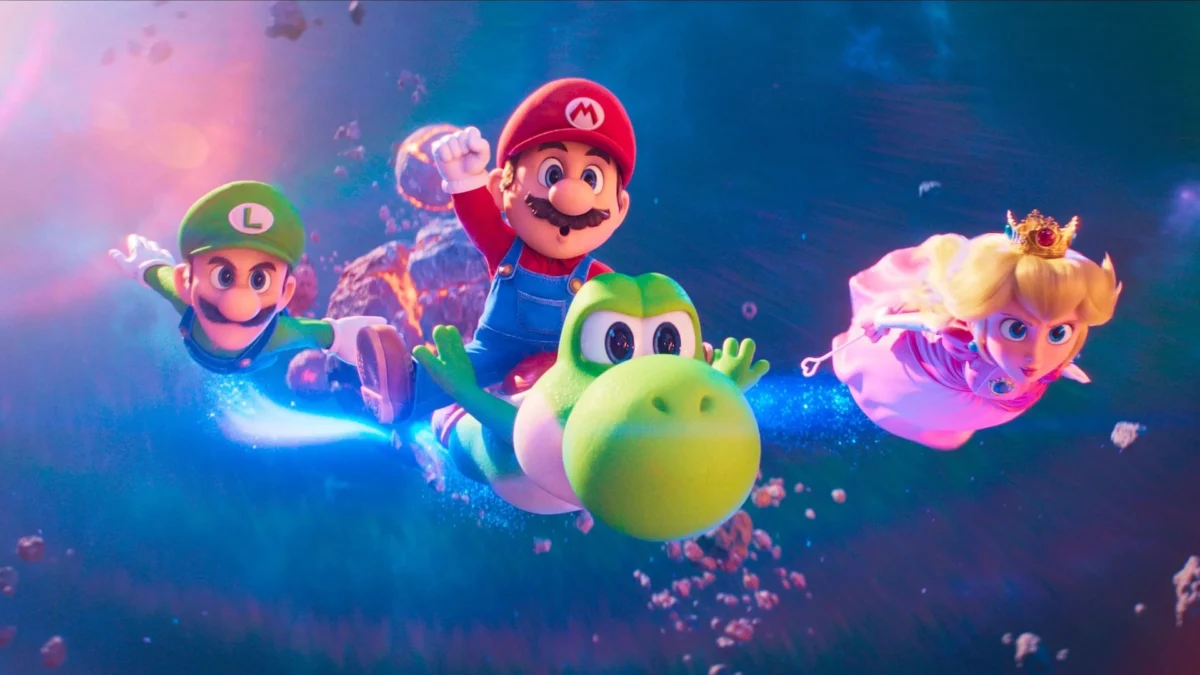
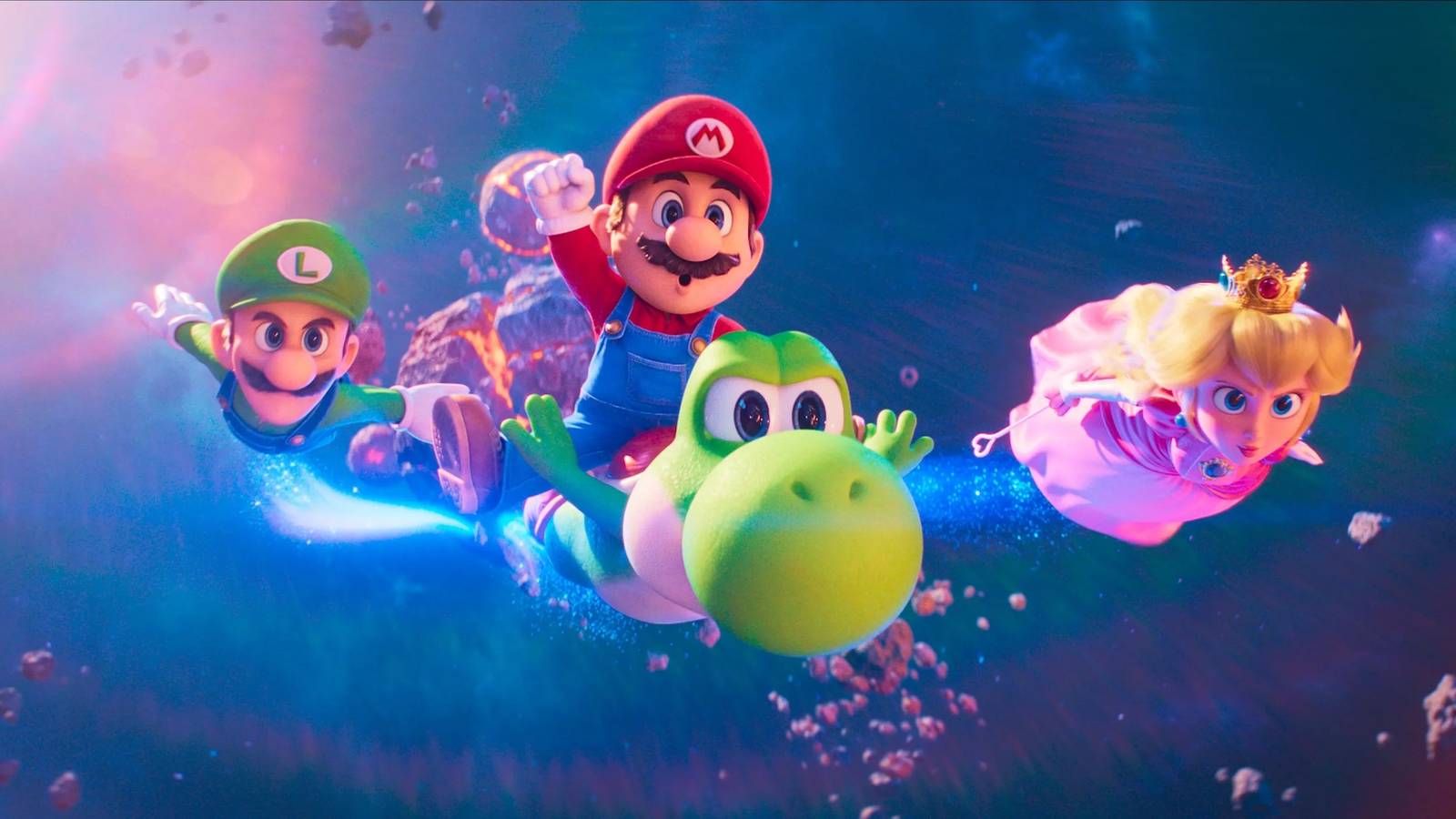
The cinematic universe of Nintendo continues to expand, with "The Super Mario Galaxy Movie" soaring to expected box office heights. Yet, amidst the fervent anticipation for a companion 3D Mario game that never materialized, an unexpected hero has emerged from the shadows: "Yoshi and the Mysterious Book." Released concurrently with the movie, this new Nintendo Switch 2 adventure, ostensibly a tie-in for Yoshi and Bowser Jr.’s big-screen debuts, quietly harbors a profound secret – a captivating, albeit subtle, ode to the beloved Super Mario Galaxy series, and indeed, to a legacy of cosmic exploration woven deep into Nintendo’s design DNA.
What initially appeared to be a curious synergy, perhaps even a missed opportunity for a Super Mario Galaxy 3, has revealed itself to be a fascinating journey through Nintendo’s storied past. "Yoshi and the Mysterious Book" not only provides a fresh platforming experience but also serves as a historical artifact, demonstrating how the company consistently iterates on its foundational ideas, allowing classic concepts to resurface and evolve in new, delightful ways. This latest Yoshi title, far from being a mere placeholder, stands as a testament to Nintendo’s enduring philosophy of interconnected design, culminating in an unexpected interstellar voyage that redefines its place in the broader Mario universe.
The Unexpected Cosmic Conclusion: Yoshi’s Galactic Detour
"Yoshi and the Mysterious Book" invites players into a vibrant world where the adorable green dinosaur’s primary objective is to meticulously study a diverse array of creatures inhabiting ten distinct biomes. The journey typically unfolds through charming, grounded landscapes, from lush forests to bustling towns, aligning with the whimsical, craft-like aesthetic often associated with the Yoshi series. However, the game takes a dramatic and exhilarating turn in its climactic final area, propelling Yoshi far beyond the familiar earthly bounds and into the vast expanse of outer space.
Here, on the desolate surface of the Moon, Yoshi’s mission shifts dramatically. Players find themselves navigating alien environments, encountering enigmatic UFOs, and contending with rapidly reproducing goo balls – a stark departure from the game’s preceding pastoral settings. This surprising cosmic conclusion is more than just a thematic change; it’s a deliberate and intricately designed homage to the Super Mario Galaxy series, subtly integrated into Yoshi’s unique 2D platforming mechanics.
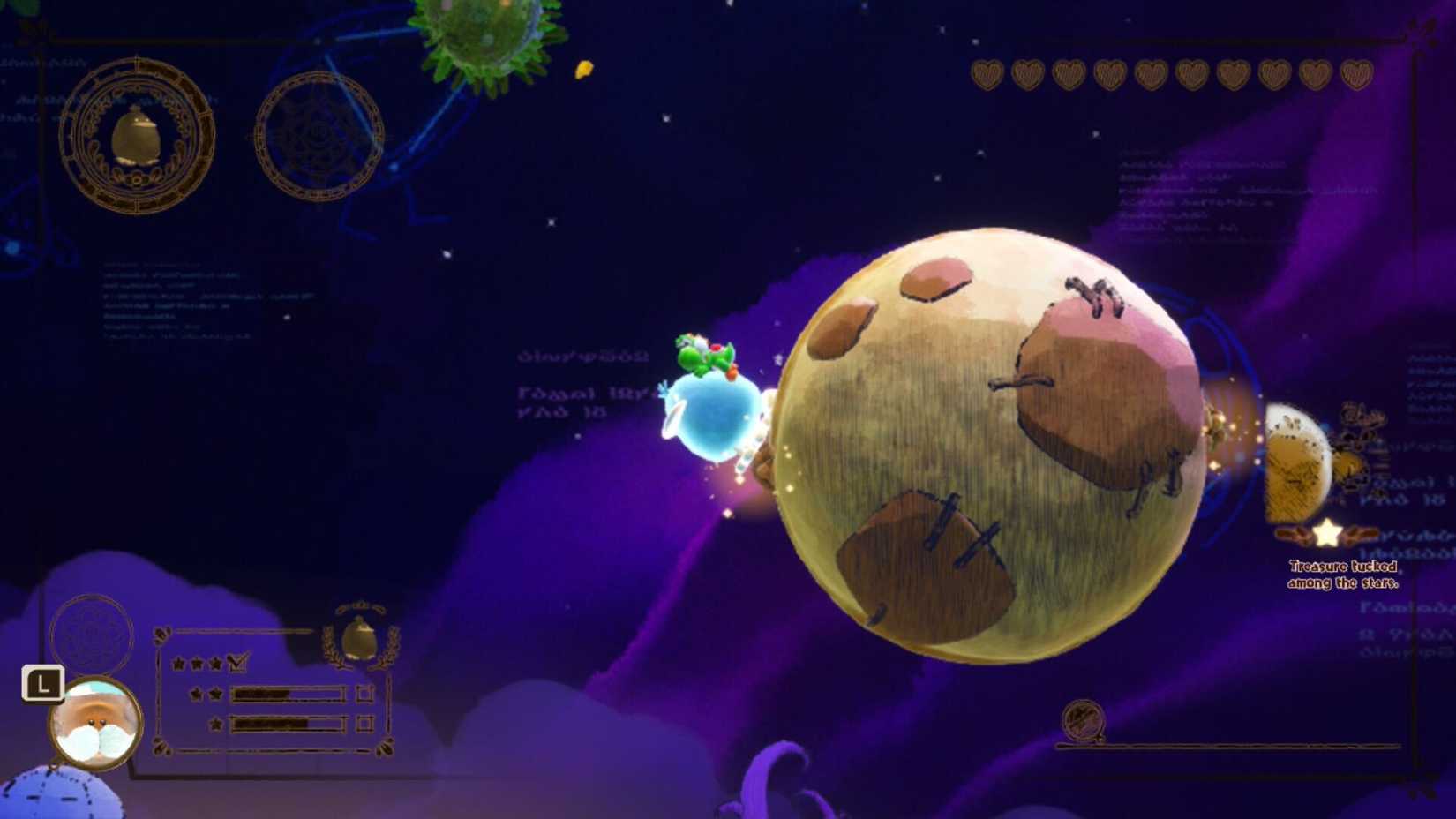
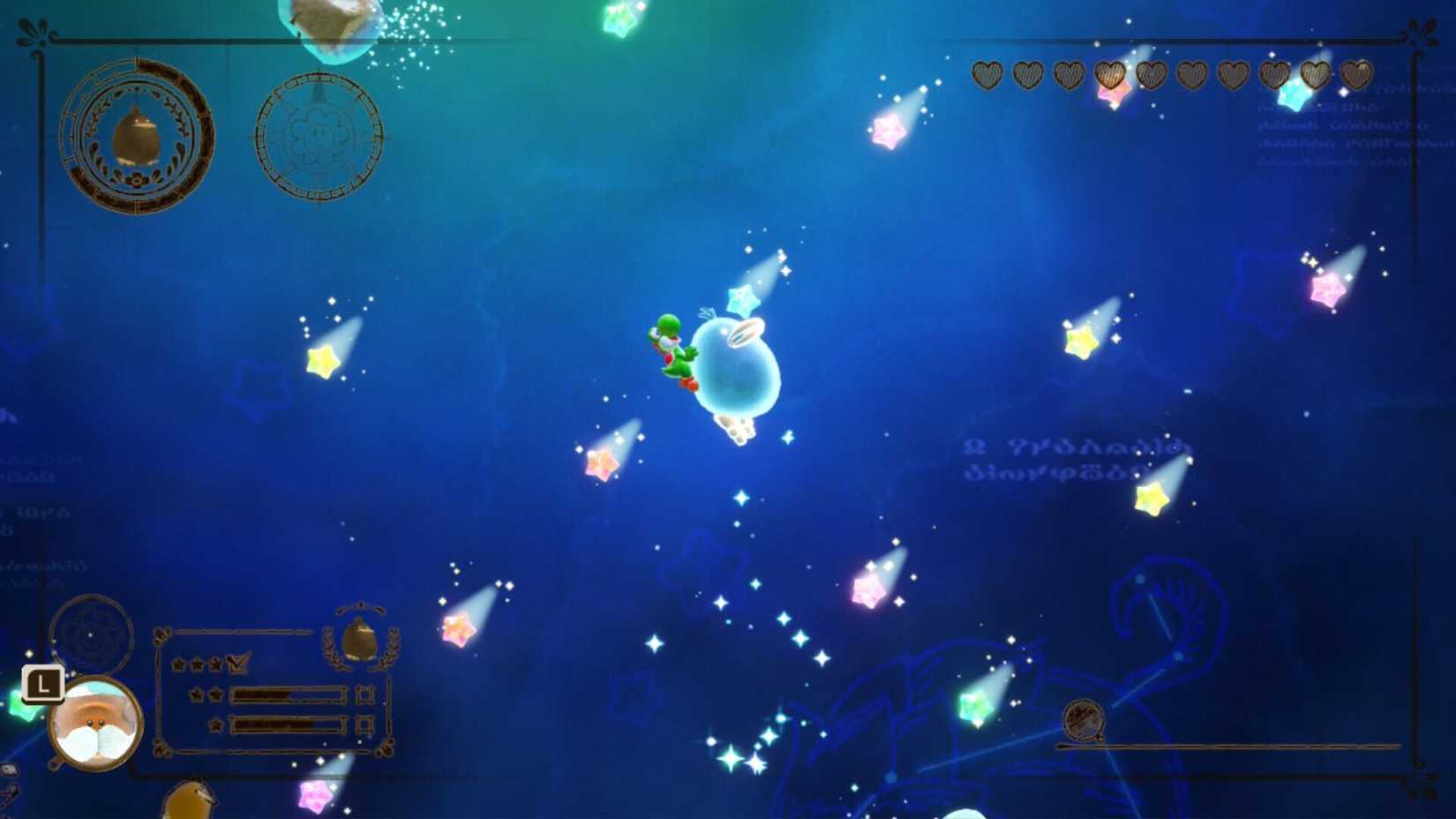
The heart of this galactic tribute lies within a specific level centered around Raphael the Raven, a character with his own deep roots in Yoshi lore. In this innovative sequence, Yoshi is tasked with platforming between miniature planets, deftly hopping in and out of their individual gravitational pulls using newfound cosmic powers. While the gameplay remains firmly within a 2D perspective, the visual and experiential cues are unmistakably Galaxy-esque. Players can observe Yoshi running across the curved surfaces of these small celestial bodies, mirroring the iconic spherical level design that defined Mario’s 3D space adventures. The homage deepens with the inclusion of Raphael the Raven’s ability to "gobble up Star Bits," the luminous, collectible gems synonymous with the Super Mario Galaxy games. This aesthetic and mechanical blend creates an immersive sensation, making players feel as though they are experiencing a 2D iteration of Galaxy, perhaps even traversing the enchanting pages of Rosalina’s cosmic storybooks.
This blend of classic Yoshi gameplay with overt Galaxy elements transforms the final biome into a vibrant nexus of Nintendo’s history, demonstrating a playful yet profound dialogue between different eras and franchises. It’s a testament to the developers’ understanding of their own legacy and their ability to weave intricate narrative and mechanical threads across their expansive universe.
A Chronology of Cosmic Concepts: From Game Boy to Switch 2
While "Yoshi and the Mysterious Book" offers a fresh perspective on gravity-defying planetary platforming, its cosmic journey is not an entirely novel concept within Nintendo’s extensive catalog. In fact, true Nintendo aficionados recognize that the Super Mario Galaxy games themselves drew significant inspiration from earlier titles, creating a fascinating lineage of space-themed mechanics. Understanding this chronology reveals the iterative genius at the heart of Nintendo’s game design.
The Genesis: Super Mario Land 2: 6 Golden Coins (1992)
The very first instance of a platformer in the Mario universe venturing into outer space dates back to 1992 with the release of Super Mario Land 2: 6 Golden Coins for the original Game Boy. This seminal title introduced a level aptly named "Space World," which ingeniously manipulated gravity, allowing Mario to perform significantly higher and floatier jumps than usual. While Mario wasn’t running around spherical planets as he would later, "Space World" was a groundbreaking experiment. It represented one of Nintendo’s earliest attempts to conceptualize and implement how platforming mechanics could be adapted and reinterpreted within a zero-gravity or low-gravity environment.
The limitations of the Game Boy’s hardware at the time meant that the scale and complexity of "Space World" were constrained, yet its innovative approach laid crucial groundwork. It demonstrated a willingness to break free from traditional terrestrial settings and explore the imaginative possibilities that space offered to the platforming genre. This early foray into the cosmos planted a seed that would blossom decades later.
The Blueprint: Super Mario World 2: Yoshi’s Island (1995)
Three years later, in 1995, Nintendo expanded on the concept of gravity-defying platforming with Super Mario World 2: Yoshi’s Island for the Super Nintendo Entertainment System (SNES). While often celebrated for its distinct crayon-art aesthetic and innovative gameplay featuring Baby Mario and Yoshi, Yoshi’s Island also contained a pivotal section in World 5 that directly foreshadowed the Super Mario Galaxy series.
In this memorable world, Yoshi is tasked with platforming his way between small, distinct planets, each possessing its own gravitational field. Players would observe Yoshi traversing these miniature celestial bodies, hopping from one gravitational sphere to another, demonstrating a remarkably sophisticated understanding of physics-based level design for a 2D game of its era. This "planetary platforming" culminated in an epic boss fight against Raphael the Raven, a recurring, somewhat obscure villain in the Yoshi series. To defeat Raphael, Yoshi had to strategically ground-pound stumps on the side of the planet opposite the raven, disrupting his balance and causing damage. This boss encounter was not merely a challenge; it was a masterclass in applying the game’s unique gravitational mechanics to a boss battle, making players truly feel like they were interacting with a small, spherical world.

Indeed, it is here that one can draw a direct and undeniable line from Yoshi’s Island to Super Mario Galaxy. The 2D planetary platforming and the Raphael the Raven boss fight in Yoshi’s Island provided the foundational conceptual framework upon which Super Mario Galaxy would later build its revolutionary 3D spin.
The Evolution: Super Mario Galaxy (2007) & Super Mario Galaxy 2 (2010)
When Super Mario Galaxy launched on the Nintendo Wii in 2007, it redefined 3D platforming with its innovative spherical level design and seamless transitions between planets. While widely acclaimed for pioneering this gravity-defying gameplay, it’s clear that the game wasn’t conjuring these ideas from thin air. Instead, it was brilliantly riffing on the groundwork laid by Yoshi’s Island more than a decade prior. The Wii’s motion controls and 3D capabilities allowed Nintendo to fully realize the potential of running around small planets, an idea previously constrained by 2D perspectives.
The connections became even more explicit in Super Mario Galaxy 2 (2010) with the introduction of the Digga-Leg boss fight. This particular encounter is functionally a direct remake of the Raphael the Raven battle from Yoshi’s Island. Players must navigate around a spherical planet, ground-pounding specific points to damage the boss, echoing the mechanics and strategy employed against Raphael. This direct callback served as a subtle nod to the game’s predecessors, affirming the deep historical roots of its core mechanics. Thus, the enduring legacy of Super Mario Galaxy‘s innovative design owes a significant debt to the pioneering spirit of Yoshi.
The Full Circle: Yoshi and the Mysterious Book (2026)
Now, with "Yoshi and the Mysterious Book" in 2026, the cosmic journey comes full circle. The game not only pays homage to Super Mario Galaxy with its space-themed final world and Star Bit collection but also re-embraces the very 2D planetary platforming that Yoshi’s Island introduced. It’s a modern interpretation, leveraging the capabilities of the Switch 2 while celebrating a design philosophy that has been refined over three decades. This return to form for Yoshi, now with the added aesthetic and mechanical flourishes of Galaxy, serves as a powerful reminder of how Nintendo’s past continues to inform its present and shape its future.
Supporting Data and Nintendo’s Iterative Design Philosophy
The context surrounding the release of "Yoshi and the Mysterious Book" provides additional layers to this fascinating narrative. The initial absence of a dedicated 3D Mario game to accompany "The Super Mario Galaxy Movie" was perplexing to many fans and industry observers. Given the movie’s guaranteed success, a Super Mario Galaxy 3 or a similar title would have been a logical and highly profitable companion. Instead, Nintendo opted for Yoshi and the Mysterious Book, a title that, while charming, operates on a smaller scale than a flagship 3D Mario release.
This decision, however, can be viewed through the lens of Nintendo’s long-standing, somewhat understated, design philosophy: an almost organic process of iteration, experimentation, and cross-pollination of ideas across its franchises. Rather than directly commenting on the lack of a Galaxy 3, Nintendo implicitly offers its "official response" through the very design of Yoshi and the Mysterious Book. It suggests that new games, even those featuring secondary characters, can serve as fertile ground for re-exploring, refining, or even foreshadowing mechanics that might later appear in larger, more prominent titles.
This approach is not isolated to the Mario and Yoshi series. Nintendo’s history is replete with examples of concepts or "one-off gimmicks" from older games resurfacing in unexpected ways in completely unrelated series. A notable example is a boss fight in Splatoon 3, which discerning players recognized as taking clear mechanical and structural notes from Super Mario Sunshine‘s challenging level designs. Similarly, elements of The Legend of Zelda‘s expansive world design and puzzle-solving ethos can be traced back through decades of titles, constantly evolving while retaining a core identity.
This iterative design process underscores a crucial aspect of Nintendo’s development strategy: a deep institutional memory coupled with a relentless drive for innovation. Ideas are rarely discarded; instead, they are cataloged, re-contextualized, and often reimagined through different gameplay lenses or across varying hardware generations. This internal "design conversation" plays out over decades, rewarding loyal players who have witnessed the evolution of these concepts over their lifetime. It also allows Nintendo to experiment with new technologies or gameplay styles in less high-stakes projects, potentially paving the way for future flagship titles.
"Yoshi and the Mysterious Book" itself is a prime example of this ethos. It reflects elements from every prior Yoshi game, from its distinctive art style to its unique platforming challenges. Furthermore, it subtly incorporates the foundational principles of the original Super Mario Bros. – precise controls, clear objectives, and the joy of discovering hidden secrets – adapting them for a modern audience. When the game finally takes players to space, it’s not just a change of scenery; it’s a meticulously crafted tour through over three decades of Nintendo’s imaginative history, demonstrating how seemingly disparate games are, in fact, deeply interconnected by a shared lineage of creative design.
Implications for Players, Developers, and Nintendo’s Future
The intricate connections between "Yoshi and the Mysterious Book," Super Mario Galaxy, Yoshi’s Island, and Super Mario Land 2 carry significant implications for various stakeholders within the gaming ecosystem.
For players, particularly long-time Nintendo fans, this deep intertextuality adds a profound layer of enjoyment and appreciation. Discovering these historical threads and recognizing the evolution of design concepts creates a rewarding sense of continuity and mastery. It transforms each new release into a potential treasure hunt for subtle nods and profound influences, enriching the overall gaming experience. It reinforces the idea that Nintendo games are not isolated products but rather chapters in an ongoing, interconnected narrative of creative development. This encourages long-term engagement and fosters a unique bond between the player and the brand.
For game developers, Nintendo’s approach offers a masterclass in iterative design. It demonstrates that innovation doesn’t always require inventing entirely new mechanics from scratch. Instead, it can involve skillfully re-imagining existing ideas, adapting them to new contexts, genres, or hardware capabilities. This process highlights the value of maintaining a rich library of design concepts and the importance of fostering a development culture that encourages revisiting and refining past successes. It teaches that "new" can often mean "familiar, but brilliantly executed in a fresh way," a lesson crucial for navigating an increasingly saturated industry.
For Nintendo’s brand, this consistent practice of honoring and evolving its legacy reinforces its unique identity in the global market. It showcases Nintendo not merely as a company that creates popular games, but as a cultural institution with a deep respect for its own history and a commitment to nurturing its creative heritage. This approach contributes to the perception of "Nintendo magic" – a blend of nostalgic charm and innovative brilliance that keeps players coming back for more. It also provides a strategic advantage, allowing the company to leverage established intellectual property in new ways, keeping franchises fresh and relevant across generations without resorting to mere rehashes.
Looking to the future, the release of "Yoshi and the Mysterious Book" with its hidden Galaxy homage could hint at several possibilities. It might serve as a subtle testing ground for mechanics or aesthetics that could be integrated into a future, more ambitious 3D Mario title. It also suggests that Nintendo will continue to surprise players by weaving complex design histories into seemingly straightforward games, ensuring that every release, no matter how minor, holds the potential for unexpected depth and discovery.
In a gaming landscape often dominated by rapid cycles of sequels and remakes, Nintendo’s patient, iterative approach stands out. "Yoshi and the Mysterious Book" is more than just a charming platformer; it’s a vibrant illustration of Nintendo’s commitment to a living, breathing design philosophy, where ideas from decades past are never truly forgotten, but rather nurtured and given new life. Far out, man, indeed.











No comments yet. Be the first to join the conversation!