

For years, the agency model for competitive intelligence has suffered from a terminal flaw: the "latency gap." Social media managers spend hours meticulously tracking competitor activity, scraping data, and drafting lengthy reports, only to watch those insights grow stale while waiting for internal approval and manual scheduling. By the time a post is ready, the trending conversation has often shifted, turning a strategic opportunity into a missed connection.
However, a new paradigm is emerging. By integrating Claude with Model Context Protocol (MCP) servers—specifically those bridging the gap between data scraping and social media management—agencies are collapsing a three-hour manual research process into a 45-minute, high-velocity workflow. This transition represents a shift from "research-heavy" operations to "execution-first" intelligence.
The Bottleneck: Why Competitive Analysis Stagnates
The primary challenge in agency workflows isn’t a lack of information; it is the friction between identification and implementation. In a traditional setup, the workflow looks like this:
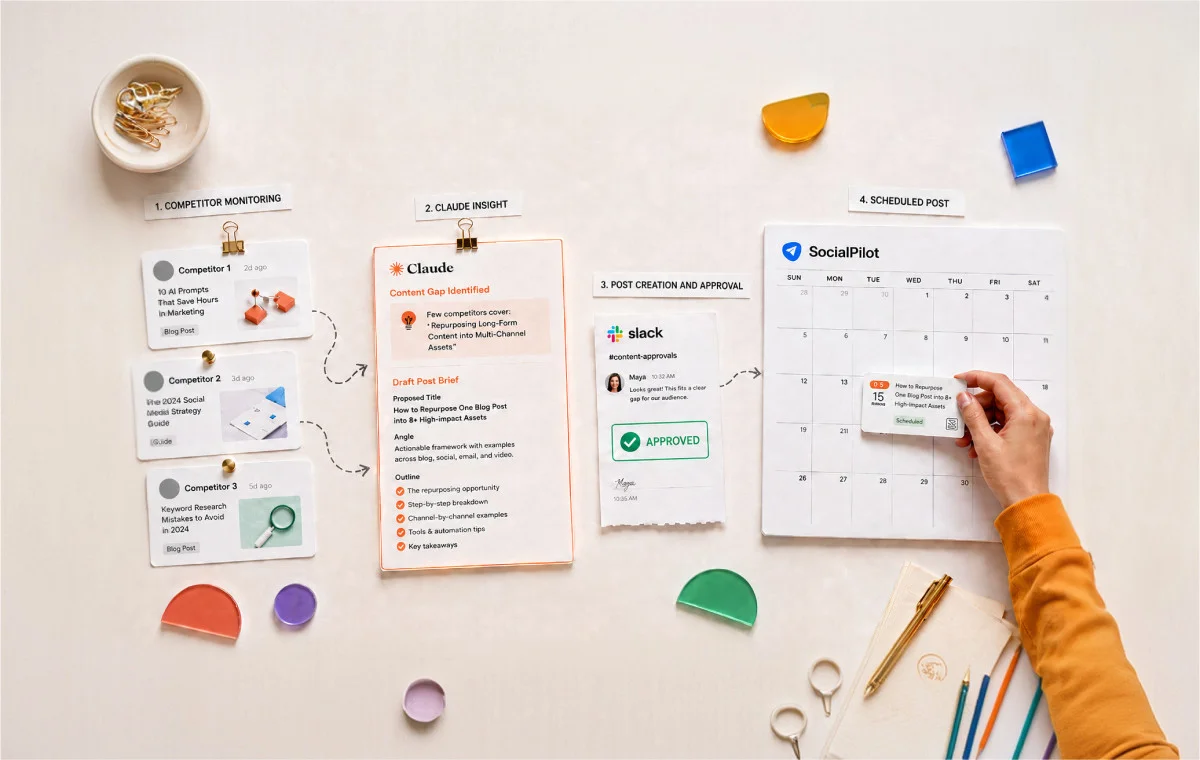
- Manual Extraction: Pulling data from three to five platforms across multiple competitors.
- Analysis: Formatting that data into a document that is often ignored by stakeholders.
- Drafting: Creating a brief and then a post based on that analysis.
- Context Switching: Moving from a research tool to a spreadsheet, then to a word processor, and finally to a publishing platform.
When an agency manages ten or twenty clients, this process breaks. The sheer cognitive load of managing different brand voices, posting cadences, and audience nuances forces most agencies to settle for quarterly audits. Unfortunately, quarterly data is rarely actionable in the hyper-fast world of social media, where trends often have a shelf life of mere days.
The Connected Workflow: A New Economic Model
A connected workflow, powered by MCP integrations, fundamentally changes the economics of agency work. By centralizing competitor monitoring, gap identification, brief generation, and final scheduling within a single Claude conversation, agencies can dramatically scale their output without increasing headcount.
The math is compelling: a task that historically required three hours of labor per client per quarter can now be executed in 45 minutes per week. The end product is no longer a PDF report gathering dust in a folder; it is a live, scheduled post in a queue.
The Architecture: Three MCPs, One Command
The system relies on three specific MCP integrations that allow Claude to interface directly with the agency’s tech stack:
- Apify MCP: This serves as the data collection layer. It enables Claude to trigger scrapers for Instagram, LinkedIn, or TikTok in real-time, pulling raw data—captions, format types, and engagement metrics—directly into the chat.
- SocialPilot MCP: This acts as the publishing and content layer. It allows Claude to "read" what a client has already posted to prevent redundant content, and ultimately, to push approved drafts directly into the client’s publishing queue.
- Slack MCP: This provides the team communication layer, facilitating seamless collaboration. When a gap is identified, Claude can draft the content and push it to a client-specific Slack channel for instant approval.
Chronology of an Automated Workflow
To implement this system, agencies follow a structured two-phase process that turns raw competitor noise into strategic content.
Phase 1: From Competitor Feeds to Gap Brief
The process begins with a one-time onboarding setup where the agency provides Claude with the client’s "brand DNA"—including voice guidelines, target audience profiles, and content pillars. Once established, the workflow proceeds:
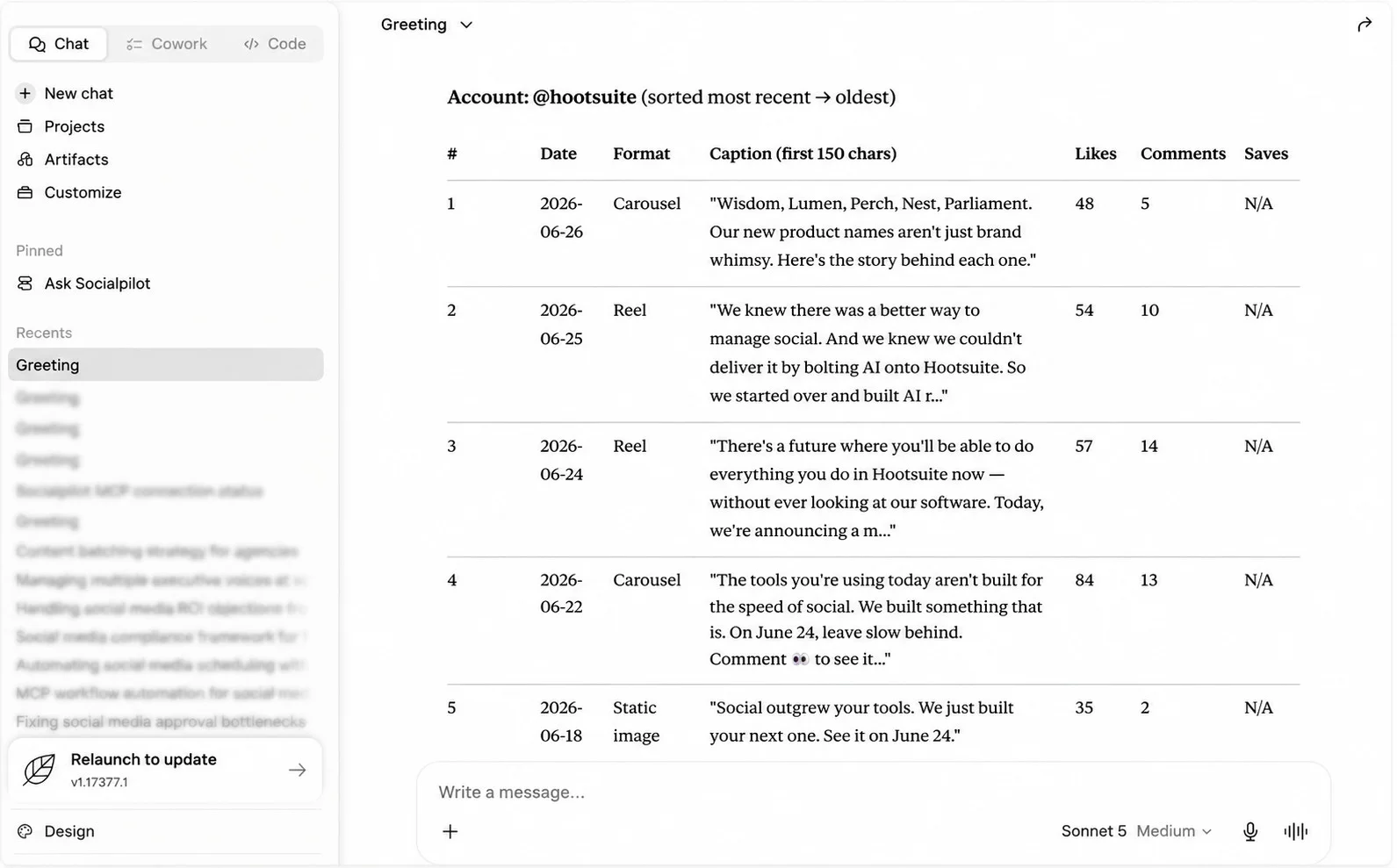
- Data Retrieval: Claude calls the Apify MCP to pull the 15 most recent posts from specified competitor handles.
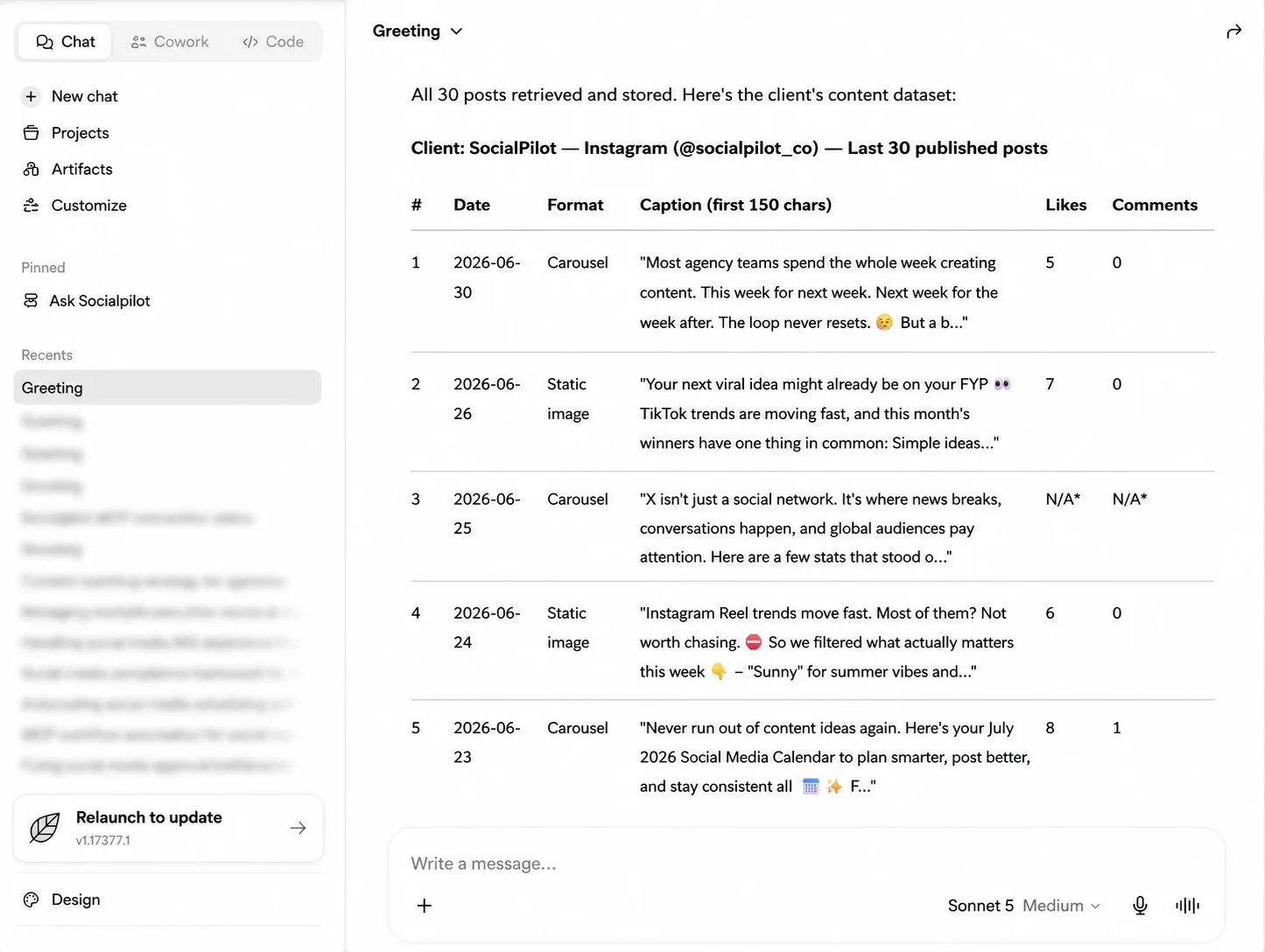
- Contextual Analysis: Claude then uses the SocialPilot MCP to ingest the client’s last 30 posts, ensuring that any "gap" identified is genuinely fresh and relevant.
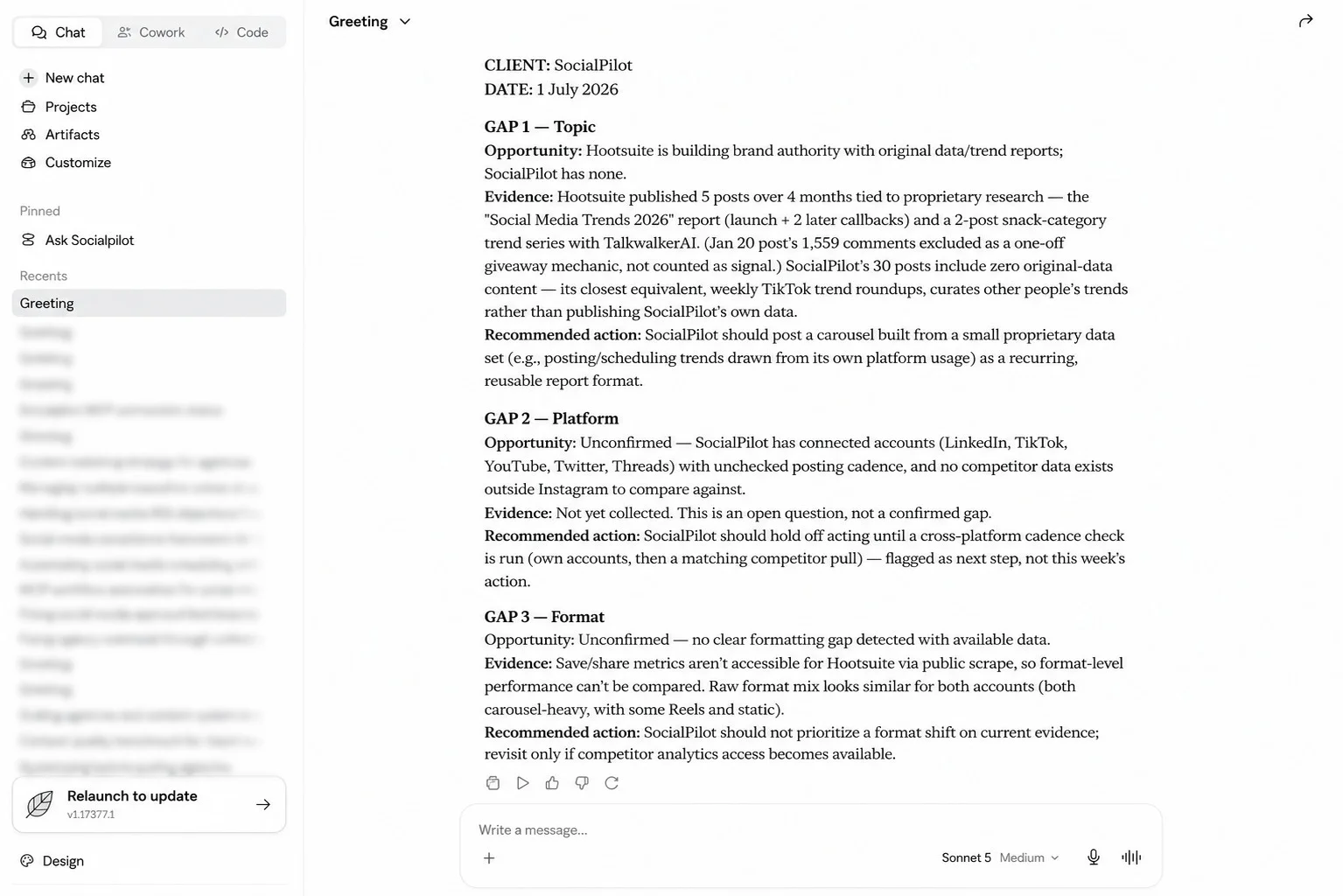
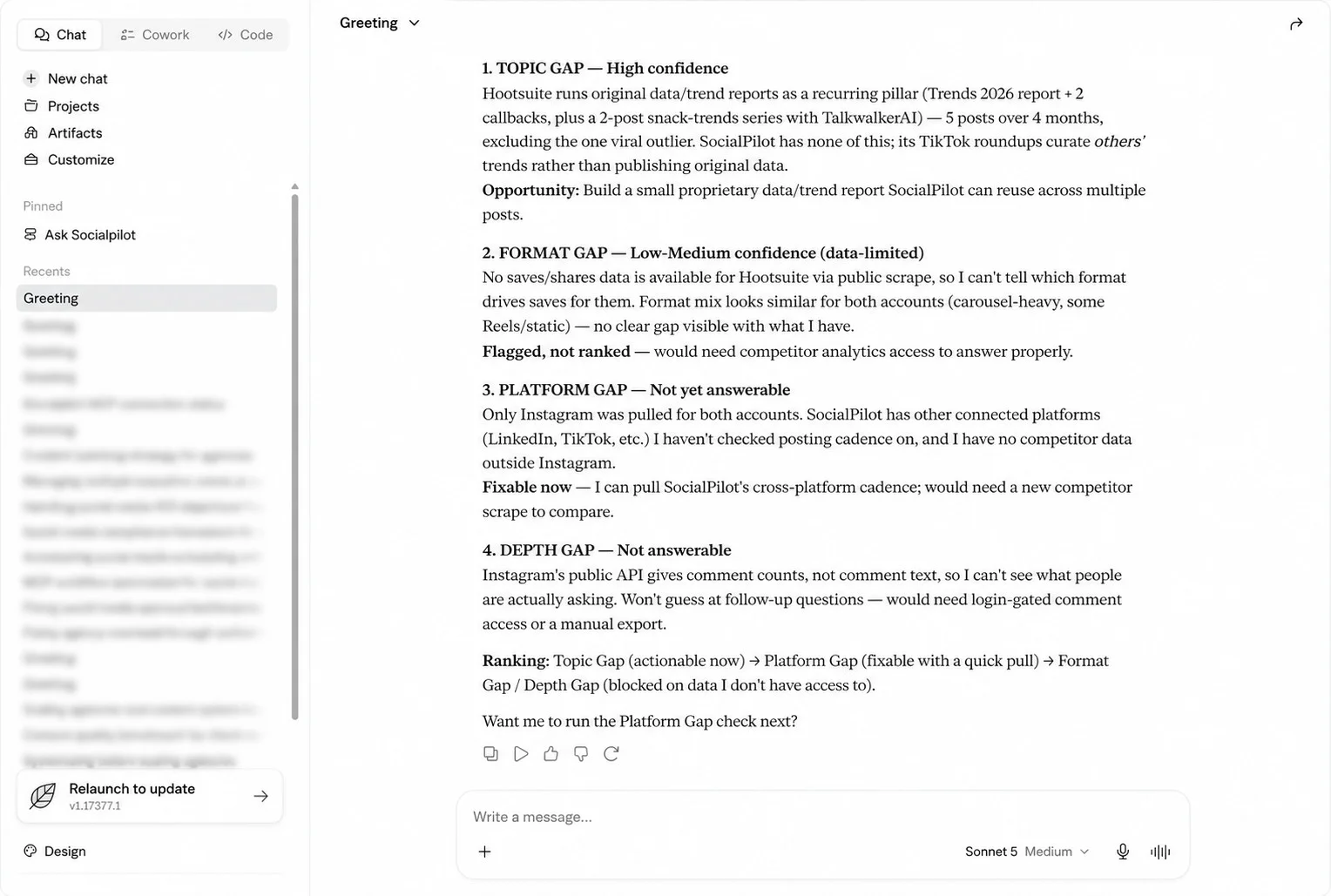
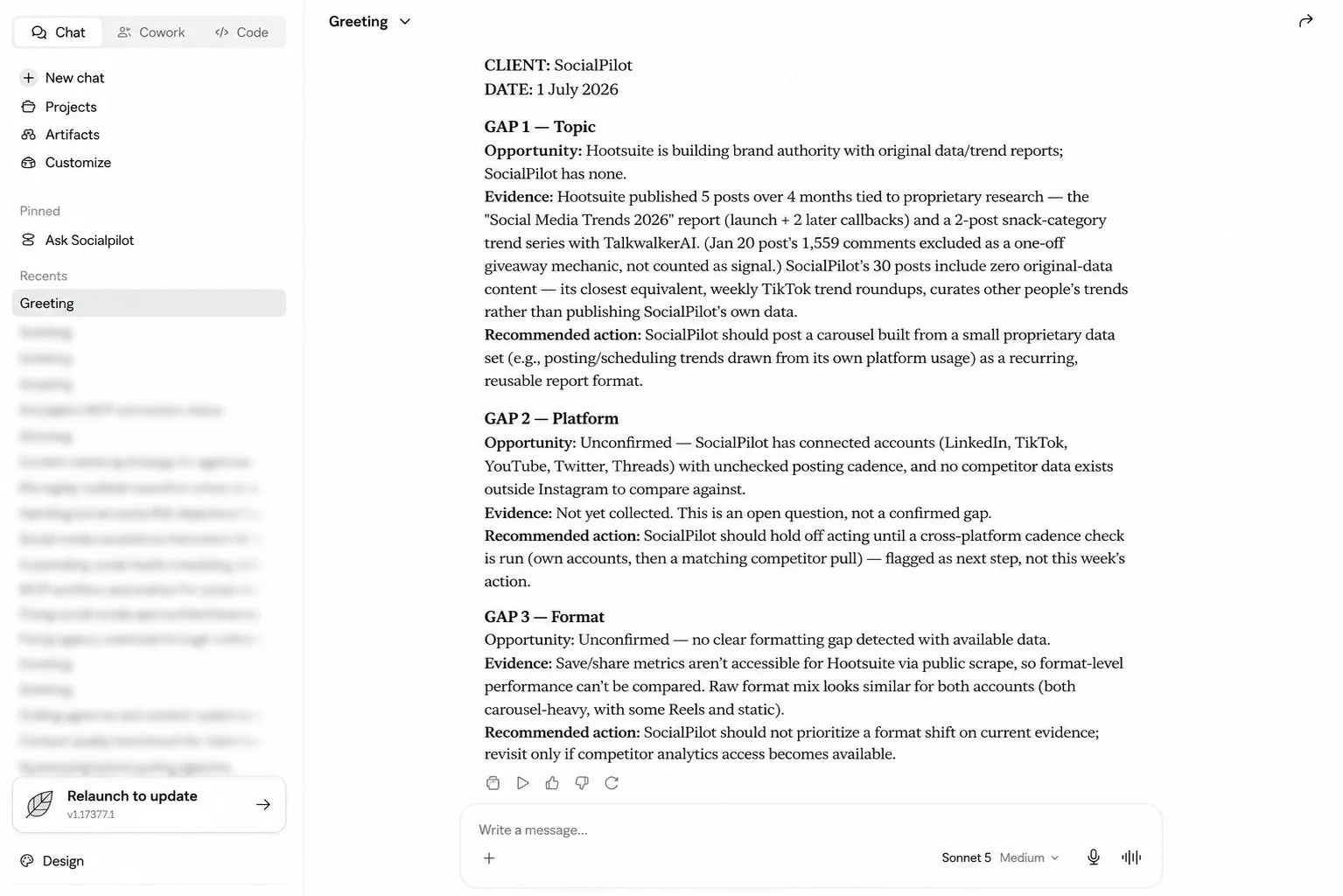
- Gap Identification: Claude evaluates the datasets across four dimensions:
- Topic Gaps: What are competitors talking about that the client is ignoring?
- Format Gaps: Are competitors finding success with Reels or Carousels where the client is only using static images?
- Platform Gaps: Is there an underserved audience on a specific network?
- Depth Gaps: Where are competitors providing surface-level answers that the audience is clearly hungry to learn more about?
Phase 2: From Brief to Scheduled Post
Once the brief is generated, the human element takes control. The social media manager reviews the ranked opportunities and selects the most promising one. Upon selection, the process shifts to execution:
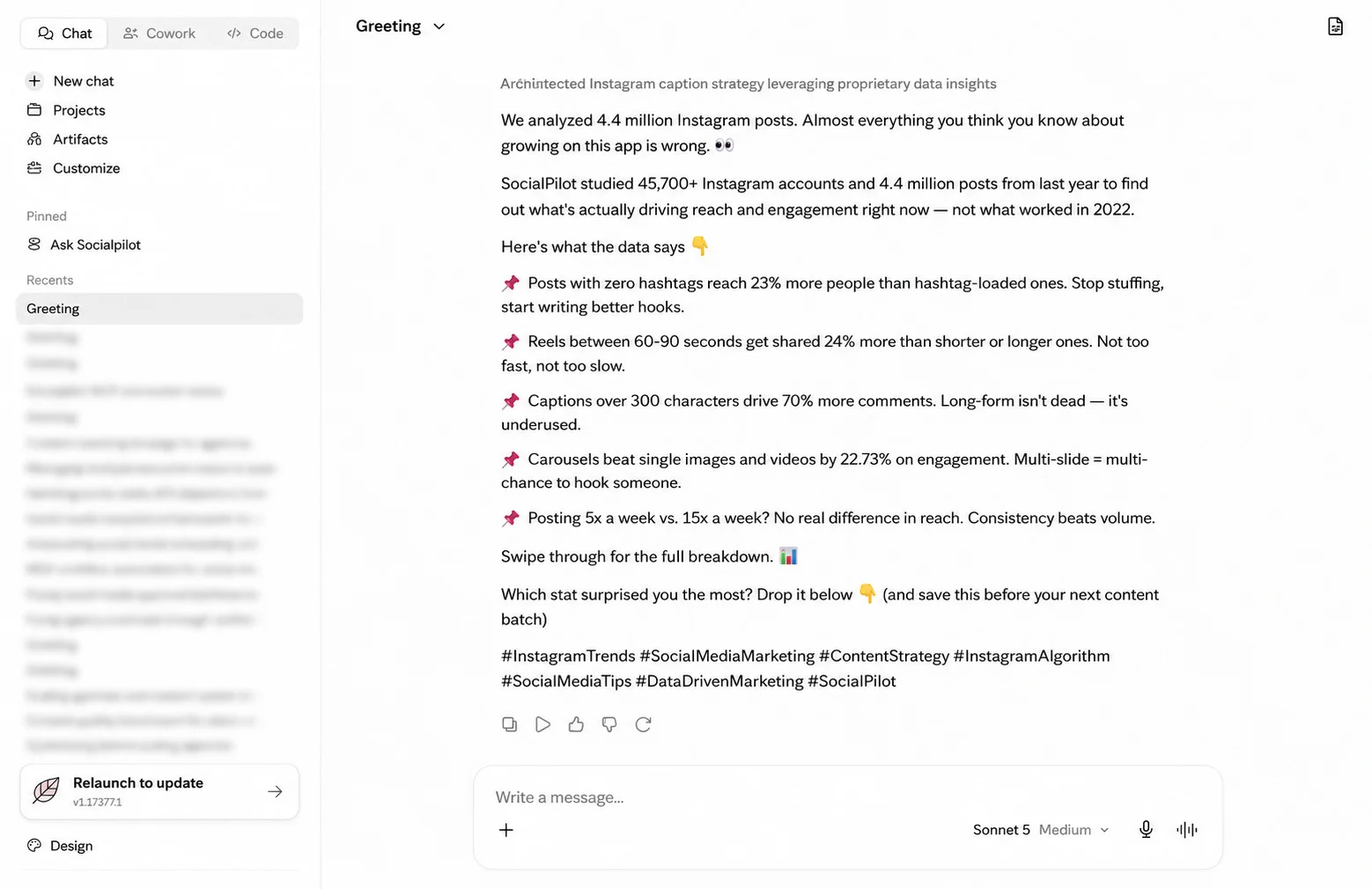
- Drafting: The manager prompts Claude to draft the content using the specific brand voice and format requested.
- Approval: The draft is routed to Slack for client feedback.
- Scheduling: Once approved, a final prompt triggers the SocialPilot MCP to schedule the post, effectively closing the loop from research to output in under 20 minutes.
Supporting Data and Evidence
Agencies that have adopted this model report a significant increase in content velocity. The key metric of success here is the "Time-to-Queue" interval. By eliminating manual file transfers and context switching, teams save an average of 135 minutes per client every week.
Furthermore, because the system relies on real-time data scraping rather than stagnant monthly reports, the content produced is significantly more relevant. Engagement data shows that content addressing "Depth Gaps"—specifically answering recurring questions found in competitor comment sections—outperforms generic, pre-planned content by an average of 22% in terms of shares and saves.
Implications for Agency Operations
The transition to an MCP-integrated workflow has profound implications for the future of agency work.
1. Scaling Without Headcount
For many agencies, the limit to growth is the "service-to-staff" ratio. By automating the mechanical aspects of research and scheduling, agencies can handle larger client rosters without the immediate need to hire more account managers.
2. From "Service Provider" to "Strategic Partner"
When agency staff are no longer bogged down in the minutiae of manual data entry and formatting, they can redirect their energy toward higher-level strategy. Instead of spending their week "doing research," they are spending their week "making decisions."
3. Creating Reusable Skills
The true power of this system lies in the ability to package these workflows as "Skills." By saving the entire logic—from the Apify scrape to the SocialPilot scheduling—as a reusable command (e.g., /competitor-gap [client-name]), agencies can ensure consistent quality across all accounts. This standardization reduces the risk of human error and ensures that every client receives the same rigorous level of competitive monitoring.
Official Perspective: The Human-in-the-Loop Advantage
While the system is highly automated, proponents of this workflow are quick to emphasize that it is not "AI-autonomous." The agency retains full editorial control. Claude handles the extraction, synthesis, and technical implementation, but the "Agency Decision Point"—the choice of which gap to exploit and the final sign-off on tone—remains firmly in human hands.
As the digital landscape becomes more crowded, the ability to act on intelligence with speed and precision will define the winners. The agencies that successfully adopt this connected workflow aren’t just working faster; they are operating with a level of agility that was previously impossible.
For agencies looking to start, the path is clear: connect the MCP servers, standardize the onboarding prompts, and move the competitive intelligence process into a single, living conversation. The gap between your client’s current strategy and their market potential is waiting to be filled—and it can be done before the week is out.











