

In the modern fitness landscape, a gym’s social media presence is often a digital façade. A quick scroll through the Instagram feeds of local fitness studios reveals a consistent pattern: high-production-value workout montages, inspirational quotes, and images of smiling members. Yet, behind the scenes, many gym owners are staring at a stagnation of trial sign-ups. The "content calendar" is active, the Reels are trending, and the engagement metrics look healthy on paper. But as Chris Cooper of Two-Brain Business succinctly puts it, "Likes do not pay the rent for a gym."
The disconnect between digital popularity and physical membership growth is the industry’s best-kept secret. For gym owners and the agencies that represent them, the challenge is not a lack of effort; it is a lack of structural conversion.
The Structural Failure: Why Your Content Isn’t Selling
For many years, the standard advice for gym social media was "brand awareness." However, brand awareness is a luxury that only massive franchises can afford to prioritize. For the local box, the HIIT studio, or the private training facility, social media must function as a direct-response funnel.
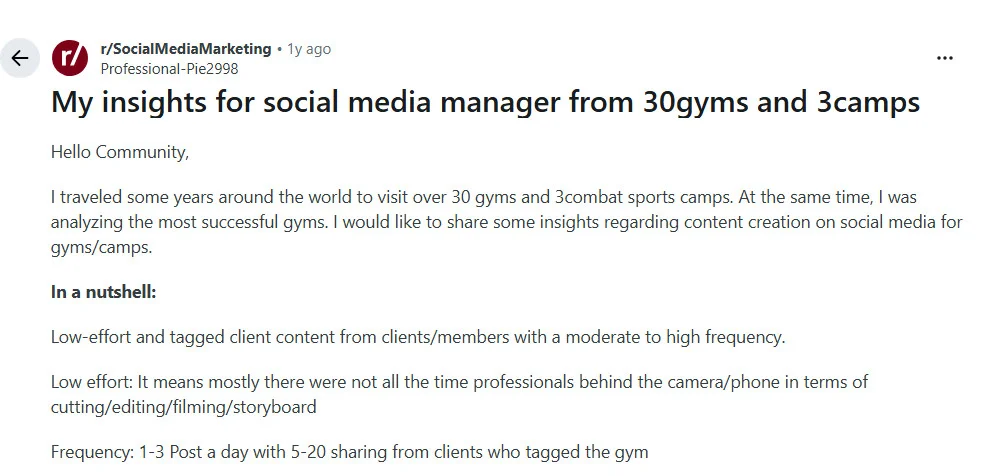
Recent data discussions on platforms like r/SocialMediaMarketing highlight a recurring trend: SMMs (Social Media Managers) are reporting high engagement rates but near-zero membership attribution. This usually stems from two failure modes:
- The "In-Group" Bias: Most gyms produce content exclusively for their current members. Shoutouts for "Member of the Month" or inside jokes from a morning class build retention, but they do nothing to entice a stranger. If a piece of content is only intelligible to those already walking through your doors, it is failing as an acquisition tool.
- The Absence of a Mechanism: A post without a clearly defined path to conversion—a booking link, a DM prompt, or an explicit offer—is merely an advertisement for the idea of fitness, not for your specific gym.
The Anatomy of a Conversion-Focused Funnel
To move from "brand awareness" to "lead generation," gym owners must treat every platform as a unique cog in a larger machine.
1. Instagram: The Digital Front Door
Instagram is where the prospective member validates your gym before deciding to walk through the door. It serves as your social proof hub.

- Reels: These are your primary discovery engine. Unlike feed posts, the Instagram Reel algorithm pushes content to non-followers based on interests and location. A well-executed 30-second reel showing a class in motion provides an immediate sensory experience that static images cannot match.
- Stories: This is your retention engine. Use Stories to humanize the brand with behind-the-scenes glimpses, class schedule reminders, and daily community updates.
- The Conversion Test: Every post should pass the "non-member test." If a stranger watches your reel, do they know exactly how to book a trial? Your CTA (Call to Action) must be specific: "Book your free trial via the link in our bio" is significantly more effective than "Check us out."
2. TikTok: The Organic Discovery Engine
TikTok operates on a fundamentally different premise: the algorithm prioritizes interest over social graphs. A small, local gym can reach thousands of people in its specific city without spending a cent on ads.
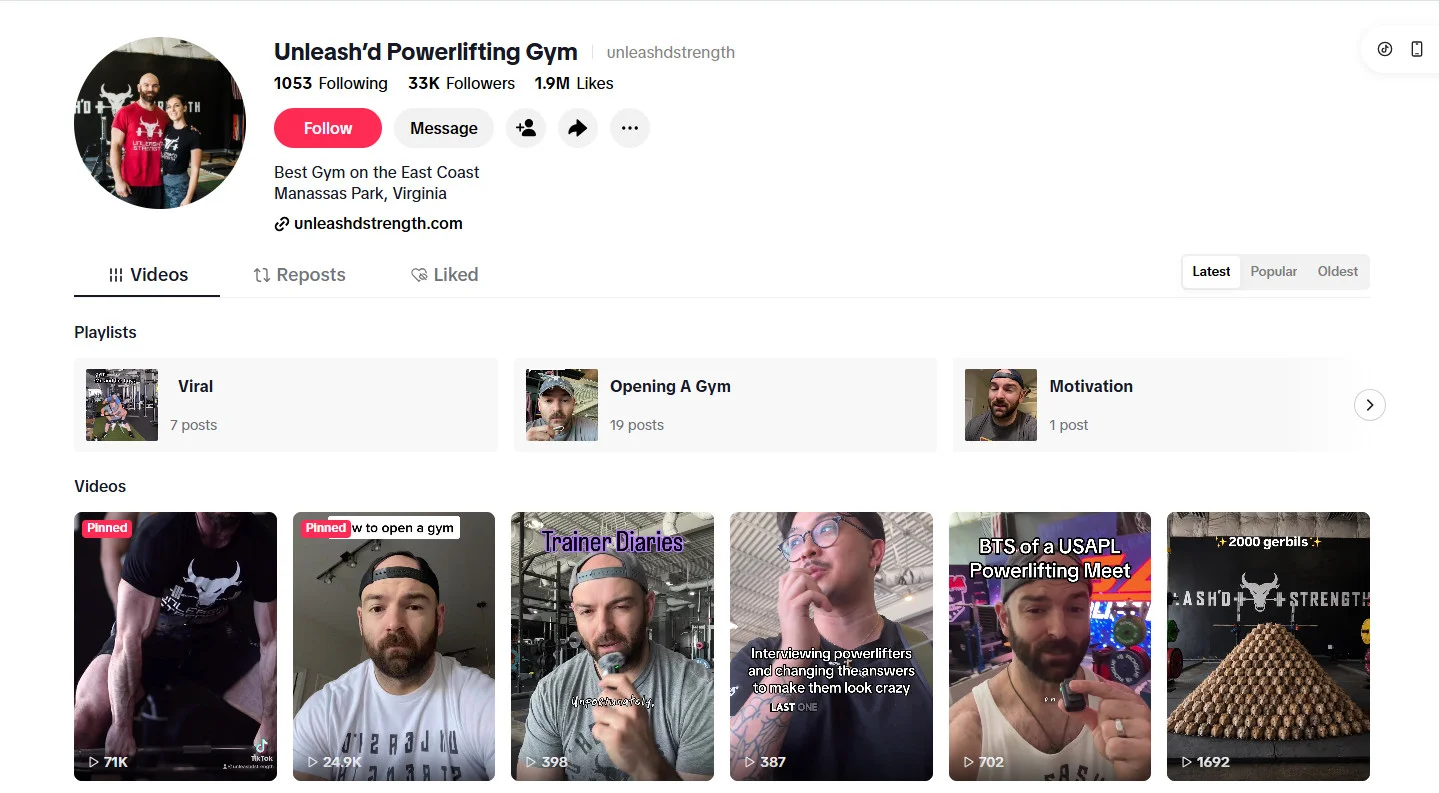
- The Power of Authenticity: On TikTok, polish is the enemy. The most successful gyms are those that show unscripted trainer reactions, the "ugly" reality of a heavy lifting session, or humorous, relatable moments on the gym floor.
- Strategic Limitation: If your gym serves a demographic aged 40+, your time is better spent on Facebook. TikTok’s primary user base is younger, making it the perfect playground for CrossFit boxes, boutique studios, and high-intensity facilities.
3. Facebook: Community and Paid Local Acquisition
Facebook remains the dominant platform for the 35+ demographic, which often holds the highest lifetime value for gyms.

- Private Groups: Creating a members-only group builds a "retention moat." When members feel part of a digital community, they are less likely to cancel their membership.
- Paid Ads: Facebook’s radius-based targeting is unparalleled for local businesses. By running ads to a 5-mile radius with a compelling trial offer, gyms can convert local residents who are already searching for fitness solutions.
The Content Matrix: A Weekly Workflow
Content burnout is the primary reason most gyms abandon their social media strategies. The solution is a 90-minute weekly batch-session. By dedicating one block of time to film, write, and schedule, owners can maintain a consistent presence without sacrificing their daily operations.
| Content Type | Purpose | Frequency | Example CTA |
|---|---|---|---|
| Conversion | Generate leads | 1x Weekly | "3 spots left in our 6-week challenge. DM us ‘START’ to claim." |
| Connection | Build trust | 1x Weekly | "Meet Coach Sarah—book a session with her at the link in bio." |
| Value | Educate | 1x Weekly | "3 tips to fix your squat form today." |
The "Five-Minute" Rule: Why Speed Matters
A landmark study from MIT regarding Lead Response Management revealed a staggering truth: leads contacted within five minutes are 100 times more likely to be reached than those contacted after 30 minutes.

For a busy gym owner coaching back-to-back sessions, this is a significant logistical hurdle. This is why centralized tools—such as a unified Social Media Inbox—are critical. By aggregating comments and DMs from Facebook, Instagram, and TikTok into a single dashboard, gym owners ensure that no lead is left in the "unread" pile for hours.
Implications for the Future
The evolution of gym marketing is shifting away from "vanity metrics" like follower counts toward "integrity metrics" like DM inquiries and trial bookings.

Gym owners must realize that social media is not a broadcast channel; it is a conversation. When a prospect engages with a post, they are signaling interest. If that signal is not met with a frictionless, immediate response, the prospect will simply scroll to the next gym.
The Takeaway:
If your gym is under 300 members, you do not need a complex marketing agency or a multi-platform content strategy. You need a disciplined system:

- Pin a clear trial offer to the top of your profiles.
- Post three times a week, alternating between conversion, connection, and value.
- Respond to every DM within five minutes.
- Batch your content creation to prevent burnout.
Success in digital marketing for fitness is not about becoming a content creator; it is about becoming a better communicator. By aligning your social strategy with your business goals, you move away from the noise of the algorithm and toward the reality of a growing, thriving gym community.










