Nana Wu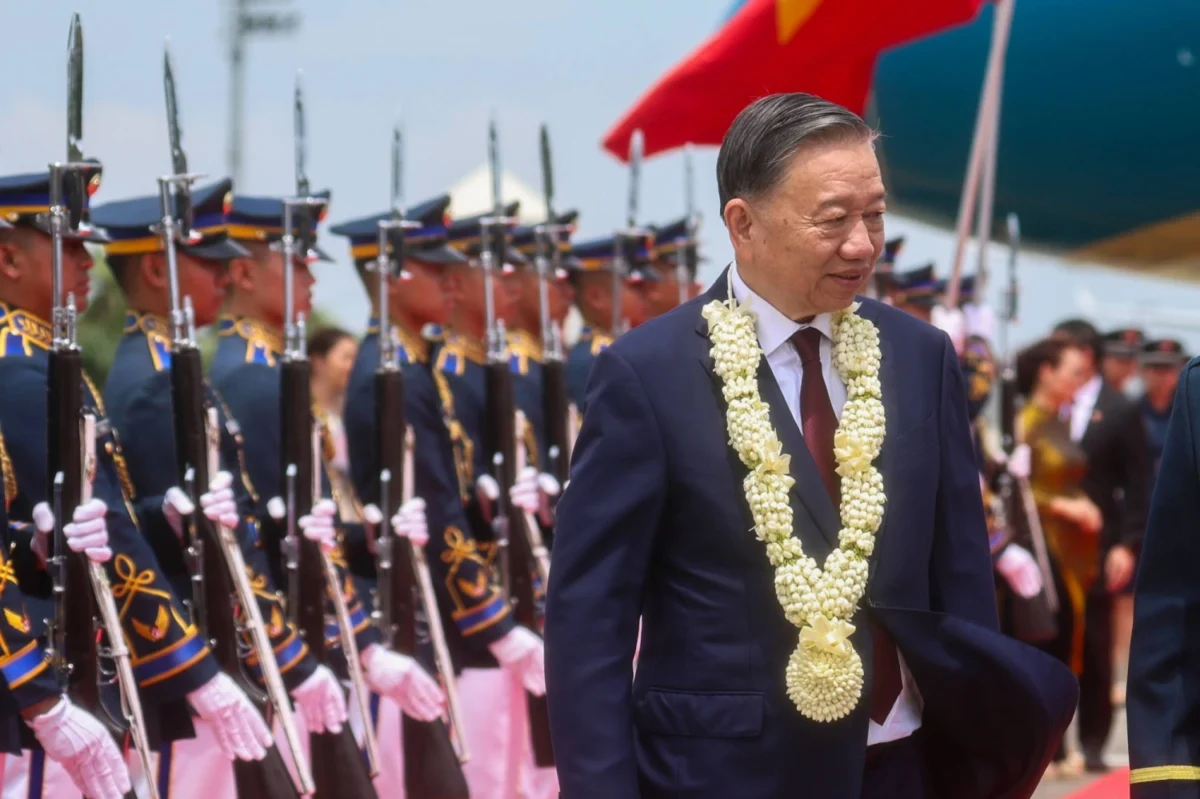
By International Affairs Desk
In a significant diplomatic maneuver that underscores the shifting geopolitical architecture of Southeast Asia, Vietnamese leader To Lam arrived in Manila this past Sunday for a high-stakes summit with Philippine President Ferdinand Marcos Jr. The meeting, which concluded on Monday, served as a powerful signal of alignment between two of the region’s most prominent claimants to territory in the contested South China Sea. As Beijing continues to exert expansive territorial claims over the waterway, the deepening ties between Manila and Hanoi suggest a hardening of resistance among Southeast Asian nations against unilateral maritime expansion.
The Core Mandate: Stability and Sovereignty
The central theme of the bilateral summit was the preservation of the "rules-based international order." During a joint press briefing following their private discussions, President Marcos Jr. adopted an unequivocal tone regarding the strategic waterway.
“As fellow claimant states, we reaffirm that maintaining peace, stability and the freedom of navigation and overflight in the South China Sea remains nonnegotiable,” Marcos stated. His remarks echoed a growing sentiment in the Philippines—a nation that has increasingly moved away from the appeasement strategies of previous administrations toward a more assertive stance on its Exclusive Economic Zone (EEZ).
To Lam, in his capacity as the Vietnamese leader, mirrored this sentiment, emphasizing the necessity of a coordinated regional response to the evolving security climate. “We need to coordinate more closely to respond more effectively to the changing circumstances of both countries for the sake of peace, stability and development,” Lam noted.
Chronology: The Evolution of Manila-Hanoi Relations
The relationship between Vietnam and the Philippines has historically been defined by a pragmatic, if cautious, partnership. However, the last decade has seen a marked acceleration in diplomatic, military, and economic cooperation.
- 2015: The Strategic Partnership: Vietnam and the Philippines signed a Strategic Partnership agreement, elevating their relationship to a formal framework that allowed for increased intelligence sharing and maritime security cooperation.
- 2022: The Marcos Shift: Upon taking office, President Marcos Jr. pivoted the Philippines back toward a stronger alliance with traditional partners while simultaneously seeking deeper engagement with fellow ASEAN members, specifically those with overlapping claims in the South China Sea.
- January 2024: Maritime Cooperation Agreement: During a visit by President Marcos to Hanoi, the two nations signed a landmark memorandum of understanding on incident prevention in the South China Sea. This established a communication mechanism between their respective coast guards to avoid unintended escalations.
- June 2026: The Current Summit: The arrival of To Lam in Manila marks a consolidation of these previous agreements. It represents a transition from conceptual cooperation to operational coordination, particularly in the face of what both nations perceive as increased provocations in the West Philippine Sea and the East Sea (the Vietnamese term for the South China Sea).
Supporting Data: The Anatomy of the Dispute
The South China Sea is one of the most vital shipping lanes in the world, with over $3 trillion in trade passing through its waters annually. However, it is also home to some of the world’s most complex maritime disputes.
Beijing’s "nine-dash line"—a map-based claim that encompasses roughly 90% of the South China Sea—remains the primary point of contention. The Permanent Court of Arbitration in The Hague ruled in 2016 that this claim had no legal basis under the UN Convention on the Law of the Sea (UNCLOS). Despite the ruling, China has continued to construct artificial islands, militarize reefs, and deploy a vast fleet of "maritime militia" vessels to intimidate regional fishing fleets.
For Vietnam and the Philippines, the data is stark:
- Fishing Livelihoods: Thousands of fishermen from both nations have faced harassment, the destruction of gear, and illegal detention while operating within their own recognized EEZs.
- Natural Resources: The South China Sea is estimated to hold significant untapped oil and gas reserves, as well as vast biodiversity. Disputes over exploration rights have frequently led to standoffs between survey ships and Chinese coast guard vessels.
- Militarization: Satellite imagery over the last five years has confirmed the expansion of runways, radar facilities, and missile defense systems on Chinese-occupied features, fundamentally altering the military balance of power in the region.
Official Responses and Diplomatic Rhetoric
The diplomatic signaling from both Manila and Hanoi suggests a departure from the traditional ASEAN policy of "consensus-based silence." By speaking with one voice on the non-negotiability of freedom of navigation, Marcos and Lam are effectively challenging the narrative that Southeast Asian nations are divided on the issue.

Observers note that while both Vietnam and the Philippines maintain robust economic ties with China, their security concerns have begun to outweigh the benefits of silence. The official statements released after Monday’s summit suggest that both leaders are cognizant of the "gray zone" tactics—actions that fall below the threshold of conventional warfare but are designed to achieve strategic objectives through intimidation.
In Beijing, the response has remained consistent: a rejection of the 2016 arbitral ruling and a insistence that maritime disputes should be settled through bilateral negotiations without "external interference"—a clear reference to the United States and its allies.
The Broader Implications: A Regional Security Paradigm Shift
The implications of this summit extend far beyond the borders of Vietnam and the Philippines. Several key factors are now at play:
1. ASEAN Centrality under Stress
The Association of Southeast Asian Nations (ASEAN) has long been criticized for its inability to forge a unified Code of Conduct (COC) for the South China Sea. The proactive stance taken by Manila and Hanoi may be interpreted as a "coalition of the willing" within the broader bloc, signaling that if the larger group cannot act, individual members will move to secure their own interests through minilateral cooperation.
2. The US Factor
While neither leader explicitly centered their talks on the United States, the subtext of the meeting is undeniable. As the Philippines strengthens its Enhanced Defense Cooperation Agreement (EDCA) with Washington, Vietnam remains a critical strategic partner for the U.S. in the Indo-Pacific. A coordinated Manila-Hanoi approach allows the U.S. to integrate its regional allies into a more cohesive maritime security network, potentially complicating Beijing’s ability to "pick off" claimant states one by one.
3. Economic Stability vs. Security
Both leaders recognized that sustained economic development is impossible without regional stability. The disruption of fishing and potential energy exploration due to maritime tension is a direct threat to the GDP growth of both nations. By emphasizing "development" in their joint statement, Marcos and Lam are framing maritime sovereignty as an economic imperative rather than just a military one.
Conclusion: The Path Ahead
As To Lam concludes his visit, the diplomatic community will be watching closely to see if these high-level commitments translate into tangible actions. The immediate next steps likely involve joint maritime patrols, enhanced information sharing regarding maritime domain awareness, and potentially, a unified legal front in future international forums.
The Manila-Hanoi summit is a testament to the fact that in the face of persistent maritime pressure, strategic autonomy is not found in isolation, but in the forging of alliances based on shared risk and mutual recognition of sovereignty. As the South China Sea remains the epicenter of global maritime friction, the partnership between the Philippines and Vietnam may well become the defining security relationship of the next decade, reshaping the balance of power in one of the world’s most critical waterways.
The era of quiet diplomacy appears to be ending, replaced by a more vocal, coordinated, and resolute defense of national interests. Whether this shift will deter further escalation or provoke a hardening of positions remains the primary question for the geopolitical future of Southeast Asia.


 Neng Nana
 Asro
Asro