

By Mustafa Mahmoud
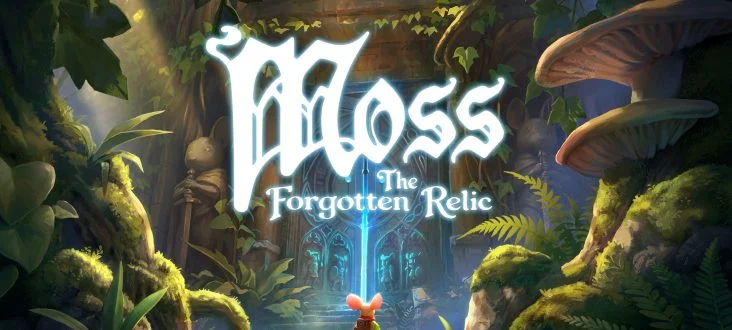
For years, the gaming industry has operated on a one-way street: developers have poured resources into "porting" traditional flat-screen experiences into the immersive, albeit hardware-intensive, realm of Virtual Reality (VR). Whether through official studio efforts or the tireless work of community modders, the goal has been to pull players into the screen. Now, however, the narrative is shifting. Polyarc, the studio behind the critically acclaimed Moss duology, has announced a significant pivot: the beloved VR-exclusive adventure is being meticulously reworked, enhanced, and reimagined for traditional monitors and televisions.
The Announcement: A Definitive Adventure
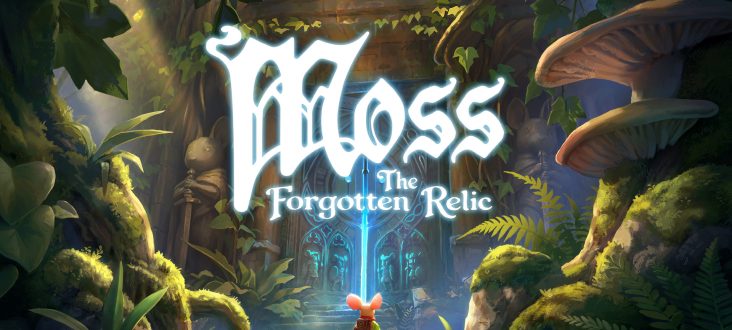
The announcement of Moss: The Forgotten Relic marks a turning point for Polyarc. By uniting the original Moss and its direct sequel, Moss: Book II, into a single, cohesive experience, the studio aims to bring the story of Quill—the small but brave mouse heroine—to a wider audience than ever before.
While Moss was initially designed as a tactile VR experience, the shift to a non-VR format is not merely a "port." Polyarc has explicitly stated that the title is being "reimagined" for its debut on PC and consoles. The studio is looking to bridge the gap between the intimate, perspective-based gameplay that defined the VR originals and the standard inputs and viewpoints expected by desktop gamers. This is a rare instance of a "VR-native" studio betting on the longevity of its IP by removing the barrier of entry that once limited its reach.
Chronology of a VR Success Story
To understand the significance of this move, one must look back at the trajectory of the Moss franchise.
- February 2018: The original Moss debuts on PlayStation VR, garnering widespread critical acclaim for its innovative use of perspective and its emotional narrative. Players were cast as the "Reader," an ethereal entity watching over Quill, creating a unique sense of scale and presence.
- 2018–2021: Moss expands to other VR platforms, including PC VR (Oculus Rift, SteamVR) and the standalone Meta Quest. It becomes a flagship title for the medium, consistently ranking among the best-selling and highest-rated VR games.
- March 2022: Polyarc releases Moss: Book II, which expands upon the mechanics of the first game, adding new weapons and environmental puzzles. It is lauded for its polish and storytelling.
- 2023–2024: Industry data begins to reflect the limitations of the VR market. Despite critical success, the reach of the Moss franchise remained tethered to the adoption rate of VR headsets.
- May 2026: Polyarc officially announces Moss: The Forgotten Relic, confirming the transition to flat screens and setting a launch window for the summer of 2026.
Supporting Data: The Case for Migration
The decision to bring Moss to traditional screens is supported by broader industry trends. While VR remains a vital niche, its hardware penetration has historically been lower than that of traditional gaming platforms like PC, PlayStation, and Xbox.
Reports indicate that both Moss and Moss: Book II successfully surpassed the 1-million-copy sales milestone—a significant achievement in the VR space. However, in the wider gaming ecosystem, blockbuster titles often reach tens of millions of players. By porting to flat screens, Polyarc is opening its doors to a potential audience size that is orders of magnitude larger than the current VR user base.
Furthermore, the game’s design is uniquely suited for this transition. Unlike first-person VR shooters that rely on physical immersion and 360-degree awareness, Moss utilizes an isometric, "diorama-style" perspective. Because the player is already acting as an external observer looking down into the world of Quill, the gameplay loop translates naturally to a standard monitor or television screen. The "Reader" perspective essentially functions as a fixed-camera system, which is a staple in many successful third-person adventure games.
Official Responses and Creative Vision
Polyarc has been vocal about the technical challenges involved in this reimagining. Bringing a game out of VR involves more than just disabling head tracking. The studio has had to rework the user interface, rebalance the interaction mechanics, and optimize the game for standard controllers and mouse-and-keyboard setups.
In their official press release, the team emphasized that this is not a lazy port. "We wanted to ensure that the magic of Quill’s world remains intact while making it feel like a native experience for players who have never touched a VR headset," a representative noted. The studio is focusing on visual fidelity enhancements, ensuring that the art style—which was designed to look stunning at close proximity in a headset—translates to the sharp, high-resolution textures expected on modern gaming monitors.
Implications for the Industry
The move by Polyarc could signal a broader trend in the gaming industry: "VR-first, then everywhere." As developers seek to maximize their return on investment, the ability to release titles on traditional hardware without sacrificing the integrity of the design becomes an attractive strategy.
1. Breaking the "Hardware Wall"
Many VR developers struggle with the "chicken and egg" problem: games are expensive to develop, but the user base is relatively small, making it difficult to recoup costs. If The Forgotten Relic proves successful, it provides a blueprint for other VR developers to follow. By building a high-quality "core" in VR and then refining it for a mass-market audience, studios can sustain themselves through multiple revenue streams.
2. The Preservation of VR Experiences
There is also a preservationist aspect to this trend. VR hardware is notoriously fragile and evolves rapidly. As older headsets become obsolete, many VR games risk being lost to time. By bringing Moss to flat screens, Polyarc is effectively "future-proofing" their work, ensuring that future generations can experience the story of Quill regardless of whether they have access to cutting-edge VR hardware.
3. The Expectations of the Traditional Player
However, this transition is not without risk. Traditional gamers are accustomed to specific standards of control responsiveness and camera movement. If the "reimagining" feels too clunky or if the controls feel like an afterthought, the game may struggle to find an audience outside of the existing Moss fanbase. Polyarc must prove that the game is fun on its own terms, not just as a "VR game running on a monitor."
Looking Forward: A Summer of Discovery
As we approach the summer release window, the gaming community is watching with anticipation. The questions remain: How will the community respond to this shift? Will The Forgotten Relic be viewed as an accessible entry point for those who were previously priced out of VR, or will it be seen as a diluted version of a premium VR experience?
If successful, Moss: The Forgotten Relic could spark a wave of similar announcements. Titles like Beat Saber or Superhot VR have already explored some of this territory, but Moss represents a narrative-heavy, world-building experience that could prove that the "VR-to-Flat" pipeline is a viable path for narrative-driven studios.
For now, the industry looks toward Polyarc. They have taken a risk, not by abandoning the technology that made them famous, but by choosing to share the story of a small mouse with the largest possible audience. Whether this marks the end of an era for VR exclusivity or the beginning of a new era of multi-platform design, the arrival of The Forgotten Relic will undoubtedly be one of the most interesting case studies of the year.
KitGuru Commentary
The industry is often criticized for the "gimmicky" nature of some VR titles, but Moss was always an exception—it was a genuinely great game that just happened to be in VR. By removing the hardware barrier, Polyarc is inviting millions of people to experience a beautiful story that was previously locked behind a headset. If this succeeds, expect to see more developers taking their VR "darlings" and bringing them to the living room screen.
What are your thoughts? Did you ever play the original Moss? Do you believe the isometric style of the game is perfectly suited for a flat-screen transition, or does it lose its charm without the immersion of a headset? Which other VR titles deserve a flat-screen reimagining? Let us know in the comments below.










No comments yet. Be the first to join the conversation!