

By International News Desk
The geopolitical landscape of the Middle East has descended into a state of acute volatility this week, as the United States launched its third consecutive night of military strikes against Iranian infrastructure. The escalation follows a seismic shift in U.S. maritime policy, with President Donald Trump announcing the reinstatement of a U.S.-led blockade of Iranian shipping and the imposition of a controversial 20% "security fee" on all commercial cargo transiting the Strait of Hormuz.
The region, already reeling from months of conflict, now faces the specter of a total maritime shutdown. As oil prices surge to multi-month highs, the international community is scrambling to interpret the legal and economic implications of the U.S. declaring itself the "Guardian of the Hormuz Strait."
The Strategic Flashpoint: Chronology of Escalation
The recent hostilities represent a dramatic intensification of a war that began in February. On Monday, the situation reached a breaking point as the Strait of Hormuz—the world’s most vital oil transit artery—became an active combat zone.
Monday: The Declaration and the Strikes
The sequence of events began on Monday morning when President Trump took to Truth Social to announce a unilateral change to the status of the waterway. "The Hormuz Strait is OPEN, and will remain OPEN, with or without Iran. We are reinstating THE IRANIAN BLOCKADE," the President wrote. He further outlined a plan to charge a 20% tariff on all cargo passing through the strait, framing it as a reimbursement for U.S. "guardianship."
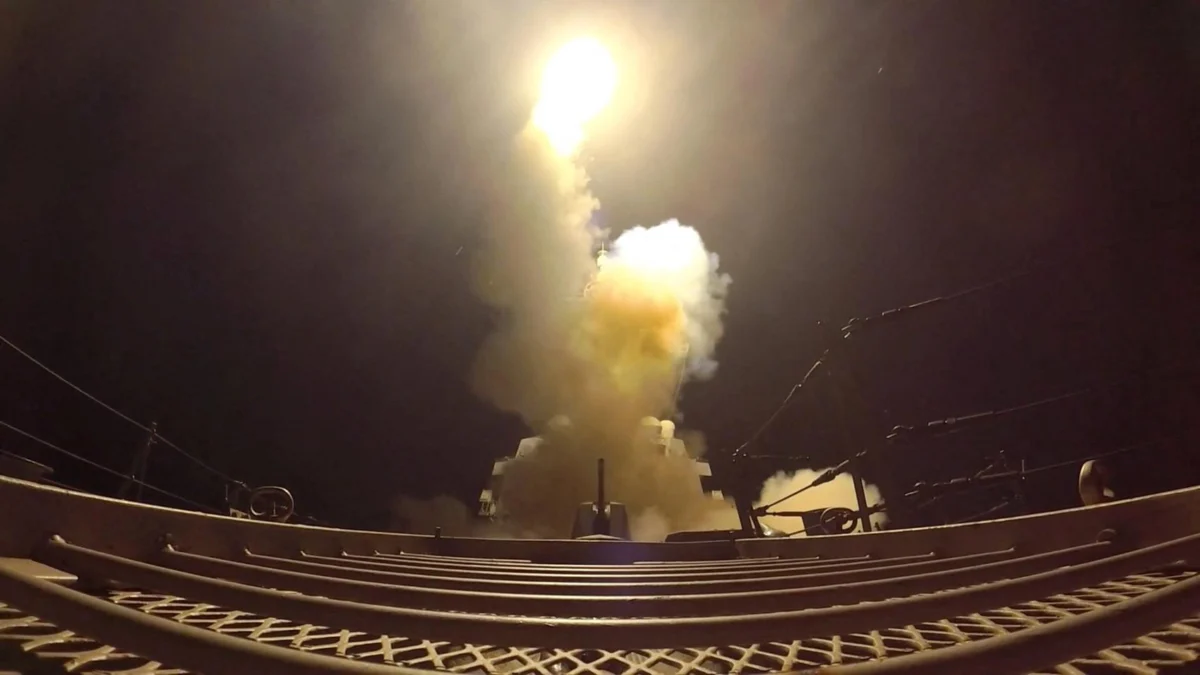
Following this, U.S. Central Command confirmed the commencement of precision strikes against Iranian military assets. Simultaneously, reports emerged from the United Arab Emirates (UAE) Ministry of Defense that two Emirati oil tankers, the Mombasa and Al Bahiyah, had been struck by Iranian cruise missiles while in Omani territorial waters. The attack resulted in the death of one crew member and left eight others injured.
Tuesday: The Widening Conflict
By early Tuesday, the conflict had spilled over into the broader Gulf region. Iranian state media reported a series of explosions across the port city of Bandar Abbas, as well as on Kish, Qeshm, and Abu Musa islands. Further inland, the province of Khuzestan reported U.S. projectiles hitting regional infrastructure, leading to four casualties.
In a retaliatory posture, the Iranian military claimed to have targeted a "hostile" U.S. vessel with cruise missiles, while also launching drone strikes against U.S. facilities in Kuwait. The Revolutionary Guards reported the downing of a U.S. MQ-1 drone, while sirens wailed across Bahrain as air defense systems scrambled to intercept incoming projectiles.
Economic Implications: The Cost of "Guardianship"
The decision to impose a 20% transit fee on the Strait of Hormuz has sent shockwaves through global financial markets. Before the onset of the current conflict, the strait served as the conduit for roughly 20% of the world’s daily oil and gas consumption—approximately 15 million barrels per day.
Market Volatility
The market reaction was immediate and severe. Brent crude futures surged by more than 9% on Monday, marking their most significant single-day dollar gain since April. U.S. crude futures followed a similar trajectory, settling at their highest valuation since mid-June.
Analysts suggest that if the U.S. successfully implements the 20% levy, the revenue generated could reach an estimated $250 million per day. However, the economic cost of such a policy extends far beyond the tolls. The disruption of global supply chains and the resulting spike in energy prices pose a significant threat to global inflation, particularly as the U.S. approaches pivotal midterm elections in November. For the administration, managing the political fallout of high gasoline prices has become a top priority as the party fights to retain its congressional majority.
The Shipping Crisis
Data from MarineTraffic indicates that the uncertainty is already impacting commerce. Vessel activity through the strait declined by 52% between July 10 and July 12 compared to the previous week. While U.S. officials claim that 20 vessels were successfully escorted through the channel in a 24-hour window, the lack of confidence among insurers and shipping companies suggests that the "Guardian" policy may lead to a de facto, if not legal, stagnation of regional trade.
Official Responses and Diplomatic Friction
The international reaction to the U.S. proposal has been largely condemnatory, with key global bodies challenging the legality of the move.
The UN Stance
The International Maritime Organization (IMO), the UN agency responsible for shipping safety, has pushed back against the Trump administration’s toll proposal. In a statement, the organization reiterated that there is no legal basis under the UN Convention on the Law of the Sea (UNCLOS) for a nation to impose mandatory tolls on transit through international straits. The IMO warned that such a move could undermine the freedom of navigation—a cornerstone of international maritime law.
The Iranian Perspective
Tehran has been defiant. Foreign Minister Abbas Araqchi took to social media to reject the U.S. claim to guardianship, asserting that Iran is, and will remain, the rightful protector of the strait. Addressing the proposed 20% fee, Araqchi remarked with a note of biting irony: "20% is of course too much. We will be fair."
The Iranian military command has issued stern warnings that the U.S. has no role in determining the future of the waterway, signaling that any attempt to enforce the blockade will be met with further asymmetrical warfare.
Regional Destabilization and Military Strategy
The conflict, which has been described by military observers as a "war of attrition," has spread far beyond the narrow waters of the Gulf. With Iranian strikes hitting targets in Jordan, Bahrain, and Kuwait, the conflict has effectively regionalized.
Tactical Shifts
The U.S. military’s strategy appears focused on neutralizing Iran’s "Anti-Access/Area Denial" (A2/AD) capabilities. By targeting radar systems in Oman, fuel depots in Jordan, and military sites in Bandar Abbas, the U.S. is attempting to degrade Iran’s ability to project power into the strait.
Conversely, Iran’s strategy relies on the use of low-cost, high-impact assets—drones, cruise missiles, and speedboats—to challenge the presence of a superior conventional force. The reported destruction of radar systems and the targeting of airbases suggest that Iran is attempting to create a "no-go zone" for Western aircraft and naval vessels.
The Human Toll
Despite the focus on macro-economic and military data, the human cost remains the most tragic aspect of the ongoing crisis. Thousands have lost their lives since the conflict intensified in February. Reports from Abadan confirm that civilian infrastructure remains vulnerable, with local officials documenting the deaths of non-combatants during recent U.S. strikes. As rescue operations continue in the affected provinces, the international humanitarian community remains largely sidelined by the intensity of the kinetic exchanges.
Future Outlook: A Precarious Path
As the blockade deadline—set for 2000 GMT on Tuesday—approaches, the world waits to see if the U.S. will move forward with the full implementation of its maritime toll. The Joint Maritime Information Center (JMIC) has stated that the measure will apply to all vessels regardless of flag, while ostensibly allowing for humanitarian shipments subject to inspection.
However, the definition of "neutral transit" remains a point of contention. If the U.S. follows through, the Strait of Hormuz will essentially become a militarized checkpoint. The potential for miscalculation is immense; a single misfired missile or a misidentified civilian vessel could trigger a full-scale regional conflagration.
With oil prices climbing and the diplomatic channels between Washington and Tehran effectively severed, the coming days will be critical. The global economy is held hostage by the tension in these waters, and as the U.S. assumes its self-appointed role as "Guardian," it faces the daunting challenge of maintaining stability in a region that seems increasingly determined to reject its authority.
© Thomson Reuters 2026.











