

By International News Desk
February 2026
The Middle East teetered on the precipice of a total energy supply collapse on Monday as Yemen’s Iran-aligned Houthi forces announced a formal naval blockade against Saudi Arabia. The declaration, described by Houthi leadership as an "eye for an eye" response to the ongoing Saudi-led siege of Yemen, effectively opens a volatile new front in the expanding regional war between Tehran and Washington. As maritime insurance premiums soar and global oil markets react with frantic volatility, the specter of a total cessation of trade through the Red Sea threatens to cripple energy supplies far beyond the Persian Gulf.
The Escalation: A New Maritime Front
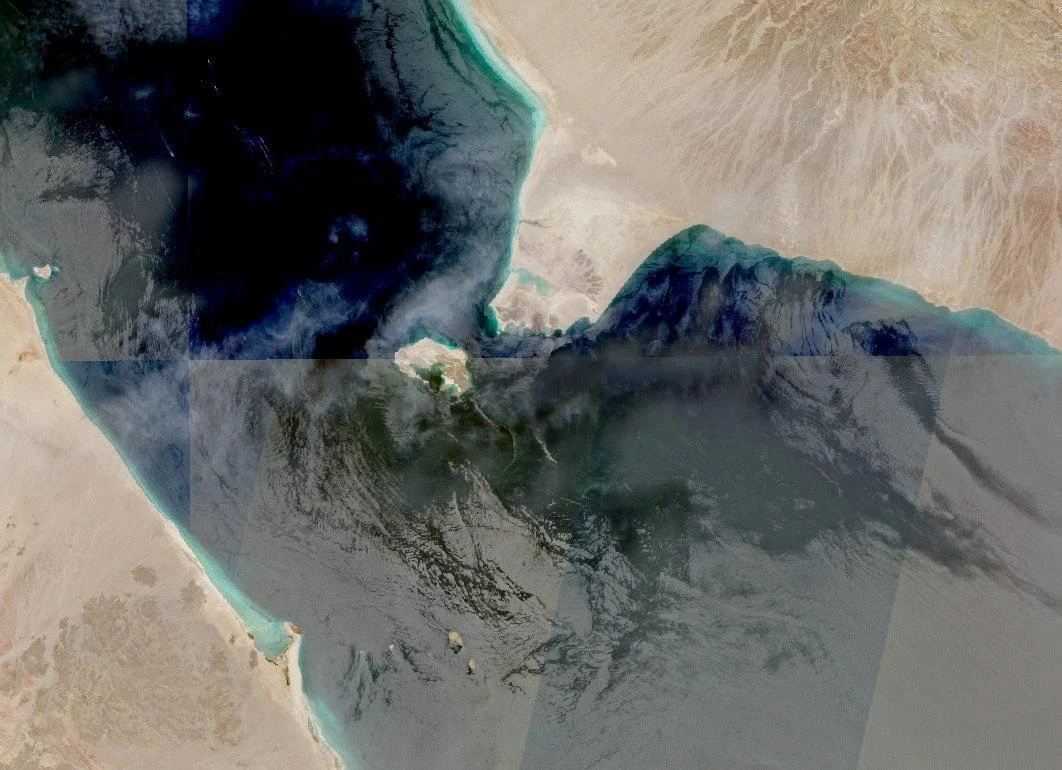
The Houthi declaration, issued early Monday, signaled a direct expansion of the conflict that has gripped the region since February 2025. By targeting the Bab el-Mandeb strait—a critical maritime artery—the Houthis have effectively weaponized global trade.
"We are declaring a maritime embargo against the criminal Saudi enemy, based on the equation of ‘an eye for an eye’, effective immediately," the Houthi armed forces stated. This move follows months of coordinated pressure from Tehran, which has reportedly urged its proxies to sever the Bab el-Mandeb gateway should the United States continue its aerial campaign against Iranian power infrastructure.
The strategic implications of a total closure are catastrophic. The Bab el-Mandeb serves as the conduit for roughly 7% of the world’s daily oil supply. Should this flow be entirely severed, it would be compounded by the pre-existing 10% reduction in global shipments caused by the ongoing war in the Gulf, where the Strait of Hormuz has been effectively neutralized by intermittent combat and naval blockades.
Chronology of a Widening Conflict
The current state of play is the culmination of a rapid descent into open warfare. The following timeline outlines the primary friction points of the last 48 hours:
- February 28, 2025: The conflict begins in earnest with U.S.-Israeli strikes targeting critical Iranian military and power infrastructure.
- Late 2025 – Early 2026: A fragile interim agreement is signed to halt the cycle of attacks; however, it remains "all but wrecked" by repeated violations.
- Sunday, February 2026: Reports emerge of explosions involving two oil tankers in the Strait of Hormuz. Simultaneously, a vessel off the coast of Oman is struck by an unidentified projectile.
- Monday, February 2026:
- Houthis declare a formal naval blockade on Saudi Arabia.
- U.S. Central Command conducts its ninth consecutive night of airstrikes against Iranian targets.
- Iranian Interior Minister Eskandar Momeni arrives in Islamabad to request renewed Pakistani mediation.
- President Donald Trump reaffirms his administration’s commitment to retaliatory strikes via Truth Social.
Supporting Data: Economic and Strategic Impact
The economic fallout was instantaneous. While oil prices initially spiked upon the announcement of the blockade, they later retreated as traders clung to the hope of a diplomatic miracle. However, the underlying data paints a grim picture for the global economy.
Maritime insurance underwriters have sharply increased premiums for any vessel attempting to transit the Red Sea, effectively pricing smaller commercial operators out of the region. Furthermore, the damage to regional infrastructure is mounting; Kuwaiti officials confirmed that a major desalination plant was struck for the second consecutive day, leading to a massive fire and concerns over water security.
The U.S. military’s role remains dominant but strained. In addition to sustained airstrikes, U.S. forces have successfully disabled one Iranian vessel and redirected seven others in a tactical effort to break the blockade of Iranian ports. Despite this, the list of affected infrastructure grows: Tabriz, Chabahar, Konarak, and various oil-processing sites in Bandar Mahshahr have all reported heavy explosions, resulting in civilian casualties near Tabriz.
Official Responses and Diplomatic Maneuvering
Despite the exchange of fire, a flurry of back-channel diplomacy suggests that both Washington and Tehran are seeking an exit ramp, albeit one that preserves their respective strategic interests.
Tehran’s Position
Iran’s Foreign Ministry acknowledged that international mediators have presented new "proposals" to salvage the dying ceasefire agreement. A senior Iranian official confirmed to Reuters that a 10-day ceasefire is currently under discussion. The Iranian government is clearly feeling the weight of the blockade, evidenced by the arrival of Interior Minister Eskandar Momeni in Islamabad to solicit Pakistan’s diplomatic intervention.
Washington’s Stance
President Donald Trump has maintained a hawkish posture, specifically citing the loss of American service members as the justification for the sustained bombing campaign. Addressing the military leadership, Trump wrote on Monday: "Every time Iran kills an American Soldier they will pay for that killing many times over! This directive has been passed on to Secretary of War, Pete Hegseth, Chairman of the Joint Chiefs of Staff, Daniel Caine, and every Leader in the Military."
The White House is also managing the fallout of the domestic gasoline price surge, which has become a central point of political contention as the midterm election cycle approaches.
The Lebanese Factor
The conflict’s reach extends to the Mediterranean. Lebanese President Joseph Aoun is scheduled to arrive at the White House on Tuesday. His agenda is focused on presenting a framework for the disarmament of Hezbollah and a subsequent Israeli withdrawal from occupied Lebanese territories. Analysts view this as a potential "test" for the U.S. administration, as it attempts to disentangle the Lebanese front from the broader Iranian-American theater.
Implications for Global Stability
The situation in the Middle East has transcended traditional proxy warfare. By targeting global trade routes and critical civilian infrastructure like desalination plants, the combatants have ensured that the economic consequences of the war are felt in every corner of the globe.
The Hamas Variable
Adding to the complexity is the leadership transition within Hamas. The appointment of Khalil Al-Hayya as the group’s overall leader, following years of war in Gaza, is being interpreted by regional analysts as a signal of a more hardened, uncompromising stance against disarmament efforts. This suggests that the southern front of the conflict—the Israeli-Palestinian dimension—remains a stubborn obstacle to any regional peace deal.
Energy Security
The "equation of an eye for an eye" utilized by the Houthis suggests a shift toward a war of attrition. If the Bab el-Mandeb strait remains blocked, the global market will face an unprecedented supply shock. Current stockpiles may stave off immediate shortages, but the psychological impact on energy markets and the inevitable inflationary pressure on shipping costs are likely to persist as long as the IRGC continues to challenge U.S. naval dominance.
As the world watches the White House meeting between Trump and Aoun, the reality on the ground remains stark. With ballistic missiles striking military assets in Jordan, Syria, and Kuwait, and the IRGC actively engaging in maritime sabotage, the window for a 10-day ceasefire is rapidly closing. The next 72 hours will be decisive: either a breakthrough in Pakistani-mediated talks will offer a path toward de-escalation, or the Red Sea will become the latest, and perhaps most devastating, casualty of a war that shows no sign of abating.
© Thomson Reuters 2026.











