Reynand Wu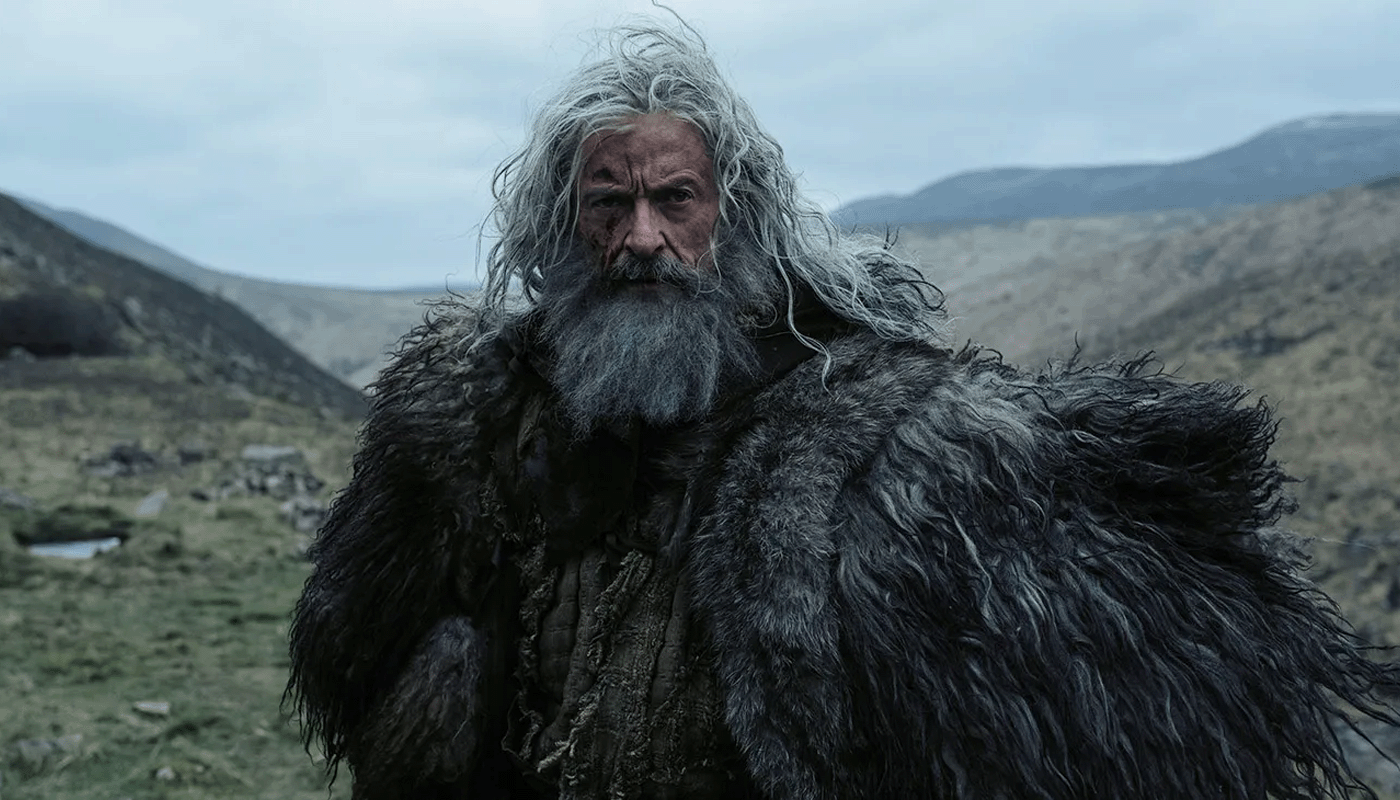
The legend of Robin Hood has long served as a mirror for the era that invokes it. From the morally ambiguous, knife-wielding outlaw of the earliest medieval ballads to the sanitized, aristocratic hero of Howard Pyle’s The Merry Adventures of Robin Hood, the character has been reinvented to suit the anxieties and ideals of every generation.
However, the latest attempt to bring the Prince of Thieves to the screen, Michael Sarnoski’s The Death of Robin Hood, presents a radical, if deeply divisive, departure from tradition. By grafting the grim, existential nihilism of neo-Westerns like Unforgiven and Logan onto the Sherwood Forest mythos, the film attempts to answer a question that perhaps didn’t need asking: What if the hero we remember was, in reality, nothing more than a violent, self-serving brigand?
The Anatomy of a Legend: From Ballad to Screen
To understand the weight of Sarnoski’s latest project, one must look at the source material. The film finds its primary inspiration in "Robin Hood his Death," one of the oldest recorded ballads in the English tradition. In the original verses, the ending is famously bleak: Robin, now an elderly man, seeks sanctuary with his cousin, a prioress. Instead of providing refuge, she conspires to betray him, intentionally botching the medieval blood-letting process to ensure his slow, agonizing expiration.
The tragedy is compounded by the tardiness of Little John, who arrives only to find his friend too far gone to save. In a final act of agency, Robin demands his bow, fires a final arrow, and instructs his loyal companion to bury him where the projectile lands.
Director Michael Sarnoski, having earned significant critical acclaim for the contemplative and quiet intensity of his 2021 feature Pig, seemed the ideal candidate to handle such somber subject matter. With a high-profile cast led by Hugh Jackman and Bill Skarsgård, the production arrived with the promise of a "thoughtfully assembled" deconstruction of folklore. Yet, the final product reflects a tonal struggle between genuine character study and a relentless, almost performative, grittiness.
A Chronology of Cinematic Stagnation
The failure of The Death of Robin Hood to resonate as a truly great adaptation is part of a broader, more systemic malaise in the franchise. For over three decades, the Robin Hood myth has struggled to find a foothold in contemporary cinema.
- The 2010 Ridley Scott Attempt: Seeking to mirror the historical grit of Gladiator, Scott’s Robin Hood was a sprawling, "realistic" epic that ultimately felt damp and devoid of the character’s inherent charm.
- The 2018 Gritty Reboot: This installment attempted to modernize the tale with A Knight’s Tale-style anachronisms, resulting in a confused, aggressively grim aesthetic that lacked the earned stakes of its inspirations.
- The 2023 MGM Series: Recent television attempts have focused heavily on Norman-Saxon political tensions, relying on the star power of actors like Sean Bean to lend gravity to an otherwise stagnant narrative.
Statistically, it has been over thirty years since the last universally beloved take on the character—Mel Brooks’ Men in Tights. The inability of modern directors to find the "soul" of the character suggests that the obsession with "realism" has become a crutch rather than a tool for exploration.
Plot Summary: The Aging Outlaw
The narrative opens on a world-weary, elderly Robin (Hugh Jackman), who has long since abandoned the romantic notions of heroism. He is a man defined by the bodies he has left in his wake, a murderer and thief who admits he never acted for the benefit of the poor, but for his own survival.
His path crosses with an equally desperate Little John (Bill Skarsgård), who has attempted to escape his past by assuming the identity of "Edward," a farmer living a quiet life with his wife and child. This domestic peace is shattered when the ghosts of their past catch up to them, forcing John to drag a reluctant, injured Robin into one final, violent confrontation.
The conflict leads them to an island priory overseen by Sister Brigid (Jodie Comer), a healer whose proximity to the supernatural—or at least the fringe of medieval medicine—earns her whispers of witchcraft. As Robin heals under the name "Randolph," he strikes up an unlikely friendship with a leper (Murray Bartlett) who tends the orchards. The arrival of John’s daughter, Little Margaret, signals that the blood feuds are not finished, forcing a climactic collision between the myth of the past and the reality of the present.
Supporting Data: The Weight of "Realism"
The film’s commitment to "realism" manifests in its fight choreography and world-building. Sarnoski focuses heavily on the visceral, unglamorous nature of medieval combat. There is a palpable sense of bile, mud, and slow-moving blood in every encounter. While this serves to highlight the brutality of the era, it becomes a point of diminishing returns. Once the audience understands that this is a world where combat is dirty and painful, the constant focus on the mechanics of death ceases to be an interesting narrative device and instead becomes a monotonous aesthetic choice.
Furthermore, the film suffers from a lack of historical or psychological context regarding the protagonist. We are introduced to Robin at the tail end of his life, with little insight into his formative years. The film operates on the assumption that the audience is inherently interested in the "Violent Man at the End of His Journey" archetype, a trope that has been over-mined in recent years by films like Logan.
Official Perspectives and Critical Implications
The central question, "Why does this need to be a Robin Hood story?" remains unanswered by the film. Critics have noted that the script’s most profound moments—those concerning the power of place, the intersection of pagan and Christian spiritualities, and the distortion of history over time—could have functioned perfectly well with an original character.
The inclusion of the Robin Hood brand feels like a "ruse," a way to force a connection to a beloved folk hero while fundamentally stripping him of the characteristics that make the legend endure. By turning Robin into an "asshole," as one might characterize the film’s version of the hero, the filmmakers aren’t necessarily offering a deeper commentary on human nature; they are simply subverting an expectation to the point of alienation.
The Verdict: The Death of Myth
The most compelling aspect of the film is its exploration of how we curate our own memories. Murray Bartlett’s performance as the orchard-tending leper is a standout, serving as a philosophical anchor who reminds the audience that humans rarely remember their own histories with any degree of accuracy.
However, the film’s attempt to tackle the nature of storytelling, myth-making, and the burden of legacy is consistently hampered by its narrow scope. While television shows like Interview with the Vampire have mastered the art of examining personal mythologies with "agony, pathos, and devastating cleverness," The Death of Robin Hood feels stuck in the mud of its own grimness.
Ultimately, the film suggests that Robin Hood is a story about the danger of holding onto the past. Yet, in its relentless pursuit of a "realist" perspective, it fails to realize that realism is not the antithesis of a good story. By killing off the myth, the film leaves the audience with a man named Randolph, but it fails to give us a reason to care about the man behind the bow. We are left with a technically proficient, moody, and occasionally beautiful film that nonetheless feels hollow—a stark reminder that when you strip away the wonder of a legend, you are often left with nothing but the dust of the road.

 Asep Darmawan
 Dwi Wanna