

From the minting of Middle-earth to the shifting landscape of international literature and the complex bureaucracy of modern publishing, the past week has been a whirlwind for the speculative fiction community. As we look across the spectrum of film, print, and digital media, several key developments highlight the evolving nature of genre storytelling and the legal frameworks protecting its creators.
1. The Royal Mint Unveils "Precious" Middle-earth Currency
The Royal Mint has officially launched a commemorative series of 50p coins to mark the 25th anniversary of Peter Jackson’s The Lord of the Rings: The Fellowship of the Ring. This ambitious seven-coin collection serves as a tribute to J.R.R. Tolkien’s enduring legacy and the cinematic milestone that redefined fantasy filmmaking.
Design Innovation and Craftsmanship
The first coin in the series, unveiled in Llantrisant, Wales, features a striking design incorporating Elvish script and a golden "One Ring" motif. Most notably, the coin utilizes a "groundbreaking caustic feature"—a design innovation that allows the all-seeing Eye of Sauron to appear from the negative space at the center of the ring when light hits the surface. The Royal Mint, with typical British wit, noted that these coins were "forged not in the fires of Mount Doom, but in Wales," yet possess a level of detail that "even the Elves of Rivendell would admire."
Implications for Collectors
This release is not merely a novelty; it represents a "UK coinage first" regarding its light-refracting technology. Over the next three years, the Mint will roll out the remainder of the seven-coin series, coinciding with the 25th anniversaries of the subsequent films in the trilogy. For numismatists and Tolkien fans alike, this collection serves as a tangible bridge between the physical world and the mythos of Middle-earth.
2. Literary Breakthrough: Taiwan Travelogue Wins International Booker Prize
In a historic win for global literature, the 2026 International Booker Prize was awarded to Taiwan Travelogue by Yang Shuang-zi, translated from Mandarin Chinese by Lin King. The ceremony, held at the Tate Modern in London, marked a significant turning point for translated works.

Chronology of the Award
- The Work: Published in Mandarin in 2020, the book previously earned Taiwan’s Golden Tripod Award.
- The Translator: Lin King is the first Taiwanese-American translator to secure the International Booker.
- The Publisher: And Other Stories, a Sheffield-based independent press, made history by winning the award in consecutive years, following their 2025 success with Heart Lamp.
Metafictional Complexity
Taiwan Travelogue is a sophisticated piece of metafiction that masquerades as a 1938 travel memoir. It follows a Japanese writer on a culinary tour through occupied Taiwan, accompanied by a local interpreter. The narrative’s structure—rife with introduction and afterwords—has been praised for its "dizzying" and "alluring" construction, successfully challenging the boundaries between historical record and creative invention.
3. The Legal Front: Authors Guild Challenges Publisher Negligence
A critical issue has emerged regarding the Bartz v. Anthropic class action settlement. The Authors Guild (AG) is currently soliciting information from authors whose works were excluded from the settlement due to a failure by their publishers to register copyright.
Official Responses and Demands
Mary Rasenberger, CEO of the Authors Guild, has been vocal about the need for systemic accountability. The AG argues that publishers who were contractually obligated to register copyrights but failed to do so should be held liable. Their proposed compensation stands at $1,500 per title—approximately half the estimated payout of the Anthropic settlement. To date, Macmillan remains the only major publisher to proactively address this by reimbursing affected authors and restructuring their internal workflows to prevent future lapses.
4. The Future of Franchise Storytelling: Damon Lindelof’s Star Wars Exit
The creative friction inherent in massive intellectual properties was recently brought to light by screenwriter Damon Lindelof. In a candid appearance on the House of R podcast, Lindelof discussed his departure from a high-profile, Rey-centric Star Wars project.
Implications of "Tanker" Management
Lindelof compared managing a franchise like Star Wars to steering a massive oil tanker: it takes significant time and effort to change course, and the sheer scale of canon can paralyze creative decision-making. He noted that the primary hurdle was the tension between "nostalgia and revision." Ultimately, his vision for the project—which he described as a "Protestant Reformation" of the lore—proved incompatible with the studio’s current trajectory. This episode serves as a case study for the difficulties inherent in balancing legacy IP with new, risk-taking narratives.

5. Worldbuilding: The Timbuktu Legacy in SFF
In a compelling piece for the SFWA’s Planetside, Jason Collins explores how West African manuscripts from the Timbuktu archives can serve as a blueprint for contemporary science fiction and fantasy worldbuilding.
Supporting Data for New Narratives
Collins argues that these archives reveal a rich intellectual lineage where:
- Spirituality and science coexisted as complementary forces.
- Libraries served as the primary political and moral centers of society.
- Literacy was treated as both a civic duty and a spiritual pursuit.
By shifting the focus of speculative fiction from "conquest-based" narratives to "inquiry-based" societies, writers can create expansive worlds that break free from tired tropes of knights and castles, replacing them with mathematicians, astronomers, and scholars.
6. Genre Milestones and Cultural Commentary
Eating the Fantastic with Charles Stross
Podcast host Scott Edelman recently sat down with Hugo-winning author Charles Stross for a wide-ranging conversation. The discussion touched upon the "failure to launch" period of the Interzone generation, the conclusion of the long-running Laundry Files series, and how an unfinished novel’s opening sentence can spark an entirely new series. Stross’s insights into the evolving nature of convention-going and the craft of sustained professional output remain essential listening for aspiring writers.
Doctor Who and the Aesthetics of the 70s
Camestros Felapton provided a deep dive into the classic Doctor Who serial The Robots of Death. The analysis highlights how the series utilized "gorgeous" and "clever" robot designs to contrast with the decadent, high-fashion aesthetic of the human crew, subverting standard class-coded sci-fi tropes of the era.

Japanese Time-Travel Cinema
The BFI recently highlighted the resurgence of Japanese time-travel films, noting that the genre has moved beyond mere sci-fi spectacle to become a vehicle for existential drama and micro-budget indie innovation. Films like Beyond the Infinite Two Minutes—which cleverly employs the "nagamawashi" (long-take) technique—demonstrate that creative constraints often lead to the most groundbreaking narrative results.
7. Commemorating Shirley Rousseau Murphy
We conclude this week’s digest by honoring the late Shirley Rousseau Murphy (1928–2022). Known for her whimsical and emotionally resonant fiction, Murphy’s Joe Grey mystery series remains a masterclass in blending the mundane with the magical. Her ability to write felines that not only understood human speech but spoke it—without needing an exhaustive, tedious explanation—remains a hallmark of her unique voice. From dragons to unicorns and her celebrated cat-centric mysteries, Murphy’s contribution to the fantasy canon is a testament to the power of imaginative, character-driven storytelling.
Chronological Summary of Key Events
- May 19, 2026: SFWA publishes Jason Collins’ guide on utilizing West African manuscripts for worldbuilding.
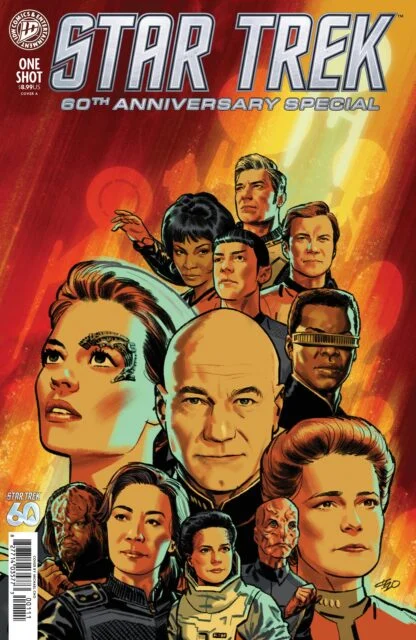
- May 19, 2026: Details released regarding the Star Trek 60th Anniversary comic special, featuring David Gerrold and Mike McMahan.
- May 20, 2026: Taiwan Travelogue wins the International Booker Prize in London.
- May 20, 2026: Episode 282 of Eating the Fantastic featuring Charles Stross is released.
- May 21, 2026: Camestros Felapton publishes his critique of The Robots of Death.
As these developments demonstrate, the speculative fiction community remains a vibrant, evolving ecosystem. Whether through the physical legacy of a 50p coin, the intellectual rigor of a Booker Prize-winning novel, or the ongoing struggle for authorial copyright protection, the industry continues to reflect the complexities and triumphs of the world at large.












No comments yet. Be the first to join the conversation!