Lina Irawan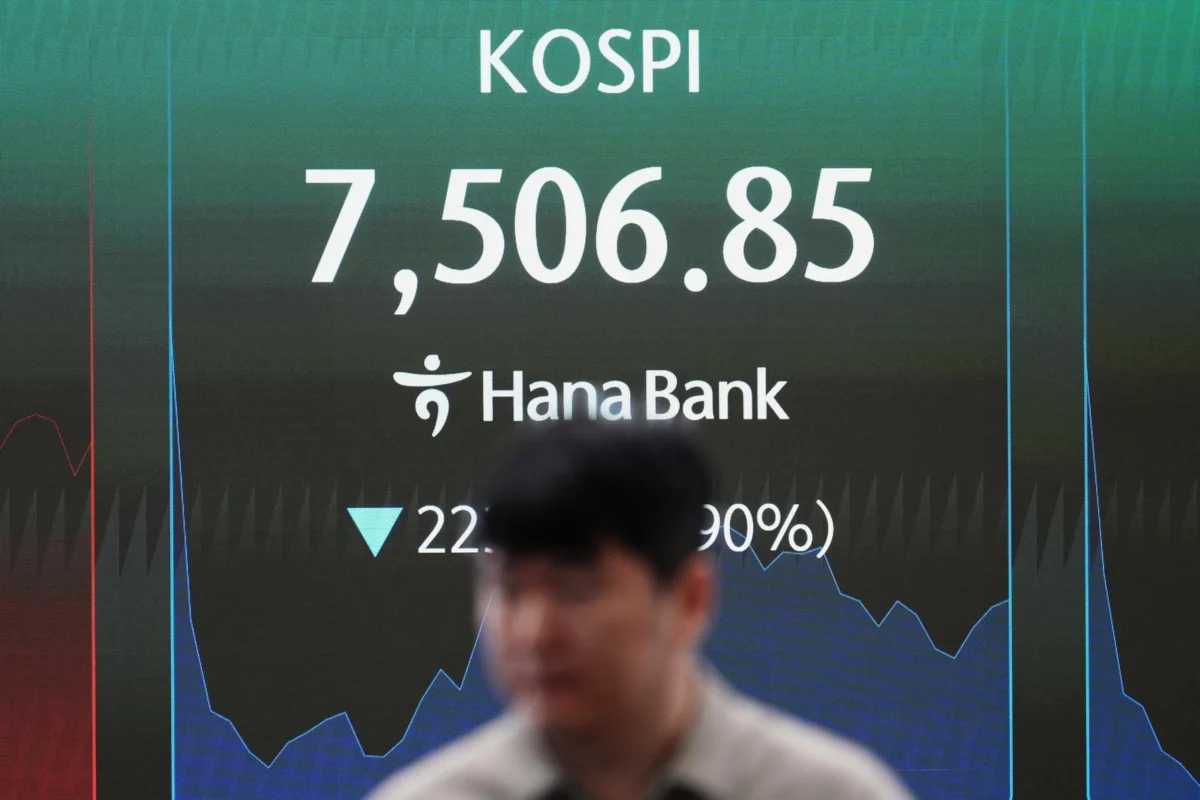
TOKYO – Global financial markets erupted in a wave of optimism on Monday as news of a breakthrough in the Iran conflict sparked a massive rally in equities and a sharp cooling of volatile energy prices. The prospect of reopening the strategic Strait of Hormuz, a critical artery for global oil transit, has provided the most significant relief to the world economy since hostilities broke out in late February.
As Asian indices hit historic highs and futures markets pointed toward a robust open on Wall Street, investors signaled that the "geopolitical risk premium"—which has weighed heavily on global commerce for months—is finally beginning to unwind.
A Watershed Moment: The De-escalation Deal
The catalyst for the market euphoria was the confirmation of a tentative agreement to end the war, a move brokered through international diplomatic channels. U.S. President Donald Trump publicly confirmed the initial framework, announcing that he had authorized the cessation of the U.S. naval blockade surrounding Iranian ports.
The agreement, while fragile, represents a monumental shift in a conflict that had pushed the global economy to the brink of a systemic crisis. Iran has acknowledged the deal, though officials in Tehran noted that full implementation is contingent upon a formal signing ceremony scheduled for Friday in Switzerland, as announced by Pakistani officials.
While the cessation of active hostilities is the primary objective, the roadmap for long-term stability remains complex. Broader negotiations, specifically addressing Iran’s nuclear program, are expected to dominate the diplomatic agenda over the next 60 days. This "cooling off" period is being viewed by analysts as the essential foundation for preventing a return to the brinkmanship that has defined the last quarter.
Market Chronology: From Panic to Record Highs
The market reaction was immediate and decisive. In Tokyo, the Nikkei 225 index shattered records, closing at 69,317.50—a staggering gain of 3,297.46 points. The index briefly surged more than 5% during the session, driven by an insatiable appetite for technology and artificial intelligence-linked equities. This performance continues a historic trend for Japan, where the benchmark index has now climbed more than 80% over the past 12 months.
The sentiment rippled across the Asia-Pacific region:
- Seoul’s Kospi surged 4.9% to close at 8,517.93.
- Australia’s S&P/ASX 200 advanced 1.4% to 8,922.90.
- Taiwan’s Taiex gained 2.5%, buoyed by semiconductor strength.
- Hong Kong’s Hang Seng rose 0.6% to 24,867.94, while the Shanghai Composite added 1.1% to 4,073.08.
The optimism extended to U.S. futures, with the S&P 500 up 1% and the Dow Jones Industrial Average gaining 0.9% in pre-market trading, suggesting that the "risk-on" sentiment will carry through to the opening bell on Wall Street.
Energy Markets: The "Relief Valve" Effect
Perhaps the most tangible impact of the peace announcement was the sharp contraction in oil prices. Brent crude, the international benchmark, tumbled $3.61 to $83.64 per barrel, while U.S. West Texas Intermediate (WTI) plummeted $4.27 to $80.61.
For months, the closure of the Strait of Hormuz acted as a strangulation point for global energy supplies, forcing shipping companies to navigate perilous alternatives and driving up costs for gasoline, heating oil, and industrial manufacturing. However, experts warn that a return to pre-war price stability will not happen overnight.
"The reopening of Hormuz is a relief valve, not a full peace dividend," noted Stephen Innes, a strategist at SPI Asset Management. "The market can remove some crude panic, but it still has to price the gap between a headline, a signature, and a regime that actually complies."
Logistical hurdles remain. Energy experts emphasize that shipping and insurance conglomerates will require tangible evidence of the deal’s durability before resuming full-scale transit through the Strait. Insurance premiums for vessels remain elevated, and until the maritime corridors are declared fully secure, the "risk premium" on every barrel of oil will likely linger, albeit at a reduced level.
The SpaceX Factor and the AI Boom
The market’s resilience is further bolstered by a newfound fervor for technology, underscored by the blockbuster debut of Elon Musk’s SpaceX on the New York Stock Exchange last Friday. The aerospace giant saw its shares leap 19.2% on their first day of trading, pushing the company’s total market capitalization to an eye-watering $2.1 trillion.
To put this valuation in perspective, SpaceX is now more valuable than Exxon Mobil, Bank of America, and Coca-Cola combined. The company’s focus—ranging from aerospace to its proprietary artificial intelligence firm, xAI—has captured the imagination of institutional investors who see AI as the primary engine of long-term economic growth.
The successful IPO of SpaceX has served as a psychological anchor for the market, proving that even amidst geopolitical uncertainty, capital remains eager to flow into disruptive, high-growth sectors. This has provided a necessary cushion for the S&P 500, which is currently enjoying its 10th winning week in the last 11.
Macroeconomic Outlook: A Busy Week Ahead
While the Iran peace deal is the primary focus, the market is bracing for a series of high-stakes monetary policy decisions that will define the trajectory of the global economy for the remainder of the year.
This Thursday, the Federal Reserve and the Bank of England are both slated to announce their latest interest rate decisions. Investors are closely monitoring the Fed for any indication that the recent geopolitical stability might allow for a more dovish stance on inflation control.
Meanwhile, all eyes are on the Bank of Japan, which is scheduled to announce its policy updates on Tuesday. Analysts widely expect the central bank to raise its benchmark interest rate from 0.75% to 1.0%—a move that would mark the highest interest rate environment in Japan in more than 30 years. This shift reflects the country’s ongoing struggle to normalize monetary policy against a backdrop of strengthening economic performance and rising inflation expectations.
Currency markets have remained relatively stable in the face of these developments. The U.S. dollar rose slightly to 160.20 Japanese yen, while the euro strengthened to $1.1595.
Implications and the Path Forward
The tentative deal to end the war represents a critical juncture for the global economy. For three months, businesses, consumers, and governments have grappled with the inflationary pressures of a restricted oil supply and the constant threat of regional escalation.
However, as Takashi Hiroki, chief strategist at Monex, noted: "Buying by foreign investors is leading the market with expectations of easing tensions. The decline in New York crude oil futures is supporting this positive market."
The implications of a sustained peace are profound. If the signing ceremony in Switzerland proceeds as planned on Friday and the 60-day negotiation window for the nuclear issue remains constructive, the world could see a significant cooling of inflation. Lower energy costs will filter through to consumer goods, potentially allowing central banks to ease the aggressive monetary tightening that has dominated headlines for the past year.
Yet, the shadow of skepticism remains. Markets are inherently forward-looking, and while they have priced in the "headline" of the peace deal, they are also hedging against the possibility of a diplomatic breakdown. As the world awaits Friday’s signing, the consensus is clear: the path to economic recovery is now open, but the transition from a wartime footing to a period of stable growth will require more than just signatures—it will require a long-term commitment to regional compliance and a return to the rules-based international order.
For now, investors are celebrating the return of stability. Whether this represents the beginning of a new, sustained bull market or a temporary respite in a volatile era will depend on the implementation of the peace deal and the upcoming central bank decisions. One thing is certain: the world is breathing a collective sigh of relief, and the numbers on the ticker tapes across Tokyo, Seoul, and New York are reflecting that shift in sentiment.
Reported by the Associated Press. Contributing reporting from Senior Producer Mayuko Ono in Tokyo.
© Copyright 2026 The Associated Press. All rights reserved. This material may not be published, broadcast, rewritten or redistributed without permission.


 Neng Nana
 Asro
Asro