

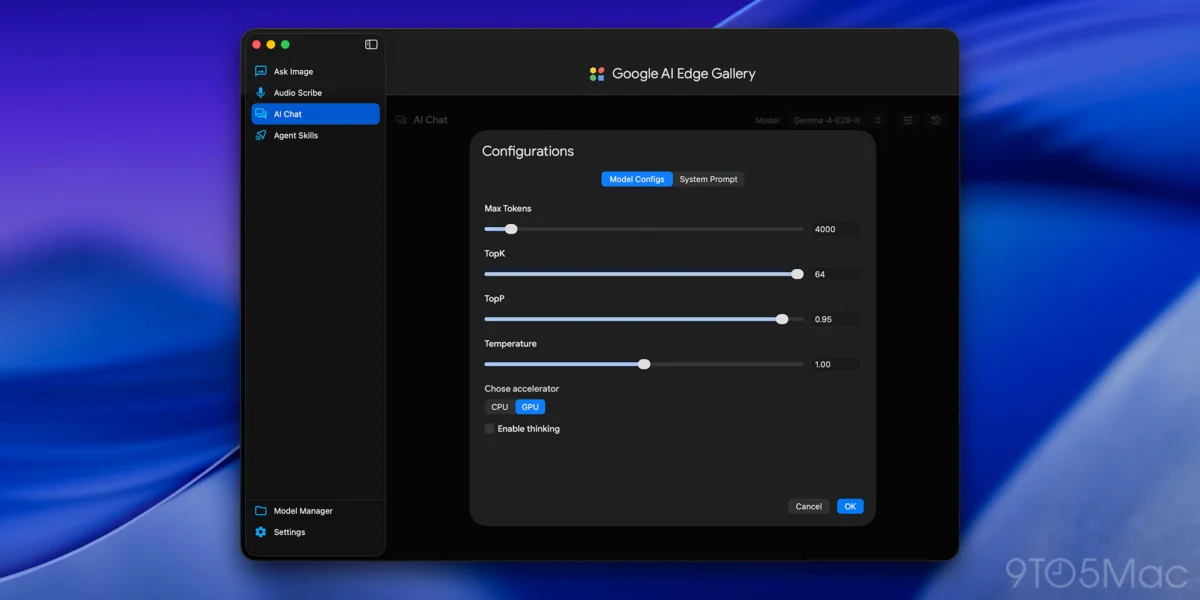
In a significant push to democratize high-performance artificial intelligence, Google has officially expanded its "AI Edge" ecosystem to the macOS platform. This strategic move includes the launch of the Google AI Edge Gallery for Mac, the debut of the powerful Gemma 4 12B model, and the introduction of "Eloquent," a sophisticated on-device dictation tool. By shifting the paradigm from cloud-dependent processing to local, privacy-centric computation, Google is challenging the status quo of how users interact with Large Language Models (LLMs).
The Shift to Local Intelligence: A New Paradigm
For the past two years, the AI landscape has been dominated by cloud-based giants like OpenAI’s ChatGPT, Anthropic’s Claude, and Google’s own Gemini. While these services offer unparalleled computational power by leveraging massive server farms, they come with inherent trade-offs: latency, privacy concerns regarding data transmission, and a total dependency on internet connectivity.
Local AI models represent a departure from this "Always-Online" architecture. By running directly on the user’s hardware, these models offer distinct advantages. Firstly, privacy is significantly enhanced; since no data leaves the machine, sensitive documents and personal conversations remain strictly under the user’s control. Secondly, local models eliminate the "round-trip" latency associated with cloud servers, providing a near-instantaneous user experience. Finally, they offer a level of reliability that cloud-based services cannot match, as they remain fully functional in offline environments.
While previously limited to enthusiasts using complex tools like Ollama or LM Studio, Google’s latest releases are designed to bring this power to the mainstream Mac user, bridging the gap between high-end research and daily productivity.

Chronology of the Release
The expansion of Google’s AI Edge ecosystem follows a clear, iterative roadmap:
- Initial Development: Google established its Edge platform, primarily targeting mobile ecosystems with lightweight, privacy-focused AI solutions.
- Mobile Precedent: The Google AI Edge Gallery and the Eloquent dictation tool were initially introduced to iOS and Android, receiving positive feedback for their integration and speed.
- The Mac Pivot: Recognizing the high-performance capabilities of Apple Silicon, Google began optimizing its Gemma architecture for the macOS environment.
- The June 2026 Launch: Today marks the official launch of the Google AI Edge Gallery for macOS, accompanied by the high-efficiency Gemma 4 12B model and the desktop version of the Eloquent dictation app.
Supporting Data: The Power of Gemma 4 12B
The centerpiece of this announcement is the Gemma 4 12B model. In the world of LLMs, "parameters" generally dictate the capacity and reasoning depth of the model. While most consumer-grade models hover between 2 billion and 9 billion parameters, Google has achieved a technological breakthrough with its 12B variant.
Performance Benchmarks
Google’s engineering team has optimized Gemma 4 to achieve performance levels previously associated with 26-billion-parameter mixture-of-experts (MoE) models. This represents a massive leap in efficiency. Key technical highlights include:
- Hardware Compatibility: The model is specifically engineered to run fluidly on consumer laptops equipped with at least 16GB of RAM, making it accessible to a wide range of MacBook Pro and high-end MacBook Air users.
- Multimodality: Unlike traditional text-only models, Gemma 4 is inherently multimodal. It is capable of processing and analyzing text, vision, and audio inputs simultaneously.
- Agentic Capabilities: Perhaps most significantly, the model is designed for "agentic" workflows. This means the AI is not merely completing text, but can be tasked with complex, multi-step operations—such as extracting data from a spreadsheet, cross-referencing it with an image, and summarizing the findings in a code snippet—all without leaving the device.
Google AI Edge Eloquent: Rethinking Dictation
Alongside the model release, the launch of Google AI Edge Eloquent for macOS marks a major upgrade for productivity software. Eloquent is a free, on-device dictation application that solves one of the most persistent frustrations with voice-to-text: human imperfection.
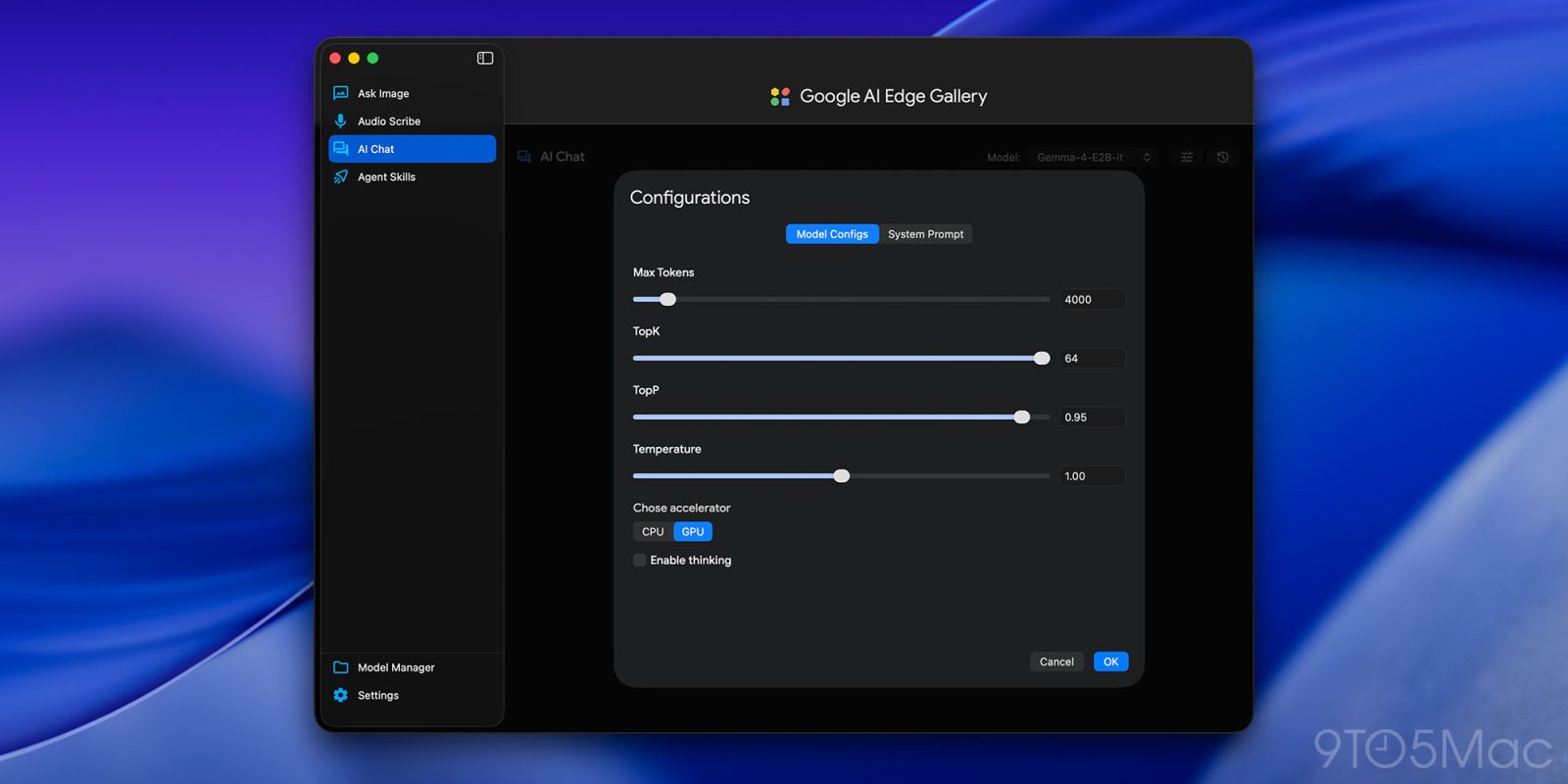
Standard dictation software often captures speech with "filler" words, stutters, and grammatical errors. Eloquent utilizes local LLM processing to transcribe in real-time while simultaneously performing "light edits." It cleans up disfluencies, improves flow, and ensures the resulting text is clear and professional. Because the processing occurs locally, the latency is almost non-existent, and the user’s voice data is never uploaded to a cloud server, addressing the security concerns common in enterprise environments. Furthermore, the inclusion of custom vocabulary—allowing users to add industry-specific jargon or complex names—ensures that the app remains accurate across specialized professional fields.
Official Perspectives and Strategic Implications
Google’s move is widely interpreted as a competitive strike against the centralized model of AI development. By providing the tools to run models like Gemma 4 locally, Google is positioning itself as a leader in the "Edge AI" movement.
The Implications for Developers and Users
For the developer community, the Google AI Edge Gallery simplifies the deployment process. While platforms like Ollama have long allowed users to pull models from repositories like Hugging Face, Google’s curated gallery provides a "walled garden" experience—ensuring that the models provided are fully optimized, safe, and stable for the Mac architecture.
For the end-user, the implications are profound:

- Democratization: The barrier to entry for running sophisticated AI models has been lowered. Users no longer need to be software engineers to leverage advanced LLMs offline.
- Privacy-First Workflows: Businesses that have been hesitant to use AI due to concerns over proprietary data leaking into cloud-based training sets now have a viable, high-performance alternative.
- The Rise of the Personal Agent: The transition toward "agentic" models means that our computers are evolving from passive tools into active assistants. By integrating vision and audio capabilities into local models, the laptop can now assist with visual data analysis and complex coding tasks that were previously only possible via a web browser.
The Future of Localized AI
As hardware continues to improve—particularly with the rapid advancement of Neural Engines in Apple’s M-series chips—the gap between cloud-based and local AI will continue to shrink. Google’s commitment to the macOS platform suggests that they view the laptop as a primary hub for AI interaction, not just an endpoint for web-based services.
While Google AI Edge Gallery currently offers a limited selection of five optimized models, the trajectory is clear: the ecosystem is expanding. As the company continues to refine the Gemma series and optimize the Eloquent dictation engine, users can expect to see a wider array of specialized models hitting the Mac platform.
This development is not merely an incremental update; it is a fundamental shift in how we conceive of AI. By moving intelligence from the "cloud" to the "edge," Google is handing the keys of the AI revolution back to the user, ensuring that the next generation of productivity is faster, more private, and entirely under our own control. Whether you are a developer looking to build local agents or a professional seeking a more secure and efficient dictation tool, the tools released today represent the new frontier of desktop computing.












No comments yet. Be the first to join the conversation!