

By Editorial Staff
July 16, 2026
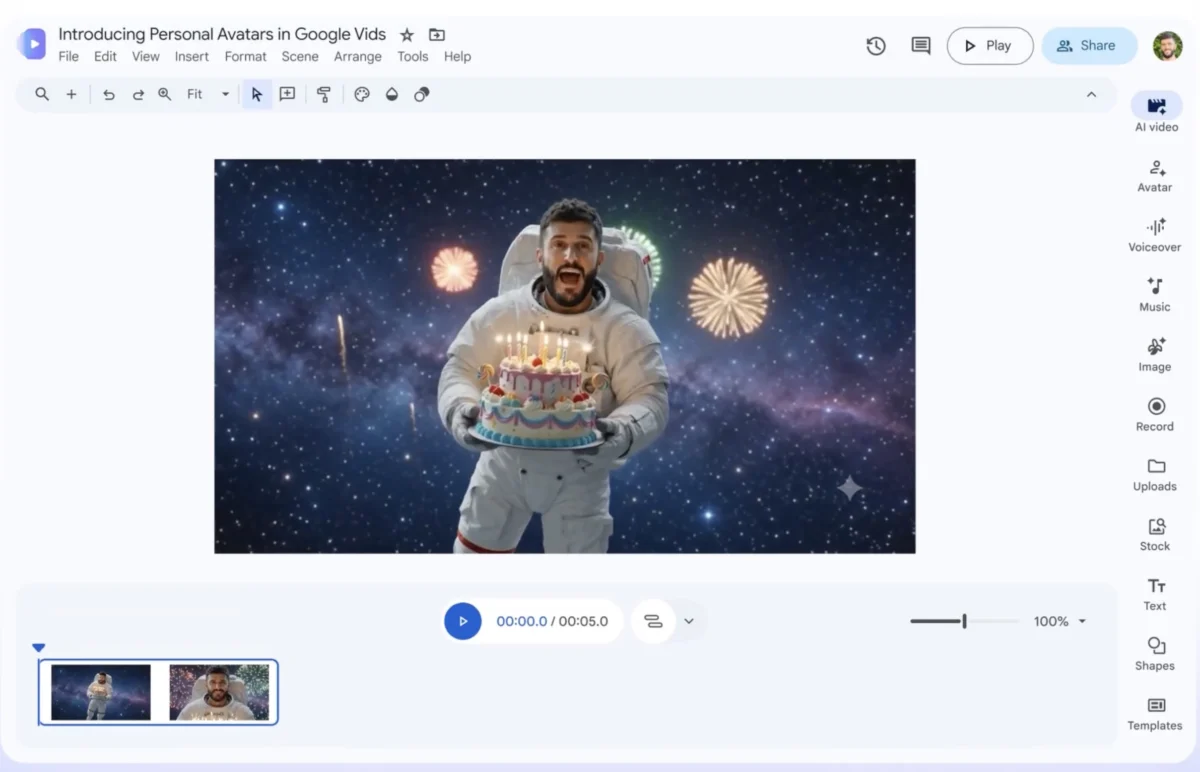
In a significant pivot for its workplace productivity suite, Google has unveiled a suite of transformative updates to its video creation platform, Google Vids. Following the industry-wide turbulence caused by the shuttering of OpenAI’s Sora earlier this year, Google is doubling down on the demand for high-fidelity, accessible AI video generation. The latest update, announced Thursday, introduces hyper-realistic personal AI avatars and integrates the multimodal powerhouse, Gemini Omni, into the core workflow of Google Workspace.
These changes signal a strategic shift: Google Vids is moving beyond its roots as a simple presentation assistant, positioning itself as a formidable competitor in the burgeoning market for corporate video production—a space currently dominated by specialized startups like HeyGen, Synthesia, and Captions.
The Core Transformation: What’s New in Google Vids?
The update centers on two primary technological advancements: the ability to generate a digital twin of the user and the integration of the Gemini Omni model to facilitate conversational, iterative video editing.
Personal AI Avatars
Users can now create a digital avatar that mirrors their own likeness and voice. By uploading a single selfie and a brief voice recording, the system generates a high-fidelity avatar capable of reciting scripts generated or provided by the user. This feature is designed specifically for professional use cases, such as internal training modules, personalized company-wide updates, or asynchronous communication where a human presence is required but time is at a premium.
Gemini Omni Integration
The integration of Gemini Omni acts as the engine for these new capabilities. Unlike previous iterations of AI video tools that relied on static prompts, Omni is multimodal. Users can now combine written instructions with reference images, allowing the AI to synthesize these inputs into a cohesive visual narrative. Furthermore, Omni offers sophisticated post-production features, such as background replacement, dynamic lighting adjustments, and the application of complex visual effects—all triggered via natural language commands.
A Brief Chronology of AI Video Evolution
To understand the weight of this announcement, one must look at the rapid, often volatile, trajectory of generative video technology over the past eighteen months.
- Early 2024: The industry reaches a fever pitch as models capable of generating cinematic-quality video from text prompts are unveiled.
- March 2026: OpenAI announces the discontinuation of Sora. The move sent shockwaves through the tech sector, raising questions about the scalability, safety, and commercial viability of high-end generative video models.
- May 2026: Google introduces Gemini Omni. The model demonstrates the ability to seamlessly interpret and synthesize text, audio, and visual data in real-time, setting the stage for more complex application integrations.
- July 2026: Google integrates these capabilities into the Workspace ecosystem, effectively moving AI video from a "novelty" feature into a standardized business utility.
Supporting Data and Market Positioning
Google’s move into this space is not merely an exercise in innovation; it is a calculated response to a growing market segment. The corporate video software market is projected to reach unprecedented valuations by 2030, driven by the shift toward remote work and the need for scalable corporate communications.
Comparative Landscape
While Google Vids previously focused on organizational presentations, the new avatar and editing features place it in direct competition with established players:
- HeyGen and Synthesia: Known for their robust enterprise avatar solutions.
- Captions and D-ID: Specialized in mobile-first editing and avatar generation for content creators.
Google’s distinct advantage lies in its integration. By housing these tools within the Google Workspace environment—already utilized by millions of enterprises—Google eliminates the friction of third-party software subscriptions, data migration, and security compliance.
The "Step-by-Step" Advantage
One of the most requested features in the professional video editing space has been the ability to iterate without destruction. Gemini Omni’s support for "step-by-step edits" addresses this pain point. Users no longer need to regenerate an entire video sequence if a single element is incorrect. They can now surgically modify segments, allowing for a collaborative, human-in-the-loop workflow that is crucial for professional settings.
Official Responses and Safety Protocols
The introduction of personal avatars naturally raises significant concerns regarding deepfakes and the potential for impersonation. Google has preemptively addressed these issues with a multi-layered security and ethics framework.
The SynthID Implementation
Every video generated through the new Google Vids update will be embedded with an invisible watermark via SynthID. This tool, developed by Google DeepMind, ensures that AI-generated content can be identified by detection software, even if the file is edited or re-compressed. This is a critical step in maintaining corporate integrity and preventing the misuse of executive likenesses.
Account-Bound Likeness
Google has explicitly stated that personal avatars are strictly tied to the account holder’s verified Google identity. This means that users cannot generate avatars of others—such as public figures, CEOs, or colleagues—without express, authenticated consent tied to their own security credentials.
Age and Regional Restrictions
Recognizing the risks associated with the proliferation of synthetic media, Google has implemented strict gating for these features. Access is currently limited to users aged 18 and older, with additional regional limitations in place to ensure compliance with local digital privacy and synthetic media legislation.
Implications for the Future of Work
The integration of Gemini Omni into Google Vids suggests a fundamental change in how corporate communication is produced.
1. The Democratization of Professional Video
Traditionally, creating high-quality training videos or corporate updates required a camera crew, lighting technicians, and a post-production editor. With the new Vids update, that entire department is theoretically condensed into a single interface. A manager can record a brief script on their laptop, and the AI can elevate the production value to a studio standard in minutes.
2. The Shift to "Asynchronous Presence"
The personal avatar feature allows for a new form of "asynchronous presence." An executive can, in theory, record a single message that is then translated and customized for different global offices, with the AI avatar maintaining the executive’s likeness while adapting to the linguistic and cultural nuances of the audience.
3. Ethical and Legal Challenges
While Google’s safety measures are robust, the broader implications remain complex. As AI-generated video becomes indistinguishable from reality, the burden of proof for the authenticity of digital media will fall more heavily on the viewer and the recipient. Enterprises will need to adopt rigorous internal policies regarding the use of "synthetic spokespeople" to ensure transparency with employees and shareholders.
4. A New Era for Workspace
Google Vids is no longer just a tool for creating slide decks. It is evolving into a comprehensive media engine. As Gemini Omni continues to learn from user interaction, we can expect future updates to include more autonomous content generation, such as auto-populating slides with relevant data from Sheets or Docs while simultaneously generating the accompanying video narrative.
Conclusion
Google’s latest update to Vids is a clear signal that the company intends to dominate the intersection of AI and workplace productivity. By combining the ease of use of a consumer-facing tool with the security and reliability required by enterprise-level clients, Google has bridged a gap that many startups have struggled to navigate.
While the ghost of OpenAI’s Sora still looms over the industry, Google’s measured, security-first approach—bolstered by the power of Gemini Omni—suggests that AI-assisted video is not just here to stay; it is rapidly becoming the new standard for professional communication. As organizations begin to adopt these tools, the focus will undoubtedly shift from the novelty of the technology to the efficiency and scalability it brings to the modern, distributed workplace.
For now, the message from Mountain View is clear: the future of work is not just typed; it is generated, voiced, and rendered in real-time.











