

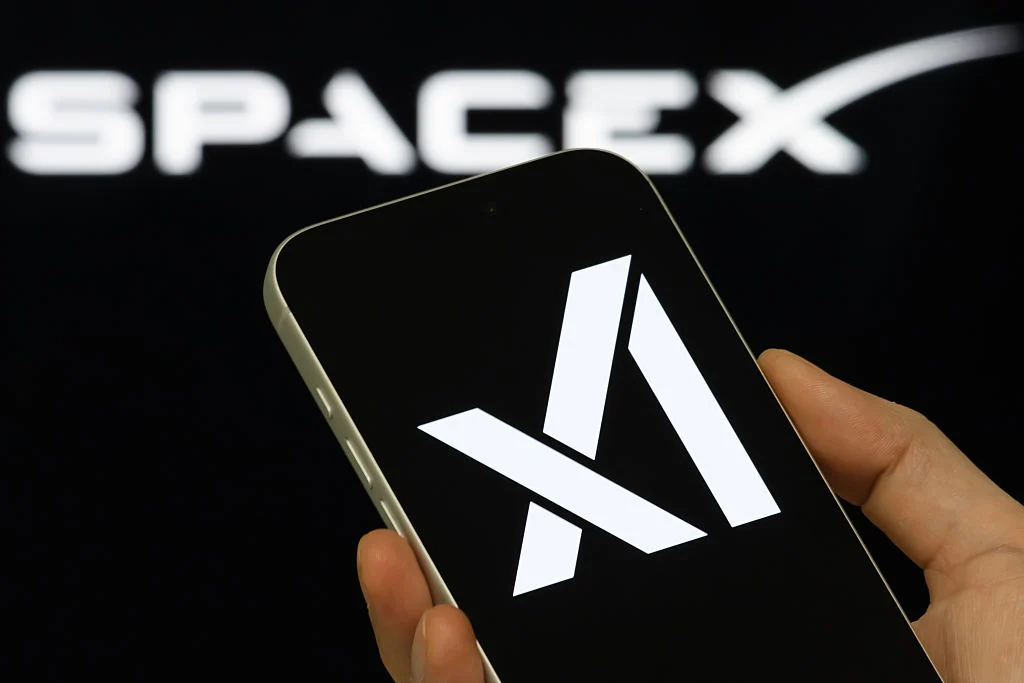
The artificial intelligence landscape is witnessing a high-stakes corporate drama as SpaceXAI—the recently consolidated entity formed from the merger of Elon Musk’s xAI and SpaceX’s infrastructure—faces a significant brain drain. According to reports from The Information, more than 50 researchers and engineers have vacated their positions since February. This mass departure has sent ripples through Silicon Valley, raising fundamental questions about the sustainability of Musk’s aggressive management style and the long-term technical viability of his flagship AI product, Grok.
The exodus is not merely a quantitative loss; it is a qualitative one. The departures include pivotal leadership figures across critical departments, including those responsible for world models, coding architectures, and the voice-interaction capabilities of Grok. As internal morale appears to fluctuate, competitors—most notably Meta and the nascent Thinking Machine Labs, founded by former OpenAI luminary Mira Murati—are actively absorbing this displaced expertise.
A Chronology of Consolidation and Conflict
The current instability can be traced back to the strategic consolidation announced in early February. In a move designed to leverage SpaceX’s massive data center infrastructure for AI training, Musk integrated xAI into the broader SpaceX umbrella. Shortly thereafter, the company was rebranded as SpaceXAI.
However, the internal transition was far from seamless. Almost immediately following the merger, a wave of departures hit the company, including at least two of the organization’s founding members. By mid-February, TechCrunch reported that nearly half of the original xAI founding team had exited, signaling a deeper dissatisfaction with the new corporate structure.
- February 2026: SpaceX formally acquires xAI. Musk installs a new leadership layer, signaling a shift in operational focus.
- Late February 2026: The first major wave of resignations occurs, with high-level researchers citing structural changes and shifts in company mission as primary catalysts.
- March 2026: The rebranding to "SpaceXAI" takes effect. Internal reports suggest a shrinking of the core pre-training team to a "handful" of individuals, sparking alarm among remaining staff regarding the project’s future.
- Present Day: The company continues to lose specialized talent to rivals, with at least 11 former employees joining Meta and seven moving to Thinking Machine Labs.
The Shrinking Core: Why Pre-Training Teams Matter
At the heart of the controversy is the attrition within the "pre-training" team, the group responsible for the foundational work that allows AI models to understand, process, and generate information. The departure of team lead Juntang Zhuang was a significant blow to the organization’s institutional memory.
Pre-training is arguably the most labor-intensive and technically demanding aspect of AI development. It requires immense computational power and a high degree of mathematical rigor. When a company loses its core pre-training staff, it loses the "architects" of its intelligence. Industry analysts have noted that the depletion of this specific team suggests a pivot away from original foundational research, potentially forcing the company to rely on existing architectures rather than pushing the boundaries of generative AI.
The "Hardcore" Culture and the Cost of Speed
A recurring theme in the reports surrounding the departures is Musk’s "extreme work" culture. This philosophy, which famously defined his leadership at Tesla, SpaceX, and X (formerly Twitter), demands long hours and aggressive, often unrealistic, deadlines.
Former employees have characterized the environment at SpaceXAI as one of relentless pressure. Sources close to the company report that the rush to iterate on Grok led to the "cutting of corners," with engineers pushed to ignore technical debt in favor of immediate performance milestones. While this approach has historically allowed Musk to disrupt industries, it is proving to be a double-edged sword in the AI sector, where precision and long-term research are arguably more vital than rapid, iterative releases.
The human cost of this approach is becoming increasingly visible. Engineers who are used to the academic rigor of top-tier AI labs often find the "move fast and break things" mentality—when applied to foundational model training—to be intellectually exhausting and professionally stifling.
Financial Motivations: Liquidity and IPO Expectations
While culture and leadership are clearly factors, the financial aspect of the departures cannot be ignored. SpaceX maintains a unique compensation structure, frequently offering tender offers that allow employees to sell vested shares in the private market.
For many high-level AI researchers, the equity in SpaceXAI represents a significant "golden ticket." As the company moves toward what many market observers believe is an inevitable and blockbuster IPO, employees may feel that they have reached a point of financial stability. Once the prospect of liquidity becomes a reality, the incentive to endure a high-pressure, potentially chaotic work environment diminishes rapidly. For many of the departed, leaving SpaceXAI is not just an exit—it is a "cashing out" phase that allows them to transition to startups like Thinking Machine Labs, where the work might be more research-focused, or to tech giants like Meta, where the resources are vast and the work-life balance is traditionally more structured.
Implications for the Future of Grok
The mass departure of talent raises a critical question: Can SpaceXAI maintain its competitive edge against heavyweights like OpenAI, Google DeepMind, and Anthropic?
The loss of 50+ researchers is not easily overcome by hiring alone. AI development is a craft that relies on the "tribal knowledge" of teams who have worked together to fine-tune models over years. When that continuity is broken, the risk of technical regression becomes very real.
If the company continues to lose its top-tier researchers, we may see a stagnation in the development of Grok. If the "core pre-training team" remains at its currently diminished capacity, the company may find it increasingly difficult to compete with models like GPT-5 or Claude 4, which are currently being developed by teams with higher stability and deeper research benches.
Official Responses and Industry Outlook
TechCrunch and other outlets have reached out to SpaceX for comment regarding the restructuring and the high turnover rates. As of this writing, official responses have been sparse, with the company generally maintaining that it is "optimizing" its workforce to better align with its long-term mission of merging space-faring infrastructure with advanced artificial intelligence.
Industry analysts are watching this situation closely. The failure or success of SpaceXAI will serve as a bellwether for the "Musk-ification" of the AI industry. If he can overcome the current talent crisis, it will validate his high-pressure, integrated-systems approach. If he fails, it may serve as a stark warning to the industry that AI, unlike rocket manufacturing or electric vehicle production, requires a different, perhaps more deliberative, human-capital strategy.
For now, the talent pipeline continues to flow outward, moving from the SpaceXAI offices in the Bay Area to the research labs of his most formidable competitors. The coming months will determine whether this is merely a "growing pain" of a new merger or the beginning of a significant decline for one of the industry’s most ambitious, if volatile, players.











No comments yet. Be the first to join the conversation!