Laily UPN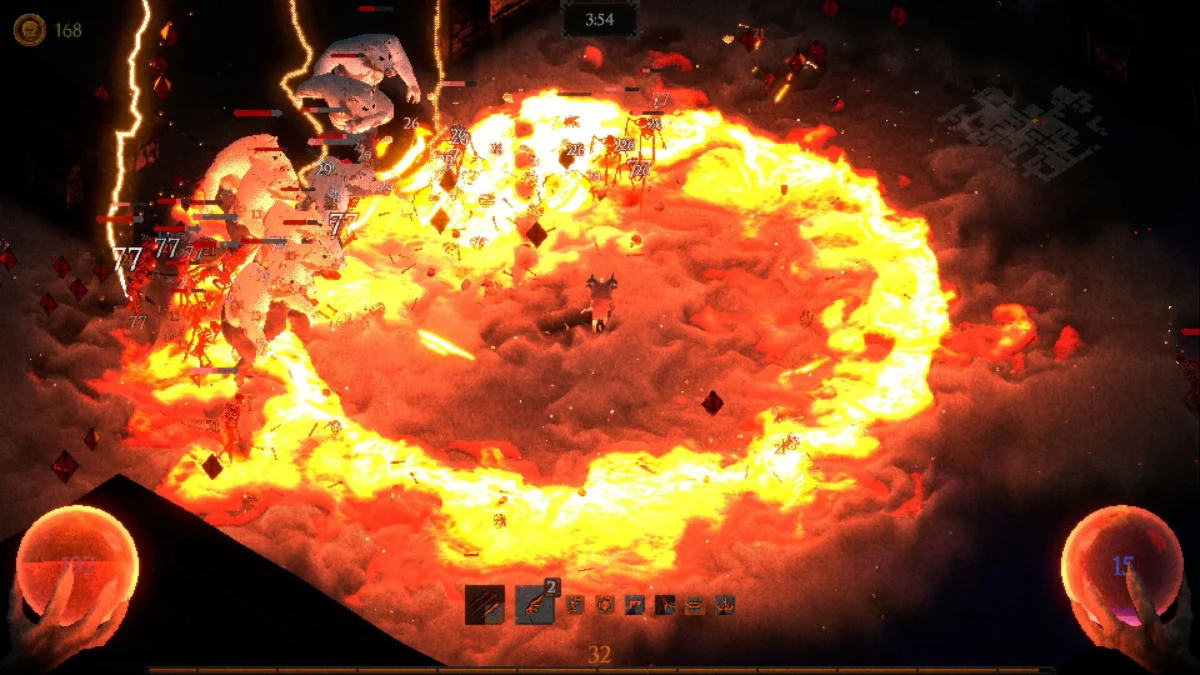
The "survivors-like" genre—often colloquially referred to as the "bullet heaven" or "horde-survivor" sub-genre—has spent the last few years searching for its next great evolutionary leap. Since the meteoric rise of Vampire Survivors, developers have struggled to balance the intoxicating "dopamine hit" of clearing screens full of enemies with the need for mechanical depth. With the release of the Ignitement demo, the industry may have finally found a title that marries visceral, pyrotechnic spectacle with genuine, high-stakes tactical decision-making.
Developed by a team clearly inspired by the arcade roots of the 80s, Ignitement shifts the genre’s traditional "auto-fire and pray" loop into the realm of active, twin-stick management. By placing the onus of combat directly onto the player, the game transforms from a passive experience into a high-octane test of reflex and resource conservation.
The Core Mechanics: Beyond Simple Automation
At its heart, Ignitement tells a story of a masked fire shaman wandering the psychic landscape of their own mind. Players ascend a ceremonial staircase to a temple, where the battle against an encroaching dark fantasy horde begins. Unlike its contemporaries, Ignitement rejects the "walk-around-while-the-game-plays-itself" design philosophy.
Active Combat and Resource Management
The defining feature of Ignitement is its rejection of auto-firing mechanics. In this title, every blast of fire from your shaman’s arsenal consumes mana. If the player is reckless, they can drain their resources entirely, leaving them defenseless against the encroaching tide.
This introduces a layer of "tactical pacing" that is largely absent from the genre. When the screen is flooded with enemies, the temptation to hold the trigger down is immense. However, the game rewards restraint: when the shaman isn’t firing, their movement speed increases significantly. This creates a rhythmic "push-and-pull" dynamic where players must constantly decide between aggressive fire-spreading and evasive mobility. Mana regeneration is quick, yet the game forces you to consciously "give it a break," turning what could have been a mindless button-masher into a disciplined dance of fire and movement.
The Mask System and Character Customization
The demo provides a glimpse into the game’s loadout system through the use of "Masks." Each mask dictates the shaman’s starting capabilities.
- The Flamethrower Mask: Focuses on sustained, mid-range crowd control with a dash ability for repositioning.
- The Fireball/Shield Mask: Encourages a more defensive, methodical playstyle, utilizing projectiles and barriers to survive the escalating darkness.
These masks act as the foundation for each run, ensuring that even within the limited scope of the demo, players are forced to adapt their strategy based on their starting equipment.
Chronology of the Demo Experience
The Ignitement experience is structured around twenty-minute survival gauntlets. As the clock ticks down, the density of the horde increases exponentially.
- Early Game (0–5 minutes): The player learns the rhythm of mana management. The primary focus is on gathering experience gems to trigger the first few level-ups.
- Mid Game (5–15 minutes): The environment begins to test the player. This is where the "environmental risks" come into play. The game introduces non-combatant entities, such as a mysterious devil who offers high-risk, high-reward "burdens," or a chance demon that forces a 50/50 coin flip on character stats.
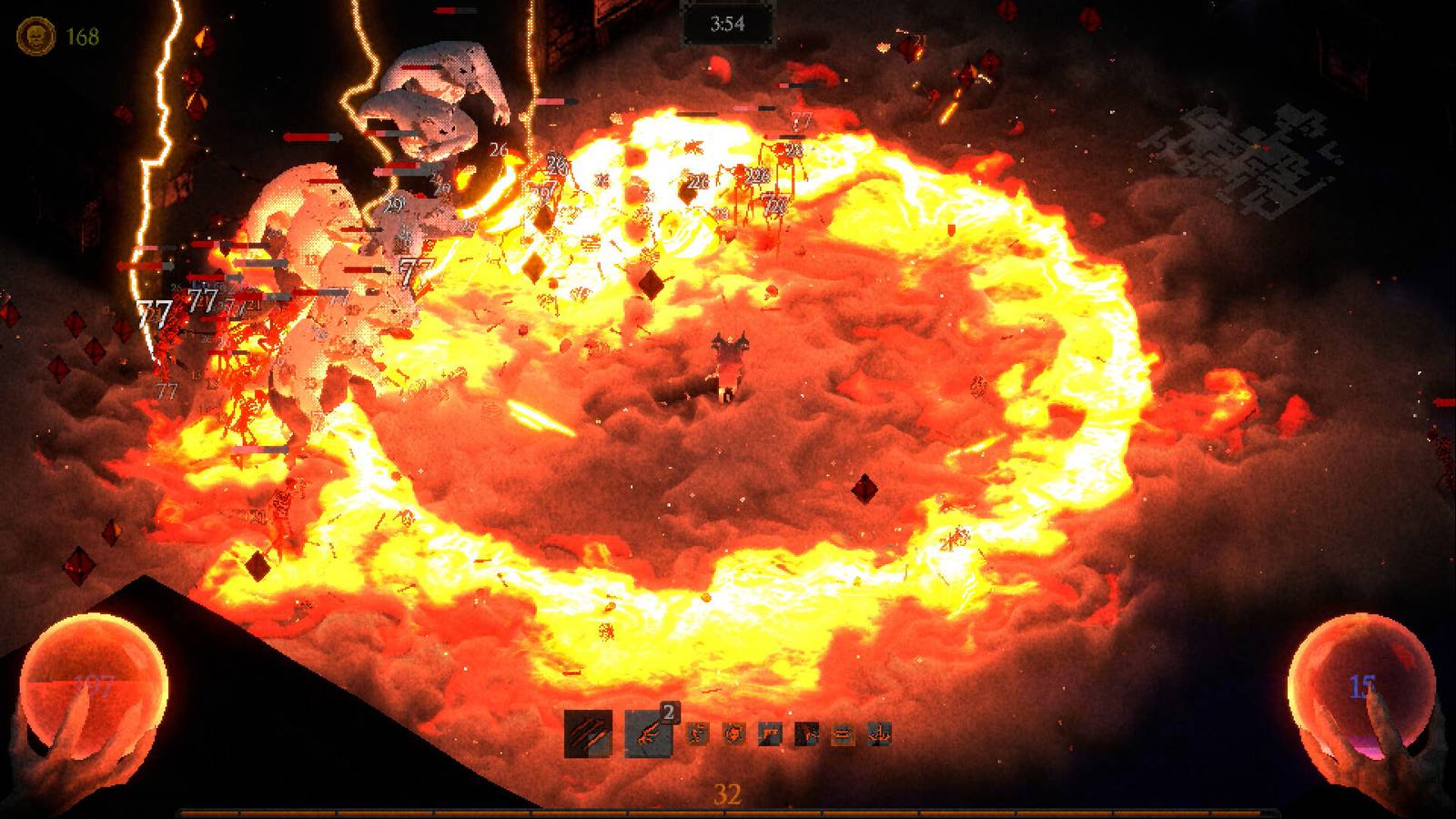
- Late Game (15–20 minutes): The screen becomes a cacophony of visual effects. The smoke-swirled floor and the constant barrage of flames create an atmosphere that feels less like a simple game and more like a cinematic display of controlled destruction.
Supporting Data: Upgrades and Progression
Progression in Ignitement is split between in-run choices and between-run investments. The level-up system allows players to select one of three randomized upgrades, forcing a "build-on-the-fly" mentality.
The Role of Gold
Gold coins collected during runs serve as the primary currency for persistent progression. Unlike other titles that might allow you to purchase raw stat boosts, Ignitement focuses on the quality of the RNG. Coins are spent to enhance the probability of higher-tier upgrades appearing during a level-up event. While it doesn’t guarantee a "legendary" roll, it heavily weights the scales in the player’s favor, ensuring that even a bad run provides the resources to make the next one significantly more potent.

The "Chaos" Variable
Perhaps the most intriguing aspect of the upgrade system is the "Chaos" tier. When chosen, these upgrades apply unpredictable, game-altering effects. While risky, they offer the highest potential for breaking the game’s difficulty curve, rewarding players who are willing to gamble on volatility over consistency.
Official Stance and Community Reception
While the developers have maintained a relatively quiet profile leading up to the demo, the community response has been overwhelmingly positive. Early feedback highlights the "auto-choose random" function as a standout feature—a quality-of-life improvement that allows players to opt out of constant menu interruptions if they prefer to focus entirely on the action.
The developer’s philosophy, as hinted in interviews and supporting materials, is to move away from the "static" nature of current survivors games. By introducing elements of twin-stick shooters and active resource management, they are aiming to create a product that respects the player’s agency while maintaining the visual flair that the genre is famous for.
Implications for the Genre
The success of the Ignitement demo signals a potential shift in the "survivors" landscape. For years, the gold standard has been a balance of visual "juice" and passive scaling. Ignitement suggests that the future of the genre lies in intentionality.
1. The Death of Passive Play
If Ignitement succeeds, it will likely pressure other developers to move away from fully automated combat. Players are increasingly demonstrating a desire to "feel" the impact of their choices, not just watch them happen.
2. The Rise of Tactical Survival
By requiring mana management, the game has effectively bridged the gap between the roguelike-shooter and the horde-survivor. This creates a wider appeal, drawing in fans of games like Dusk or Geometry Wars who might have previously found the "survivors" genre too hands-off.
3. Visuals as Gameplay, Not Just Flavor
In Ignitement, the fire isn’t just for show—it is a functional light source in a dark, oppressive world. The interaction between the player’s abilities and the environmental art creates a cohesive aesthetic that feels purposeful.
Conclusion
The Ignitement demo is more than just another entry in a crowded genre; it is a proof-of-concept that the "survivors" formula has room to grow. By prioritizing active movement, resource management, and high-stakes risk-taking, it manages to keep the addictive nature of its predecessors while discarding the monotony.
As the game moves toward its full release, the focus will undoubtedly be on how the developers expand the current library of masks and arenas. However, the foundation is solid. Whether you are a fan of fast-paced action or a student of meticulous mechanical design, Ignitement proves that even in a digital hellscape, there is always room for a bit of well-managed, fiery chaos. The shaman’s journey is just beginning, and for those who enjoy the thrill of the horde, it is a journey well worth taking.


 Asro
Asro
 Muslim