Lina Irawan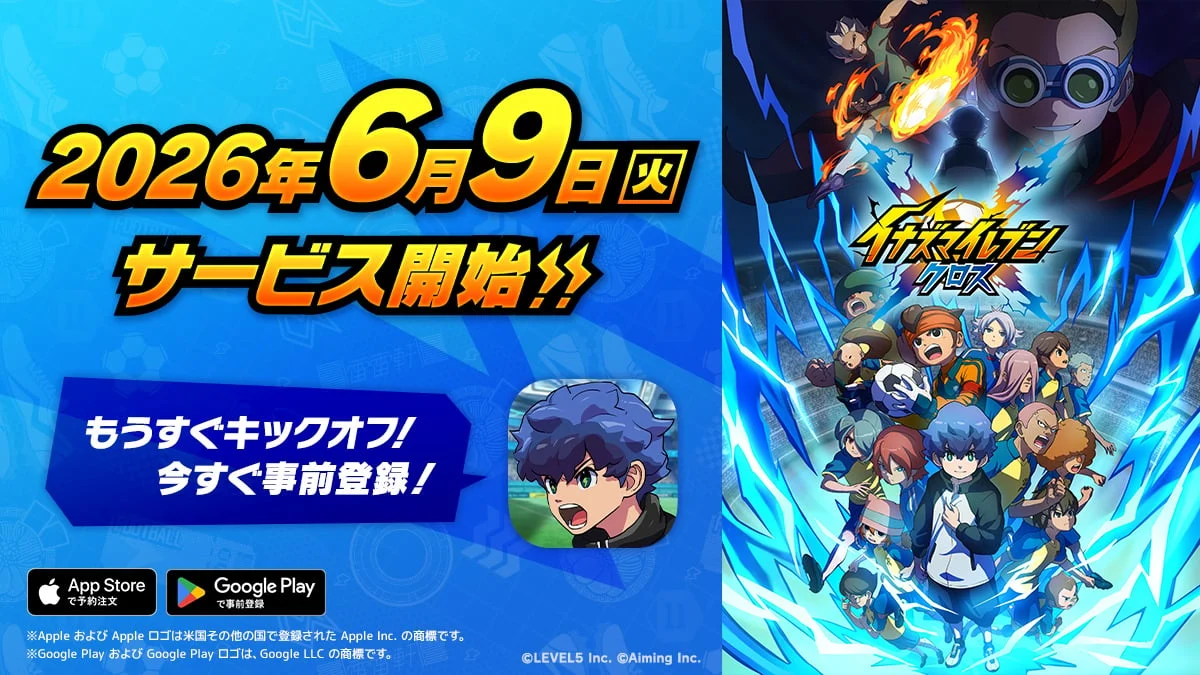
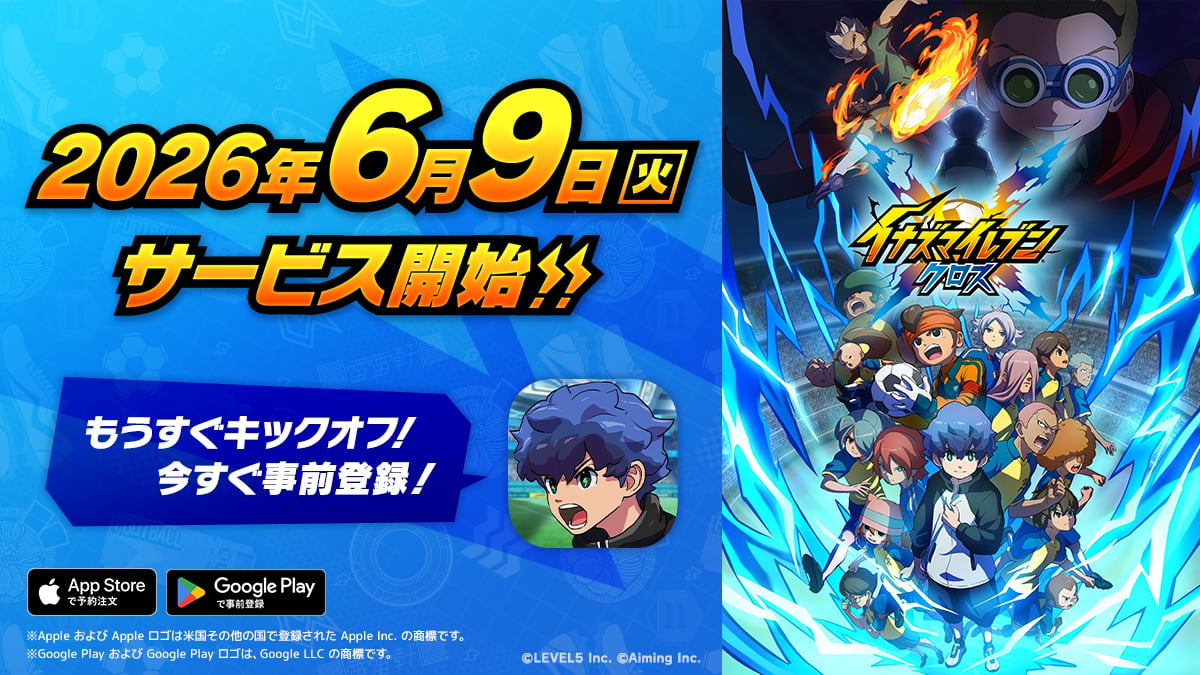
TOKYO, Japan – May 29, 2026 – The highly anticipated free-to-play mobile game, Inazuma Eleven: Cross, is set to launch on iOS and Android platforms in Japan on Tuesday, June 9, 2026 (JST). Developed collaboratively by veteran publisher LEVEL-5 and mobile specialist Aiming, the title marks a significant expansion of the beloved Inazuma Eleven franchise into the competitive mobile gaming sphere. The announcement, made during a dedicated live stream, also unveiled the "Japan National Team 2026 Project," promising exclusive content featuring iconic characters Mark Evans (Mamoru Endo) and Jude Sharp (Yuto Kido) adorned in special national team uniforms. Pre-registration for the game is now officially open, inviting fans to secure their place ahead of the grand kickoff.
This launch represents a pivotal moment for the Inazuma Eleven series, which has captivated audiences worldwide with its unique blend of soccer action and role-playing elements. The move to a free-to-play mobile model signals LEVEL-5’s strategic ambition to reach a broader audience while leveraging the enduring popularity of its flagship characters and intricate world-building.
Main Facts
- Game Inazuma Eleven: Cross
- Platforms: iOS (via App Store) and Android (via Google Play)
- Launch Date (Japan): June 9, 2026 (JST)
- Publishers/Developers: LEVEL-5 (publisher and developer), Aiming (developer)
- Genre: Free-to-play mobile soccer RPG (expected)
- Key Announcement: "Japan National Team 2026 Project"
- Project Features: Newly illustrated commemorative artwork, addition of Mark Evans (Mamoru Endo) and Jude Sharp (Yuto Kido) in Japan national team uniforms.
- Current Status: Pre-registration is currently available in Japan.
- Official Sources: Announcement made via the official Inazuma Eleven: Victory Road website and an "INA-DAI" live stream.
Chronology of the Announcement
The journey to the official launch date announcement for Inazuma Eleven: Cross has been marked by a series of strategic reveals designed to build anticipation among the franchise’s dedicated fanbase. The initial whispers of a new mobile title in the Inazuma Eleven universe had circulated for some time, fostering a sense of eager expectation.
The formal confirmation of Inazuma Eleven: Cross as a free-to-play mobile game was met with significant interest, positioning it as a distinct offering alongside the console-bound Inazuma Eleven: Victory Road. This distinction clarified LEVEL-5’s dual-platform strategy, aiming to cater to different player preferences and engagement models.
The decisive announcement of the June 9, 2026, launch date arrived during a dedicated "INA-DAI" live stream on May 29, 2026. These live streams have become a customary and effective channel for LEVEL-5 to directly communicate with its community, offering real-time updates, developer insights, and exclusive first-looks. During this particular broadcast, not only was the release date locked in, but the exciting "Japan National Team 2026 Project" was also unveiled. This project, immediately capturing fan attention, highlighted the inclusion of fan-favorite characters Mark Evans and Jude Sharp in special national team attire, accompanied by commemorative artwork. The immediate availability of pre-registration following the announcement underscored LEVEL-5 and Aiming’s readiness to mobilize player interest and kickstart the pre-launch engagement phase. This carefully orchestrated rollout, from initial tease to concrete launch details and immediate pre-registration, reflects a seasoned approach to building hype and ensuring a strong debut for the title.
Supporting Data
The Inazuma Eleven Legacy
The Inazuma Eleven franchise, a cornerstone of LEVEL-5’s diverse portfolio, boasts a rich history spanning over a decade. Originating as a Nintendo DS title in 2008, the series quickly distinguished itself by seamlessly blending elements of traditional role-playing games with the dynamic excitement of soccer. Players recruit and train a team of uniquely skilled individuals, each possessing "Hissatsu Tactics" – over-the-top, anime-inspired special moves that defy the laws of physics and bring an unparalleled level of spectacle to the pitch. This imaginative fusion, coupled with compelling narratives centered on friendship, perseverance, and overcoming formidable opponents, resonated deeply with a broad audience, particularly in Japan.
Beyond its video game roots, Inazuma Eleven rapidly evolved into a multimedia phenomenon. A highly successful anime adaptation, which closely followed the game’s storylines, further expanded its reach, bringing the vibrant characters and their epic soccer battles to television screens globally. This was complemented by manga series, animated films, and a plethora of merchandise, solidifying its status as a cultural touchstone for many young fans. The franchise’s enduring appeal lies in its ability to deliver exhilarating sports action within a deeply engaging RPG framework, allowing players to not only witness incredible soccer feats but also to actively participate in the development and triumph of their chosen team. The transition to mobile with Inazuma Eleven: Cross aims to leverage this established brand loyalty and introduce the series to a new generation of players accustomed to on-the-go gaming experiences.
LEVEL-5 and Aiming: A Collaborative Endeavor
The partnership between LEVEL-5 and Aiming for Inazuma Eleven: Cross brings together distinct strengths crucial for a successful mobile game launch. LEVEL-5, renowned for creating beloved franchises such as Professor Layton, Yo-kai Watch, and, of course, Inazuma Eleven, possesses an unparalleled understanding of character design, narrative development, and world-building that has captivated audiences for years. Their expertise in crafting engaging IPs and delivering high-quality entertainment is foundational to the Inazuma Eleven: Cross project. While LEVEL-5 has ventured into mobile gaming previously, this collaboration signifies a focused effort to optimize their IP for the unique demands of the mobile platform.
Aiming, on the other hand, is a specialist in the realm of online and mobile game development. With a portfolio that includes successful titles known for their robust online functionalities, persistent worlds, and effective monetization strategies, Aiming brings the technical prowess and operational experience essential for a free-to-play mobile game. Their expertise in server infrastructure, live service management, player engagement loops, and free-to-play monetization models (such as gacha mechanics and seasonal events) is invaluable. This collaboration allows LEVEL-5 to focus on the core creative vision and brand integrity of Inazuma Eleven, while Aiming ensures the game is technically sound, scalable, and designed for long-term player retention in the competitive mobile market. The synergy between LEVEL-5’s creative genius and Aiming’s mobile development acumen positions Inazuma Eleven: Cross with a strong foundation for both critical and commercial success.
The Mobile Gaming Landscape in Japan
Japan stands as one of the most mature and lucrative mobile gaming markets globally, characterized by a highly engaged player base and a significant preference for free-to-play titles often featuring intricate gacha mechanics. The market is intensely competitive, dominated by both domestic giants and international players, all vying for player attention and spending. Japanese mobile gamers are known for their discerning tastes, appreciating high-quality visuals, deep gameplay systems, and strong narrative elements, often with a particular fondness for IP-driven titles that leverage established anime, manga, or game franchises.
The prevalence of smartphone usage means that mobile gaming is not merely a niche but a mainstream form of entertainment, deeply integrated into daily life. This environment necessitates robust live-service operations, frequent content updates, and effective community management to maintain player interest over extended periods. Games that successfully tap into cultural trends, offer compelling social features, and provide a steady stream of new characters, events, and challenges tend to thrive. For Inazuma Eleven: Cross, entering this market means facing seasoned competitors, but also presents an immense opportunity to capitalize on the franchise’s existing popularity. The free-to-play model, combined with recognizable characters and the beloved soccer-RPG mechanics, is a well-trodden path to success in Japan, provided the execution meets the high standards expected by local players. The strategic decision to launch in Japan first underscores the importance of this domestic market to the game’s overall trajectory.
Deep Dive into the Japan National Team 2026 Project
The "Japan National Team 2026 Project" is a significant promotional and content initiative designed to celebrate the launch of Inazuma Eleven: Cross and deeply engage the fanbase. The core of this project revolves around the introduction of iconic characters Mark Evans (Mamoru Endo) and Jude Sharp (Yuto Kido) in special Japan national team uniforms, accompanied by newly illustrated commemorative artwork. This is a powerful move for several reasons.
Firstly, Mark Evans and Jude Sharp are arguably two of the most recognizable and beloved characters in the entire Inazuma Eleven saga. Mark, as the protagonist and inspirational captain, embodies the spirit of the series, while Jude, the strategic genius, represents its tactical depth. Featuring them prominently in national team gear immediately taps into a deep well of nostalgia and fan affection. The "2026" designation within the project name is also noteworthy. While it could simply signify the game’s launch year, it subtly evokes the quadrennial cycle of major international soccer tournaments, hinting at a potential in-game event or narrative arc that mirrors the excitement of a real-world World Cup. This connection could allow players to build their ultimate national team, participate in special themed events, and experience the thrill of international competition within the game’s universe.
The "newly illustrated commemorative artwork" further enhances the project’s appeal, offering fresh visual takes on these classic characters. Such artwork often becomes highly sought-after by fans, suitable for wallpapers, merchandise, or in-game collectibles. By integrating these elements directly into the game, LEVEL-5 and Aiming are providing exclusive, high-value content right from the outset, incentivizing early adoption and pre-registration. This project is not merely a cosmetic update; it’s a strategic content drop that leverages the franchise’s strongest assets to generate buzz, drive engagement, and establish a strong foundation for the game’s live service. It signals a commitment to celebrating the series’ heritage while pushing forward with new content.
The Free-to-Play Model and Its Implications
Inazuma Eleven: Cross embracing the free-to-play (F2P) model has significant implications for its accessibility, monetization, and long-term viability. The primary advantage of F2P is its low barrier to entry: anyone with a compatible device can download and start playing without an upfront cost. This dramatically expands the potential player base, allowing the game to reach millions who might be hesitant to purchase a premium title. For a beloved franchise like Inazuma Eleven, this means rekindling interest among lapsed fans and introducing the series to entirely new audiences, particularly younger players accustomed to mobile gaming.
However, the F2P model also comes with inherent challenges, primarily concerning monetization. Revenue generation typically relies on in-app purchases (IAPs), often through "gacha" mechanics, where players spend virtual currency (purchased with real money) to randomly acquire new characters, rare items, or special abilities. This system, while highly profitable when implemented ethically, can lead to concerns about "pay-to-win" dynamics, where players who spend more money gain a significant competitive advantage, potentially alienating free players.
For Inazuma Eleven: Cross, the F2P model will likely involve collecting different versions of characters (like the national team variants of Mark and Jude), improving their stats, and acquiring powerful "Hissatsu Tactics." The developers will need to strike a delicate balance between offering compelling paid content and ensuring a rewarding experience for free players to maintain a healthy ecosystem. Successful F2P games thrive on robust live-service operations, including regular content updates, seasonal events, battle passes, and daily login bonuses, all designed to keep players engaged and encourage spending over time. The implications are clear: while the F2P model offers immense reach, its success hinges on fair monetization, continuous content delivery, and a strong commitment to player satisfaction.
Pre-Registration and Community Engagement
Pre-registration campaigns have become a standard and critical component of mobile game launches, serving multiple strategic purposes for Inazuma Eleven: Cross. Firstly, it acts as a powerful marketing tool, generating early buzz and awareness for the upcoming title. By encouraging players to sign up ahead of time, developers can gauge initial interest, estimate potential launch-day downloads, and build a foundational audience even before the game goes live.
Secondly, pre-registration often comes with incentives, typically in the form of tiered rewards. As more players pre-register, increasingly valuable in-game items, currency, or exclusive characters are unlocked for all participants upon the game’s launch. This gamified approach not only motivates individual sign-ups but also fosters a sense of collective achievement within the burgeoning community. For Inazuma Eleven: Cross, such rewards could include rare versions of iconic players, valuable training materials, or premium gacha tickets, providing a head start for new players.
Beyond mere sign-ups, pre-registration is an integral part of community engagement. It provides developers with an initial direct communication channel to early adopters, allowing them to send updates, teasers, and launch notifications. This early interaction helps cultivate a loyal player base, which is crucial for the long-term success of any live-service mobile game. The fact that pre-registration is available immediately after the launch date announcement signifies LEVEL-5 and Aiming’s intent to build momentum rapidly and convert initial interest into committed players, ensuring a strong and well-supported launch day.
Official Responses
In the official announcement, LEVEL-5 and Aiming conveyed their enthusiasm and provided specific details regarding the launch and the "Japan National Team 2026 Project."
"Our new mobile title Inazuma Eleven: Cross will officially launch on Tuesday, June 9, 2026 (JST)," the companies stated. This direct confirmation served to eliminate any ambiguity regarding the release timeline, setting a clear expectation for fans eagerly awaiting the game’s debut.
Further elaborating on their immediate post-launch plans, the developers added, "Alongside the release, we unveiled the special Japan National Team 2026 Project, featuring newly illustrated commemorative artwork, as well as adding Mark Evans (Mamoru Endo) and Jude Sharp (Yuto Kido) wearing the uniform of Japan’s national team, to the game." This statement highlights the immediate focus on delivering new, exclusive content that celebrates the franchise’s heritage while offering fresh reasons to engage. The emphasis on "newly illustrated commemorative artwork" underscores the artistic effort invested, providing tangible value beyond just character additions. The inclusion of Mark Evans and Jude Sharp, two of the series’ most iconic figures, in special national team attire, is a clear nod to fan preferences and a strategic move to capitalize on their enduring popularity from day one.
The announcement also directed fans to official resources for more information, stating, "For further details and additional first-look announcements, visit the Ina-Dai archive stream and the official Inazuma Eleven: Cross website." This points to a multi-channel communication strategy, ensuring that all interested parties can access comprehensive information and stay updated on future developments. The availability of the "INA-DAI" live stream archive allows those who missed the live broadcast to catch up on all the revealed details and developer insights, fostering transparency and continued engagement with the community. These official responses reflect a well-planned launch strategy that prioritizes clear communication, immediate content delivery, and sustained fan interaction.

Implications
Impact on the Inazuma Eleven Franchise
The launch of Inazuma Eleven: Cross on mobile carries profound implications for the future trajectory of the entire franchise. Historically, Inazuma Eleven has thrived on dedicated handheld consoles, fostering a deep, single-player RPG experience. The pivot to a free-to-play mobile model represents a significant strategic shift, aiming to broaden its reach beyond its traditional console audience. This move could introduce the unique blend of soccer and RPG elements to a new generation of players who primarily engage with games on smartphones, potentially revitalizing the brand and expanding its global footprint.
However, it also presents a challenge: maintaining the franchise’s core identity and narrative depth within the constraints and conventions of mobile gaming. Fans accustomed to rich storylines and extensive character interactions might find the F2P structure, often characterized by episodic content and gacha mechanics, a departure from the series’ roots. The success of Cross will heavily influence how LEVEL-5 approaches future Inazuma Eleven titles, potentially signaling a long-term commitment to mobile as a primary platform or informing a hybrid strategy that balances console and mobile offerings. If Cross succeeds in attracting a large, engaged player base, it could unlock new revenue streams and investment opportunities for the franchise, ensuring its continued evolution and expansion across various media.
Market Positioning and Competition
Entering the Japanese mobile gaming market in 2026 means Inazuma Eleven: Cross is stepping into an arena saturated with established and highly successful titles. The sports genre on mobile, particularly those with RPG and collection elements, is fiercely competitive. Cross will need to carve out a distinct niche for itself amidst popular gacha RPGs, rival sports management sims, and other IP-driven mobile games. Its unique selling proposition lies in its distinct "super-dimensional soccer" gameplay, its rich cast of characters, and the established brand loyalty of the Inazuma Eleven universe.
The collaboration between LEVEL-5 and Aiming is a strategic advantage, combining creative vision with technical expertise in mobile live services. However, the game’s long-term market positioning will depend on its ability to offer compelling, regularly updated content, fair monetization practices, and robust player-versus-player (PvP) or cooperative multiplayer features that foster a vibrant community. Competing for player attention and spending in Japan’s mobile landscape requires continuous innovation and responsiveness to player feedback. The "Japan National Team 2026 Project" is an excellent initial step in differentiating the game, but sustained engagement will require a clear roadmap for future content and events to stand out in a crowded marketplace.
Global Release Prospects
While Inazuma Eleven: Cross is initially launching exclusively in Japan, the global popularity of the franchise strongly suggests that a worldwide release is a significant possibility, if not an eventual certainty. The Inazuma Eleven anime and previous game titles have garnered considerable fanbases across Europe, North America, and other Asian territories. These fans are likely eager to experience the series’ latest iteration, particularly on accessible mobile platforms.
However, a global release comes with its own set of challenges. Localization, including translation of vast amounts of text and voice acting (if applicable), is a substantial undertaking. Cultural sensitivities, marketing strategies, and legal compliance (especially concerning gacha mechanics and data privacy laws like GDPR) must also be carefully considered for each target region. Furthermore, server infrastructure and community management would need to scale significantly to support a worldwide player base. If Inazuma Eleven: Cross performs strongly in Japan, demonstrating its commercial viability and ability to retain players, LEVEL-5 and Aiming will be strongly incentivized to invest in a global rollout. Such a move would significantly expand the game’s potential revenue and solidify Inazuma Eleven‘s status as a truly international multimedia franchise.
Player Expectations and Monetization Concerns
Player expectations for Inazuma Eleven: Cross are likely to be high, stemming from the franchise’s legacy of engaging gameplay and memorable characters. Fans will be looking for a game that captures the essence of "super-dimensional soccer" with its dramatic special moves and strategic team building. The mobile format, however, inherently introduces concerns about monetization, particularly the free-to-play model’s reliance on gacha.
Many players approach F2P games with a cautious eye, wary of predatory practices that might gate progress behind excessive spending or create a significant "pay-to-win" disparity. The challenge for LEVEL-5 and Aiming will be to implement a monetization strategy that feels fair and rewarding, allowing free players to progress meaningfully while offering appealing, but not essential, purchases for paying players. Transparency in gacha rates, generous in-game currency rewards, and accessible content for all players will be crucial in building trust and fostering a positive community. If the monetization feels exploitative or if the game becomes too heavily reliant on spending, it risks alienating a significant portion of its potential player base, especially those deeply invested in the franchise’s history. Meeting player expectations will require a delicate balance between commercial viability and maintaining the integrity of the player experience.
The Future of LEVEL-5 on Mobile
The success or struggles of Inazuma Eleven: Cross will likely serve as a crucial indicator for LEVEL-5’s broader strategy in the mobile gaming sector. While the company has released mobile titles before, this project, with its high-profile IP and collaboration with a mobile specialist like Aiming, appears to be a more concerted effort to establish a strong foothold in the F2P market. A positive reception and strong performance could encourage LEVEL-5 to port more of its beloved franchises (e.g., Yo-kai Watch, Professor Layton) to mobile, or even develop new IPs specifically for the platform.
Conversely, if Cross struggles to gain traction or faces significant backlash regarding its monetization or gameplay, it could lead LEVEL-5 to re-evaluate its approach to mobile F2P, potentially returning its focus primarily to premium console and handheld experiences. This venture is not just about one game; it’s a test case for how one of Japan’s most iconic developers can adapt its creative philosophy and established IPs to the ever-evolving mobile landscape. The outcome of Inazuma Eleven: Cross will, therefore, offer valuable insights into LEVEL-5’s strategic direction and its commitment to diverse gaming platforms in the years to come.



 Sagoh
Sagoh