Nana
Nana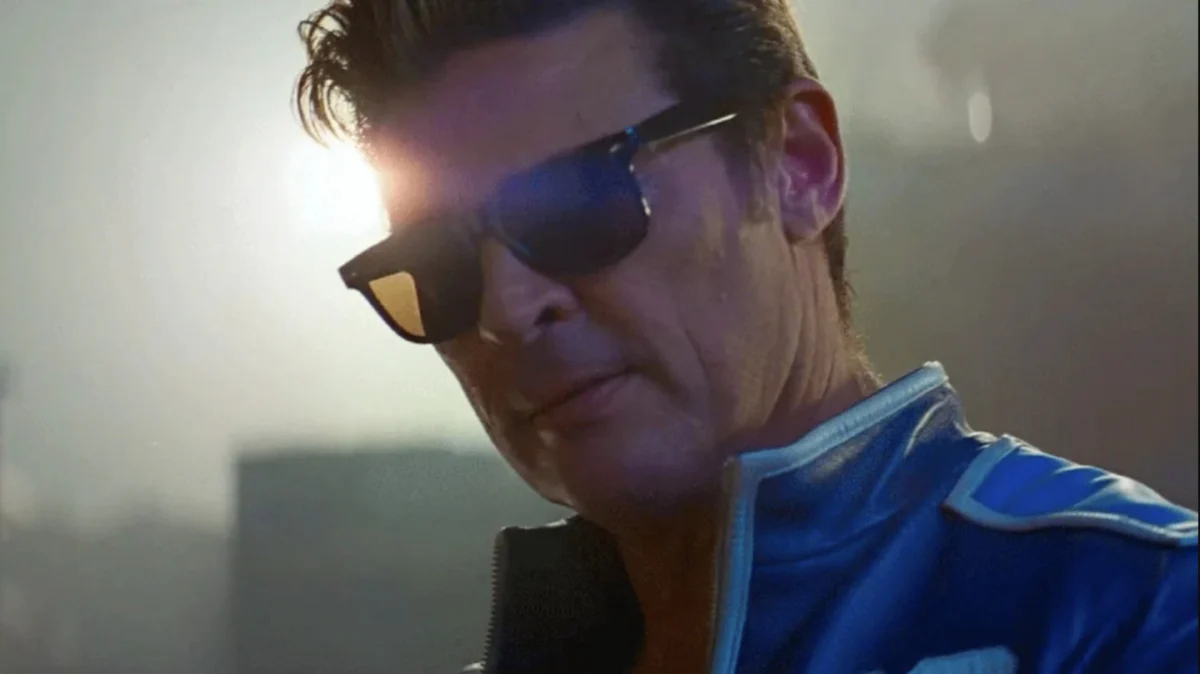
The challenge of adapting a video game franchise as storied as Mortal Kombat is a precarious balancing act. For director Simon McQuoid, the objective with the 2021 reboot was to establish a grounded, visceral foundation. With the sequel, Mortal Kombat II, the mandate shifted: expand the roster, deepen the lore, and elevate the emotional stakes without sacrificing the brutal, high-octane choreography that defines the brand.
In a recent exclusive interview, McQuoid revealed the intricate creative processes behind the film’s most pivotal moments, ranging from the complex character dynamics between Johnny Cage and Kitana to the technical precision required to film a "movie-within-a-movie."
The Evolution of the Mortal Kombat Universe
When McQuoid first stepped into the director’s chair for the 2021 film, he faced the inherent skepticism that often accompanies video game adaptations. While that initial entry received mixed critical reception, it was lauded for its authentic approach to martial arts and its respect for the source material.
With Mortal Kombat II, McQuoid has arguably delivered the most complete vision of the franchise to date. By moving beyond the static icons of a character-selection screen, the sequel breathes dramatic life into its ensemble. The narrative weight is carried largely by the introduction of Johnny Cage, played by Karl Urban, and Kitana, played by Adeline Rudolph. These two figures serve as the emotional pillars of the film, acting as the primary audience surrogates as they navigate the apocalyptic tournament for the fate of Earthrealm.
![Mortal Kombat II Director Reveals How They Made Johnny Cage's In-Universe Movie [Exclusive Interview]](https://www.slashfilm.com/img/gallery/mortal-kombat-ii-director-reveals-how-they-made-johnny-cages-in-universe-movie-exclusive-interview/l-intro-1778250365.jpg)
Balancing Protagonists: The Kitana and Johnny Cage Dynamic
One of the most praised sequences in the sequel is the early confrontation between Kitana and Johnny Cage. For an audience, the tension is palpable: both characters are sympathetic, and the viewer finds themselves in the rare position of wanting both combatants to succeed.
McQuoid explained that achieving this balance was a deliberate structural choice. "They are the main pillars of the film," McQuoid noted. "It was important that they met each other early and played off one another. One causes an effect for the other, and they eventually find common ground as we reach the ending."
The Psychology of Combat
The staging of this fight was not merely a display of physical prowess but a masterclass in character perspective. McQuoid ensured that the scene functioned through dual lenses:
- Johnny Cage: Portrayed as a quintessential "fish out of water," Cage is thrust into a reality he cannot comprehend. The fight serves as a catalyst, forcing him to reconnect with a sense of purpose he had long since abandoned.
- Kitana: Conversely, Kitana operates with a calculated, long-term strategy. Driven by a quest for vengeance and a rejection of her father’s influence, she treats the fight as a necessary maneuver.
The technical execution of this scene was equally rigorous. McQuoid highlighted the work of Zia Kelly, Kitana’s stunt performer, who executed a complex, gravity-defying flip—repeatedly—without the use of digital trickery. "That’s all in-camera," McQuoid emphasized, noting that Kelly’s versatility was such that she also served as the woman in the red dress during the film’s humorous "in-universe" movie sequence.
![Mortal Kombat II Director Reveals How They Made Johnny Cage's In-Universe Movie [Exclusive Interview]](https://www.slashfilm.com/img/gallery/mortal-kombat-ii-director-reveals-how-they-made-johnny-cages-in-universe-movie-exclusive-interview/intro-1778250365.jpg)
The Art of the "In-Universe" Movie
A standout element of the sequel is the portrayal of Johnny Cage as a washed-up, 1990s action star. To illustrate his past glory, McQuoid and his team crafted an "in-universe" film—a project that had to feel authentic to the era while maintaining a tongue-in-cheek affection for the tropes of ’90s action cinema.
Technical Authenticity through Analog Methods
To capture the specific aesthetic of a 1990s B-movie, McQuoid made a bold production choice: he insisted on shooting the sequence on film. "We worked out how they would have made a film in 1989 or 1990," the director explained. "We sourced the lenses they would have used and shot the whole thing on film. We mirrored the camera work and dialed the stunts to be a bit cheesier."
This commitment to medium was vital. McQuoid noted that digital capture often creates a "too perfect" image that would have made the sequence look like a low-budget Halloween costume. By using film, the production achieved a level of grain and texture that made the fake movie feel like a legitimate artifact of the era, rather than a parody.
Behind the Scenes: A Collaborative Environment
The shoot for this sequence served as a morale booster for the entire production. According to McQuoid, the scene was filmed toward the end of the production schedule, at a point when the cast and crew had developed a profound rapport. The energy on set was electric; cast members who were not scheduled to appear in the scene gathered on a nearby staircase to cheer on Karl Urban as he performed his stunts, turning a technical requirement into a genuine communal celebration.
![Mortal Kombat II Director Reveals How They Made Johnny Cage's In-Universe Movie [Exclusive Interview]](https://www.slashfilm.com/img/gallery/mortal-kombat-ii-director-reveals-how-they-made-johnny-cages-in-universe-movie-exclusive-interview/mcquoid-talks-balancing-and-then-flipping-his-protagonists-1778250366.jpg)
Implications for the Future of the Franchise
The success of Mortal Kombat II signals a shift in how studios approach video game adaptations. By prioritizing emotional stakes—such as the internal growth of Johnny Cage or the strategic agency of Kitana—McQuoid has successfully transitioned the series from a "fight-of-the-week" spectacle to a coherent cinematic saga.
The implication here is clear: audiences are no longer satisfied with mere visual references to source material. They demand character arcs that resonate with the same intensity as the choreography. By grounding the fantastical elements of Mortal Kombat in the lived-in reality of its characters, McQuoid has laid a foundation for future installments to explore even deeper aspects of the franchise’s vast mythology.
Conclusion: A Masterclass in Fan Service and Filmmaking
Simon McQuoid’s approach to Mortal Kombat II demonstrates that the best way to honor a legacy property is to treat it with the same level of creative scrutiny as any other dramatic work. Whether it is through the meticulous, analog recreation of a 1990s action aesthetic or the careful choreography of an early-act conflict, McQuoid’s directorial vision serves as a bridge between the high-octane excitement of the games and the narrative depth of modern cinema.
As the film continues its theatrical run, the legacy of this production will likely be defined by its ability to walk the thin line between being a faithful adaptation and a standalone cinematic experience. In the world of Mortal Kombat, where the stakes are perpetually life or death, McQuoid has proven that the most important battles are the ones fought for the hearts and minds of the audience.
Chronology of Production Highlights
- Early Development: Focus on expanding the roster beyond the 2021 film’s core group.
- Mid-Production: Implementation of character-driven choreography, focusing on the dynamic between Kitana and Johnny Cage.
- Late Production: Shooting the in-universe "Johnny Cage" film using period-accurate film stock and lens kits.
- Current Status: Wide theatrical release, receiving acclaim for its balance of lore-accuracy and emotional resonance.
Key Takeaways
- Emotional Stakes: The film moves away from simple tournament tropes, favoring arcs for characters like Johnny Cage and Kitana.
- Authentic Craft: The decision to shoot the in-universe movie on film provided a tactile quality that digital effects could not replicate.
- Collaboration: The positive on-set culture contributed to the high energy and "earnest" tone of the final film, as evidenced by the supportive atmosphere during the filming of the Johnny Cage sequences.


 Ammar Sabilarrohman
 Lina Hope