At the prestigious Hot Chips 2026 conference, Intel finally pulled back the curtain on its next-generation data center powerhouse: the Xeon 7, codenamed "Diamond Rapids." Designed to spearhead the company’s push into the latter half of the decade, the processor architecture represents a fundamental shift in how Intel designs its server-class silicon. With a staggering capacity of up to 256 P-cores and a massive 1.28 GB of last-level cache (LLC), Diamond Rapids is engineered to meet the skyrocketing demands of agentic AI workloads and high-performance cloud computing.
Scheduled for a 2027 rollout, the platform is not merely a spec bump; it is a manifestation of Intel’s long-term roadmap, integrating its enhanced 18A-P process node, advanced UCIe interconnects, and a revolutionary "fan-out" fabric architecture.
Main Facts: The Anatomy of Diamond Rapids
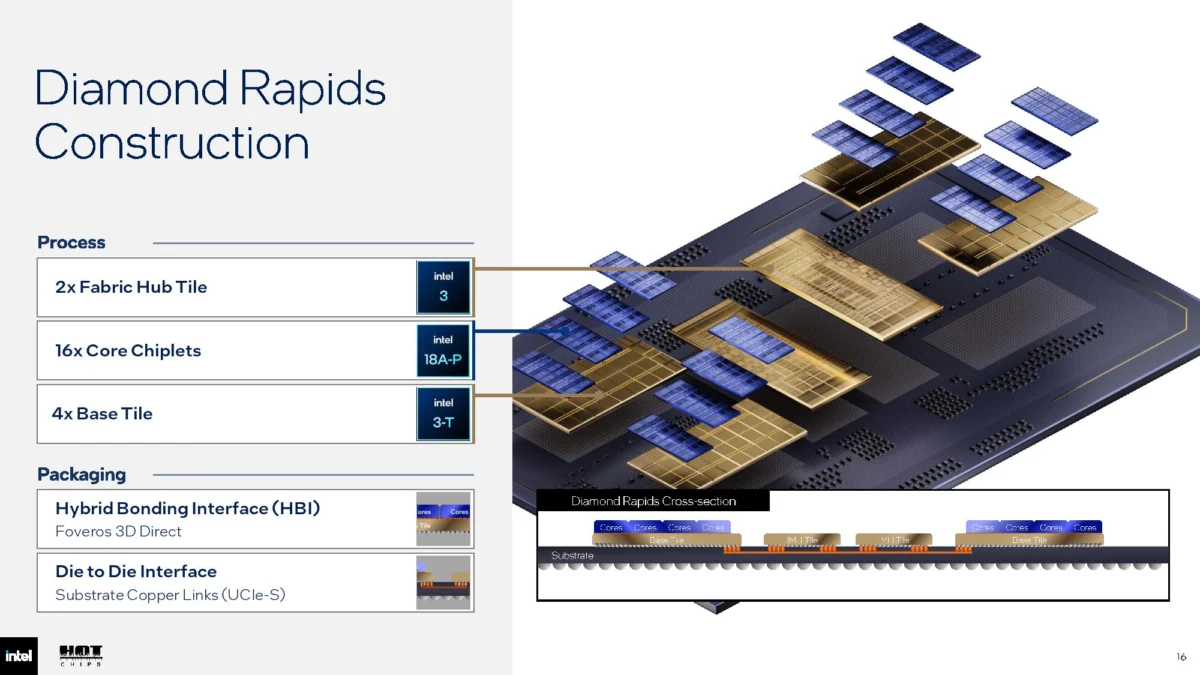
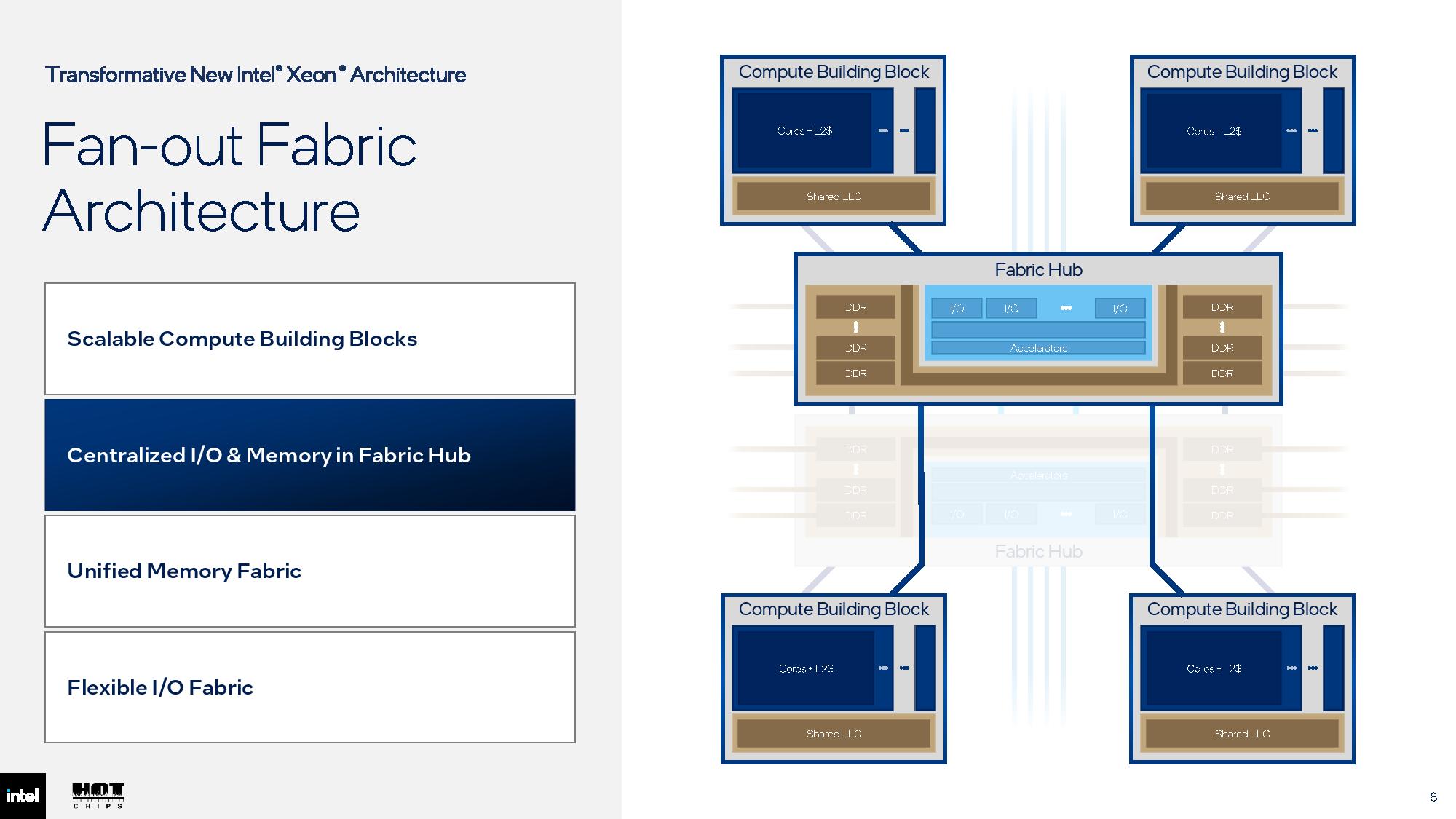
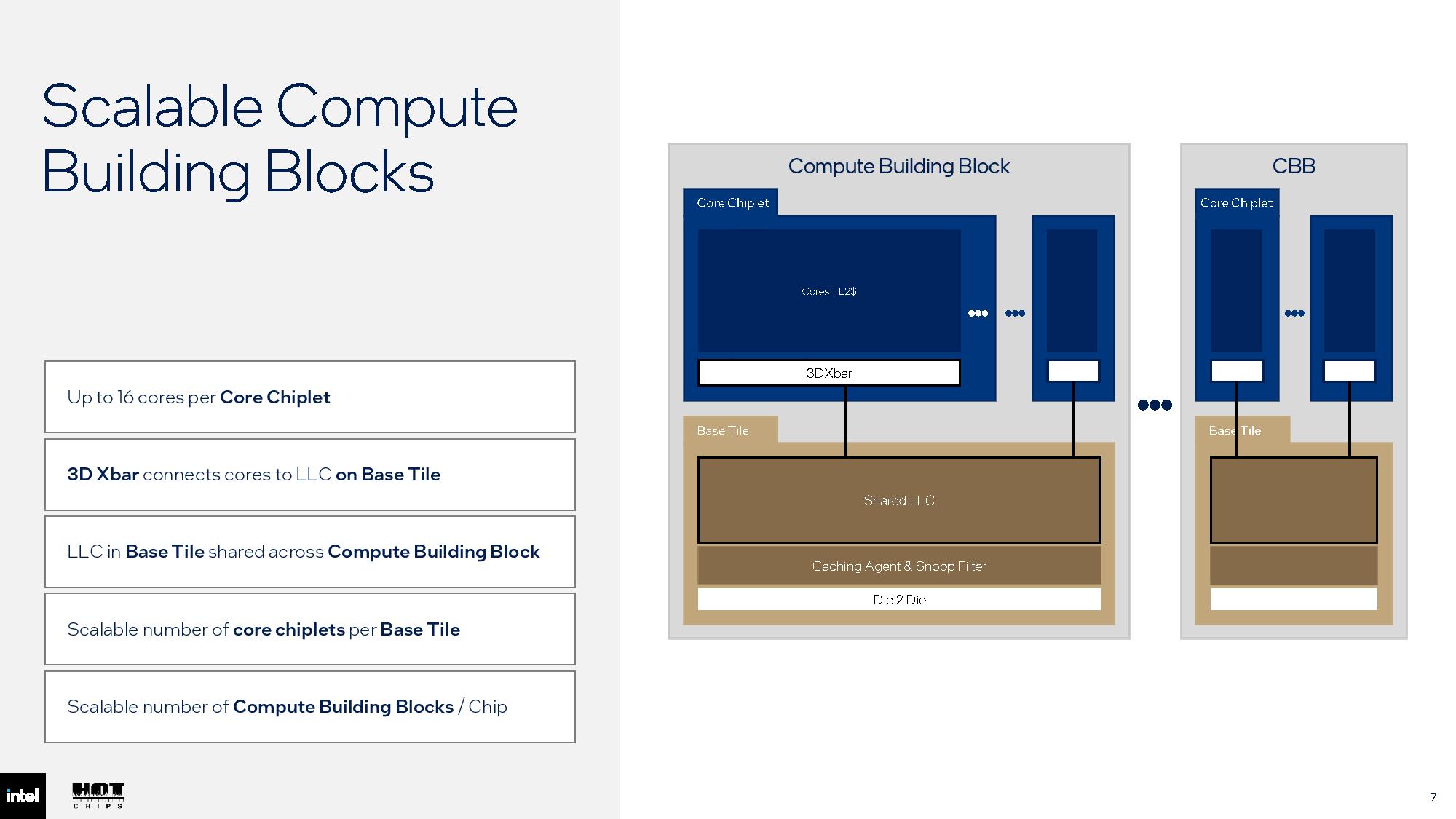
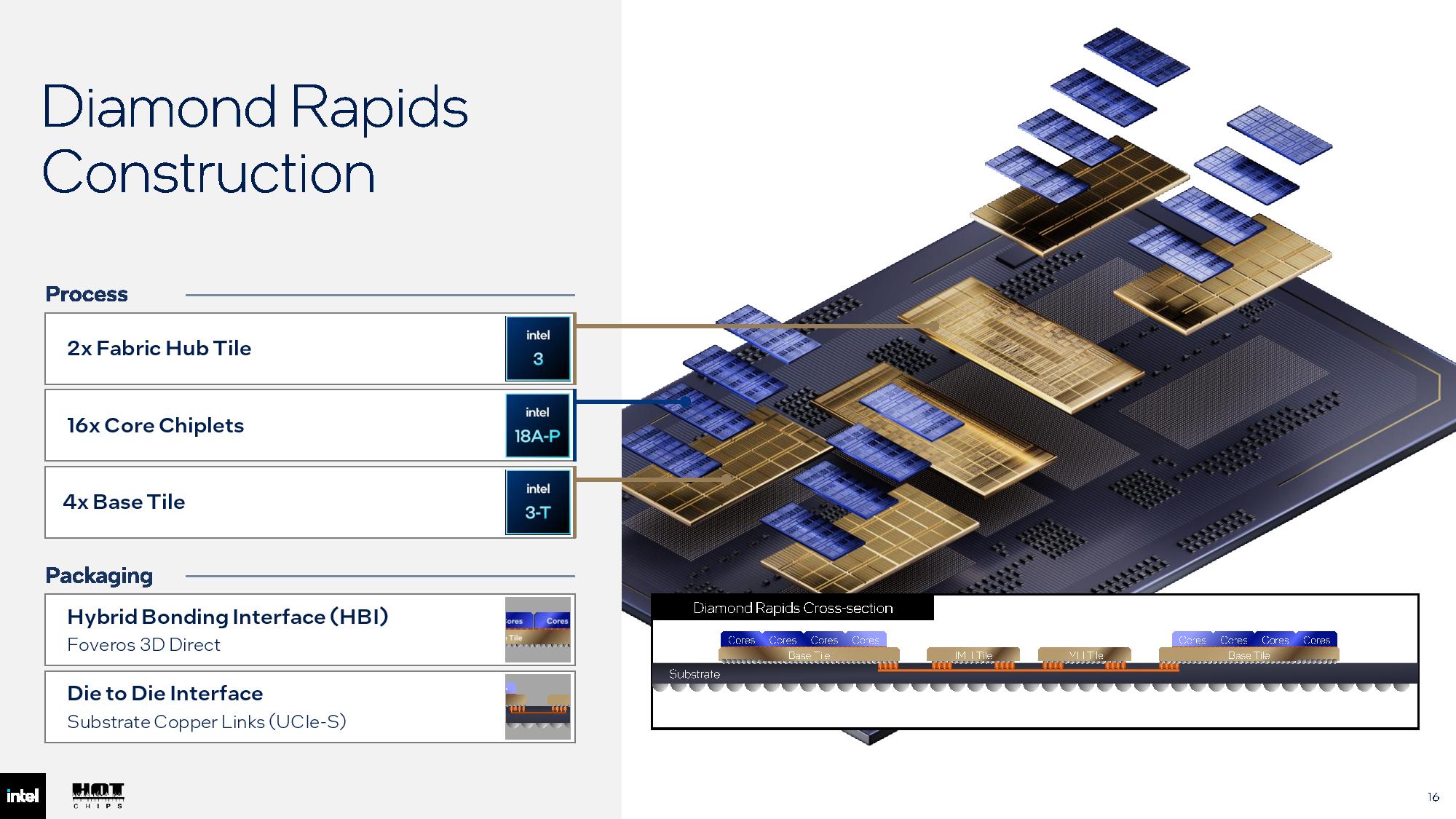
The architectural foundation of Diamond Rapids rests on what Intel identifies as Compute Building Blocks (CBBs). This modular approach allows for extreme scalability, a necessity in the modern data center. Each CBB serves as a housing for core chiplets stacked atop a base tile that manages the massive LLC pool. Each core chiplet is designed to hold up to 16 P-cores, and in a full-scale Diamond Rapids system-on-chip (SoC), up to four of these chiplets can be aggregated within a single CBB.
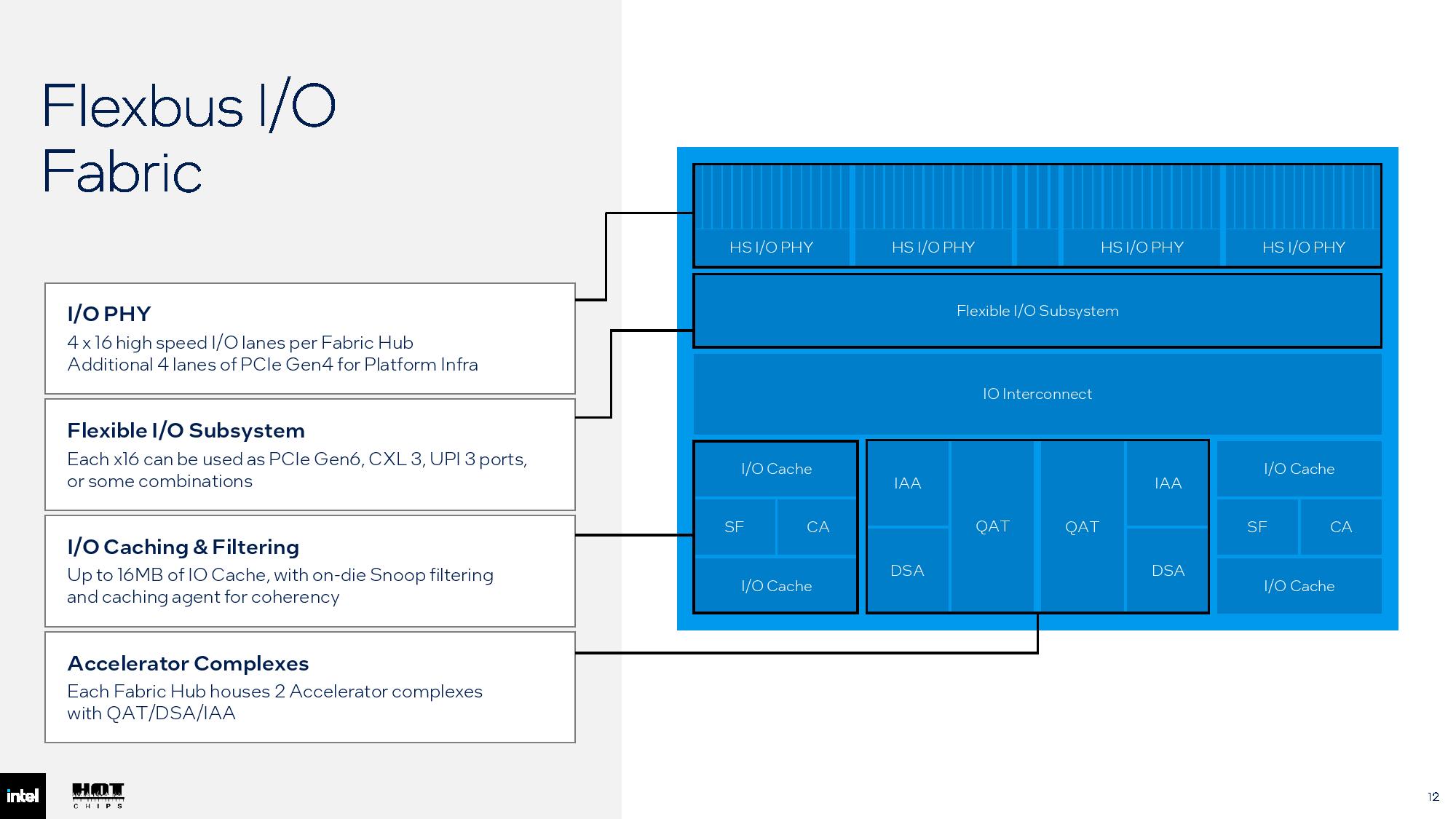
The configuration of the full SoC is nothing short of intricate: it features four base tiles manufactured on the Intel 3-T process, two specialized fabric hub tiles built on Intel 3, and a total of 16 core chiplets utilizing the cutting-edge Intel 18A-P node. By offloading memory and I/O tasks to centralized fabric hubs, Intel has effectively "flipped" the chip layout compared to the preceding Granite Rapids architecture. In the new design, compute-heavy cores are pushed to the edges of the die, while the memory and I/O subsystems occupy the center—a design philosophy that mirrors the successful modular strategies previously pioneered by AMD’s EPYC line.
Chronology of Development and Strategic Milestones
The path to Diamond Rapids has been a multi-year exercise in process-node refinement and architectural pivoting. Intel’s journey began in earnest with the conceptualization of the Panther Cove core architecture. While specific details on the internal execution pipeline of Panther Cove remain under wraps, the broader technical strategy has been public for some time:
- 2023: Intel introduces the concepts of AVX 10 and the Advanced Performance Extensions (APX) as a way to modernize the x86 instruction set architecture (ISA) for both P-cores and E-cores.
- June 2026: Intel officially announces that its 18A-P process node—the "Performance Enhanced" version of the 18A node—has entered risk production, signaling the readiness of the manufacturing pipeline for the Diamond Rapids launch.
- August 2026: The official technical deep dive at Hot Chips 2026 confirms the utilization of 18A-P for the compute dies, promising significant gains in power efficiency and performance-per-watt.
- 2027 (Target): Expected commercial availability for the Diamond Rapids platform in global data centers.
This timeline underscores the high stakes of the 18A-P transition. Intel has promised that 18A-P will deliver a 9% performance increase over the standard 18A node at peak, or conversely, an 18% reduction in power consumption for equivalent performance—a critical metric for hyper-scale data center operators focused on total cost of ownership (TCO).
Supporting Data and Technical Innovations
The performance potential of Diamond Rapids is bolstered by a series of technical choices that highlight Intel’s focus on low latency and memory bandwidth.
Memory and I/O Subsystem
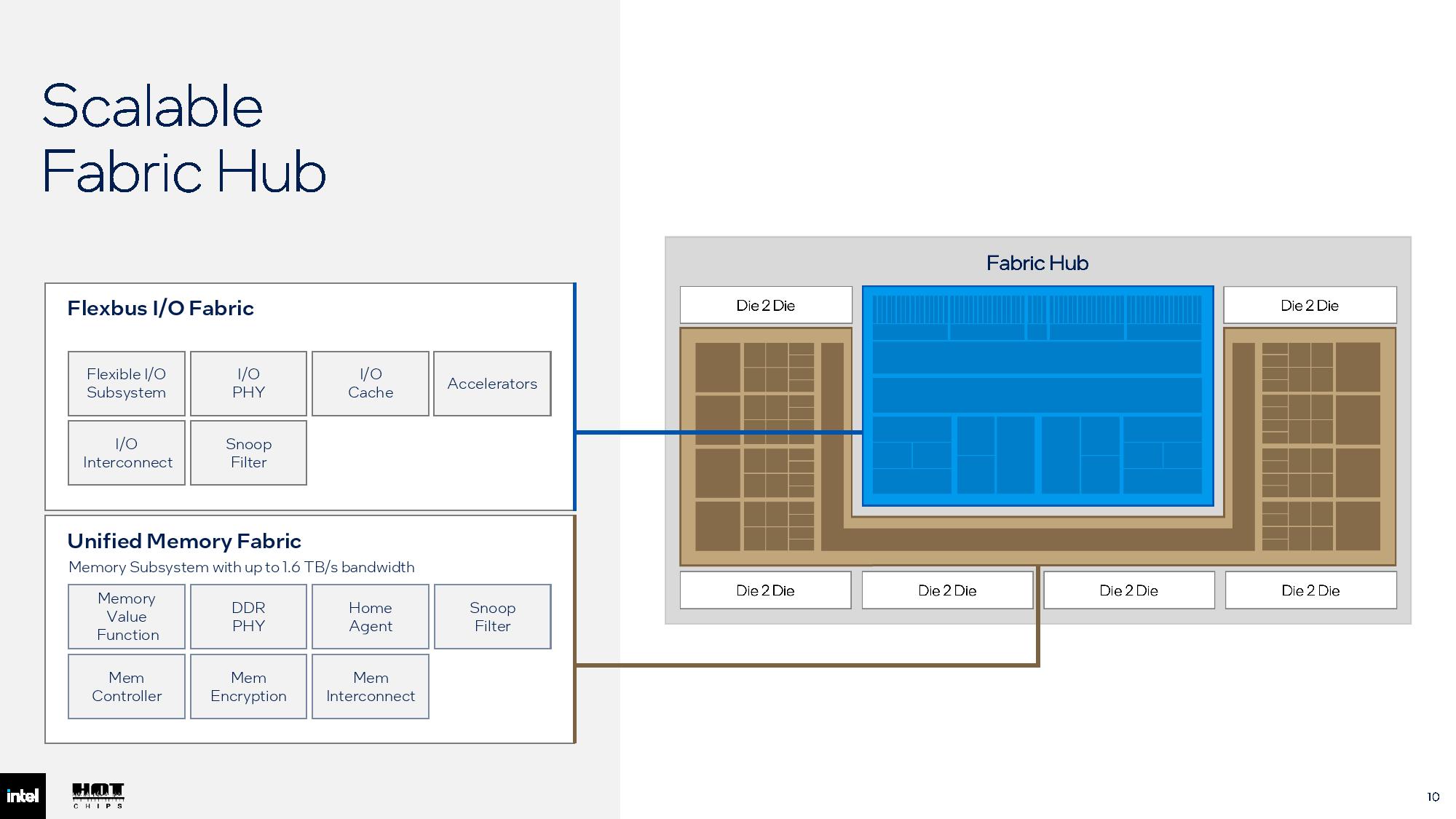
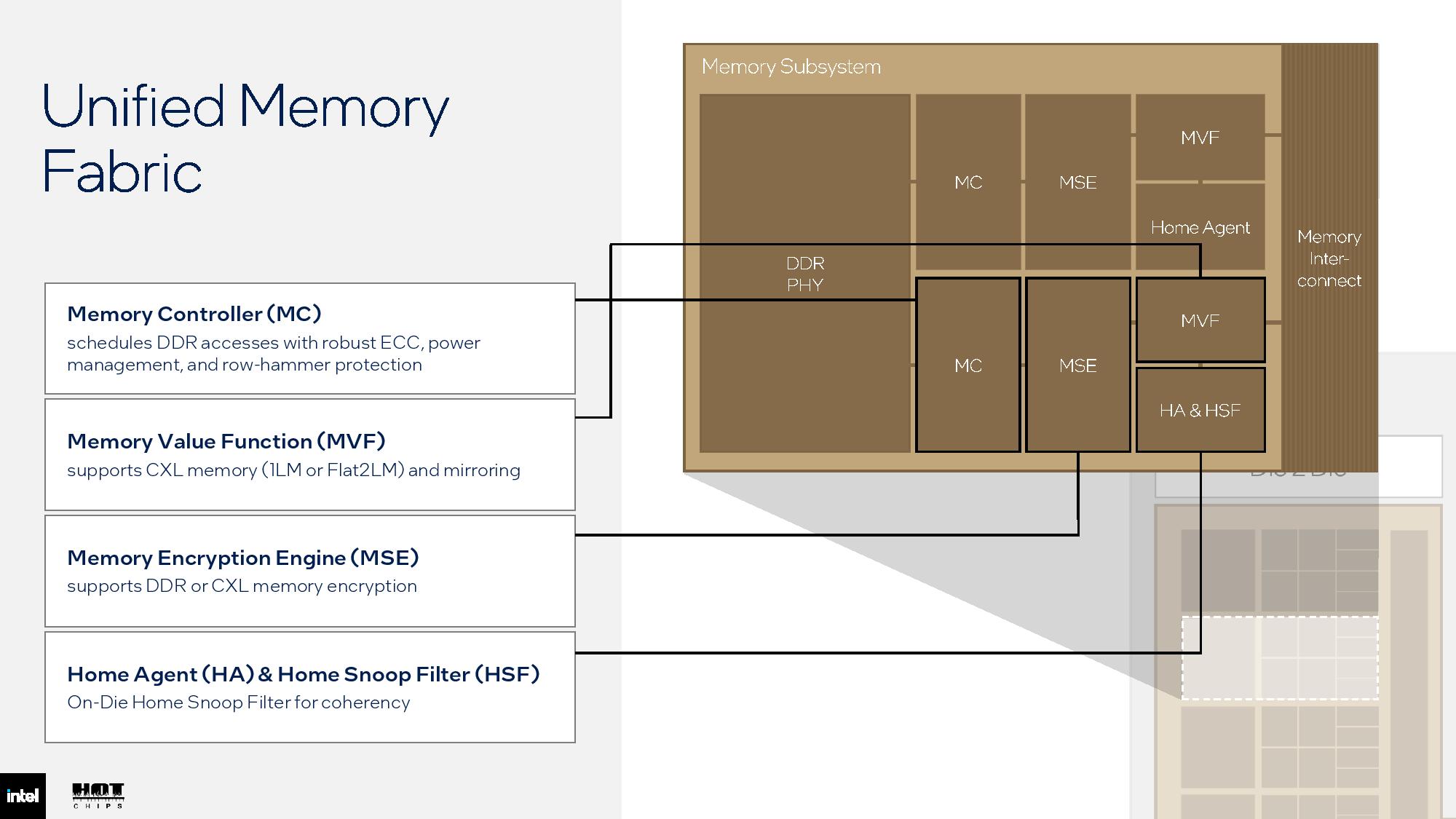
Diamond Rapids supports a 16-channel memory architecture, a significant expansion over the 12 channels found in Granite Rapids. This allows for high-speed operation with DDR5 at 8,000 MT/s, scaling up to 12,800 MT/s when utilizing MRDIMMs.
Central to this performance is the "snoop filter" integrated directly into the memory fabric. By moving the directory for cache coherency onto the CPU, Intel has effectively removed the bottleneck of directory storage and cache management tasks from the memory subsystem, allowing for smoother data flow and reduced latency.
Packaging: Foveros Direct and UCIe
Rather than relying on its established EMIB (Embedded Multi-die Interconnect Bridge) for all connections, Intel has employed a bifurcated strategy. The compute tiles are bonded to the base tiles using Foveros Direct 3D, ensuring high-density, low-latency 3D stacking. For the connection between the CBBs and the centralized fabric hubs, Intel opted for UCIe-S (Universal Chiplet Interconnect Express).
When asked why they bypassed their own EMIB technology, Intel engineers explained that UCIe-S provided a "low-latency uniform connection" across the longer distances required by the Diamond Rapids fabric, making it the most efficient choice for this specific, highly distributed chip layout.
AVX 10.2 and APX
Diamond Rapids marks the full-scale implementation of AVX 10.2. Unlike the previous AVX 10.1 iteration, which was largely a bridge from AVX-512, version 10.2 offers converged 256-bit vectors, allowing instructions to execute seamlessly on both P-cores and E-cores.
Furthermore, the introduction of APX (Advanced Performance Extensions) serves as a major quality-of-life update for x86 software. By doubling the number of general-purpose registers from 16 to 32, the architecture reduces the reliance on memory-intensive "load" and "store" operations by roughly 10% and 20%, respectively. Crucially, this improvement is backward compatible, meaning existing codebases can reap the benefits simply by being recompiled, without requiring manual source code refactoring.
Official Responses and Strategic Rationale
Intel’s leadership has framed Diamond Rapids as the answer to the "agentic" era of computing. With AI agents requiring massive amounts of concurrent processing power and low-latency memory access, the move to a decentralized core layout—and the centralizing of I/O and memory controllers—is designed to minimize the "thermal hotspots" that plagued previous generations.
By pushing the hottest components (the cores) to the periphery, Intel is addressing the primary challenge of high-density server chips: thermal management. The company remains confident that the combination of 18A-P and this new physical floorplan will allow them to regain the performance crown from competitors who have long utilized modular, chiplet-based designs.
Implications for the Industry
The announcement of Diamond Rapids arrives at a pivotal moment. The data center industry is currently grappling with a massive shift in demand, moving away from simple cloud hosting toward complex, real-time AI inference and training.
- Competitive Landscape: Intel is directly challenging the dominance of AMD’s EPYC line by adopting a similar philosophy regarding modular design and centralized I/O. If Intel can deliver on the 18A-P yield and performance promises, it could significantly slow the market share erosion it has experienced over the past five years.
- The Return of SMT: While Diamond Rapids does not feature Simultaneous Multi-Threading (SMT), industry analysts have noted that Intel’s roadmap indicates a reintroduction of SMT in the generation following Diamond Rapids. This suggests that Diamond Rapids is a "transitional" architecture in terms of thread management, prioritizing raw core count and cache density for now.
- Efficiency Metrics: With energy costs becoming the single largest operating expense for data centers, Intel’s focus on the 18% power reduction provided by 18A-P could be the "killer feature" that attracts large cloud service providers (CSPs) like AWS, Google, and Microsoft.
- The "Too Little, Too Late" Narrative: Critics have pointed to the delays and manufacturing missteps associated with the Granite Rapids-AP era as a potential shadow hanging over the Diamond Rapids launch. Intel must prove that the 18A-P process is robust enough for high-volume manufacturing. If the 2027 target is met, it will signal a successful turnaround; if it slips, the competitive disadvantage may become insurmountable.
In conclusion, Diamond Rapids represents a massive "bet" on the future of x86. By standardizing the ISA through APX, pushing the boundaries of memory speed with 16-channel DDR5/MRDIMM support, and perfecting its Foveros 3D packaging, Intel is building a platform meant to last. Whether these innovations will be enough to redefine the server market depends on the company’s ability to execute on its most ambitious manufacturing schedule to date. The world will be watching in 2027 to see if the "Diamond" lives up to its name.