Lina Hope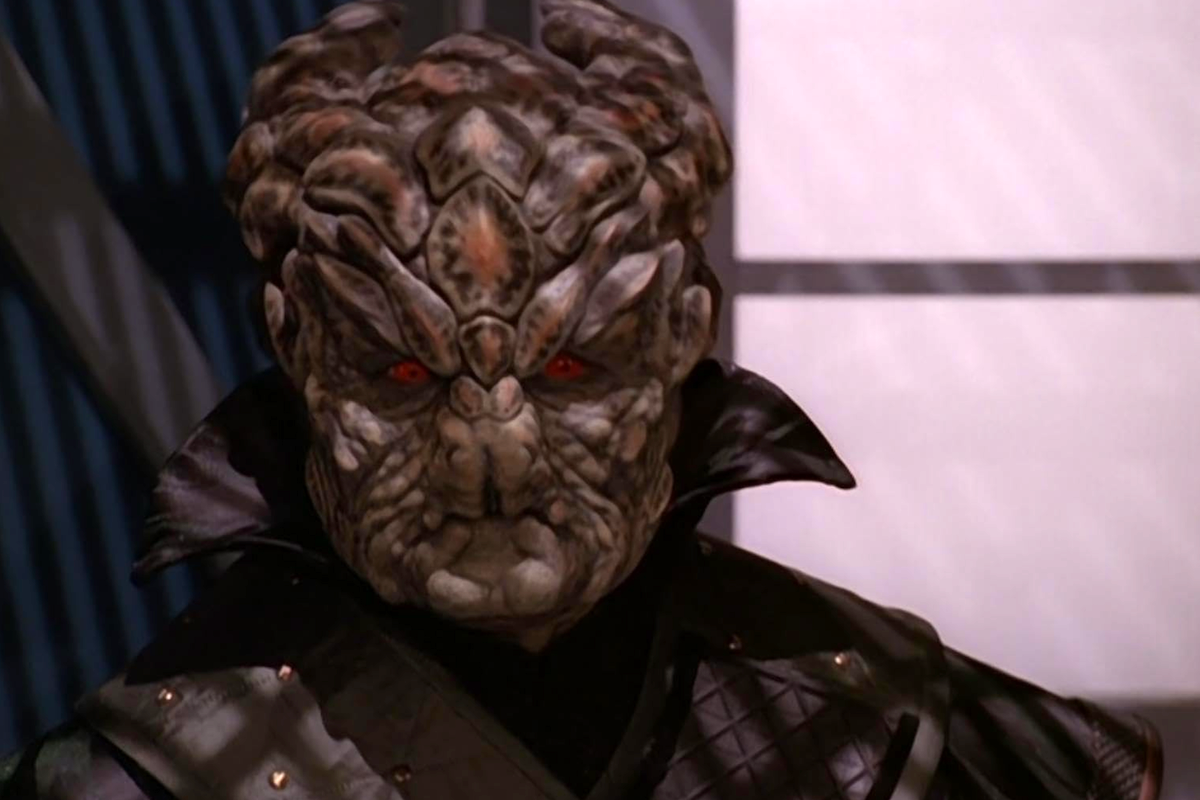
By Editorial Staff
The landscape of 1990s television science fiction was dominated by a singular, sprawling vision: J. Michael Straczynski’s Babylon 5. While the five-year arc of the original series remains a benchmark for serialized storytelling, its spin-off, Crusade, occupies a more complex, often contentious position in the franchise’s history. Among its episodes, the series opener, "War Zone," stands as a pivotal—and highly criticized—artifact of network-mandated creative interference.
Originally airing on June 9, 1999, "War Zone" was tasked with a Herculean objective: bridge the gap between the film A Call to Arms and the new series, while simultaneously introducing a cast of characters to an audience potentially unfamiliar with the intricate political tapestry of the Babylon 5 universe.
Main Facts: The Genesis of the Mission
The premise of "War Zone" is stark. Following the catastrophic Drakh attack on Earth—a biological scorched-earth policy involving a deadly, slow-acting plague—the United Earth Alliance is forced to launch a desperate search for a cure. The vessel selected for this mission is the EAS Excalibur, a prototype Explorer-class ship equipped with cutting-edge technology.
Commanding the Excalibur is Captain Matthew Gideon (Gary Cole), a veteran officer whose career has been defined by his refusal to conform to bureaucratic expectations. His first command decision—if it can be called that—is to handpick a crew that defies the standard protocols of EarthForce. This includes the telepathic Lieutenant John Matheson (Daniel Dae Kim), the enigmatic thief Dureena Nafeel (Carrie Dobro), and, through a series of machinations, the brilliant but abrasive archeologist Max Eilerson (David Allen Brooks).
The mission is urgent, the stakes are planetary, and the tone is decidedly grim. Yet, as the episode unfolds, it becomes clear that "War Zone" is less an organic pilot and more a structural necessity forced upon the production team by TNT executives who feared that viewers would be lost without a "reboot" of the preceding narrative context.

Chronology of a Crisis
The narrative of "War Zone" functions as a rapid-fire sequence of events designed to move the pieces into place.
- The Mutiny: The story begins with a volatile situation aboard an Explorer-class ship. Captain Gideon faces a mutiny from crew members hailing from Mars, who are paralyzed by the fear of returning to a plague-ridden Earth. Gideon’s resolution—a physical confrontation—establishes his character as a "hands-on" leader, though it leaves the audience with more questions about his leadership style than answers.
- The Ceti IV Discovery: While the EAS Persephone is destroyed by the Drakh, a distress signal is linked to a crash site on Ceti IV. This allows for the introduction of Max Eilerson and his IPX expedition, who find themselves trapped by the very Drakh forces that decimated the Earth fleet.
- The Formation of the Crew: Gideon is summoned to Mars by Senator McQuate. Despite the political friction regarding his unorthodox choices—specifically the inclusion of a "teep" (telepath) like Matheson and a criminal like Nafeel—Gideon secures his command.
- The Rescue and Recruitment: Upon arriving at Ceti IV, the Excalibur engages the Drakh. The skirmish acts as a proving ground for the new crew, incorporating the sudden, mystical intervention of the techno-mage Galen.
- The Final Assembly: The episode concludes with the Excalibur fully staffed and the mystery of the techno-mages deepening, setting the stage for a long, uncertain journey to find a cure for the Earth plague.
Supporting Data: The Cast and the Constraints
The production of "War Zone" was plagued by the disconnect between the showrunner’s long-term vision and the network’s short-term requirements. The cast—a quintessential "Dungeons & Dragons" party in space—features Gary Cole’s rugged, often abrasive Gideon; Daniel Dae Kim’s stoic, telepathically burdened Matheson; and Peter Woodward’s ethereal, condescending Galen.
The inclusion of Galen serves as the show’s primary source of "deus ex machina" solutions. His presence, while providing much-needed flavor, highlights a recurring issue in the episode’s writing: the tendency to rely on mystery rather than character development. The "Who do you serve and who do you trust?" catechism, while iconic, serves as a mask for the lack of established rapport between the lead characters in this opening hour.
Furthermore, the "supporting cast" of scientists introduced by Senator McQuate are largely relegated to the background, serving as visual filler rather than active participants. This choice underscores the show’s focus on the "heroic" core team at the expense of creating a lived-in, realistic environment.
Official Responses and Network Interference
The history of Crusade is often cited as a cautionary tale of network meddling. J. Michael Straczynski has been notably vocal regarding the friction between his creative direction and TNT’s demands. The network’s insistence on "War Zone" acting as a standalone refresher meant that the episode was burdened with heavy-handed exposition.
The "name of the place is Babylon 5" opening, intended to orient new viewers, was famously despised by the production staff for its condescending tone and the dramatic irony of explaining a station that had, by the timeline, already served its purpose. This tension between the "need to explain" and the "need to tell a story" resulted in an episode that feels both rushed and strangely static.

Implications for the Series and Genre
The legacy of "War Zone" is that of a "what-could-have-been." It is an episode that introduces a rich premise—a desperate, ticking-clock mission to save humanity—but struggles to find its own voice beneath the weight of its predecessor’s legacy.
For the science fiction genre, Crusade remains a significant case study. It highlights the difficulty of launching a spin-off that is simultaneously a continuation and a fresh start. The "Telepath War," referenced in this episode but never shown, serves as a reminder of the "missing" history that hindered the show’s ability to engage the audience fully.
Despite these flaws, "War Zone" succeeded in establishing the central conflict: humanity versus a biological extinction event. It introduced a crew with enough friction to sustain long-term drama, even if that friction felt manufactured in the pilot. The "D&D" structure of the party—warrior, cleric, wizard, thief, and bard—provided a classic, albeit tired, framework for the episodes that followed.
Ultimately, "War Zone" is a polarizing piece of television. To some, it is a failed attempt to replicate the lightning-in-a-bottle success of Babylon 5. To others, it is the necessary, if imperfect, foundation for a series that showed flashes of brilliance before its premature cancellation. As we re-examine these early hours, we see a show fighting for its life—not just in the narrative, where the Excalibur races against time, but in the boardroom, where the soul of the series was being negotiated, scene by scene.
Whether one views "War Zone" as a disappointment or a misunderstood beginning, its impact on the Babylon 5 mythos is undeniable. It remains the anchor point for a story that, despite its troubled start, refused to be forgotten by its dedicated, enduring fanbase.



 Raul Delapena Setiawan