

For over a decade, millions of television enthusiasts relied on a single digital companion to curate their viewing habits: TV Time. From its humble beginnings as a "funny side project" to its rise as a global powerhouse with 20 million registered users, the platform became the gold standard for tracking episodes and connecting with fandoms. However, as the digital landscape shifted toward AI-heavy monetization and corporate consolidation, the service that defined a generation of "binge-watching" is officially powering down.
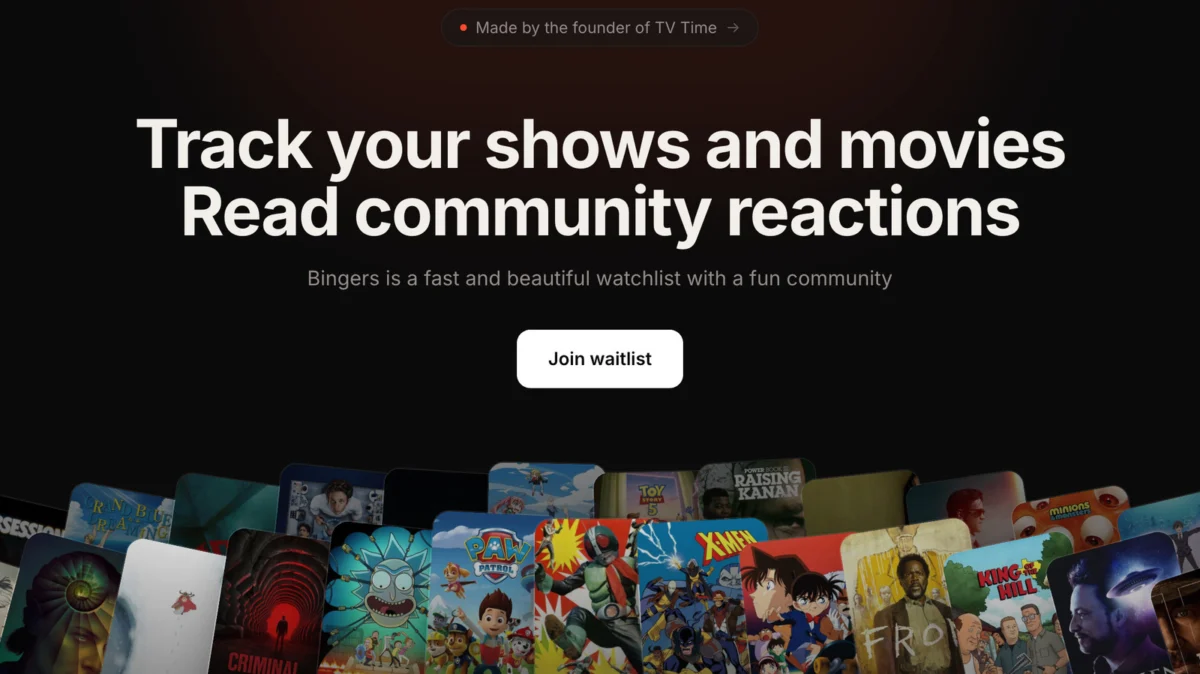
Enter Anthony Pinto, the founder of the original TV Time. With the announcement that the platform he built will cease operations on July 15, Pinto is not walking away from the community he fostered. Instead, he is launching a spiritual successor: Bingers. With a promise of sustainability, modern design, and a return to the roots of what made the original app special, Bingers is positioning itself as the new home for the world’s TV and movie obsessives.
The Core Facts: What is Bingers?
Bingers is a mobile-first application designed to serve as an all-in-one hub for entertainment tracking. At its core, the app allows users to log their progress through television series and films, set personalized reminders for upcoming releases, and participate in community discussions.
While the market is currently saturated with tracking apps, Pinto argues that Bingers occupies a unique space. By focusing on a "refreshed" user interface that adheres to modern design patterns, the app aims to provide a faster, more fluid experience than the bloated, ad-heavy iterations that characterized the latter years of TV Time.
Perhaps most crucially for the existing community, the Bingers team has prioritized data migration. The platform includes a dedicated import tool, allowing users to transfer their extensive viewing histories from TV Time to their new accounts, effectively preserving years of data that would otherwise be lost to the void of the app’s upcoming shutdown.
A Chronological History: From "TVShow Time" to the End of an Era
The story of the modern tracking app begins in 2011, when Anthony Pinto launched TVShow Time. It was an era when the "golden age of television" was hitting its stride, but the fragmented nature of streaming services and cable schedules made it difficult to keep track of progress.
- 2011: TVShow Time is founded as a passion project, quickly gaining traction among tech-savvy viewers who needed a way to manage their expanding watchlists.
- 2016: The platform, now branded as TV Time, is acquired by Whip Media. Under new ownership, the app continued to scale, leveraging its massive dataset to provide insights into viewer behavior.
- 2021: TV Time celebrates a monumental milestone, reaching 20 million registered users worldwide. It cements its status as the industry leader in audience tracking.
- Post-2021: The company is sold again, this time to Blue Torch Capital. During this transition, the app’s direction shifts toward aggressive AI integration, leading to a decline in user satisfaction as the interface became increasingly cluttered and unresponsive.
- July 2026: The inevitable conclusion arrives. Following years of financial strain and the difficulty of maintaining a free service, the company announces that TV Time will officially sunset on July 15, citing a lack of sustainability.
Sustainability and the "Forever" Promise
One of the primary concerns for users migrating to a new platform is the fear of history repeating itself. If TV Time, with 20 million users, couldn’t remain sustainable, how can a new startup succeed?
Pinto has addressed these concerns head-on. In interviews and developer updates, he has been transparent about the architectural philosophy behind Bingers. "We are building this in a way that keeps server costs very, very low," Pinto stated. By stripping away the unnecessary bloat—the excessive AI-driven background processes and the heavy, resource-draining features that plagued the later versions of TV Time—Bingers aims to be a lean, efficient operation.
Pinto’s goal is not to chase a billion-dollar acquisition or pivot to an AI-first business model. Instead, he is focused on creating a "forever" app. By keeping operational costs low, the service is designed to be self-sustaining, ensuring that users won’t be forced to migrate their data again in five years. This "back-to-basics" approach is a direct response to the frustration users felt when TV Time shifted its focus away from the community.
The Competitive Landscape: A Market in Flux
Bingers enters a crowded and highly competitive market. Today’s power users have several alternatives, but few have managed to capture the specific "social-tracking" blend that made the original TV Time so successful.
The Rivals:
- Letterboxd: The undisputed king of movie tracking. Letterboxd has cultivated a massive, film-literate community. While it is primarily film-focused, its recent reports regarding potential majority-stake sales suggest that the app is looking to expand its reach.
- Serializd: Perhaps the most direct competitor to what Bingers aims to be. Serializd has built a loyal following by focusing on the "TV show" experience, allowing for detailed reviews and episode-by-episode tracking.
Bingers intends to differentiate itself by leaning into the familiarity of the original TV Time experience. For millions of users who are currently mourning the loss of their years of data, the ability to import that history to Bingers provides a "path of least resistance" that other competitors cannot offer.
Implications: The Death of the "Free" Social Web
The shutdown of TV Time and the subsequent rise of Bingers is a microcosm of a larger trend in the tech industry: the death of the truly "free" social utility. As server costs rise and the demand for profitable AI models grows, companies are finding it increasingly difficult to support massive user bases without intrusive advertising or subscription paywalls.
The implication for users is clear: the era of the "forever free" app is fading. For Bingers to truly succeed, it will need to find a way to monetize that doesn’t compromise the user experience. Whether through a "freemium" model, community-supported features, or ethical data practices, the app must prove that it can survive without the corporate bloat that killed its predecessor.
Furthermore, the migration of 20 million users represents a massive shift in social capital. If a significant percentage of the TV Time base successfully transitions to Bingers, the new app will immediately become one of the most significant hubs for television discussion on the internet. This creates a "network effect" that could potentially challenge the dominance of giants like Letterboxd, provided that Pinto can manage the infrastructure demands of a sudden influx of millions of users.
Conclusion: A New Chapter for Television Fans
As we approach the end of July, the digital landscape for TV enthusiasts is undergoing a significant transformation. The loss of TV Time is the end of an era for millions, but the arrival of Bingers offers a tangible glimmer of hope.
Anthony Pinto’s mission is clear: to reclaim the simplicity, speed, and community spirit that made the original TV Time a staple of the streaming age. By focusing on low-cost architecture and prioritizing the user’s history, Bingers is positioning itself not just as an app, but as a long-term home for those who treat television as more than just a casual pastime.
Whether Bingers will truly last "forever" remains to be seen. However, in an industry defined by consolidation and the pursuit of AI-driven profit, the return of a founder to their original vision is a rare and compelling narrative. As the countdown to the official launch continues, the community watches with cautious optimism—ready to track their next binge, and hopeful that this time, their data has finally found a permanent home.











