Nana Muazin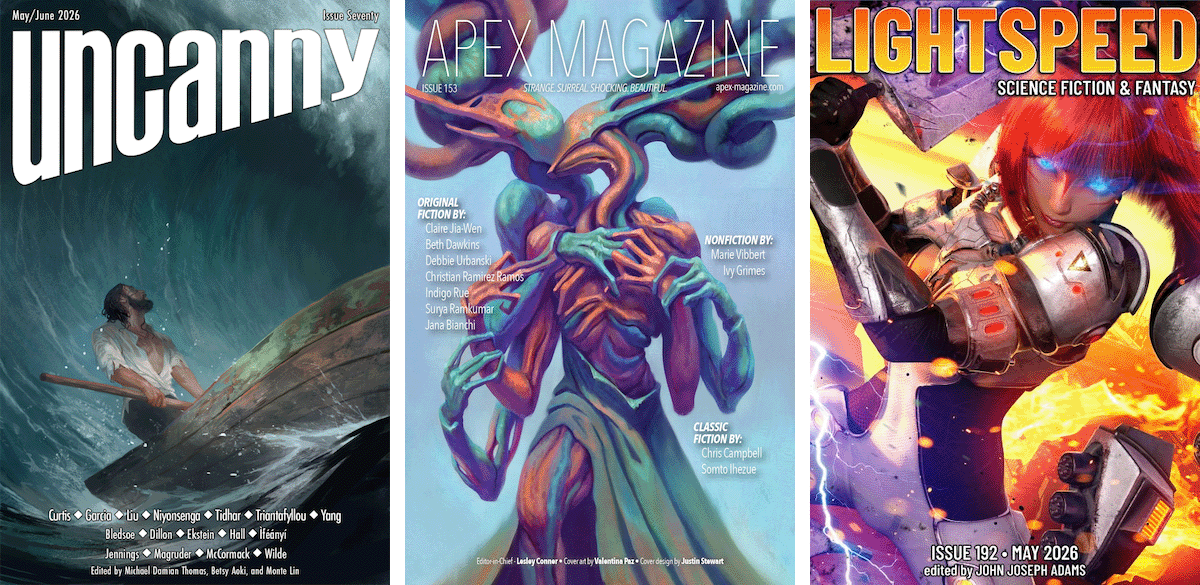
In the landscape of modern literature, the sprawling epic is often lauded as the ultimate test of a writer’s endurance. Yet, there is a distinct, crystalline beauty found in the constraints of short-form fiction. As the summer season approaches, readers often find their attention spans shifting toward narratives that are as evocative as they are concise. For the month of May 2026, the world of speculative fiction—encompassing science fiction, fantasy, and horror—has provided a bounty of "literary treats": bite-sized narratives that deliver profound emotional and intellectual impact without the burden of hundreds of pages.
This report examines ten standout stories published throughout May 2026, analyzing how these authors utilize the short-story format to interrogate the human condition, colonial legacies, and the fluid nature of memory.
The Landscape of May 2026: A Chronological Overview
The literary output of May 2026 showcased a diverse range of thematic preoccupations. From the Martian plains of Ron Fein to the mythological depths of the Hindu diaspora in Surya Ramkumar’s work, the month was defined by a globalized perspective on the "genre of ideas."
- April 2026 (Reflective): Phano (Issue 16) kicked off the trend with Yasmeen Amro’s “Dark, Where the Sun Never Sets.”
- May 4, 2026: Strange Horizons published the evocative “Senescence” by newcomer aegor ray.
- Mid-May 2026: A wave of releases from Small Wonders, Lightspeed, Quotidian Bagatelle, and The Future Fire solidified the month’s preoccupation with high-concept short fiction.
- Late May/June 2026: Uncanny Magazine and Apex Magazine provided the closing statements, focusing on the intersection of technology and ancestral identity.
Thematic Analysis: Genre as a Lens for Reality
Reimagining Colonialism and Displacement
A recurring theme in the top stories of the month was the critique of colonial extraction. Aline-Mwezi Niyonsenga’s “Extracted from an unravelled braid” (Uncanny Magazine, Issue 70) serves as a poignant example. The narrative follows Memoire, a Rwandan immigrant, who undergoes a procedure to "braid" memory fibers into her scalp. While the premise suggests a beautiful tribute to heritage, Niyonsenga pivots sharply to reveal the sinister nature of the technology: it is a proprietary system owned by Western corporations designed for colonial extraction.
Similarly, Yasmeen Amro’s “Dark, Where the Sun Never Sets” uses the extraterrestrial setting of Trappist-1d to ground a narrative about the echoes of American and Israeli military aggression. By centering the story on a character navigating the language gap between English and the Nabati dialect of her relatives, Amro highlights how geography and language are often sites of political struggle.
The Power of Flash Fiction
R. F. Daniels’ “Excrescence” (Quotidian Bagatelle, Issue 5) challenges the notion that flash fiction is merely "ephemeral." Comprised of just two paragraphs, the story begins with the visceral line: "It began as an itch in the back of my throat." The work serves as a masterclass in economy, proving that a story does not require thousands of words to achieve a haunting resonance. Critics have noted that while the piece could easily be expanded, doing so would likely dilute the sharp, clinical horror Daniels achieves through brevity.
Categorizing the "Reading Treats": Key Selections
Science Fiction: Beyond the Tropes
- “1,001 Best Hikes on Mars: The Peterson Historic Trail” by Ron Fein: Structured as a sterile, bureaucratic travel guide, this piece deconstructs the colonization of Mars. By focusing on the "Peterson’s Folly" incident, Fein manages to inject a sense of tragic history into the cold, technical formatting of a hiking brochure.
- “The Aerialist” by Yoon Ha Lee: In Lightspeed Magazine, Lee explores a "gaslamp-fantasy" setting where a disgraced aerialist finds salvation in a museum-bound typewriter. It is a whimsical yet melancholic look at the intersection of magic and mechanical obsession.
Southern Gothic and Horror
- “Me, Myself, and I” by Marsden Lyonwahl: Perseid Prophecies delivers a quintessential Southern Gothic tale set in the decaying ruins of a Louisiana plantation. The story functions as a commentary on the burden of legacy and the inevitability of the past reclaiming the present.
- “Not Hunger, Not Feeling” by Grace Crouthamel: In Allegory, the author channels the collective trauma of the COVID-19 pandemic into a narrative about a corporate office lockdown—with a terrifying twist involving brain-eating zombies. It is a surreal reflection on the experience of "essential work" during a global collapse.
Mythological and Existential Reflection
- “The Vigil of the Tenth Air” by Surya Ramkumar: Published in Apex Magazine, this story is perhaps the most bittersweet of the collection. It follows the prana (life force) of a deceased father who remains attached to his son in the West. The narrative beautifully illustrates the friction between honoring ancient Hindu traditions and the pressures of assimilation in the diaspora.
- “Senescence” by aegor ray: This debut piece represents the cutting edge of contemporary prose. The narrative traces the transformation of a being through multiple states of existence, eventually arriving at a conclusion that offers a rare, profound sense of hope.
Implications for the Publishing Industry
The success of these short-form works carries significant implications for digital literary magazines. As reader habits continue to favor mobile-first, high-impact content, the "short story" is experiencing a renaissance. The data suggests that readers are increasingly seeking:
- Intertextuality: Works that reference real-world political or historical events (e.g., Amro’s use of Nabati poetry).
- Experimental Formatting: Readers are responding positively to non-traditional structures, such as the travel guide format used by Fein or the two-paragraph brevity of Daniels.
- Accessibility: Platforms that offer high-quality fiction free of charge (such as Strange Horizons and Uncanny) are becoming the primary gatekeepers of literary culture.
Official Responses and Editorial Insights
Editors from the participating publications have noted a distinct shift in the submissions they receive. "We are seeing more authors who are unafraid to tackle the ‘big’ issues—colonialism, migration, and the climate—within a very tight word count," notes one editor from Apex Magazine. "The challenge for the writer is no longer just plot; it is the precision of the emotional arc."
The emergence of authors like aegor ray, whose first fiction publication has already garnered significant critical acclaim, underscores a shift toward voices that prioritize philosophical inquiry over traditional genre tropes. This trend suggests that the future of science fiction and fantasy lies in the "micro-narrative"—stories that act as prisms, reflecting the complexity of the modern world through the lens of the fantastic.
Conclusion: A Call for Short-Form Engagement
The short stories of May 2026 are not merely "treats" for a summer reading list; they are vital pieces of contemporary literature that demand engagement. Whether through the lens of a Martian hiking guide or the haunting imagery of a dying father’s prana, these authors have demonstrated that the greatest impact often comes from the smallest packages. For the reader, these works offer a path to explore vast, complex universes—both internal and external—within the span of a single sitting. As we move into the hotter months, these stories serve as a necessary reminder that brevity, when paired with depth, is one of the most powerful tools in a writer’s arsenal.

 Raul Delapena Setiawan