Dwi Wanna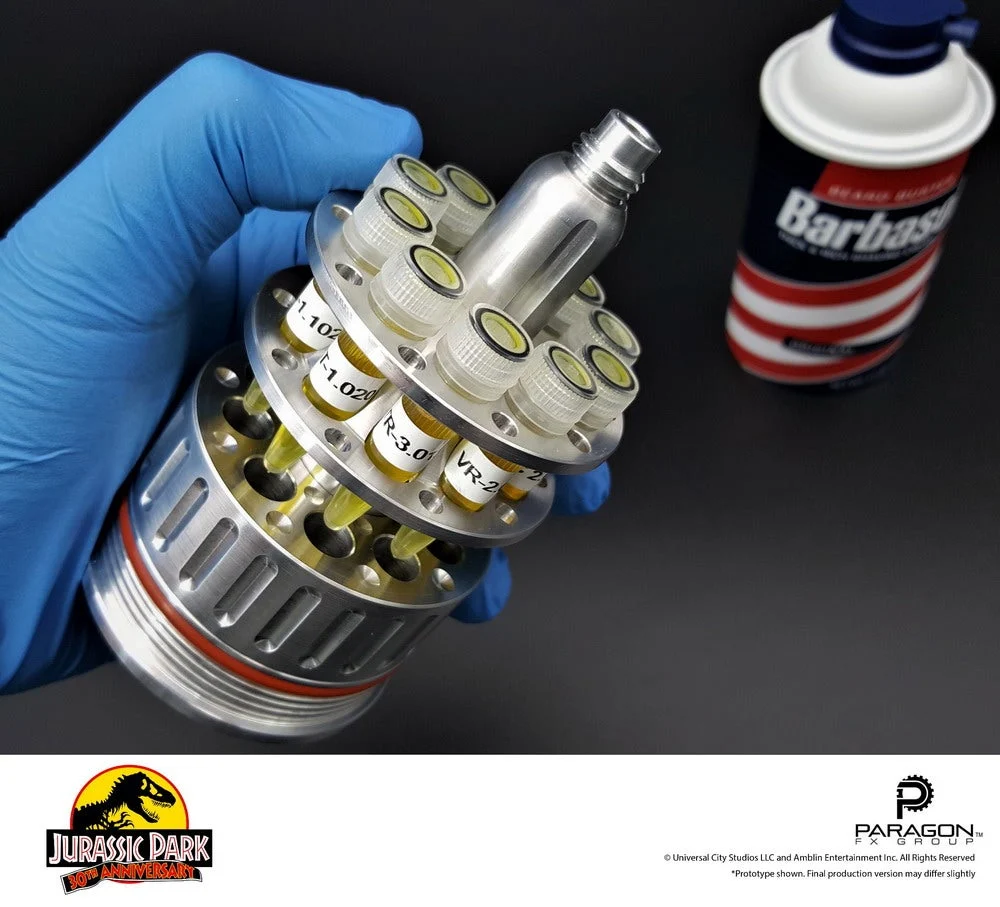
In the pantheon of cinema history, few props carry as much narrative weight and immediate visual recognition as Dennis Nedry’s "Cryo-Can." As the catalyst for the catastrophic failure of the Isla Nublar park systems, this unassuming shaving cream canister became the ultimate symbol of corporate espionage and hubris. Now, to commemorate the 30th anniversary of Steven Spielberg’s 1993 masterpiece, Jurassic Park, Paragon FX Group has announced the release of a high-fidelity, museum-grade replica of this iconic artifact.
The Genesis of an Icon: Main Facts
Paragon FX Group, renowned for their uncompromising dedication to screen accuracy, has officially opened the doors for collectors to secure the most authentic reproduction of the Cryo-Can ever produced. Developed in direct collaboration with Universal Pictures and Amblin Entertainment, this limited-edition release is not merely a toy or a generic prop; it is a meticulously engineered machine.
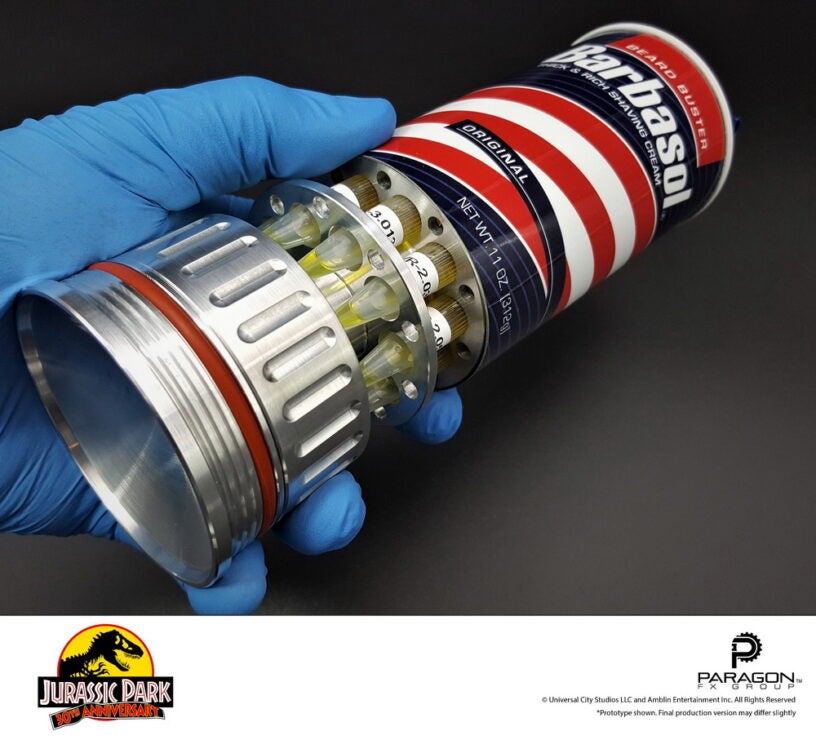
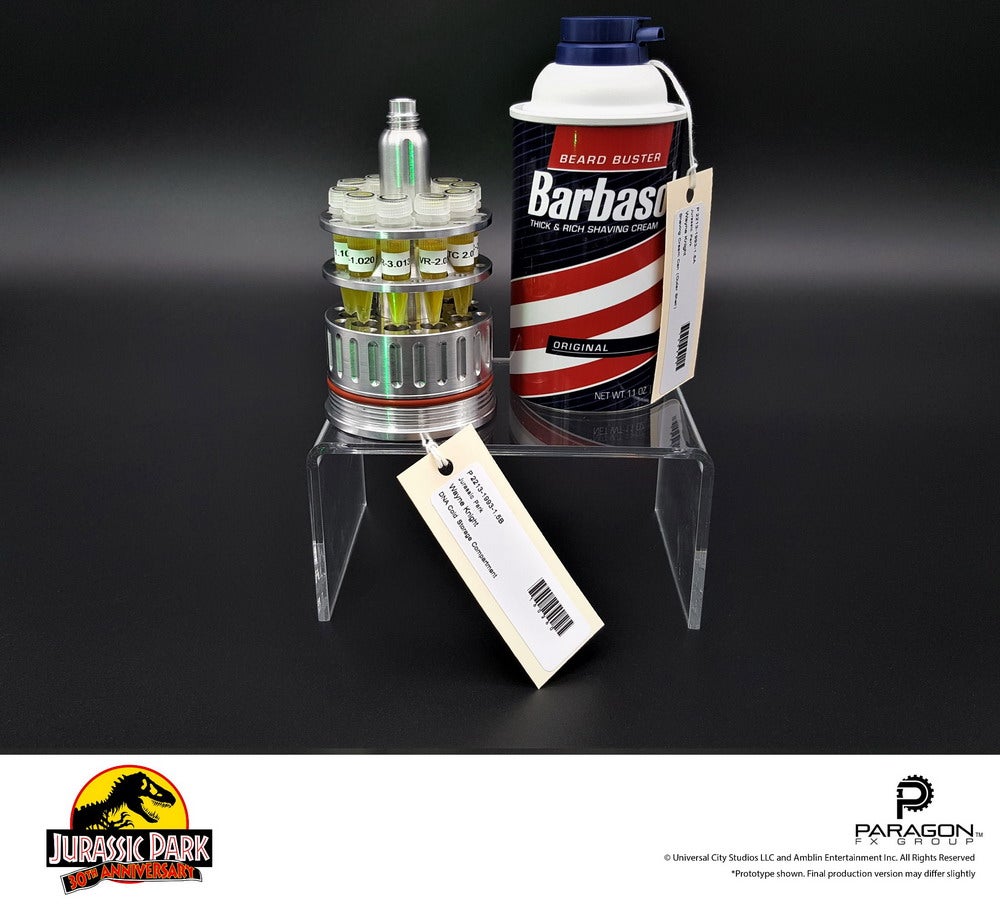
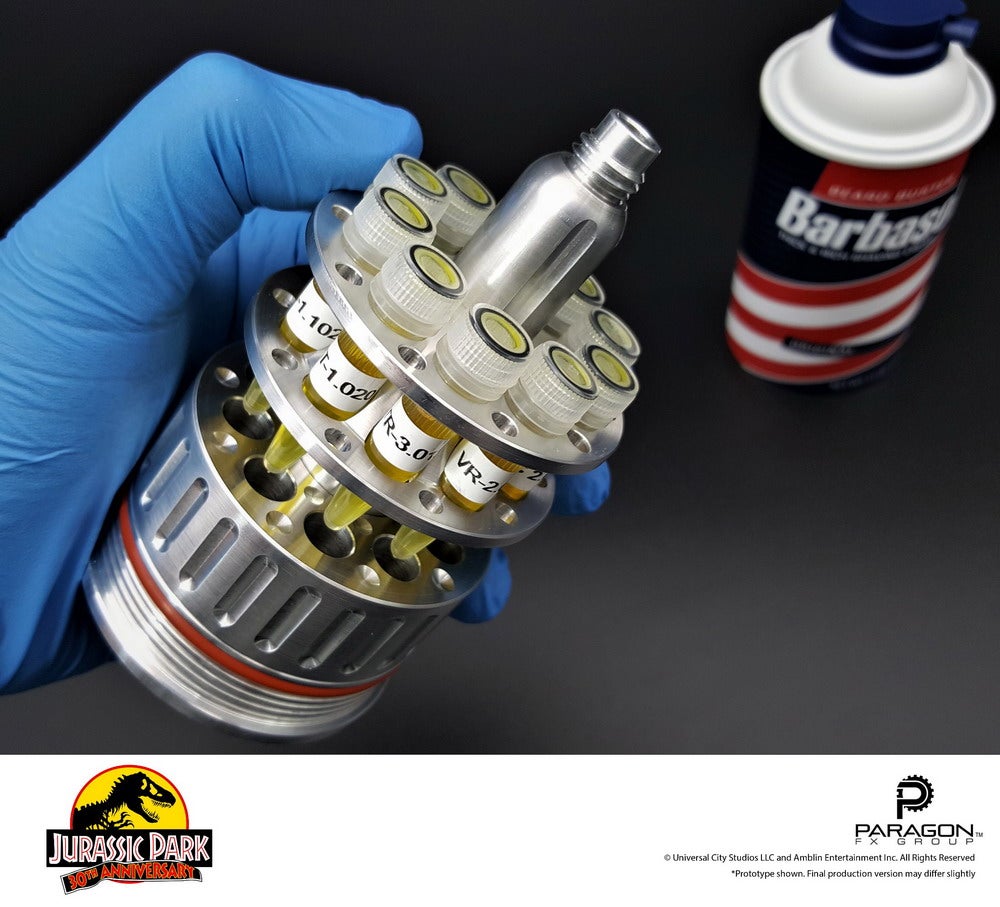
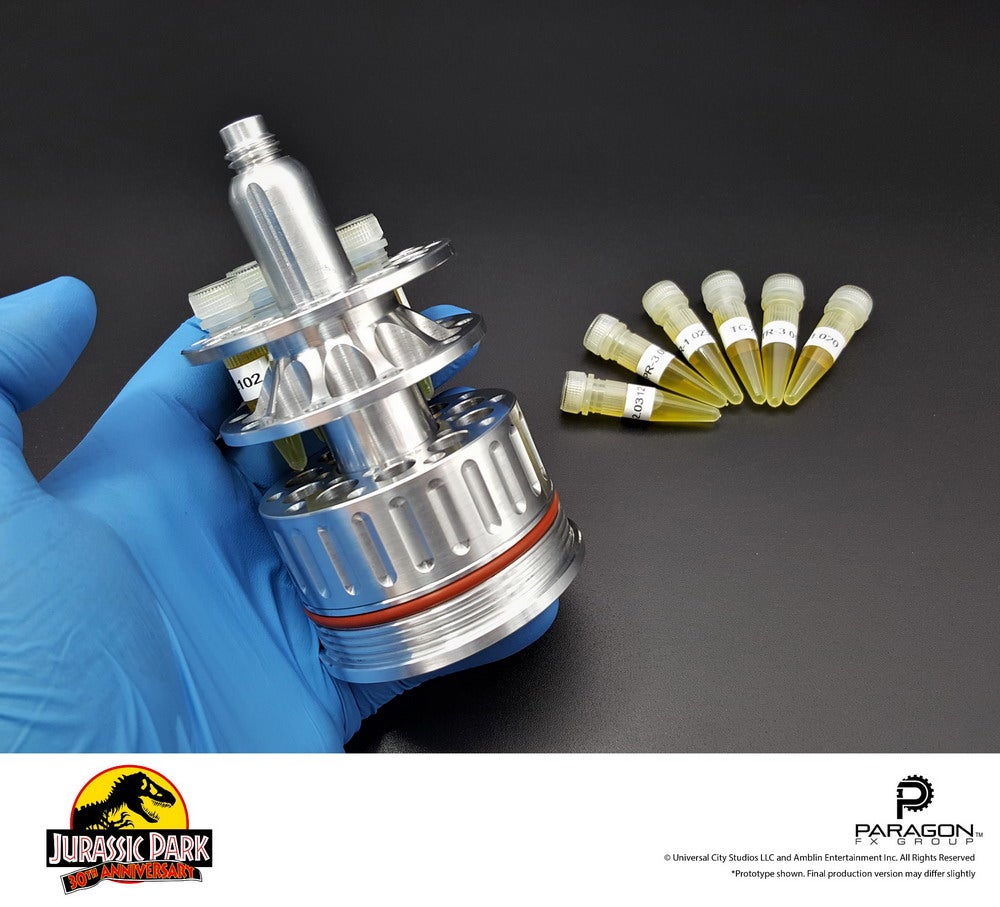
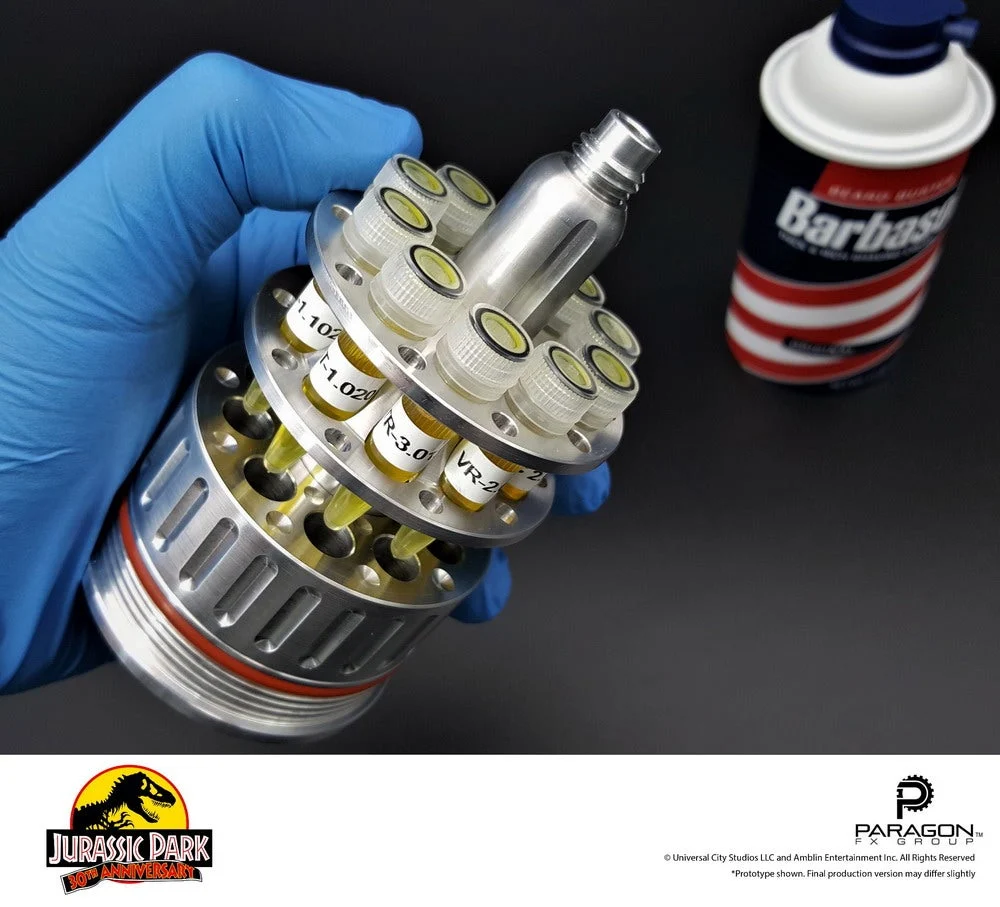
The replica is constructed from high-quality metal, utilizing CNC machining to ensure that every dimension aligns perfectly with the "hero" prop held within the studio archives. The set includes the primary metal canister, the iconic Barbasol exterior, ten microcentrifuge tubes complete with screen-accurate labels, and replica studio inventory tags. The standout feature is the functional, two-tiered "pop-up" centrifuge rack, which mimics the mechanical operation seen in the film—a detail that has historically eluded mass-market toy manufacturers.
A Chronological Journey: From Prop to Collector’s Item
The history of the Cryo-Can is as layered as the plot of the film itself. In the summer of 1993, audiences watched with bated breath as Dennis Nedry, portrayed by Wayne Knight, met with Lewis Dodgson to receive the delivery system for stolen dinosaur embryos.
The Cinematic Significance
In the film, the canister was a marvel of fictional engineering—a portable cooling unit designed by Biosyn to preserve DNA for 36 hours. Its design served as a perfect visual metaphor for the film’s central theme: the corruption of nature through corporate greed. By masking advanced biotechnology inside a mundane, everyday object like a shaving cream can, the film underscored how easily the "natural" order could be subverted by the ordinary, overlooked machinations of human greed.
The Evolution of the Replica Market
Over the last three decades, the Cryo-Can has transitioned from a film prop to a cultural icon. Throughout the 2000s and 2010s, various fan-made versions and mid-tier merchandise attempts hit the market. However, these often failed to capture the weight, the specific mechanical "pop-up" functionality, or the archival accuracy required by serious collectors. Paragon FX Group’s intervention marks the end of a long, often frustrating search for the "definitive" version of this piece. By gaining access to the original production archives, Paragon has effectively moved the needle from "fan-made" to "museum-grade."
Technical Specifications and Engineering Precision
What sets the Paragon FX Group replica apart from its predecessors is the engineering process. During the development phase, the Paragon team performed a deep-dive analysis of the original production-used hero prop.
CNC Machining vs. Injection Molding
Unlike mass-market replicas, this piece is CNC machined. This manufacturing process allows for tighter tolerances and the use of authentic materials, ensuring that the canister possesses the heft and tactile quality one would expect from a piece of industrial equipment. The metal construction ensures longevity and prevents the degradation often associated with plastic replicas.
The "Pop-Up" Mechanism
The core of the prop’s complexity is the centrifuge rack. The replica features a spring-loaded, two-tiered system that allows the user to rotate the rack and store the microcentrifuge tubes securely. This mechanical fidelity provides a tactile experience that bridges the gap between spectator and participant. When the rack is pushed down, it locks into the cooling coil base, mimicking the exact function seen on screen when Nedry prepares the vials for their journey off the island.
Archival Authenticity
Perhaps the most impressive detail for the die-hard fan is the inclusion of the studio inventory tags. These are not merely decorative; they are direct, scale-reproductions of the tags found on the original prop in the Universal archives. This level of granular detail elevates the item from a prop to a piece of cinematic history, documenting the very journey the object has taken through the studio’s storage facilities.
Official Responses and Industry Impact
The announcement has been met with widespread acclaim within the collector community, which has long viewed Paragon FX Group as the gold standard for high-end film memorabilia.
"We wanted to ensure that when a fan holds this, they aren’t just holding a prop; they are holding the actual technology that Biosyn would have provided to Nedry," noted a representative from Paragon FX Group. By working under the aegis of Universal and Amblin, the company has bypassed the guesswork that usually plagues replica manufacturing. This official endorsement provides a level of provenance that significantly bolsters the item’s long-term value.
Industry analysts suggest that this release highlights a growing trend in the memorabilia market: the shift toward "investment-grade" collecting. Fans are no longer satisfied with simple aesthetic approximations; they demand a physical connection to the production process. The collaboration between a legacy studio and a boutique manufacturer represents a maturation of the licensing model, where the focus shifts from volume to extreme quality.
Broader Implications: Why the Cryo-Can Matters
The release of this replica serves as a poignant reminder of the enduring legacy of Jurassic Park. Even 30 years after its debut, the film’s production design remains a benchmark for practical effects.
The Intersection of Art and Technology
The Cryo-Can represents the "Analog Age" of filmmaking. It was a physical object, handled by actors, and captured by a camera—a stark contrast to the digital-heavy production methods of today’s blockbusters. Owning this replica allows collectors to preserve a piece of that tactile, practical-effect history. It is a tangible link to a time when filmmakers relied on ingenious mechanical solutions to sell the audience on the reality of the impossible.
Cultural Cachet
The canister is arguably the most famous "spy gadget" in sci-fi history outside of the James Bond franchise. It represents the "what if" scenarios that keep the Jurassic Park fandom active even decades later. By owning a piece that is virtually indistinguishable from the one seen on screen, collectors are essentially "securing" their own piece of the park, even if it is just a set of vials that never actually held the secrets to cloning a Velociraptor.
Conclusion: A Must-Have for the Archive
For the serious collector, the Paragon FX Group Cryogenics Canister is a non-negotiable acquisition. It balances the nostalgia of a 30-year-old classic with the technical precision of modern engineering. As we look back on three decades of Jurassic Park, it is clear that the film’s success was built on its attention to detail. By mirroring that same level of care, Paragon FX Group has ensured that the legacy of the Cryo-Can will continue to endure for another thirty years and beyond.
Whether displayed on a desk, integrated into a high-end display cabinet, or handled as a centerpiece of a collection, this replica offers an unparalleled experience. It is a testament to the fact that while the dinosaurs may have been CGI, the magic of the film was very, very real. Collectors interested in securing this piece of cinematic history are encouraged to visit the official Paragon FX Group website, as items of this caliber—produced with such high standards—rarely remain available for long.

 Evan Lee Salim
 Nana Wu