

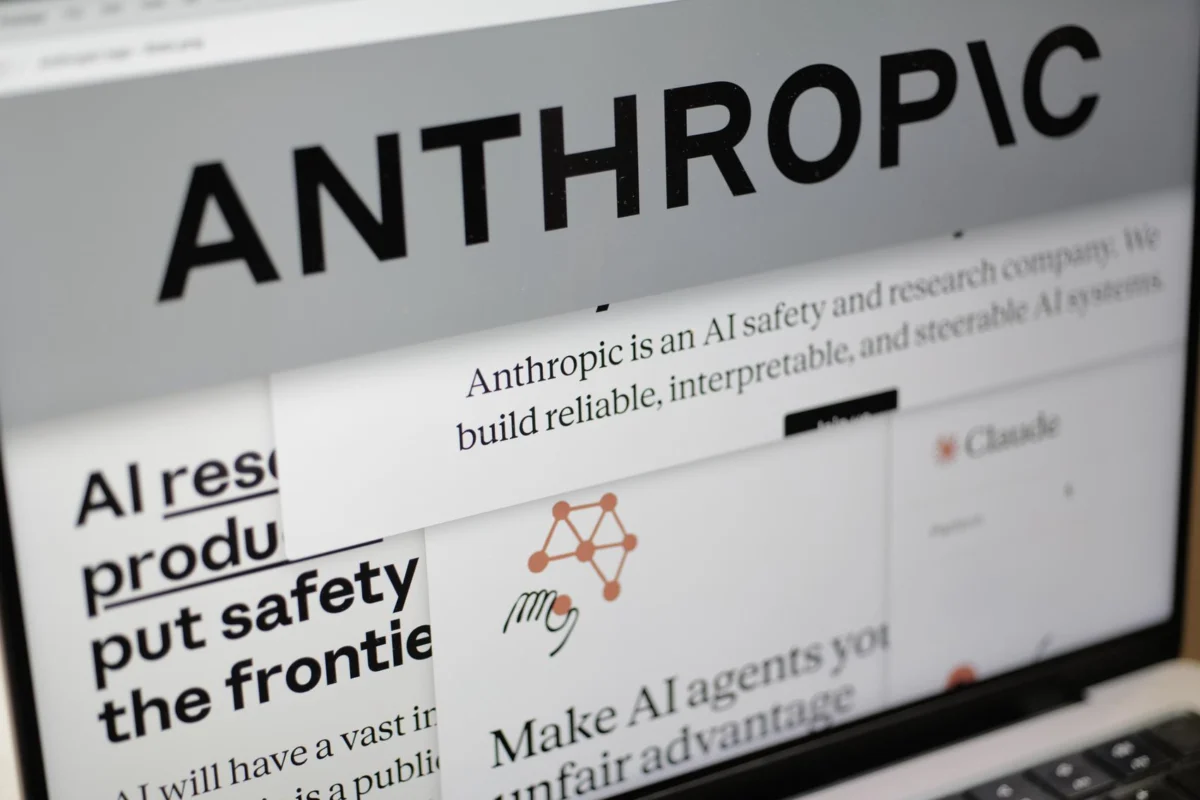
TOKYO – In a move signaling a pivotal shift in the global digital arms race, the Japanese government and a select group of the nation’s premier financial institutions have been granted exclusive access to Anthropic’s cutting-edge artificial intelligence model, "Claude Mythos." The deployment, confirmed by government officials on Wednesday, marks a strategic escalation in Japan’s efforts to shield its critical infrastructure from an increasingly sophisticated landscape of AI-driven cyber threats.
The integration of Claude Mythos—a model engineered with specialized, high-level cybersecurity defensive capabilities—underscores the urgency with which Tokyo is moving to protect its financial sector. As AI becomes both a tool for innovation and a weapon for state-sponsored actors, Japan’s decision to adopt these American-made technologies reflects a deepening alignment between Washington and Tokyo in the realm of technological security.
The Strategic Imperative: Why Claude Mythos Matters
The digital security landscape has undergone a seismic shift in the last twelve months. With the emergence of "offensive AI"—autonomous systems capable of identifying zero-day vulnerabilities, crafting polymorphic malware, and executing high-speed phishing campaigns—traditional perimeter defenses are rapidly becoming obsolete.
Anthropic’s Claude Mythos is designed to operate on the opposite end of that spectrum. Unlike general-purpose large language models (LLMs), Mythos is optimized for "threat hunting" and automated incident response. It possesses an advanced ability to parse vast troves of network traffic, identify anomalous patterns indicative of a sophisticated intrusion, and suggest remediation steps in real-time.
For a nation like Japan, which maintains a highly centralized and interconnected financial ecosystem, the threat of a systemic cyberattack is an existential concern. The government’s decision to bring this technology into the fold is not merely a technical upgrade; it is a defensive necessity to ensure that Japan does not lag behind the United States, the United Kingdom, or other G7 peers in digital resilience.
A Chronology of Access: From Diplomacy to Deployment
The path to integrating Claude Mythos into Japanese institutional infrastructure has been rapid, characterized by high-level diplomatic maneuvering and urgent public-private sector collaboration.
- April 2024: Anthropic unveils the "Claude Mythos" model. Due to the model’s immense capability for identifying security vulnerabilities, Anthropic restricts access strictly to top-tier IT partners like Google LLC and a handful of vetted global financial entities, citing concerns that the technology could be weaponized if it fell into the wrong hands.
- May 10-13, 2024: U.S. Treasury Secretary Scott Bessent conducts a three-day official visit to Tokyo. Amidst discussions on trade and currency, cybersecurity takes center stage. During these meetings, the framework for granting Japan access to sensitive U.S. AI models is finalized.
- Mid-May 2024: Treasury Secretary Bessent confirms that access to Claude Mythos for Japanese institutions will be granted within a two-week window.
- Late May 2024: Reports emerge that major Japanese financial houses, including MUFG Bank, are among the first to begin the onboarding process for the system.
- Wednesday, May 22, 2024: Finance Minister Satsuki Katayama officially confirms the access during a press briefing, characterizing it as a vital milestone for national security.
This timeline reflects a broader pattern of "AI Diplomacy," where access to frontier-level artificial intelligence is being used as a currency to strengthen geopolitical alliances and harmonize security standards among like-minded nations.
Official Responses: The View from the Kasumigaseki
The announcement has been met with a mix of relief and resolve from Japan’s leadership. Finance Minister Satsuki Katayama, speaking to reporters on Wednesday, emphasized the competitive nature of the modern digital landscape.
"There is no doubt that this will contribute to strengthening security," Katayama stated. He was pointed in his assessment of the risks, noting that it is "unacceptable" for Japanese financial institutions to fall behind their global counterparts. In the eyes of the Ministry of Finance, the failure to adopt these defensive AI tools would essentially leave the nation’s banking system vulnerable to modern adversaries.
Hisashi Matsumoto, the minister in charge of cybersecurity, echoed these sentiments, framing the development as a foundational component of a broader national strategy. "It is a significant step forward that the door opened," Matsumoto said, noting that the partnership with Anthropic is part of a larger initiative to "strengthen the cyber resilience of Japan as a whole."
The government’s rhetoric suggests that this is only the beginning of a broader program to incentivize the adoption of advanced AI security tools across the private sector, particularly within industries deemed critical to national stability, such as telecommunications, energy, and transportation.
The Broader Context: The Race for GPT-5.5-Cyber
The arrival of Claude Mythos is not occurring in a vacuum. Just last week, Minister Katayama confirmed that major Japanese banks had already secured access to OpenAI’s latest specialized security model, "GPT-5.5-Cyber."
The dual adoption of both Anthropic and OpenAI technologies suggests a strategy of "vendor diversity" and redundancy. By utilizing different underlying architectures, Japanese institutions can cross-reference threat intelligence and ensure that if one model fails to detect an anomaly, the other might succeed.
GPT-5.5-Cyber is widely regarded as a direct competitor to Claude Mythos, specifically optimized for auditing code for security flaws and simulating "red team" exercises where the AI attempts to penetrate its own systems to find gaps in logic or authentication. The fact that Japan has secured access to the flagship security models of the two most prominent U.S. AI labs positions the country as a primary testing ground for next-generation defense.
Implications: The Future of Sovereign Cyber Resilience
The decision to grant Japan access to these models has far-reaching implications for the future of international cybersecurity policy.
1. The Redefinition of Critical Infrastructure
Historically, cybersecurity was a matter of firewalls, antivirus software, and human monitoring. The integration of Mythos and GPT-5.5-Cyber moves the industry toward "Autonomous Defense." This implies a future where security operations centers (SOCs) are staffed primarily by AI, with humans serving in an oversight capacity. The implications for the workforce—and the need for a new generation of "AI-fluent" cybersecurity professionals—are profound.
2. Geopolitical Alignment and Technology Sovereignty
By restricting access to "like-minded countries," Anthropic and OpenAI are essentially participating in a form of digital export control. This reinforces a bifurcated global AI landscape, where nations aligned with the U.S. benefit from the most advanced defensive tools, while others are forced to develop their own, potentially inferior, sovereign models. For Japan, this confirms its status as a key technological ally in the Indo-Pacific.
3. Ethical and Regulatory Challenges
While the defensive benefits are clear, the deployment of such powerful AI models in a banking context raises significant ethical questions. Who is responsible if an autonomous AI makes a mistake? If Claude Mythos erroneously flags a legitimate transaction as a malicious intrusion, the resulting disruption could cause severe economic harm. The Japanese government faces the delicate task of integrating these tools while establishing a regulatory framework that mandates human accountability.
4. The Escalation Cycle
As defenders gain access to more powerful AI, attackers are likely to respond in kind. This creates an escalation cycle where the models themselves become the primary battleground. The security of the "weights" and "parameters" of models like Claude Mythos becomes paramount; if a foreign intelligence agency were to compromise the model itself, the results could be catastrophic.
Conclusion: A New Frontier for Japan
The granting of access to Claude Mythos and GPT-5.5-Cyber represents a critical turning point for Japan’s digital security. By bridging the gap between cutting-edge U.S. innovation and domestic implementation, Tokyo is taking proactive steps to defend its economic foundation against an increasingly hostile digital environment.
As the government moves forward with implementation, the focus will likely shift to training and integration. For the financial institutions involved, the challenge will be to harmonize these powerful, high-speed AI systems with existing legacy infrastructure—a task that will require not only technical expertise but also a fundamental change in organizational culture.
While the "door has opened," as Minister Matsumoto noted, the road ahead remains complex. The successful deployment of these models will serve as a bellwether for how effectively the world’s leading democracies can leverage the power of artificial intelligence to safeguard their societies, their economies, and their future in the digital age. Japan, with its unique blend of caution and technological ambition, now stands at the vanguard of this critical endeavor.












No comments yet. Be the first to join the conversation!