

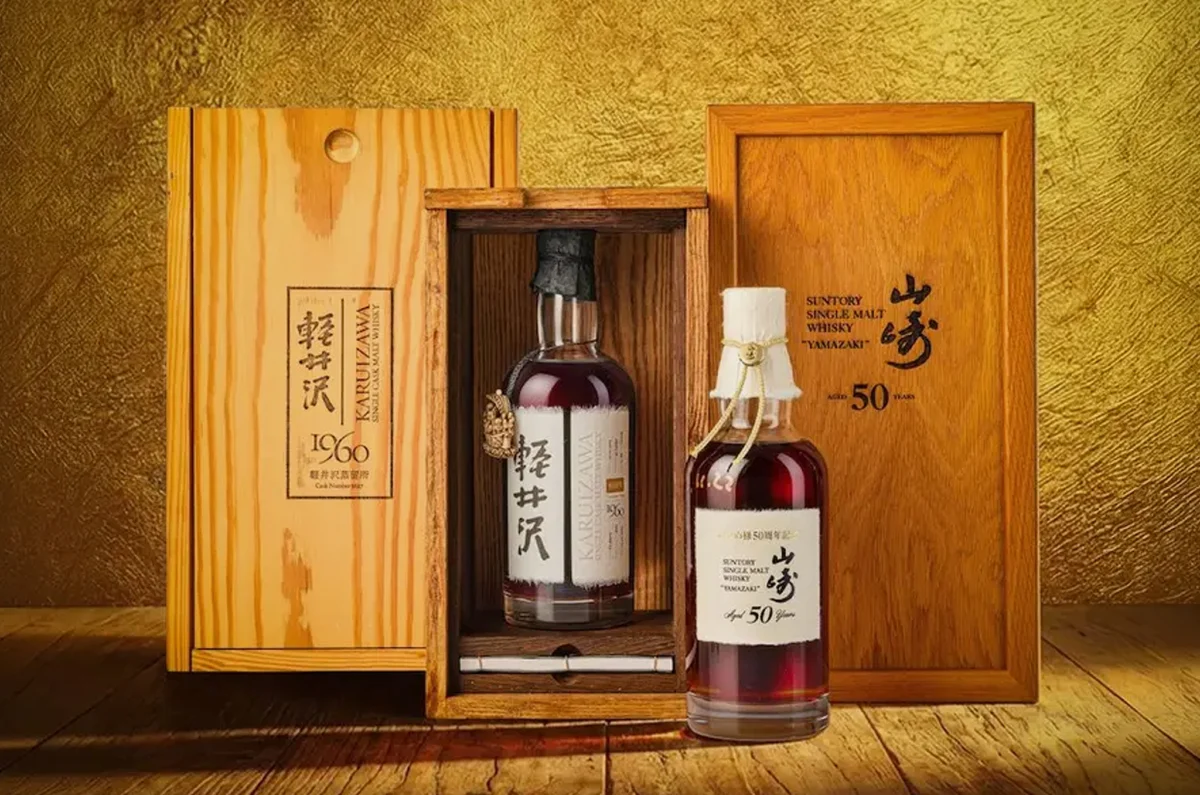
In the high-stakes world of fine spirits collecting, where provenance and scarcity dictate value, a new ceiling has been established. On a landmark Saturday at Bonhams Hong Kong, a single, bespoke bottle of the Yamazaki 50-Year-Old—a "Club Natsume" edition—hammered down for an astonishing HK$8.25 million (approximately US$1.05 million). This transaction did more than merely trade a high-end spirit; it shattered the previous world record for the most expensive Japanese whisky ever sold, signaling that the global appetite for liquid gold from Japan remains as ravenous as ever.
The sale price obliterated the pre-auction estimate of US$360,000 to US$530,000, landing at a figure 30% higher than the previous record holder: a Yamazaki 55-Year-Old, which sold at the same auction house in August 2020. This historic event confirms that despite economic fluctuations, the rarest, most exclusive bottles of Japanese whisky are increasingly viewed as blue-chip assets, rivaling the performance of fine art and vintage timepieces.
The Anatomy of a Record-Breaker: Why the Yamazaki 50-Year-Old Matters
The Yamazaki 50-Year-Old is not merely a drink; it is a monument to the history of Japanese distillation. Distilled during the 1950s—an era of profound experimentation and growth for Suntory—the spirit spent half a century maturing in rare Japanese Mizunara oak casks.
Mizunara, a species of oak indigenous to Japan, is notoriously difficult to work with. It is porous and prone to leaking, yet it imparts a profile unlike any other wood in the world of spirits. The 50-Year-Old expression is famous for its complex sensory profile: deep, resinous sandalwood, evocative incense, and a subtle, spicy finish that lingers on the palate long after the final drop.
However, the "Club Natsume" edition carries an additional layer of mythos. Created as a private gift to celebrate the 50th anniversary of the exclusive Club Natsume in Nagoya, this bottle was never intended for the commercial market. Its rarity is compounded by its aesthetic presentation, which includes a delicate washi paper label and the personal signature of Suntory’s legendary Chief Blender, Shinji Fukuyo. For the collector, these details transform the whisky from a commodity into a singular piece of cultural heritage.
The Karuizawa Contingent: A Secondary Triumph
The auction was not solely defined by the Yamazaki. The sale also showcased the enduring allure of the "silent distillery" era through the Karuizawa 52-Year-Old Cask #5627, 1960, known as the "Treasure Ship." This bottle achieved a staggering HK$6.25 million (US$797,000), nearly doubling the upper end of its pre-sale estimate.
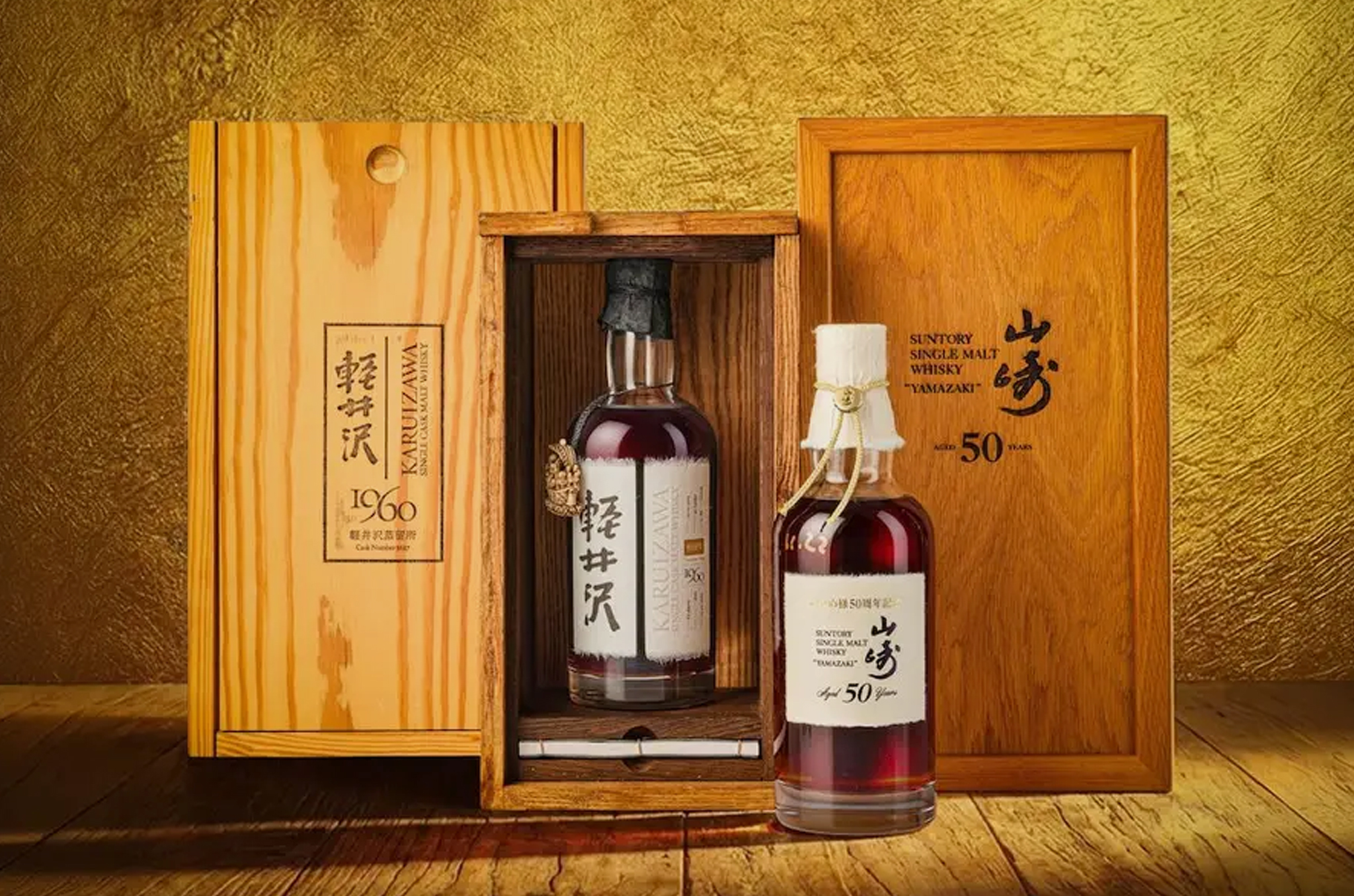
The Karuizawa 52-Year-Old is a masterpiece of craftsmanship. With only 41 bottles in existence, its value is bolstered by its presentation: a hand-carved antique netsuke—a traditional Japanese toggle—suspended from the bottle’s neck, housed in a bespoke wenge-wood puzzle box. The success of both the Yamazaki and the Karuizawa lots suggests that the market is currently experiencing a "flight to quality," where investors are prioritizing bottles with historical provenance, artistic packaging, and extreme scarcity.
A Chronology of the Japanese Whisky Boom
To understand the magnitude of this sale, one must look at the trajectory of Japanese whisky over the last two decades.
- The Early 2000s: Japanese whisky was largely an industry secret, prized by connoisseurs but under-appreciated globally.
- 2013-2015: International acclaim begins to snowball. Yamazaki and Hibiki bottlings start winning "World’s Best" awards at the International Spirits Challenge and the World Whiskies Awards, leading to massive stock shortages.
- 2018: The auction market begins to heat up as major houses like Bonhams and Sotheby’s start dedicating specific auctions to rare Japanese spirits.
- August 2020: The Yamazaki 55-Year-Old sets a new record of approximately US$795,000. It is a moment of cultural significance, proving that Japanese whisky has entered the top tier of the global collectibles market.
- June 2026: The Club Natsume Yamazaki 50-Year-Old pushes the million-dollar barrier, cementing the transition of Japanese whisky into an asset class of its own.
Supporting Data: The Economics of Scarcity
The valuation of these whiskies is driven by the "distillery supply cliff." Because the Japanese whisky industry experienced a period of low production in the late 1980s and early 1990s, the stock of whisky aged over 30 years is mathematically finite.
Market analysis from the auction house indicates that the CAGR (Compound Annual Growth Rate) of ultra-rare Japanese whiskies has outperformed many traditional equity indices over the last five years. While common supermarket-shelf expressions have seen price increases due to production costs, the "Blue Chip" sector—bottles produced in limited batches before the global boom—has seen appreciation rates often exceeding 15% to 20% annually.
The bidding activity on the Club Natsume bottle was notably aggressive. According to auction observers, the bidding process lasted several minutes, with intense competition between private collectors based in Asia and institutional buyers from Europe. This competitive atmosphere reflects a shift in the demographic of collectors, who now view these bottles as legacy items for generational wealth portfolios.
Official Perspectives and Industry Implications
Industry experts believe the record-breaking sale is a turning point for the category. "We are seeing a maturation of the collector base," says one spirits consultant. "Five years ago, people bought these bottles because they were trendy. Today, they buy them because they understand the chemical and historical rarity of Mizunara-aged spirits that will never be produced again."
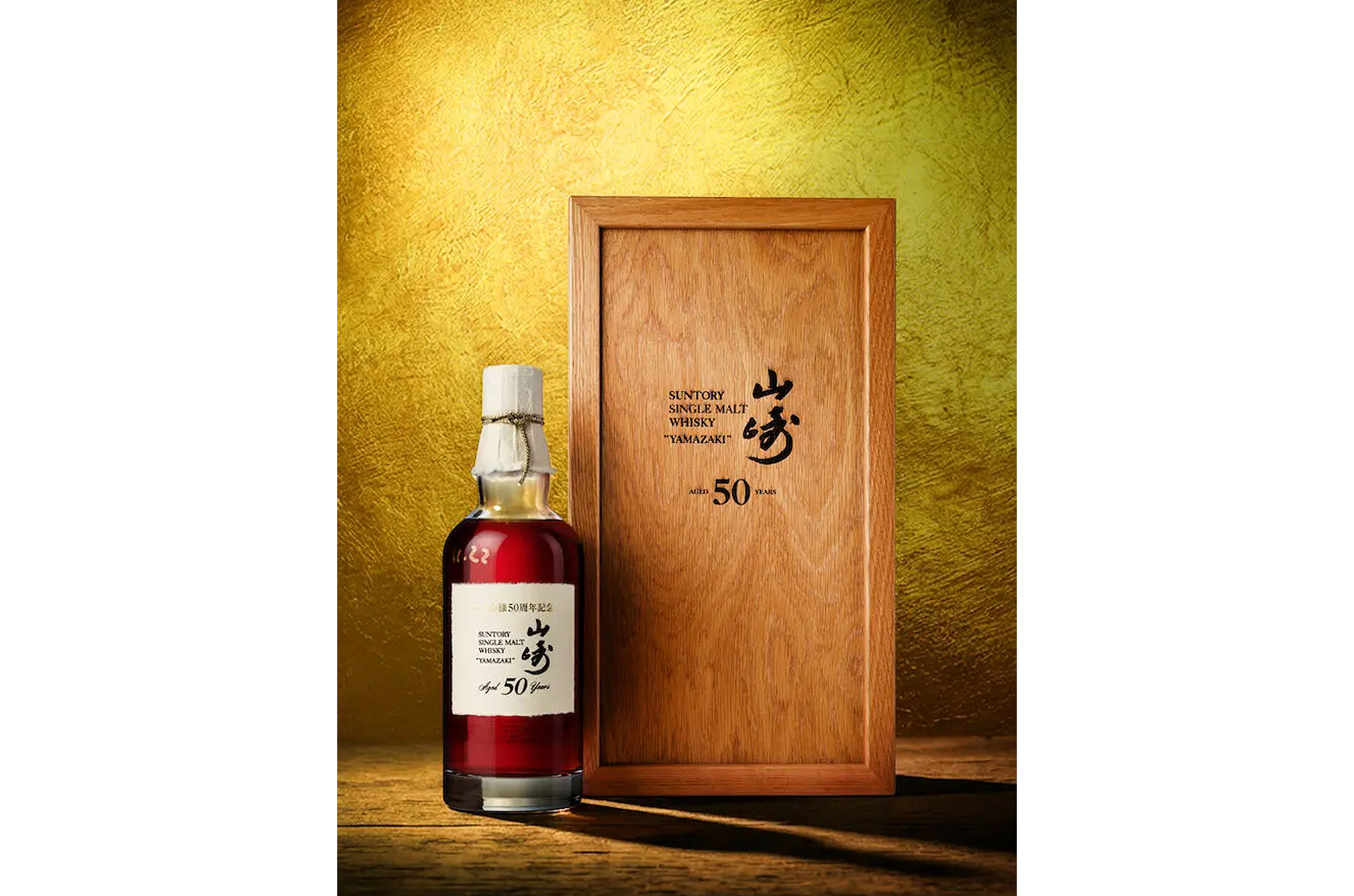
Suntory, while maintaining a policy of discretion regarding secondary market prices, has previously commented on the phenomenon of their older releases. The company emphasizes that the value lies in the craftsmanship of the Chief Blender, who manages the stocks with an eye toward preserving the legacy of the distillery’s founders.
However, there is a looming concern regarding the "drinkability" of these assets. As prices climb, the likelihood that these bottles will ever be opened decreases. Critics argue that this leads to the "museumification" of whisky, where the product is no longer consumed as a spirit but traded as a financial instrument.
The Future of the Market
What are the implications for the future?
- Increased Scrutiny on Provenance: As prices rise, the risk of counterfeits increases. Auction houses are now investing heavily in forensic analysis, checking glass molds, label paper fibers, and seal integrity to ensure that the bottles are authentic.
- The Shift to Non-Age Statement (NAS) and Newer Releases: With the scarcity of old-stock, the market for younger, innovative releases from newer distilleries is expected to grow. Collectors are already beginning to scout for the "next" Yamazaki 50, looking at smaller boutique distilleries that are experimenting with unique cask finishes.
- The Role of Auctions as Market Makers: Bonhams and other houses have become more than facilitators; they are now the gatekeepers of value. Their ability to curate these rare lots has transformed the perception of Japanese whisky from a niche beverage into a pillar of the global luxury goods market.
Conclusion
The sale of the Club Natsume Yamazaki 50-Year-Old for over US$1 million is a watershed moment. It serves as a testament to the vision of Japanese distillers who, decades ago, laid down casks with patience and precision, unaware that their liquid legacy would one day command the attention of the world’s elite investors.
As we look toward the future, the question remains: is there a limit to how high these prices can go? In a world of infinite digital assets, the tangible, consumable, and vanishing nature of a 50-year-old whisky provides a unique psychological anchor for collectors. Whether it is opened to celebrate a monumental life event or kept in a vault as a hedge against inflation, the Yamazaki 50-Year-Old stands as a symbol of the pinnacle of Japanese craftsmanship—a record that will likely stand until the next masterpiece emerges from the silent shadows of the barrel house.












No comments yet. Be the first to join the conversation!