

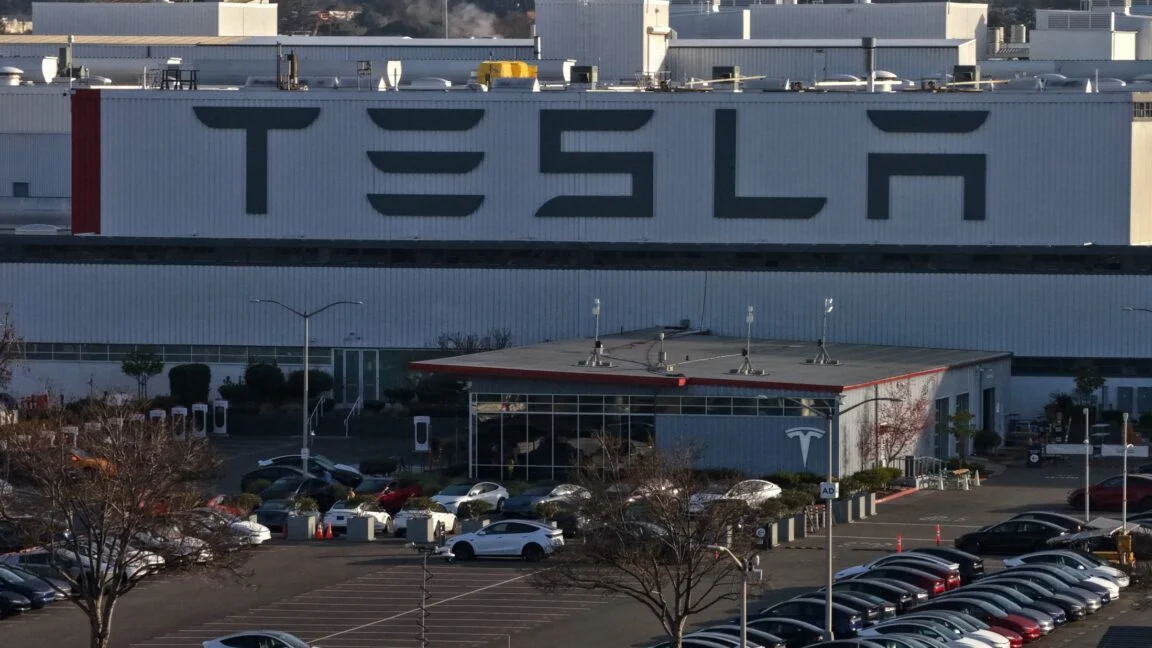
In a significant legal development for the electric vehicle giant, a California Superior Court judge has denied Tesla’s motion for summary judgment in a massive civil rights lawsuit. The case, brought by the California Civil Rights Department (CRD), alleges that Tesla fostered a systemic environment of racial discrimination and harassment at its facilities. With this ruling, the litigation moves toward a full trial, ensuring that the company’s workplace practices will be subject to intense public and judicial scrutiny.
The Core Allegations: Systemic Discrimination
The lawsuit filed by the CRD portrays a workplace culture at Tesla that is deeply fractured along racial lines. According to the agency’s complaint, Black workers at Tesla facilities have been subjected to a pattern of degradation and exclusion that violates California’s Fair Employment and Housing Act.
The CRD alleges that Black employees were routinely relegated to the most physically demanding, labor-intensive roles, regardless of their qualifications or seniority. Beyond the nature of the work assigned, the complaint highlights a pervasive culture of segregation and pay disparity, asserting that Black staff members were consistently compensated less than their non-Black counterparts for substantially similar work.
Perhaps most damaging are the claims regarding retaliation. The CRD asserts that when Black employees attempted to report these disparities or challenge the treatment they received, they were met with a “retaliatory machine” of overly harsh performance reviews, frequent and unjustified reprimands, and, in many cases, termination. The agency contends that Tesla leadership was well aware of these issues but failed to take meaningful, systemic action to stop the harassment and discrimination.
Chronology of the Legal Battle
The current ruling is the latest chapter in a multi-year conflict between the CRD and Tesla.
- Initial Investigations: Following numerous internal complaints and reports from former employees, the CRD launched a comprehensive investigation into Tesla’s Fremont, California, factory and other facilities.
- The Filing of the Suit: The CRD officially brought the lawsuit against Tesla, alleging that the company failed to provide a safe, non-discriminatory work environment.
- The Defense’s Motion: Tesla moved for summary judgment—a legal mechanism used to end a case before trial by arguing that the facts are so clear that a trial is unnecessary. Tesla attempted to prove that there was no "pattern or practice" of discrimination.
- The May 2026 Ruling: Superior Court Judge Peter Borkon issued a stinging rebuke to Tesla’s motion, determining that the carmaker had failed to provide undisputed evidence that would justify dismissing the claims. By denying the motion, Judge Borkon has effectively cleared the path for the case to proceed to the discovery and trial phases.
Supporting Data: The "N-Word" Evidence
One of the most compelling aspects of Judge Borkon’s recent ruling was his analysis of the harassment claims. The court examined hundreds of declarations from both the plaintiffs and the defense regarding the prevalence of racial slurs within the Tesla Fremont factory.
The judge’s analysis revealed a stark disconnect between the defense’s narrative and the lived reality of the employees. Of 240 declarations submitted by the plaintiffs, every single one claimed to have heard the n-word while working at the Fremont facility. Even among the declarations submitted by Tesla to prove a lack of harassment, 99 out of 228 individuals admitted to hearing the slur.
Judge Borkon utilized this data to systematically dismantle Tesla’s argument. He pointed out three critical failures in the defense’s logic:
- Scope Limitations: Tesla’s evidence was largely confined to the Fremont factory, while the CRD’s allegations of systemic discrimination cover the company’s operations statewide.
- Sample Bias: The court noted that Tesla’s evidence appeared to be a non-representative sample, making it impossible to extrapolate their findings to the entire workforce.
- Minimum vs. Maximum: The judge highlighted that Tesla’s figures represented the minimum number of people who heard the slur, rather than a definitive account of all incidents.
By framing the evidence in the light most favorable to the plaintiff—as is required at the summary judgment stage—the court concluded that Tesla failed to meet the burden of proof required to stop the trial from proceeding.
Official Responses and Corporate Defense
In its legal filings, Tesla has maintained a defensive posture, relying heavily on the existence of its corporate infrastructure. The company asserted that its written policies, anti-discrimination training programs, and orientation materials served as a sufficient safeguard against racial hostility. Tesla argued that these mechanisms show that the company did not tolerate harassment and that it took “immediate and appropriate action” whenever incidents were brought to light.
Judge Borkon, however, remained unconvinced. In his ruling, he explicitly stated that he was "not persuaded that the existence of written policies alone is sufficient to establish a prima facie showing that there was no harassment or discrimination." This distinction is vital: it signals that the court is looking for evidence of culture and practice, not just the presence of a handbook in an HR office. The judge’s stance suggests that if policies are not effectively enforced or are undermined by a toxic floor culture, they provide little protection against legal liability.
Implications for Tesla and the Tech Sector
The denial of the summary judgment motion has profound implications, both for Tesla and the broader manufacturing and technology sectors.
Legal and Financial Risk
Moving to trial carries significant risks for Tesla. Beyond potential financial damages, which could reach into the millions, the trial will involve the public airing of internal emails, management communications, and employee testimony. This "discovery" process often unearths damaging details that corporations prefer to keep private. A trial by jury also introduces an element of unpredictability that the company sought to avoid through its motion for summary judgment.
Reputational Damage
Tesla has long branded itself as a company of the future, focused on sustainability and innovation. However, the persistent narrative of a "19th-century" work environment defined by racial segregation stands in direct opposition to that brand image. Continued litigation keeps this narrative at the forefront of the public consciousness, potentially impacting the company’s ability to recruit top-tier talent and maintain its standing with socially conscious investors.
Precedent for Labor Relations
This case is being watched closely by labor rights advocates across the country. If the CRD succeeds at trial, it will set a significant precedent regarding the responsibility of large corporations to monitor and manage workplace culture. It reinforces the principle that companies cannot shield themselves from liability by pointing to "policies on paper" while ignoring the actual lived experiences of their workers.
As the case moves toward trial, the focus will likely shift to whether the plaintiffs can prove that these incidents were not isolated, but rather part of a systemic "pattern or practice." For Tesla, the challenge is now to convince a jury that the company—despite its size and rapid growth—did everything within its power to ensure a safe and equitable workplace for all employees, regardless of race.
For the California Civil Rights Department, the ruling is a major victory, affirming that the allegations are serious enough to merit a full trial and providing a platform for the thousands of Black workers who have alleged that they were systematically marginalized at one of the world’s most valuable companies. The trial, when it commences, will be a defining moment in the history of Tesla’s labor relations.












No comments yet. Be the first to join the conversation!