Raul Delapena Setiawan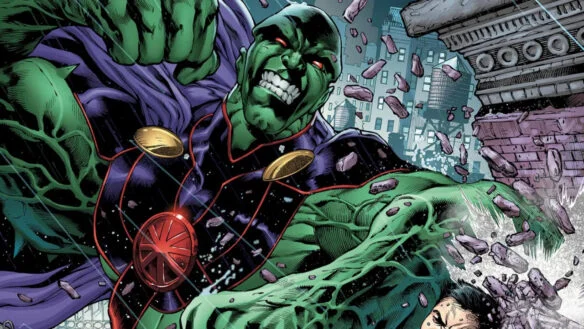
As we navigate the mid-2020s, the landscape of science fiction and speculative culture continues to evolve at a breakneck pace. From the scholarly examination of translated literature to the practical engineering of space-based infrastructure, the genre remains the primary sandbox for humanity’s collective imagination. This report synthesizes the latest developments in literary criticism, astronomical research, and pop culture, offering a comprehensive look at the current zeitgeist.
I. The Literary Frontier: Translation and Recognition
The "New York Times" Quiz and the Challenge of Recognition
The New York Times recently issued a challenge to the science fiction community: "Do You Recognize These Lines From Popular Science Fiction?" The interactive quiz serves as a litmus test for the cultural literacy of modern readers. By presenting iconic lines—such as the evocative, gritty description of "Night City"—the Times highlights the enduring power of world-building. These snippets act as anchors for readers, drawing them back to the foundational texts that shaped the genre’s aesthetic and philosophical trajectory.
The Vitality of Speculative Fiction in Translation (SFT)
While classic English-language tropes remain popular, the heart of the genre’s growth lies in translation. Rachel Cordasco, a preeminent voice in the field, recently sat down with the Science Fiction Encyclopedia to discuss the state of SFT.
Cordasco notes that the 1970s marked the first true "Golden Age" of science fiction translation, a period that opened Western readers to the radical perspectives of authors like Stanislaw Lem and the Strugatsky brothers. Her current focus, channeled through her Speculative Fiction in Translation platform and the Small Planet publication, emphasizes that translated works are often "double-vetted." Because these stories have already proven their merit in their native languages, they represent some of the highest-quality narratives available.
However, Cordasco warns of a critical void. The closure of key publishing houses like Kurodahan and Haikasoru—which were instrumental in bringing Japanese science fiction to Anglophone audiences—has left a gap that modern publishers have yet to fill. She calls for a renewed effort to source works from underrepresented literary landscapes, including Vietnamese, Bulgarian, and Icelandic speculative fiction.

II. Chronology of Events and Observations
- 1994: Inauguration of the World Wide Party (WWP) by Benoit Girard and Franz Mikiis.
- 1923: Publication of Dorothy L. Sayers’ debut novel, Whose Body?, beginning the iconic Lord Peter Wimsey series.
- 1963: Publication of John D. MacDonald’s The Girl, The Gold Watch & Everything.
- 2026 (June 21): The 33rd annual World Wide Party.
- 2026 (Ongoing): The re-evaluation of DC’s Justice League through the lens of modern narrative importance.
III. Supporting Data: The Logistics of the Future
The "StormWall" and Orbital Protection
As our reliance on satellite technology grows, so does our vulnerability to solar weather. A groundbreaking study published in Space Weather has introduced "StormWall," a provocative defense system. The proposal involves a fleet of satellites tasked with releasing hundreds of tons of gas into space to create an artificial cloud. Computer simulations suggest this could halve the intensity of a solar storm, effectively shielding Earth’s digital infrastructure from catastrophic failure.
Mining the Void: The Economics of Mars
The logistical hurdle of becoming a multi-planetary species remains the most significant barrier to Mars colonization. A recent study by researchers at EPFL (Switzerland) challenges the "Earth-centric" supply chain model. The research suggests that instead of launching raw materials from Earth—at a cost of tens of millions of pounds per ton—we should turn to M-type (metallic) asteroids. These celestial bodies, rich in iron and nickel, could be mined in situ, providing the structural steel and equipment needed for habitat construction. This transition from "shipping" to "manufacturing" is viewed by experts as the pivot point for long-term space habitation.
IV. Cultural Impact and Media Analysis
The Enduring Mystery of Dorothy L. Sayers
June 13th marked the birth anniversary of Dorothy L. Sayers (1893–1957), a titan of the mystery genre whose influence extends into the speculative realm. Unlike many of her contemporaries, Sayers infused her narratives with a sharp, upper-class social commentary that remains relevant today. Her transition from the Lord Peter Wimsey novels to religious dramas and radio plays reflects a unique trajectory in 20th-century literature. Critics note that while her foray into genre-bending stories—such as "The Cyprian Cat"—was limited, her ability to build complex, evolving characters like Harriet Vane set the standard for modern serialized fiction.
The "Gold Watch" Paradox
Memory Lane recently revisited the 1980 adaptation of The Girl, The Gold Watch & Everything. The film, which explores the comic potential of time-manipulation devices, highlights a common point of contention among fans: the perceived similarity between John D. MacDonald’s novel and the Twilight Zone episode "A Kind of Stop Watch." Despite accusations of plagiarism, the publication dates confirm that MacDonald’s work preceded the teleplay, serving as a reminder that the "time-stop" trope is a foundational, yet often debated, element of the genre.
Justice League: A Modern Ranking
In the shifting hierarchy of DC Comics, the importance of the Justice League’s founding members is being re-evaluated for 2026. The Martian Manhunter, despite being the team’s most potent telepath, currently faces a narrative decline. Analysis suggests that as the League has ballooned in size, the "classic" members are struggling to find dedicated space in an overcrowded roster. This highlights a broader trend in comics: the tension between preserving legacy characters and the need for fresh, serialized content.

V. Official Responses and Future Implications
Spielberg and the Reality of Disclosure
Steven Spielberg’s latest project, Disclosure Day, continues his lifelong fascination with the unknown. In a recent CBS Sunday Morning appearance, Spielberg discussed the current public discourse surrounding UAP (Unidentified Anomalous Phenomena). By framing the topic within the context of "closely-held secrets," Spielberg touches upon the real-world anxiety surrounding government transparency. His work serves as a cultural proxy, allowing the public to grapple with the possibility of intelligent life in an era where the boundary between science fiction and national security has become increasingly porous.
The "Loud Eater" Phenomenon: Cinema as Community
Beyond the screen, the act of media consumption itself is under scrutiny. A recent report from the BBC highlights a growing frustration among cinema-goers: the intersection of mobile phone usage and disruptive behavior. This issue is not merely one of etiquette; it speaks to the decline of the "communal experience" that once defined the golden age of film. For the science fiction community—which has historically relied on shared screenings and conventions—the preservation of this space is paramount to maintaining the genre’s social fabric.
The Cosmic Museum: Life’s Origins
Finally, the discovery of meteorite NWA 12593 has provided a new timeline for the dawn of life on Earth. By identifying a 3.5-billion-year-old impact signature, researchers have mapped a system-wide event that likely reshaped the inner solar system. This confirms that Earth’s history is inextricably linked to the debris of the cosmos. As we look to the stars for our future—whether through mining asteroids or seeking alien contact—we are also looking back at the violent, chaotic origins that forged our existence.
Conclusion
Whether it is the rigorous math of asteroid mining, the nuanced translations of foreign-language masters, or the enduring debates over the Justice League, the state of speculative culture is robust. It is a field that does not simply predict the future; it prepares us for it. As we approach the 33rd World Wide Party on June 21st, we are reminded that whether we are facing east, north, south, or west, we are all part of a global, interconnected community of dreamers.


 Nila Kartika Wati