

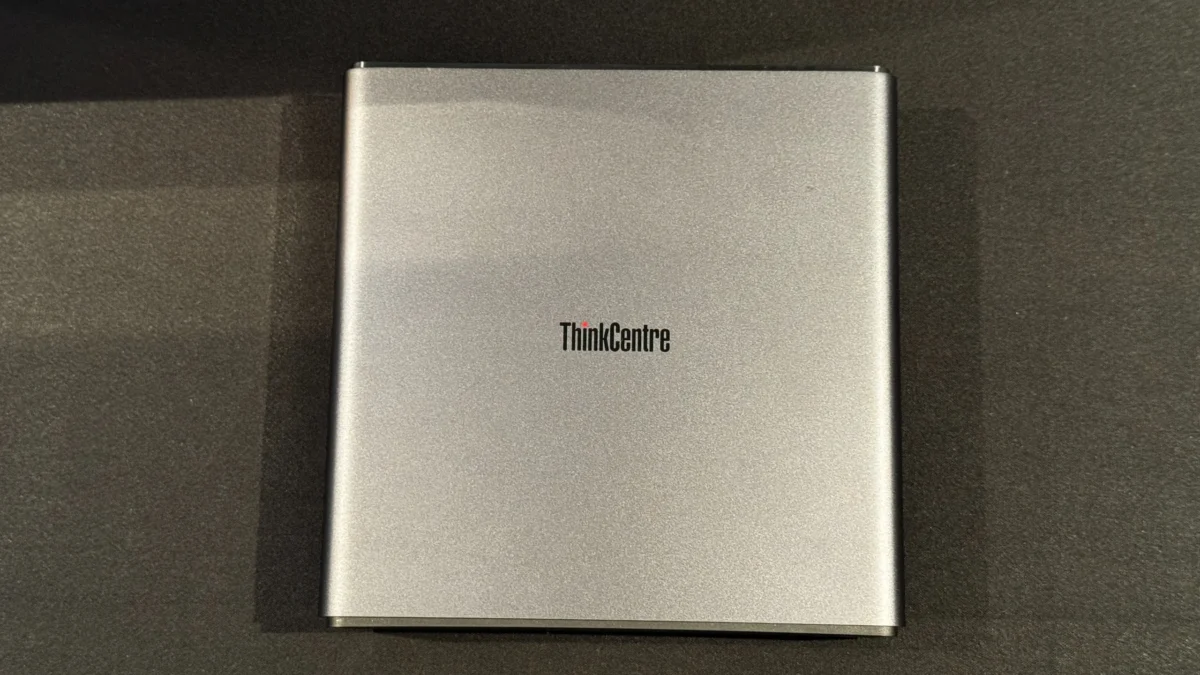
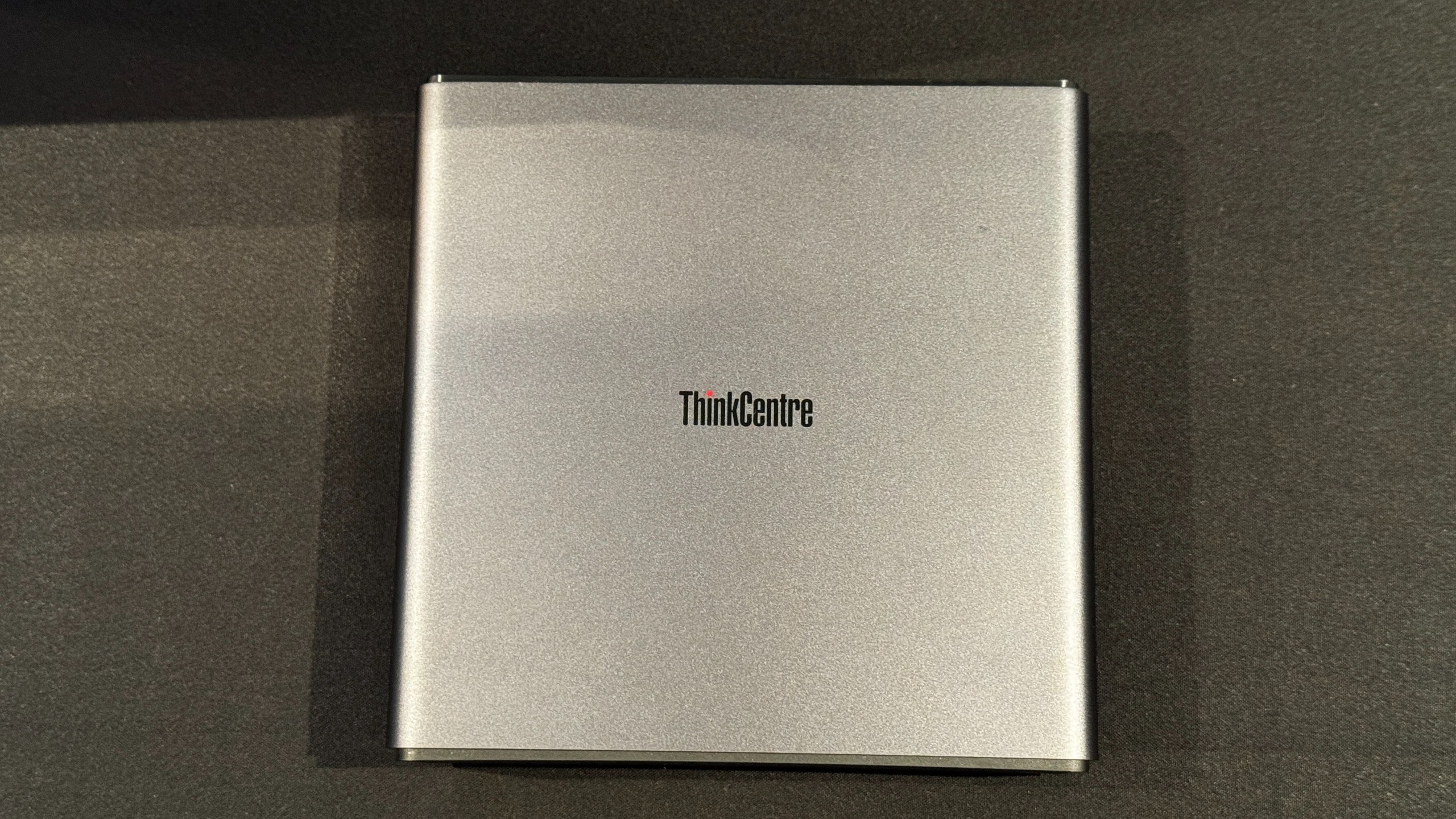
At this year’s IFA trade show in Berlin, Lenovo has stunned the tech industry by pulling back the curtain on its latest innovation in the small-form-factor (SFF) desktop category: the ThinkCentre X Ultra. Designed to bridge the gap between compact desktop convenience and the raw, unbridled power required for modern generative AI development, the device represents a major leap forward for Lenovo’s enterprise lineup.
Built around the highly anticipated AMD "Gorgon Halo" architecture—the Ryzen AI Max+ Pro 495 processor—the ThinkCentre X Ultra is not merely a home office computer. It is a workstation-grade engine designed to handle the rigorous demands of local large language model (LLM) execution, real-time data processing, and complex AI workflows. With a starting price point of $3,699, the device is clearly positioned for professionals, researchers, and developers who require significant compute density in a chassis that fits comfortably on a crowded desk.
Main Facts: A Technical Marvel in Miniature
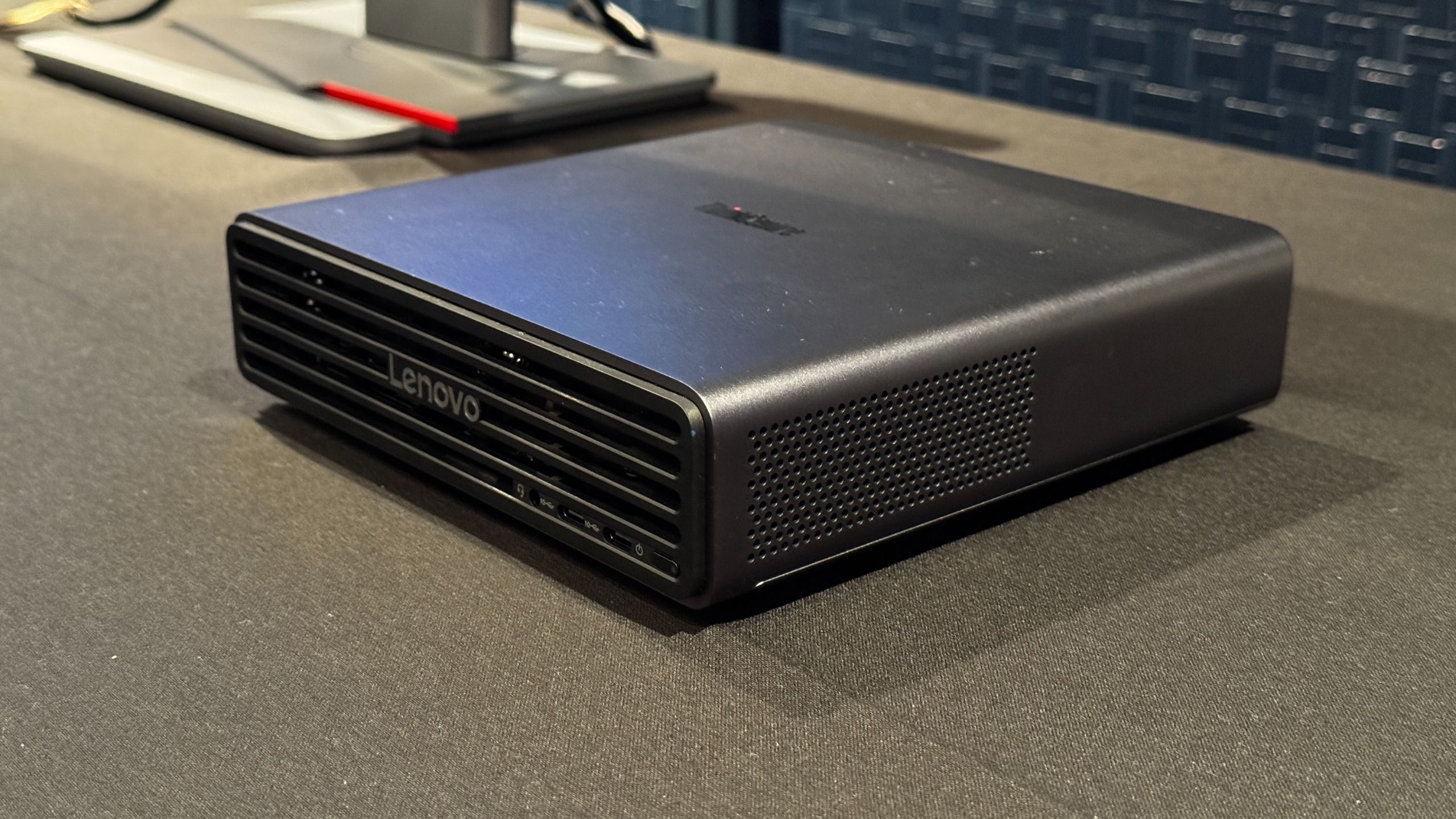
The ThinkCentre X Ultra stands out as a triumph of thermal and electrical engineering. Despite its diminutive footprint—measuring just 7.2 x 7.2 x 2 inches—it packs hardware specifications that would have been confined to massive tower workstations just a few years ago.
The Heart of the Beast
At the center of the X Ultra is the AMD Ryzen AI Max+ Pro 495. This chip, part of the "Gorgon Halo" series, leverages the cutting-edge Zen 5 CPU architecture paired with RDNA 3.5 graphics. What sets this unit apart is its utilization of unified memory architecture. By packing up to 128GB of LPDDR5x-8533 soldered RAM, the system eliminates the traditional bottlenecks associated with discrete GPU memory swapping.
AI-Ready Infrastructure
The integrated Radeon 8065S GPU isn’t just for rendering visuals; it acts as a primary co-processor for AI tasks. With the ability to allocate up to 96GB of dedicated graphics memory, the system is uniquely suited for local inference, allowing developers to run sophisticated models without the latency or privacy concerns associated with cloud-based AI services. Furthermore, the onboard NPU (Neural Processing Unit) delivers up to 55 TOPS (Trillions of Operations Per Second), ensuring the system remains relevant as AI frameworks evolve.
Chronology: The Road to the "Gorgon Halo"
The development of the ThinkCentre X Ultra did not happen in a vacuum. It is the culmination of a multi-year roadmap between Lenovo and AMD to redefine the "Pro" desktop experience.
- Early 2024: Rumors began circulating regarding AMD’s "Gorgon Halo" silicon—a high-end APU designed to rival discrete workstation GPUs.
- Q2 2025: Lenovo began testing internal prototypes of the X Ultra, focusing on thermal management within the 7.2-inch chassis.
- Late 2025: The shift toward local AI-centric hardware became a top priority for enterprise clients, prompting Lenovo to prioritize the X Ultra’s development over other consumer-grade mini PCs.
- August 2026 (IFA): Official unveiling of the ThinkCentre X Ultra to the global press.
- November 2026: The scheduled retail launch and general availability for enterprise distribution.
Supporting Data: Specifications at a Glance
To appreciate the engineering density of the X Ultra, one must look at the technical specifications, which highlight a departure from the "disposable" nature of typical mini PCs.
| Component | Specification |
|---|---|
| CPU | Up to AMD Ryzen AI Max+ Pro 495 |
| GPU | Integrated Radeon 8065S (Up to 96GB dedicated memory) |
| Memory | 128GB LPDDR5x-8533 (Soldered) |
| Storage | Dual 4TB M.2 2280 Gen5 Performance SSDs |
| NPU Performance | 55 TOPS |
| Connectivity | Wi-Fi 7, Bluetooth 5.4, 10Gb Ethernet |
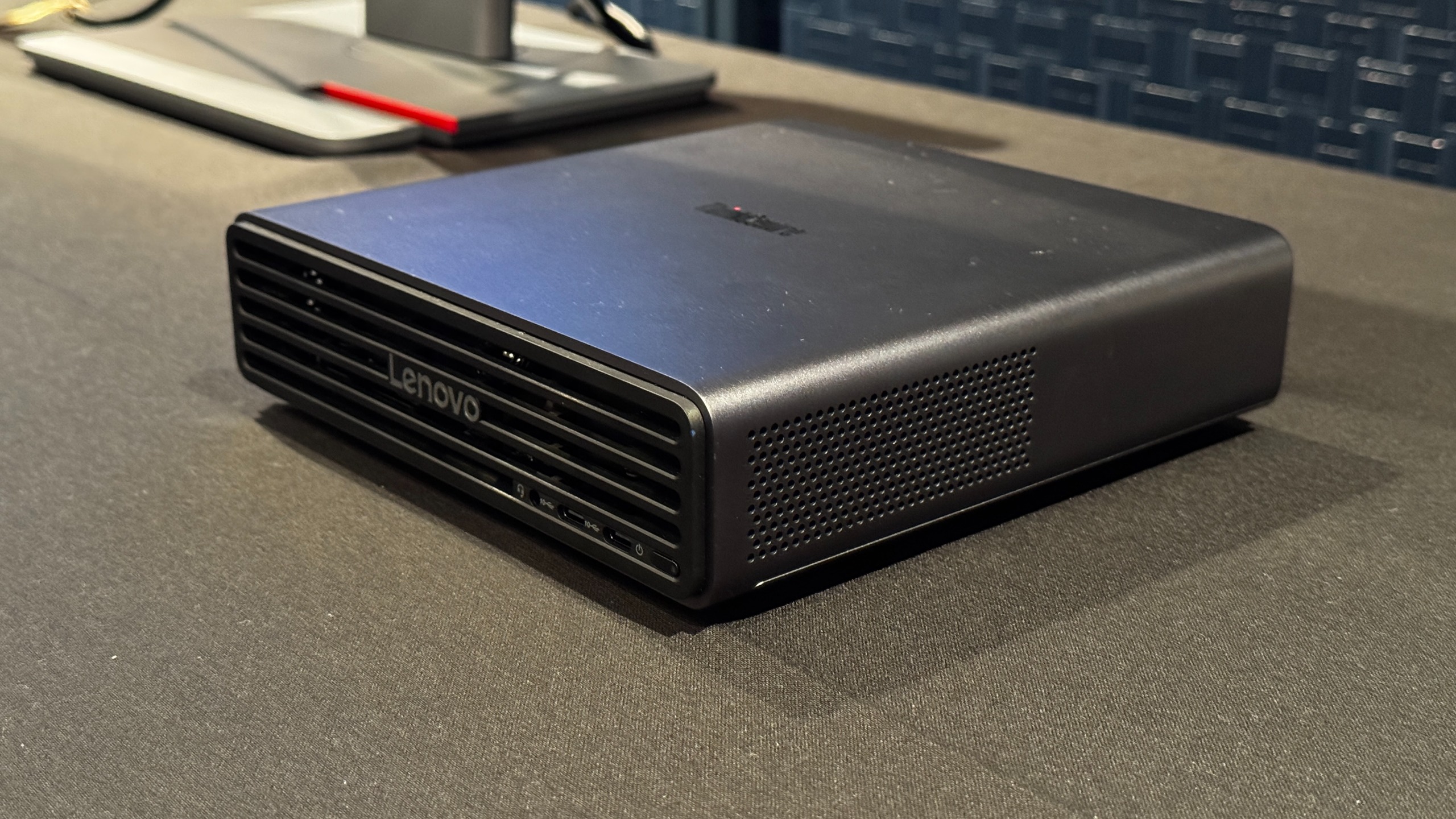
| I/O Ports | 2x USB-C (10Gbps), 2x USB-A (10Gbps), 2x Thunderbolt 4, DP 2.1, HDMI 2.1 |
| Dimensions | 183 x 183 x 51 mm |
The inclusion of Thunderbolt 4 ports—historically a rarity on AMD-based platforms—is a significant achievement, likely facilitated by the advanced nature of the Ryzen AI Max platform, providing users with massive bandwidth for external storage arrays and high-resolution display setups.
Official Responses and Strategic Positioning
During the IFA presentation, Lenovo executives emphasized that the X Ultra is not intended to replace the traditional workstation, but to "decentralize" the workstation experience.
"We are moving into an era where the latency of the cloud is simply not enough for real-time AI development," stated a lead engineer at the launch event. "The ThinkCentre X Ultra provides a sandbox where developers can experiment with models that would typically require a server farm, right on their desktop. The ability to cluster up to four of these units effectively turns a standard desk into a distributed computing cluster."
The inclusion of the AMD Ryzen AI Developer Center is a crucial part of this strategy. By providing preconfigured AI models, standardized workflows, and optimized toolsets out of the box, Lenovo is effectively lowering the barrier to entry for AI development within the enterprise.
Implications: The Future of Desktop Computing
The Rise of the "Micro-Cluster"
Perhaps the most intriguing feature of the ThinkCentre X Ultra is its scalability. Lenovo has explicitly marketed the ability to chain up to four units together. In this configuration, the combined memory and compute power allow for the processing of massive, multi-modal datasets. This modular approach allows a startup or a small research team to start with a single unit and scale their infrastructure as their models grow, without the massive capital expenditure of a full-scale server rack.
Competition in the Mini-PC Space
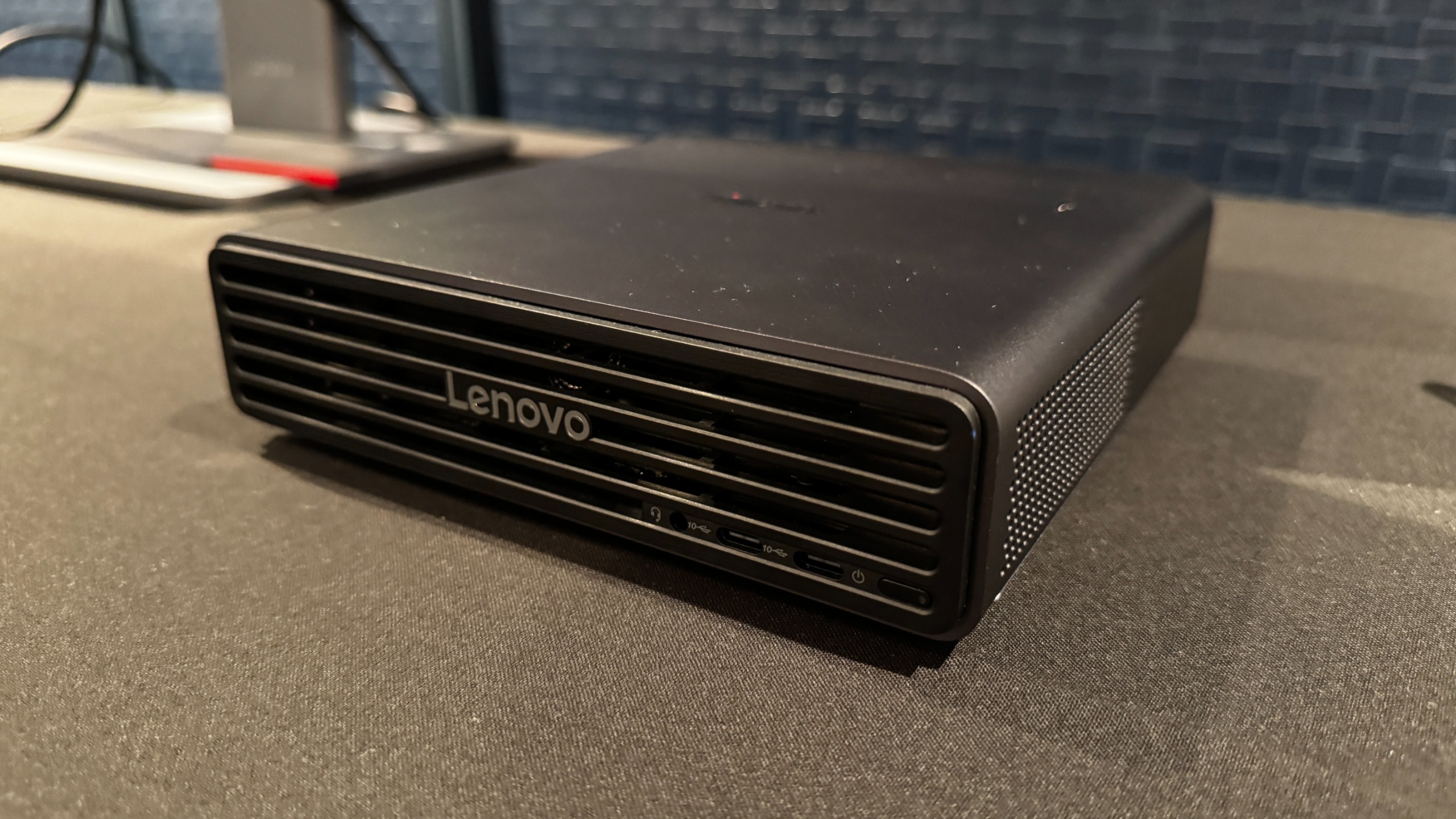
The X Ultra arrives at a pivotal moment. The mini-PC market has long been dominated by power-efficient, low-performance units. However, with Nvidia’s upcoming "RTX Spark" initiative, the segment is becoming a battleground for high-performance silicon. By securing an early lead with the AMD "Gorgon Halo" platform, Lenovo has successfully differentiated its offering by emphasizing "Unified AI Power" rather than just gaming performance.
Sustainability and Longevity
With the rise of Gen5 SSDs and LPDDR5x memory, the X Ultra is designed to be future-proof. However, the decision to solder the memory—while necessary for the speed and power efficiency of the LPDDR5x standard—does limit user-upgradability. Lenovo is betting that the 128GB ceiling will remain sufficient for the lifecycle of the device, a bet that seems well-placed given the current trajectory of AI development.
Enterprise Adoption
For the corporate sector, the ThinkCentre X Ultra offers a compelling argument for downsizing. In an age of hybrid work, the ability to pack a powerful AI-dev rig into a laptop-sized bag—and then reconnect it to a full 10Gb Ethernet and multi-monitor setup in the office—is a significant value proposition.
Conclusion
The Lenovo ThinkCentre X Ultra is more than just a small computer; it is a manifestation of the current shift in the computing paradigm. By bringing workstation-level power into a 7-inch chassis, Lenovo and AMD are empowering a new generation of developers to push the boundaries of what can be achieved locally.
As we approach the November 2026 launch, all eyes will be on whether the actual performance in real-world AI training scenarios lives up to the promises made at IFA. If it does, the X Ultra will not only change how we view the mini-PC, but it will fundamentally alter the hardware requirements for the AI-driven workplace of tomorrow. With a starting price that reflects its professional-grade internals, the X Ultra is clearly aimed at those who treat compute power not as a luxury, but as a critical business asset.











