

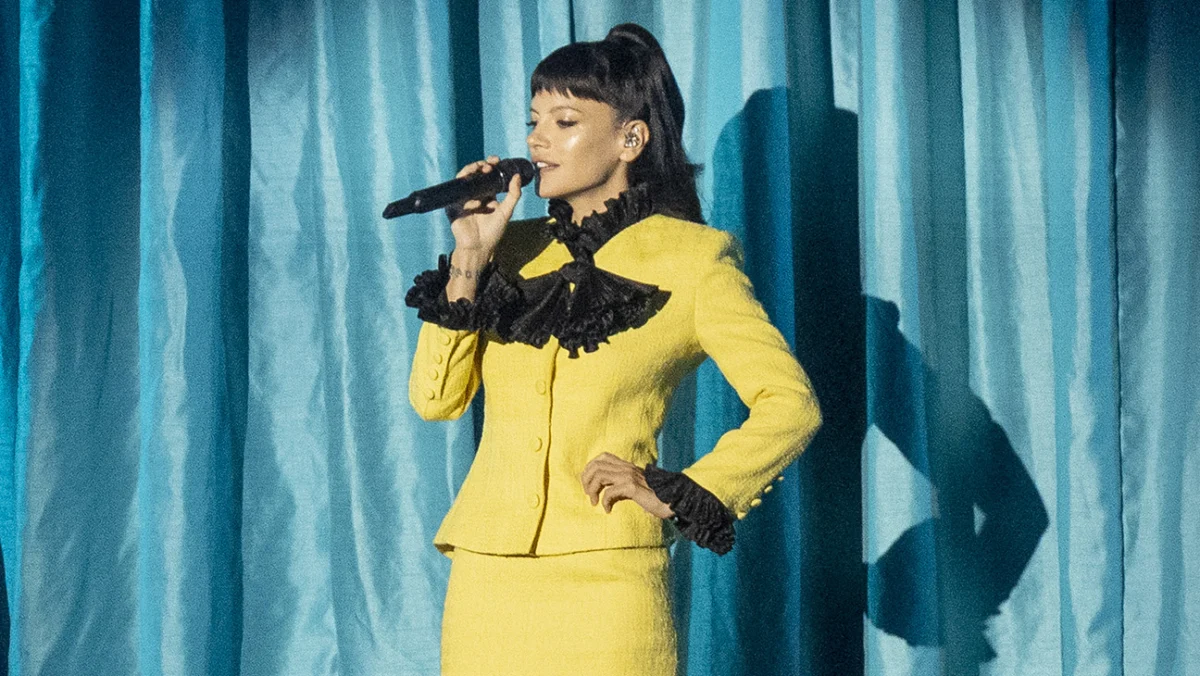
In a significant shift for her highly anticipated North American tour, British singer-songwriter Lily Allen has announced a major restructuring of her upcoming West End Girl concert dates. In a move that highlights the volatile nature of the post-pandemic touring industry, Allen is transitioning from large-scale arena venues to more intimate theater settings for the majority of her U.S. leg. While the artist’s team has remained tight-lipped regarding the specific impetus for these changes, the logistical overhaul has sent ripples through the music industry, prompting discussions regarding ticket demand, artist branding, and the current economic viability of arena-sized tours for legacy pop acts.
The Core Adjustments: A Shift in Scale
On Monday, Allen took to social media to inform fans that "some adjustments" were being made to the North American tour schedule. While the flagship performance at Madison Square Garden in New York City remains locked in its original arena format, the rest of the tour has undergone a dramatic downscaling.
The cities affected by these venue changes include Philadelphia, Chicago, Los Angeles, San Francisco, and Vancouver. Originally slated for massive venues—including the United Center in Chicago, the Kia Forum in Los Angeles, and the Chase Center in San Francisco—these performances will now take place in significantly smaller, more traditional theater spaces. Specifically:
- Los Angeles: Moving from the Kia Forum to the Greek Theatre.
- Chicago: Moving from the United Center to the Chicago Theatre.
- Philadelphia: Moving from the XFinity Mobile Arena to the TD Pavilion.
- San Francisco: Moving from the Chase Center to the Paramount Theatre.
- Vancouver: Moving from Rogers Arena to the Orpheum.
Perhaps most notably, the Montreal show at the Bell Centre has been removed from the schedule entirely, with no replacement venue announced. Conversely, in an effort to maintain momentum, Allen has added a brand-new date in Seattle at the Paramount Theatre.
Chronology of the Tour and Recent Performance History
The West End Girl tour follows the release of Allen’s fifth studio album, a project that has garnered both critical praise and commercial success. Earlier this year, Allen focused her touring efforts on the United Kingdom and Europe, playing primarily in theaters and concert halls. This approach was largely viewed as a successful "return to form" for the artist, allowing for a more intimate connection with her audience.
However, the transition to U.S. arenas was always an ambitious escalation. For the past month, Allen had been testing the waters of larger venues, most notably performing at London’s iconic O2 Arena. While the O2 date was heralded as a triumph by fans, the jump to U.S. arenas—which often hold significantly higher seating capacities than their European counterparts—appears to have presented a logistical and financial hurdle that the artist’s management team is now moving to rectify.
Supporting Data and Market Implications
The decision to move to theaters is rarely made lightly, as it requires a massive rescheduling of logistics, stage production, and contractual negotiations with promoters. While no official reason was given for the pivot, industry analysts point to the current "touring bubble" as a likely contributor. Following the surge in concert demand in 2022 and 2023, the market has begun to cool, with many mid-tier and legacy artists finding that arena tours—which carry significantly higher overhead costs—are no longer the guaranteed financial windfalls they once were.
By moving to theaters, Allen’s team is likely attempting to ensure "sold-out" status for every remaining show. An empty arena looks detrimental to an artist’s brand, whereas a sold-out theater creates an atmosphere of exclusivity and high demand. Furthermore, the cancellation of the Montreal date suggests a pragmatic approach to routing and profitability.
Despite these changes, several dates—including Boston, Toronto, Detroit, Minneapolis, and Red Rocks—remain unaffected. These venues, which were already theater or amphitheater-sized, provide a stable anchor for the tour, suggesting that the initial planning for these specific markets was more aligned with current ticket demand.
Official Response and Fan Logistics
For those who have already purchased tickets for the impacted arena shows, the transition process is designed to be as seamless as possible. Ticket holders are entitled to a full refund, which the promoter promises will be processed within five to seven business days.
To mitigate fan frustration, the tour has implemented a priority access system. Those who held tickets for the original arena dates will be automatically entered into a pre-sale for the new theater dates, allowing them a first-mover advantage to secure their seats. The general public on-sale for these rescheduled dates is set to begin on July 24.
This logistical pivot is a high-stakes move in managing fan sentiment. While fans may be disappointed by the loss of the arena "spectacle," the promise of a more intimate experience in smaller venues is often a selling point for long-term devotees of an artist like Allen, whose songwriting often thrives in smaller, more acoustic-friendly environments.
The Artistic Context: Processing the Personal
The West End Girl tour is inextricably linked to the narrative of Allen’s most recent record, which has been widely praised for its brutal honesty. The album serves as a deep dive into the singer’s recent separation from actor David Harbour, providing a raw, unfiltered look at the end of a marriage.
In previous interviews, Allen has been remarkably candid about the emotional labor required to perform these tracks. "It’s viscerally like going through the motions," she noted in a recent interview with The Hollywood Reporter. "At the time, I was really trying to process things and that’s great in terms of the album, but I don’t feel confused or angry now. I don’t need revenge."
This evolution in Allen’s perspective—moving from the initial, searing pain of the breakup to a place of post-processing and clarity—may actually be better served by the theater environment. Arena shows often necessitate a level of production and distance that can stifle the nuanced storytelling required for a record as personal as West End Girl. In a theater, the lyrical precision of Allen’s work can take center stage, allowing the music to speak louder than the production value.
Implications for the Future of Touring
The decision by Allen’s team serves as a case study for the contemporary music industry. As ticket prices continue to climb, fans are becoming increasingly selective about which shows they attend. The "bigger is better" philosophy that dominated the early 2020s is facing a correction.
Artists are now finding that it is often more sustainable—both for their mental health and their financial bottom line—to play to a full house of 2,500 people in a theater than to play to a half-empty house of 15,000 in an arena. For Lily Allen, this shift does not necessarily represent a retreat; rather, it reflects an artist who is prioritizing the quality of her live experience over the optics of venue size.
As the industry watches how the July 24 on-sale performs, it will be a bellwether for other artists in similar positions. Will fans embrace the shift to more intimate settings, or will the loss of arena-level scale dampen enthusiasm?
For now, the West End Girl tour continues to be one of the most talked-about treks of the year. By acknowledging the reality of the market and pivoting accordingly, Lily Allen has demonstrated a level of transparency that is rare in the high-pressure world of international touring. Whether this shift succeeds in recapturing the magic of her earlier, smaller shows remains to be seen, but it is clear that for Allen, the show must go on—just perhaps a little closer to her audience than originally planned.










