The Japanese writing system is a multifaceted architecture comprising three primary scripts: Hiragana, Katakana, and Kanji. While Hiragana is often the first point of entry for language learners due to its role in representing native Japanese grammar and phonetics, Katakana stands as its essential counterpart. Mastering Katakana is not merely a supplementary task; it is a fundamental requirement for any serious student of the language. Used primarily for foreign loanwords, onomatopoeia, and emphasis, Katakana provides the bridge between Japanese and the global lexicon.

The Architecture of Katakana: An Overview
Katakana is defined by its angular, sharp strokes—a stark contrast to the fluid, cursive nature of Hiragana. For the uninitiated, the system may appear intimidating, yet it is highly logical. The script operates on a syllabic structure, where a grid of vowels and consonants forms the foundation of pronunciation.
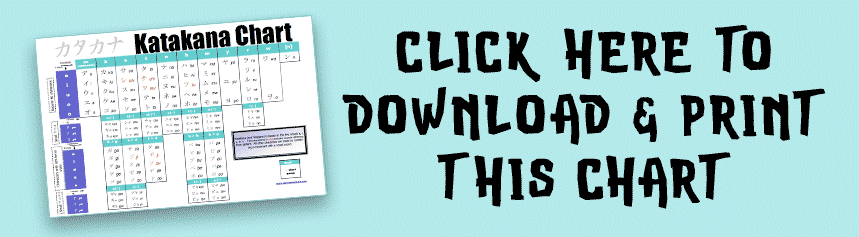
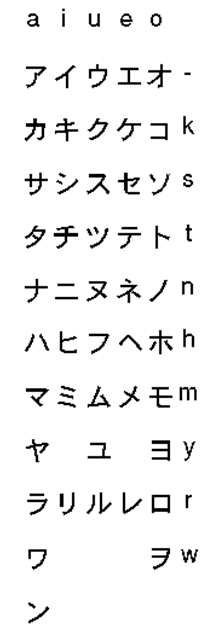
The writing system is organized into a chart where columns represent vowels (A, I, U, E, O) and rows represent consonant groupings (K, S, T, N, H, M, Y, R, W, and the standalone N). This systematic arrangement allows learners to recognize patterns quickly. For instance, the "K" row follows a predictable sequence of KA, KI, KU, KE, and KO. By internalizing these foundational blocks, a student can decode a vast array of modern Japanese vocabulary, much of which is derived from English or other foreign languages.

Chronology of Study: Why Katakana Follows Hiragana
Educational linguists and experienced tutors generally agree on a specific pedagogical sequence: Hiragana first, followed immediately by Katakana. The logic behind this is twofold. First, the two systems share identical sound values. A sound like "KA" is pronounced the same regardless of which script is used. By learning Hiragana first, the student anchors the auditory component of the language.
Second, the proximity of learning these two scripts allows for cognitive association. Because they share phonetics, learning Katakana while the memory of Hiragana is still fresh creates a "compare and contrast" environment. While some characters share visual similarities, most are distinct enough that the student can refine their ability to differentiate strokes and shapes. This "back-to-back" approach ensures that the learner does not suffer from the "forgetting curve" that often plagues those who space their study of the two scripts too far apart.
Supporting Data: Decoding the Mechanics of the Script
To truly understand Katakana, one must look at the specific stroke order and mnemonics that facilitate memory.

The Vowel Foundation (A, I, U, E, O)
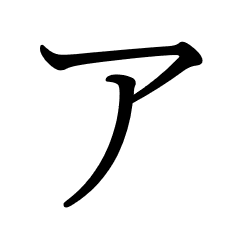
- A (ア): A simple two-stroke character.
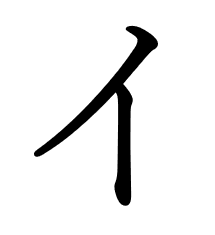
- I (イ): Also two strokes; it serves as a crucial building block for many future sounds.
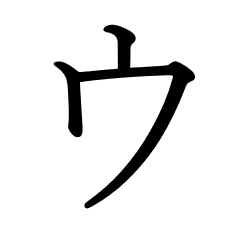
- U (ウ): Three strokes. Learners are often cautioned against taking shortcuts; the correct stroke order is vital for eventual handwriting fluency.
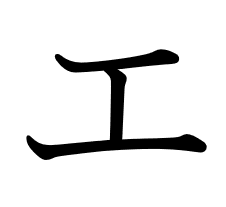
- E (エ): A three-stroke character that provides the foundation for the "E" sounds.
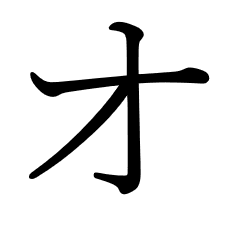
- O (オ): Three strokes. Consistent practice ensures that this is not confused with other characters of similar structure.
Consonant Rows and Irregularities
The script is not without its nuances. For example, in the "S" row, the character for "SHI" (シ) deviates from the expected phonetic pattern of "SI." Similarly, the "T" row contains "TSU" (ツ), a character often described as one of the most difficult to pronounce correctly. Native-level accuracy for "TSU" requires careful attention to the "Cat Soup" phonetic trick, where the "T-Sou" sound is compressed into a single, sharp articulation.
Furthermore, the "R" row (RA, RI, RU, RE, RO) requires specific attention to detail. "RO" (ロ), for example, is a simple three-stroke box. It is frequently mistaken for the Kanji symbol for "mouth," but in the context of Katakana, it functions strictly as a phonetic unit.

The Role of Diacritics: Ten-Ten and Maru
Once the basic characters are mastered, the complexity increases slightly through the use of diacritical marks. These marks modify the sound of a character, turning unvoiced sounds into voiced ones.
- The Ten-Ten ("): This mark, resembling a pair of double quotation marks, is added to the K, S, T, and H rows. For example, the K-row (KA, KI, KU, KE, KO) becomes the G-row (GA, GI, GU, GE, GO) when the ten-ten is applied. This rule is consistent and predictable, making it one of the most accessible parts of Japanese grammar.
- The Maru (°): A small circle, the maru, is exclusively reserved for the H-row. When applied to HA, HI, FU, HE, HO, these characters transform into the P-row (PA, PI, PU, PE, PO). This distinction is vital, as a failure to recognize the maru can fundamentally change the meaning of a word.
Advanced Phonetics: Combining Sounds
Beyond the basic grid, the Japanese language utilizes small versions of YA, YU, and YO to create compound sounds. By placing a small version of these characters next to a base character, one can create a single, combined sound. For instance, KI + small YA becomes "KYA." This is not a two-syllable "KI-YA," but a singular, rapid sound. This feature allows the Japanese language to adopt complex foreign loanwords, such as "computer" (konpyūta) or "party" (pāti), which require these specific combinations to maintain their original pronunciation.

Official Guidance and Pedagogical Resources
Educational institutions, such as The Japanese Page, emphasize that these charts are not just for memorization—they are tools for active engagement. The use of "Chapter Tests" and "Katakana Quizzes" is considered a best practice in modern language instruction. By attempting to read English loanwords transcribed into Katakana, students test their recognition speed.
Many experts advocate for the use of "mnemonics"—memory aids that associate the shape of a character with a mental image. For example, associating the character "NI" (ニ) with the number two, because it consists of two parallel lines, is a common and effective technique for retention.

Implications for the Learner
The implications of mastering Katakana are profound. Once a student can read the script, the landscape of Japan changes. Signage in airports, menus in restaurants, and the names of international brands all rely heavily on Katakana. It is the script of "modernity" in Japan.
Furthermore, for those pursuing digital resources, platforms like The Japan Shop offer bundled materials specifically designed to transition a student from a "Beri-Beri Shoshinsha" (complete beginner) to a confident reader. The transition from identifying individual characters to reading full words is the moment when a language stops being a collection of symbols and becomes a vehicle for communication.

Conclusion
Learning Katakana is a rite of passage. While the initial memorization of the basic grid may seem tedious, the payoff is immediate. Through the systematic application of stroke order, the use of diacritics like the ten-ten and maru, and the mastery of compound sounds, the learner unlocks the ability to navigate the Japanese language with precision. With consistent practice, daily exposure, and the use of modern pedagogical tools, any student can transition from struggling with the basic "A, I, U, E, O" to reading fluently in a matter of weeks. The journey is challenging, but for those who persist, the world of Japanese literature, media, and culture becomes significantly more accessible.