

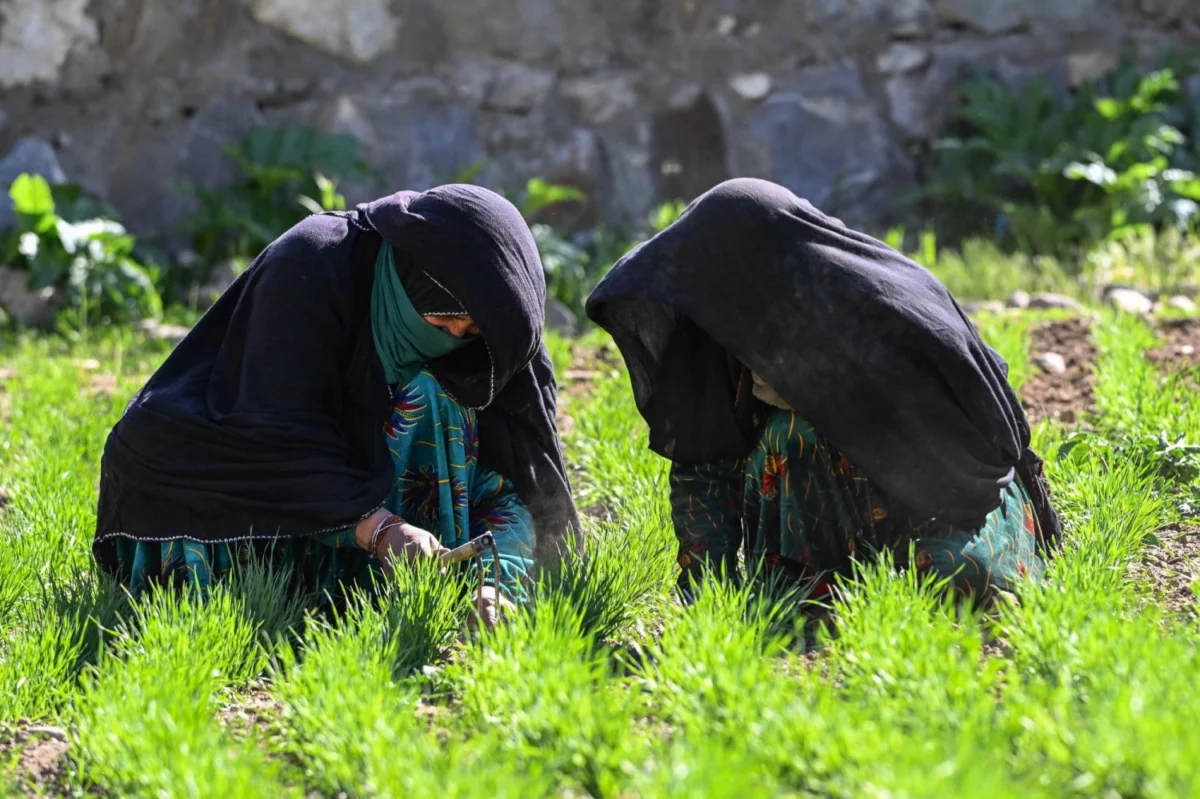
ESHTIWI, Afghanistan — Under the shadow of the jagged, snow-capped peaks of the Hindu Kush, the village of Eshtiwi sits as a testament to human endurance. In the Parun district of Nuristan province, the calendar dictates the pace of life with unforgiving precision. On June 8, as the frost finally retreats from the high-altitude valleys, the landscape begins to transform. Amidst the earth, sisters Habiba and Bibi Jan are seen working the soil, their hands moving with the rhythmic familiarity of those who have spent a lifetime coaxing life from a rugged terrain.
In a nation currently grappling with profound geopolitical shifts, economic isolation, and the looming threats of climate change, the story of these women is not merely one of agriculture. It is a narrative of survival, gendered labor, and the quiet, persistent struggle to feed a community in one of the most isolated corners of the globe.
The Landscape of Survival: Main Facts
Nuristan, historically known as "The Land of Light," is a region defined by its extreme topography. With deep, narrow valleys and near-inaccessible mountain passes, it has long remained isolated from the central governance of Kabul. For the farmers of Eshtiwi, agriculture is not a commercial enterprise; it is the fundamental mechanism of subsistence.
The primary crop is wheat—the lifeblood of the Afghan diet. However, the short growing season in the high-altitude climate of Parun allows for little margin of error. If the spring rains fail or the summer heat arrives too early, the village faces the specter of food insecurity.
Habiba, a veteran of decades of agricultural labor, represents a vital demographic. As many men in the region have migrated to cities or abroad in search of work, or have been lost to decades of conflict, the burden of food production has fallen increasingly upon the shoulders of women. Her expertise, passed down through generations, is the primary safeguard against the seasonal hunger that stalks these mountains.
A Chronology of Constraint and Cultivation
To understand the current state of agriculture in Eshtiwi, one must look at the timeline of the region’s development and the recent systemic pressures:
- Pre-2021: Historically, Nuristan received sporadic support from international NGOs focused on irrigation and crop diversification. Agricultural extension services, though limited, provided farmers with access to better seeds and fertilizer.
- August 2021: The change in national government led to the withdrawal of most international aid organizations. Banking sanctions and the freezing of national assets severely hampered the supply chain for agricultural inputs, such as improved seeds and machinery.
- 2022–2024: Consecutive years of drought, exacerbated by climate change, hit the highlands of Afghanistan particularly hard. The traditional irrigation systems—karez—began to run dry, forcing farmers to rely on unpredictable mountain runoff.
- June 2026 (Present): The current season has been marked by a late thaw. While the green sprouts appearing in the fields offer a glimmer of hope, the delay in planting cycles suggests that the upcoming harvest may be thinner than in previous, more stable years.
Supporting Data: The Agricultural Reality
The challenges faced by Habiba and Bibi Jan are mirrored across the country. According to reports from various humanitarian monitoring bodies, Afghanistan faces a critical intersection of crises:
- Water Scarcity: Over 80% of Afghanistan’s agricultural land relies on rain-fed irrigation. In provinces like Nuristan, the depletion of groundwater levels has rendered traditional terraced farming increasingly difficult.
- The Gender Gap in Labor: Despite women performing an estimated 60% to 70% of agricultural labor in rural Afghanistan, they remain largely excluded from formal land ownership and credit schemes. This limits their ability to invest in modern farming technology, keeping production at a subsistence level.
- Economic Isolation: The lack of rural credit facilities means that farmers like those in Eshtiwi often fall into cycles of debt with local traders, who provide seeds and fertilizers at high interest rates in exchange for a portion of the harvest.
For the sisters of Eshtiwi, these statistics manifest in the weight of their tools and the length of their days. Without access to capital or technical training, they rely on traditional knowledge—knowledge that is increasingly challenged by the rapid shift in weather patterns that historical experience can no longer predict.
Official Responses and Perspectives
The current administration in Kabul has frequently highlighted the importance of agricultural self-sufficiency as a pillar of their economic policy. Government spokespeople have touted initiatives to improve irrigation infrastructure and encourage the transition from illicit poppy cultivation to food crops.

However, international observers remain skeptical of the efficacy of these policies without the involvement of global development partners. The World Food Programme (WFP) and the Food and Agriculture Organization (FAO) have maintained that while direct aid reaches some, the long-term sustainability of Afghanistan’s food security depends on structural reforms that are currently stalled due to diplomatic impasses.
"The farmers of Nuristan are resilient, but resilience has a breaking point," noted an anonymous agricultural consultant formerly stationed in the region. "When the international community steps back, the most vulnerable, including women farmers, are the first to lose access to the resources needed to adapt to climate change. We are seeing a slow-motion collapse of traditional agricultural knowledge simply because the tools to apply it are no longer available."
Implications: The Future of the High Valleys
The scene in Eshtiwi on June 8—the weeding of a wheat field—is a microcosm of a much larger struggle. The implications of this daily labor are profound:
The Risk of Displacement
If the yields in the high valleys continue to decline due to climate-driven factors and lack of resources, rural migration will accelerate. This leads to the abandonment of ancestral lands and increases the population pressure on urban centers that are already struggling with high unemployment and limited infrastructure.
The Erosion of Tradition
Agriculture in Nuristan is not just a job; it is a cultural anchor. The techniques used by Habiba are tied to the linguistic and social traditions of the Nuristani people. As farming becomes less viable, the socio-cultural fabric of these isolated communities risks fraying, potentially leading to the loss of a unique regional heritage.
The Path Forward
For the international community, the debate often centers on how to provide aid without legitimizing specific political structures. However, the plight of women farmers in Eshtiwi suggests a more urgent need: the depoliticization of agricultural aid. Small-scale, localized support—such as the distribution of drought-resistant seeds, the rehabilitation of community-led irrigation canals, and the provision of basic, non-intrusive agricultural training—could provide a lifeline to thousands of families.
Conclusion
As the sun sets over the peaks surrounding Eshtiwi, Habiba and Bibi Jan finish their work. The wheat fields, though small and vulnerable, represent a triumph of will. They are the frontline workers of a nation struggling to feed itself in a world that often turns its back on the most remote corners of the map.
Their story serves as a reminder that behind the headlines of geopolitics and grand policy, there are individual lives defined by the cycle of planting and harvesting. The survival of these women is the survival of the village, and ultimately, the survival of a way of life that has weathered centuries of change. Whether they will be allowed to continue this work, or whether they will be forced to abandon their fields to the mountain winds, remains the defining question of their generation.
Quality journalism, dedicated to documenting these quiet realities, remains the only way to ensure that the struggle of farmers in places like Eshtiwi does not go unnoticed by the wider world. As we look to the future of Afghanistan, it is the hands of these women—not the pronouncements of politicians—that hold the seeds of the nation’s potential resilience.











