

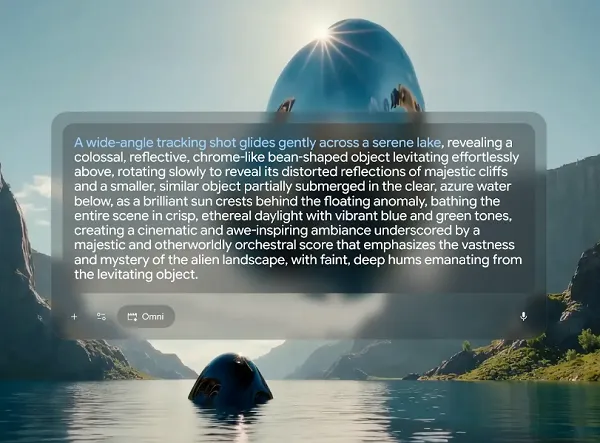
In the rapidly evolving landscape of generative artificial intelligence, the gap between a "good" image and a "masterpiece" often resides in the nuances of human instruction. Recognizing this, Google has officially released a comprehensive new guide designed to help users master the art of prompting for its latest, most sophisticated visual model: Gemini Omni.
As the tech giant continues to integrate advanced generative capabilities into its ecosystem, this instructional framework serves as both a manual for Gemini users and a broader primer on the shifting mechanics of AI-human collaboration. By detailing how to structure, refine, and contextualize text-to-visual prompts, Google aims to democratize high-end creative output, enabling users to translate abstract ideas into hyper-realistic, reflective, and precise digital imagery.
The Core Mandate: Understanding Gemini Omni
The launch of the Gemini Omni model, first unveiled at the Google I/O 2026 conference, represents a significant leap forward in multimodal processing. Unlike its predecessors, which often struggled with complex spatial relationships or fine-grained artistic stylistic nuances, Omni is engineered to synthesize, interpret, and render visual data with unprecedented fidelity.
The model’s architecture is designed to handle text-to-image and text-to-video generation with a focus on "reflectivity"—a term Google uses to describe how accurately a model captures the specific intent, lighting, and texture requested by the user. However, as Google’s engineering teams have observed, the power of a model is only as effective as the instructions provided to it. The new guide is a strategic move to shorten the "iteration loop," helping users get their desired output in fewer attempts.
Chronology of Visual AI at Google
To understand the significance of this guide, one must look at the rapid maturation of Google’s visual AI strategy over the past few years:
- Pre-2024: Google focused heavily on research models and academic benchmarks, keeping generative tools largely behind closed doors due to safety and accuracy concerns.
- Early 2025: The integration of Imagen and early Gemini iterations into Google Workspace and Search began, signaling a shift toward commercial deployment.
- May 2026 (I/O 2026): Google launched the Gemini Omni model. This was the watershed moment where image and video generation became "native" to the Gemini ecosystem, allowing for real-time, high-definition generation.
- Late 2026: Recognizing that users were struggling with "prompt fatigue"—the frustration of generating generic or inaccurate images—Google began aggregating data on successful vs. unsuccessful prompt patterns.
- Current Date: The publication of the official "Prompting Guide for Visuals," providing a standardized vocabulary for users to interact with the Omni architecture.
Supporting Data and The Science of Prompting
Google’s research into user behavior suggests that the most successful prompts follow a specific heuristic architecture. The guide categorizes the elements of a perfect prompt into four pillars: Subject, Medium, Environment, and Style.
1. Subject Specificity
The most common point of failure in AI generation is ambiguity. Google’s data indicates that providing "Subject Attributes"—such as texture, age, specific clothing, or even emotional state—increases the likelihood of a "first-try" successful generation by roughly 40%. Instead of prompting for "a man in a suit," the guide suggests "a man in his late 40s wearing a charcoal-gray tailored wool suit with a silk pocket square."
2. Contextual Environment
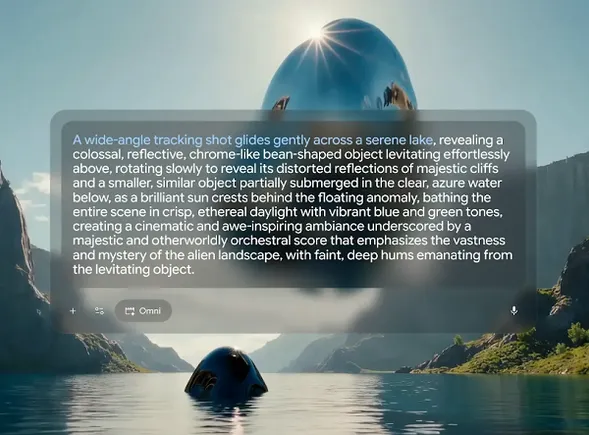
Gemini Omni performs significantly better when given spatial context. The guide encourages users to define the "where" and the "how." For instance, specifying the lighting conditions (e.g., "golden hour, soft backlighting, volumetric fog") allows the model to calculate pixel-level rendering that feels professional rather than synthetic.
3. Medium and Artistic Direction
Users often forget that AI models can emulate specific historical or technical artistic styles. Google’s guide emphasizes the inclusion of medium descriptors. Whether the user wants a "1990s analog film grain," "a high-contrast architectural photograph," or "a digital oil painting with visible brushstrokes," providing the medium allows the model to apply the correct "filter" to its underlying rendering engine.
4. Technical Constraints
For advanced users, the guide suggests adding technical keywords such as "depth of field," "f/1.8 aperture," "wide-angle lens," or "macro photography." These terms act as anchors, forcing the model to emulate the physics of real-world cameras, which effectively bridges the gap between digital art and hyper-realism.
Official Responses and Strategic Intent
Google’s internal teams have been vocal about the intent behind this resource. In a recent blog post, a Google spokesperson noted: "The goal of Gemini Omni is to be an extension of the creator’s imagination. By providing this guide, we aren’t just teaching users how to use our product; we are helping to codify a new language of creative expression. We believe that as users learn to communicate more effectively with the model, the model itself will continue to learn from the diversity of these refined inputs."
This approach aligns with Google’s broader strategy of "Human-in-the-Loop" development. By encouraging users to provide more detailed, thoughtful prompts, Google is essentially gathering a high-quality dataset of human intent, which will further train the next generation of Gemini models to be more intuitive.
Implications for the Creative Industry
The release of this guide has significant implications for professionals across creative sectors.
The Democratization of Professional Visuals
For small business owners, social media managers, and independent creators, the learning curve for professional photography or graphic design has historically been steep. With the Gemini Omni guide, the technical barriers are lowered. A user with no training in camera settings can now generate a professional-grade image simply by following the "Medium" and "Environment" guidelines provided by Google.
Impact on Stock Photography
The shift toward highly responsive AI generation poses a long-term challenge to the traditional stock photography industry. As users become more adept at prompting for exactly what they need—rather than settling for generic, pre-shot imagery—the demand for "stock" will likely migrate toward demand for "bespoke generation."
Ethical and Copyright Considerations
Google’s guide also touches upon the responsible use of AI. By standardizing how users prompt the system, Google is also creating a more predictable environment for content moderation. Users are encouraged to avoid harmful or deceptive prompts, and the guide reinforces the company’s commitment to watermarking AI-generated content, ensuring that while the tools become more powerful, they remain within the bounds of safety and transparency.
Future Outlook: The Evolution of Interaction
Looking ahead, the relationship between human language and machine generation is expected to evolve beyond static text prompts. As Google continues to iterate on Gemini Omni, we may see "conversational prompting," where the AI asks the user clarifying questions before rendering an image.
For now, the guide acts as a bridge. It acknowledges that while AI is capable of generating near-perfect visuals, the spark of creativity remains a human attribute. By mastering the structure of the prompt, users are essentially learning to "direct" the AI, much like a cinematographer directs a scene.
As Google continues to roll out these tools, the creative industry must adapt. We are moving toward an era where the most valuable skill for a digital artist may not be the ability to paint with a brush, but the ability to articulate a vision with the precision required to bring it to life through a machine.
In conclusion, the new Google Gemini Omni prompting guide is more than a list of tips—it is a roadmap for the future of digital creation. Whether you are a professional designer or a casual enthusiast, the ability to refine your inputs is the key to unlocking the full, transformative potential of the Gemini ecosystem. As we move into 2027 and beyond, those who master this craft will undoubtedly be at the forefront of the next wave of digital innovation.












No comments yet. Be the first to join the conversation!