


In the rapidly evolving landscape of social media, TikTok has transitioned from a viral playground for dance challenges into a cornerstone of professional marketing. For businesses, "TikTok for Business" is no longer an experimental venture; it is a sophisticated social marketing discipline that demands its own dedicated strategy, metrics, and creative rigor. As of 2026, with over 37% of U.S. adults actively participating on the platform, companies that fail to understand the nuance of this ecosystem risk losing relevance in an era of hyper-discovery.

Main Facts: What is TikTok for Business?
At its core, TikTok for Business is a specialized, free account type designed to bridge the gap between creative content and commercial performance. Unlike standard personal or creator accounts, this tier provides brands with a robust suite of professional utilities, including advanced analytics, centralized ad management via TikTok Ads Manager, and the integration of TikTok Shop.

The platform has shifted the paradigm of consumer behavior. Data indicates that 70% of users now utilize TikTok as a primary discovery engine for new brands and products. Furthermore, the demographic myth that TikTok is solely for Gen Z has been debunked; approximately one in four users are over the age of 35, proving that the platform is a viable conduit for diverse target markets.
Chronology: From Entertainment to E-commerce
The platform’s evolution has been defined by three distinct phases:

- The Viral Era: Initially, TikTok was characterized by short-form entertainment, where trends were dictated by high-energy audio and amateur choreography.
- The Commercial Pivot: As the user base matured, TikTok introduced the "Business Account" structure to provide brands with legal safety—specifically through the Commercial Music Library—and sophisticated ad tracking.
- The Shoppable Present: With the integration of TikTok Shop, the platform moved from a top-of-funnel discovery tool to a full-funnel conversion powerhouse, allowing users to move from "inspiration" to "transaction" without ever leaving the application.
Supporting Data and The Algorithm
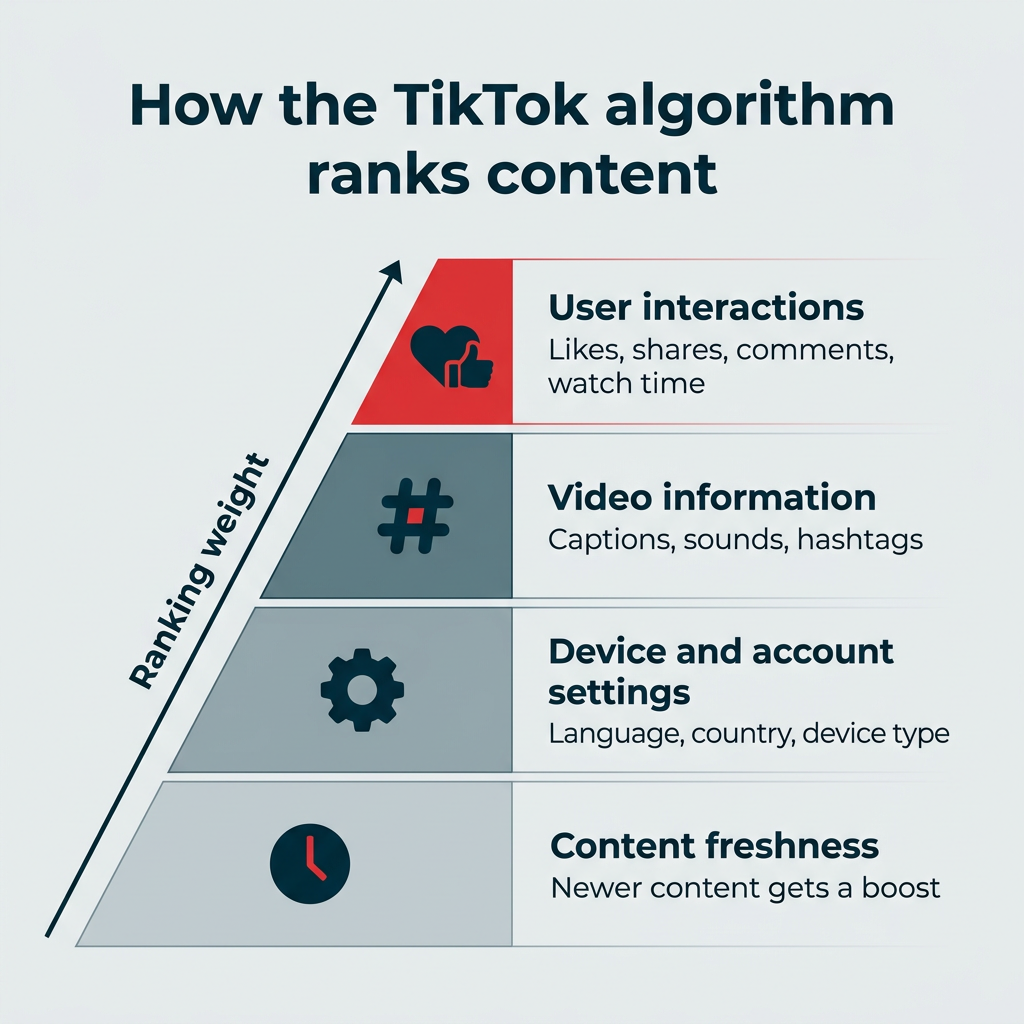
Understanding the TikTok algorithm is the "secret sauce" for business success. TikTok’s recommendation engine is not strictly social; it is interest-based. It ranks content based on:

- User Interaction: How long a viewer watches a video and whether they engage (like, comment, share).
- Information Quality: Captions, hashtags, and the specific sounds used.
- Device Settings: Language, location, and device type, which help the algorithm map content to the most relevant regional audiences.
Marketers must recognize that TikTok favors "on-platform engagement." Unlike traditional social media, where the goal might be to drive traffic off-site, the algorithm rewards content that keeps the user within the TikTok ecosystem. This is why successful brands often utilize "edutainment"—videos that teach the user something valuable while subtly showcasing a product.

Comparing Account Types: Business vs. Creator
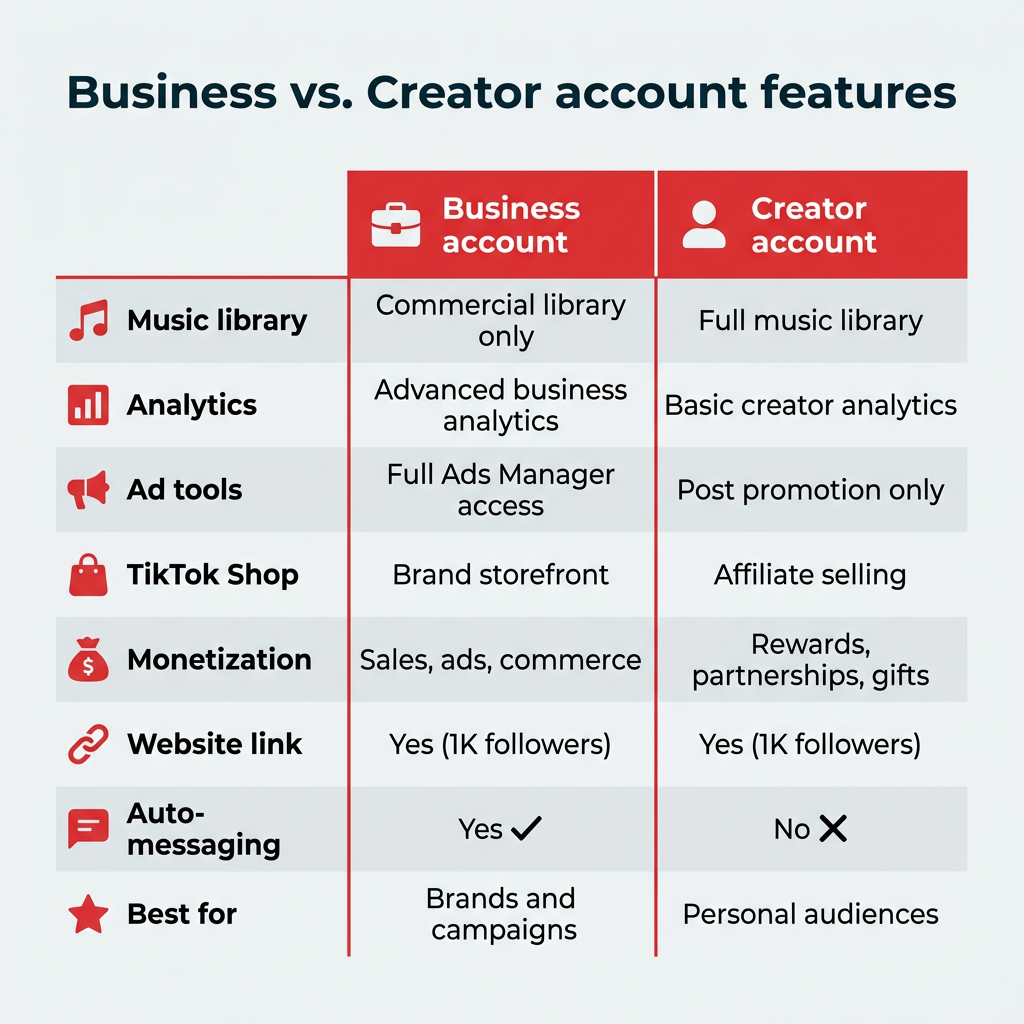
Choosing the correct account type is the foundational decision for any brand. While both offer analytical insights, they serve vastly different ends.

| Feature | Business Account | Creator Account |
|---|---|---|
| Music Library | Commercial Music Library (Safe) | Full Trending Library |
| Ad Tools | Full Access (Ads Manager) | Limited (Promote only) |
| TikTok Shop | Brand Storefront | Affiliate/Creator-Seller |
| Best For | Sales, Ads, Campaigns | Personal Branding, Partnerships |
The most critical constraint for a Business Account is the music library. Because brands must avoid copyright infringement, they are restricted to the Commercial Music Library (CML). While this limits access to the "hottest" viral sounds, it protects companies from legal liability and ensures that their ad spend is never wasted on a video that gets taken down due to licensing issues.

Setting Up Your Digital Storefront
Transitioning to a business account is a straightforward process, but it requires careful execution:

- Download and Register: Create a standard account or log in with existing business credentials.
- Switching Account Types: Navigate to Settings and Privacy > Account > Switch to Business Account.
- Categorization: Select the category that best fits your niche to help the algorithm identify your target audience.
- Optimization: Populate your profile with a clear, branded image and a bio that acts as an "elevator pitch."
Pro Tip: Your bio is limited to 80 characters. Use it to state exactly what you do, who you serve, and include a clear call-to-action (CTA). Once you hit 1,000 followers, you gain the ability to add a website URL, turning your profile into a legitimate traffic driver.

Official Strategic Insights: Building the Content Calendar
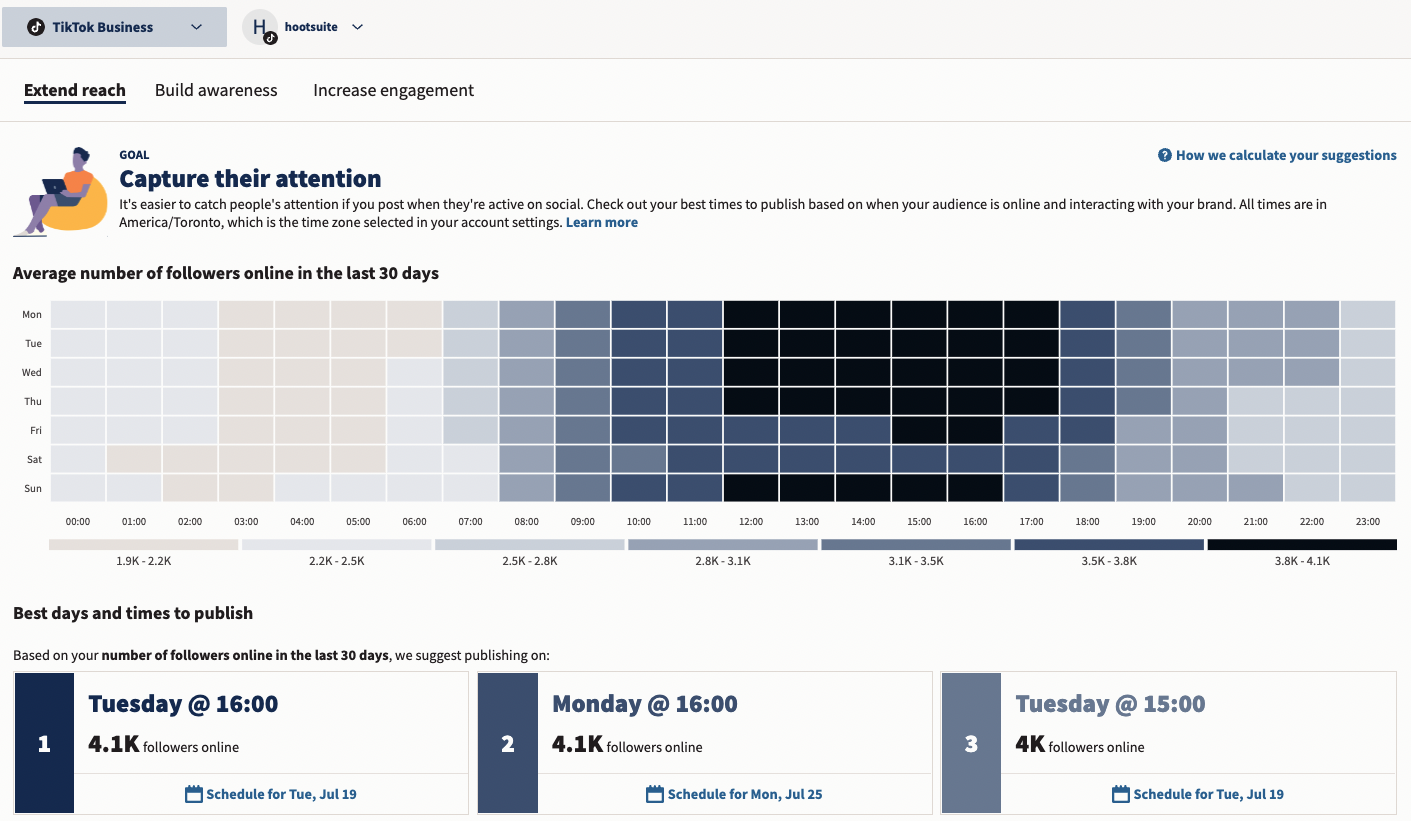
A successful TikTok strategy requires a departure from the "polished" aesthetics of Instagram. Brands that lean into "low-fidelity" content often see higher engagement because their videos feel native to the user’s feed.
The Pillars of Success:
- Behind-the-Scenes (BTS): Humanizing the brand by showing the team, the manufacturing process, or the "unhinged" reality of office life.
- Educational Content: Providing value. If you sell beauty products, show a tutorial. If you sell financial services, explain a complex tax concept in 60 seconds.
- User-Generated Content (UGC): Encourage your customers to post their own videos using your products. UGC acts as social proof and is often more persuasive than a high-production commercial.
As Kristen Bousquet, founder of Your Soucialmate, suggests, "The businesses that let their audience in on the company culture are able to create genuine relationships, which leads to higher conversion."
Implications: The Future of Regulatory and Platform Growth
While the growth of TikTok is undeniable, marketers must maintain a vigilant eye on the regulatory landscape. As of 2026, the geopolitical environment surrounding social platforms remains fluid. Businesses should adopt a "diversified content strategy." Use TikTok to build an audience, but ensure that you are capturing that data—either through email sign-ups or cross-platform following—to mitigate the risk of platform-specific disruptions.

Furthermore, the integration of AI-driven tools for video creation is accelerating. Brands should look to incorporate native editing tools—such as TikTok’s auto-captioning and transition effects—to keep their content accessible. Accessibility is not just a moral imperative; it is a strategic one, as captions allow viewers to engage with your content in sound-sensitive environments like offices or public transit.
Conclusion: The Path Forward
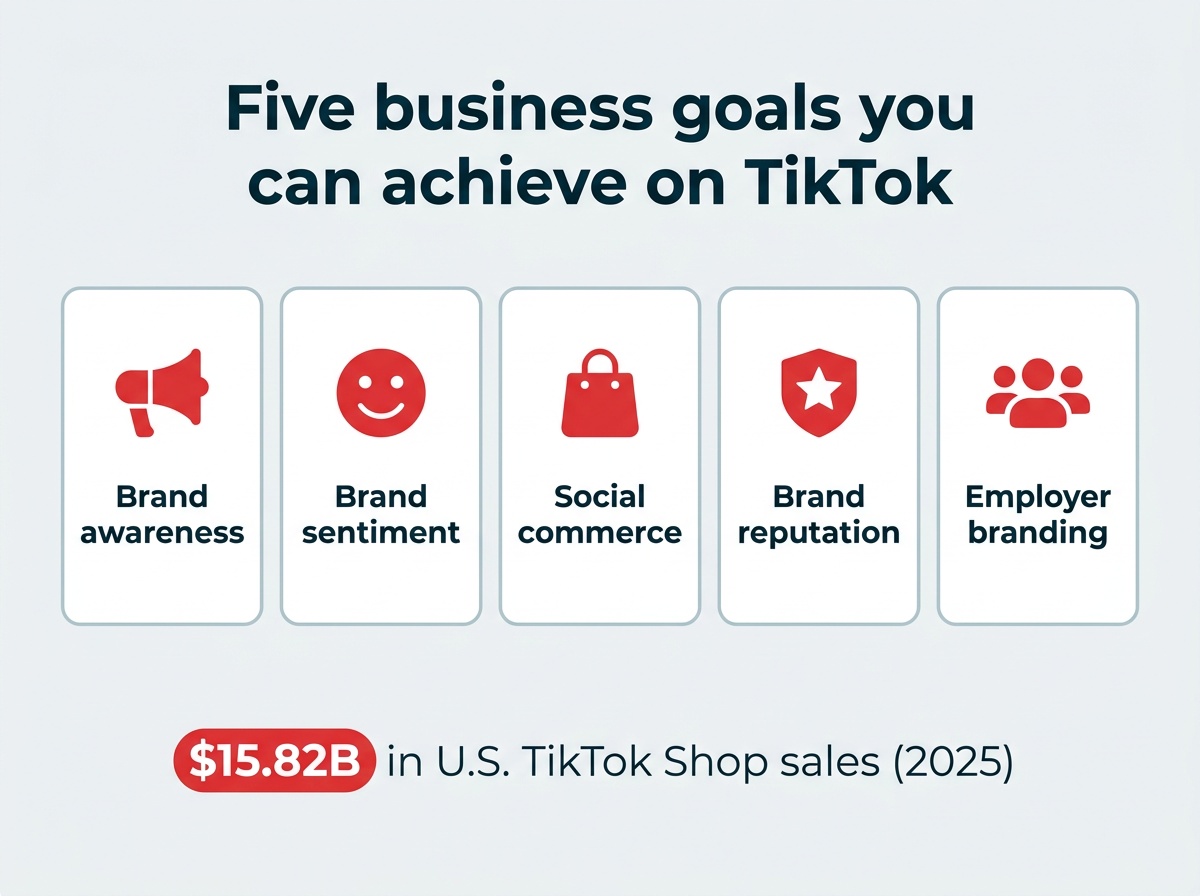
TikTok for Business is not merely an advertising channel; it is a culture-first marketing engine. Success on the platform requires a willingness to experiment, a commitment to authenticity, and a rigorous approach to analyzing what the data says about your specific audience.

By balancing the "human" element of your brand with the technical requirements of the algorithm, you can turn a viral moment into a sustainable business model. Start with a clear goal, lean into the platform’s native style, and remember: on TikTok, the most successful brands aren’t the ones that sell the loudest, but the ones that provide the most value to their community.

Disclaimer: As you embark on your TikTok journey, ensure you are staying updated with regional platform availability and evolving advertising guidelines. For those looking to scale their efforts, tools like Hootsuite provide integrated scheduling and reporting dashboards that allow for a cohesive, multi-platform social strategy.












No comments yet. Be the first to join the conversation!