

We have all experienced that peculiar phenomenon on social media: you watch one video about a niche hobby or a bizarre home repair tip, and suddenly, your entire Instagram feed is overtaken by similar content. What begins as a moment of curiosity can quickly transform into a monotonous loop of repetitive recommendations, effectively burying the content you actually want to see.
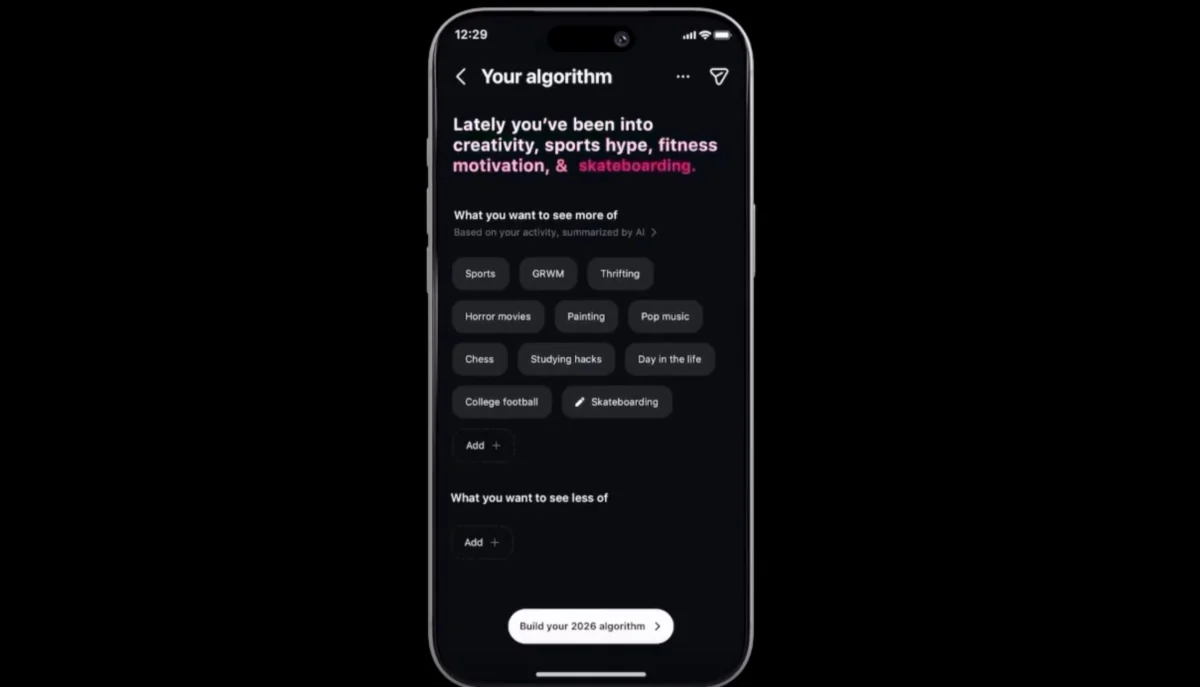
Recognizing the frustration of an "off-track" feed, Instagram is moving to give users more agency over their digital experience. The platform is currently testing new, highly accessible shortcuts for its "Your Algorithm" tool, designed to pull recommendation controls out of the deep, often-ignored submenus of the app and place them directly into the flow of your daily browsing.
The Core Problem: The "Echo Chamber" Effect
The modern social media experience is dictated by recommendation engines designed to maximize engagement. While this is effective at keeping users on the platform, it often leads to an algorithmic "echo chamber." If a user pauses on a video, interacts with a post, or searches for a specific term, the platform’s machine learning model assumes a deep, long-term interest in that topic.

Over time, this can narrow the user’s world. A feed that once featured a balanced mix of friends, professional networking, and diverse interests can slowly drift into a hyper-focused, repetitive stream. Currently, resetting these preferences requires a user to navigate through settings, find the "Suggested Content" or "Algorithm" tab, and manually prune their interests—a process that is rarely performed by the average user until they are already fed up with the app.
A Chronology of Control
Instagram’s pivot toward user-centric algorithmic control is not a sudden development, but rather the latest chapter in a multi-year effort to address concerns regarding content quality and user autonomy.
- 2024 (Initial Rollout): Instagram began testing ways to let users "teach" the algorithm. This involved simple "Interested" or "Not Interested" toggles on posts, allowing the system to adjust in real-time based on immediate feedback.
- Late 2024 – Early 2025: The platform expanded these capabilities to the main feed, introducing the "Your Algorithm" dashboard. This provided a centralized view of the topics the algorithm associated with the user, offering a rudimentary way to delete or add specific interests.
- Current Development (2026): Instagram head Adam Mosseri recently previewed a new generation of shortcuts. These aren’t just new features; they are a fundamental shift in user experience (UX) design, moving control from the "Settings" menu directly to the "Feed" and "Reels" interfaces.
Putting Controls Where the Content Lives
The most significant aspect of these new tests is the integration of control gestures directly into the user’s path of consumption.

Gesture-Based Adjustments
One of the most intuitive features being tested involves a "pull-down" gesture on the main feed. Much like refreshing the feed, this action would trigger an overlay or a quick-access menu showing the current topics driving the algorithm’s choices. For Reels—the platform’s most aggressively algorithmic feature—Instagram is testing a swipe-up gesture that brings up similar controls, allowing a user to adjust their preferences without ever leaving the video playback screen.
Real-Time Tuning
Beyond navigation, Instagram is experimenting with persistent buttons located beneath Reels. These buttons act as a "tuner," allowing users to instantly flag whether they want to see "more" or "less" of a specific genre of content. By making this interaction as easy as hitting "Like," Instagram hopes to create a more responsive feedback loop that is far more accurate than the vague data points of watch time or pause duration.
A New Frontier: The "Chatbot-Like" Interface
Perhaps the most ambitious aspect of these tests is a move toward natural language or keyword-based feed curation.

Under the current system, users are largely passive participants; they steer the algorithm by what they do or don’t do. The new "chatbot-like" interface suggests a more proactive approach. Users would be able to type in specific requests or interests—such as "positive content," "minimalist home decor," "marathon training tips," or "quick vegetarian recipes"—and have the algorithm immediately surface relevant content categories.
This allows the user to act as an architect of their own feed. Rather than waiting for the algorithm to "figure them out," they can explicitly define their current mood or interests. This is particularly useful for users whose interests are seasonal or temporary, such as someone planning a wedding or studying for an exam, who no longer want to be bombarded with that specific content once the event has passed.
Official Stance and Philosophy
Meta and the leadership at Instagram have been vocal about the need to balance "discovery" with "control." Adam Mosseri has consistently emphasized that the goal of the algorithm is to help users find things they didn’t know they liked, but he acknowledges that "discovery" can easily become "annoyance."

In recent statements, the Instagram team has positioned these tools as a way to "refresh" the user experience. The philosophy is that a user who feels in control of their feed is a user who stays on the platform longer. By providing a "reset" or "edit" button that is easy to find, the company hopes to reduce the number of users who abandon the app when they feel their feed has become stale or irrelevant.
Implications for Users and Creators
The shift toward more granular control has significant implications for both the consumer and the content creator.
For the Consumer: Reduced Ad-Fatigue and Better Mental Health
Users stand to gain the most from these changes. A more personalized, controllable feed can lead to a reduction in the "doom-scrolling" effect, where users feel trapped by content they didn’t ask for. Furthermore, if users can manually prune their interests, they may see a decrease in the repetitive, low-quality content—often referred to as "AI slop"—that has become increasingly prevalent across social media platforms.

For the Creator: The Need for Quality over "Gaming" the System
For creators, this presents a new challenge. If the algorithm is being "reset" by users more frequently, the "virality" of a post may become harder to sustain. Creators will need to ensure that their content is high-quality enough to be manually added to a user’s "interest" list. If a creator is relying on the algorithm to force their content in front of indifferent users, they may find their reach shrinking as users take a more active role in curating their own feeds.
The Broader Context: A Changing Social Landscape
Instagram’s move comes at a time when the entire social media industry is under the microscope. Competitors like TikTok have faced intense scrutiny regarding the "hidden" nature of their algorithms, with recent studies showing that new users are often fed massive amounts of low-quality, AI-generated content before the system even learns their preferences.
By contrast, Instagram is attempting to gain a competitive advantage through transparency and empowerment. If Instagram can successfully position itself as the "transparent" platform—the one where you have the keys to the engine—it may mitigate some of the regulatory and public-opinion pressures currently facing the industry.
What’s Next?
As of early 2026, these features are still in the testing phase. Instagram is known for its rigorous A/B testing, and it is likely that these features will undergo several iterations before a global rollout. The company will be monitoring metrics like "time spent in-app" and "user satisfaction scores" to determine if giving users more control leads to a healthier, more sustainable platform.
Ultimately, these changes represent a maturation of the social media business model. The era of "black box" algorithms that dictate reality for the user may be coming to a close, replaced by a more collaborative model where the machine and the human work in tandem to curate the digital experience.
For the average Instagram user, the message is clear: your feed is no longer a static product to be consumed, but a dynamic workspace to be managed. Whether this leads to a more enjoyable experience or simply adds another layer of "maintenance" to our digital lives remains to be seen. However, in an age of infinite content, the ability to say "enough of that, more of this" might just be the most valuable tool of all.











