Ali Ikhwan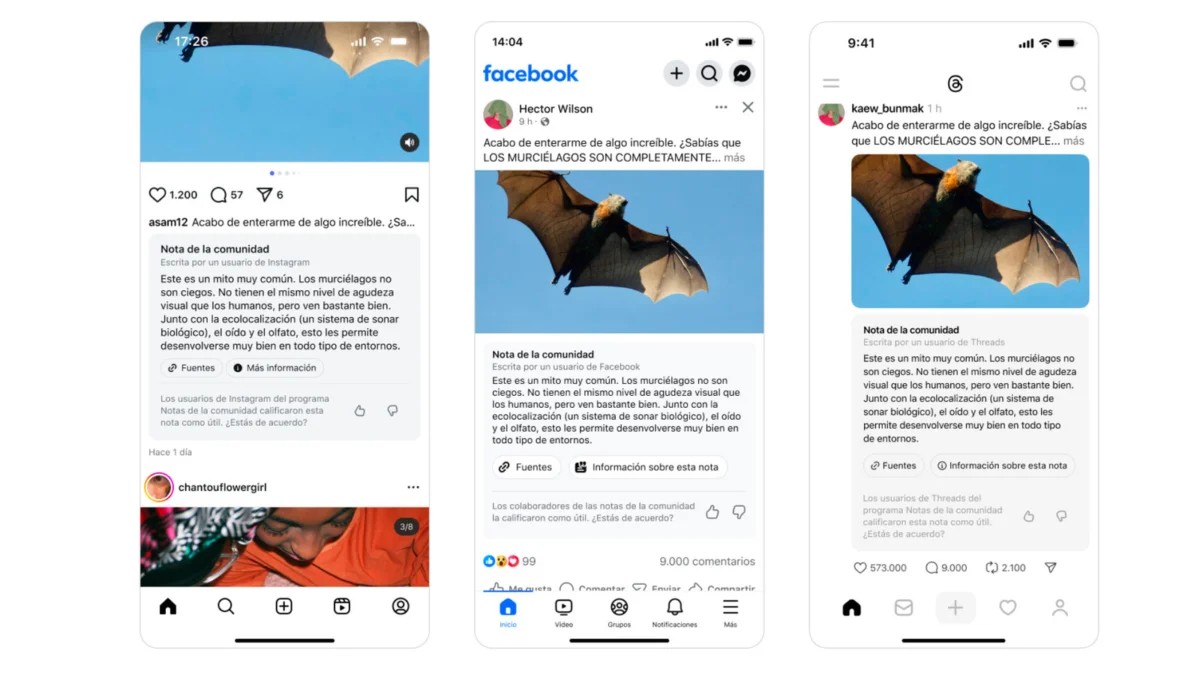
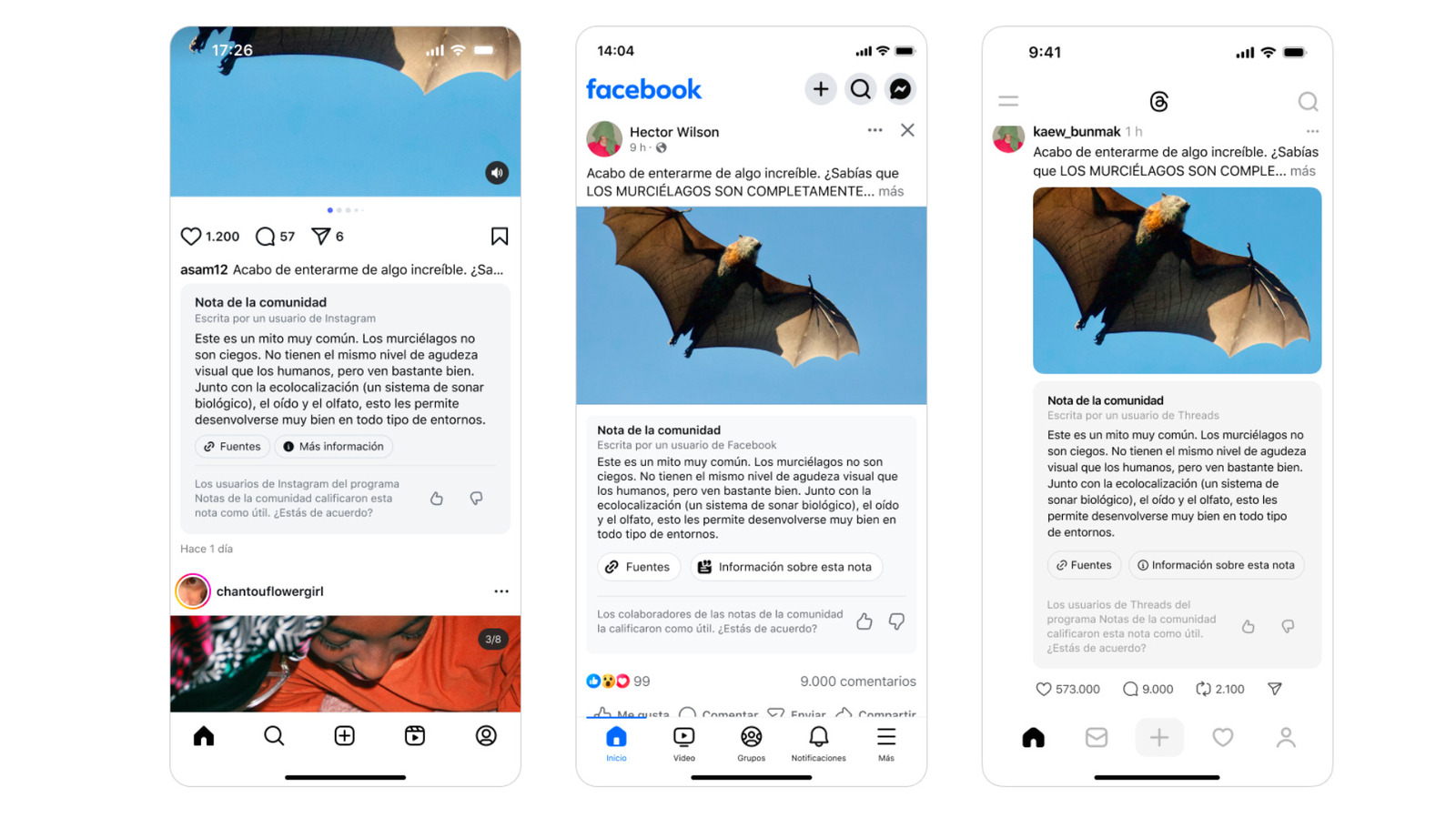
Meta, the parent company of Facebook, Instagram, and Threads, has officially commenced the international expansion of its "Community Notes" program, signaling a seismic shift in how the social media giant intends to manage misinformation. By initiating pilot tests across 16 countries in Latin America, the tech titan has made its intentions clear: it is moving toward a future where professional, third-party fact-checking may be entirely phased out in favor of a crowdsourced model.
This strategy, while mirroring the approach Meta has already adopted in the United States, has triggered a firestorm of criticism from journalism watchdogs, the Oversight Board, and human rights advocates who argue that the company is effectively lowering its defenses against disinformation in some of the world’s most politically volatile regions.
The Core Conflict: Algorithms vs. Expertise
The fundamental tension lies in Meta’s evolving philosophy regarding content moderation. For years, the company relied on partnerships with established, professional fact-checking organizations—vetted journalists who adhere to strict verification standards. These experts have been instrumental in curbing the spread of medical misinformation, election interference, and viral hoaxes.
Meta’s new approach leans on "Community Notes," a system where a decentralized group of users writes and rates context to be appended to misleading posts. While Meta views this as a scalable, democratic solution to the "truth problem," critics argue that it fundamentally misunderstands the nature of modern information warfare. By prioritizing "consensus" among users over the objective verification of facts, Meta risks turning truth into a popularity contest, where coordinated bot networks or partisan echo chambers could manipulate the system to suppress accurate information.
Chronology of a Policy Shift
To understand how we arrived at this point, one must look at the timeline of Meta’s retreat from professional verification:
- Pre-2025: Meta maintained a robust network of third-party fact-checkers globally, working alongside entities like the International Fact-Checking Network (IFCN).
- Early 2026: Meta officially ends its partnership with US-based fact-checking organizations, signaling the transition to a Community Notes-heavy model in the American market.
- Mid-2026: The Oversight Board releases a massive 15,000-word policy advisory opinion, explicitly warning Meta against a global rollout of Community Notes in regions defined by high polarization or authoritarian governance.
- September 2026: Meta announces the start of testing for Community Notes in 16 Latin American nations: Argentina, Bolivia, Chile, Colombia, Costa Rica, Ecuador, El Salvador, Guatemala, Honduras, Mexico, Nicaragua, Panama, Paraguay, Peru, Uruguay, and Venezuela.
- Present Day: Meta begins the onboarding process for contributors, while simultaneously hinting that the current third-party fact-checking programs in these countries are on a "transition" path toward obsolescence.
The Geopolitical Gamble: Why Latin America?
The selection of Latin American nations for this rollout is particularly contentious. The region is home to a diverse array of political climates, ranging from functioning democracies to states experiencing significant democratic backsliding.
The International Fact-Checking Network (IFCN) has been vocal about the dangers of this specific selection. As the IFCN noted, countries like Nicaragua have systematically dismantled democratic institutions, including the abolition of free elections and the state-sponsored persecution of political dissidents. In such environments, "community consensus" is a dangerous metric. In nations like El Salvador and Ecuador, where documented disinformation networks have operated with impunity, the idea that a user-led system can withstand organized propaganda is viewed by experts as naive at best, and complicit at worst.
By launching in these regions, Meta is essentially testing its algorithm in the "laboratory of polarization." The company argues that the program is a success in the US, citing its 1.4 million contributors. However, critics point out that the political and cultural landscape of the United States does not translate to the high-stakes, often life-or-death information environments found in Latin America.
Institutional Resistance: The Oversight Board and IFCN
The pushback against Meta is not merely anecdotal; it is structural. The Oversight Board—an independent body Meta created to oversee its most difficult content decisions—has been unusually blunt in its warnings.
The "Coexistence" Argument
In his discussions with media, Board co-chair Paolo Carozza has emphasized that Community Notes and traditional fact-checking are not mutually exclusive. "One doesn’t have to replace or substitute for the other, they can coexist," Carozza stated. The Board’s recommendation was for a hybrid model where professional expertise provides the "anchor" for truth, while crowdsourced notes provide additional, nuanced context.
Meta’s decision to ignore this advice and move toward a full replacement model suggests that the company is motivated more by cost-cutting and liability reduction than by a commitment to information integrity. By offloading the burden of fact-checking to the user base, Meta effectively distances itself from the legal and political repercussions of "getting it wrong."
The IFCN’s "Deep Concern"
The IFCN, which represents the global standard for professional fact-checking, issued a formal statement calling the program "simply not adequate." Their primary concern is that the Community Notes system lacks the rigorous evidentiary standards required to debunk sophisticated, state-sponsored misinformation campaigns. Professional fact-checkers rely on primary sources, deep-web forensic tools, and established journalistic ethics—resources that the average, unverified platform contributor does not possess.
Supporting Data: Is the System Actually Working?
The efficacy of the crowdsourced model remains a subject of intense academic and journalistic debate. A recent study by the publication Indicator provided a sobering look at the gaps in Meta’s coverage.
When analyzing Instagram posts in the US that had been flagged and debunked by the Agence France-Presse (AFP) fact-checking bureau, the researchers found that only 3 percent of those posts had subsequently received a Community Note. This 97 percent failure rate suggests that the crowdsourced model is significantly less proactive and less comprehensive than the professional model it is replacing.
If the goal is to stop the spread of harmful falsehoods, a 3 percent catch rate is statistically negligible. It indicates that Meta’s "success" in the US may be an illusion—a byproduct of a massive, highly engaged user base that is still failing to capture the vast majority of viral misinformation.
Implications: The Post-Truth Horizon
As Meta moves forward with this expansion, the implications for the digital public square are profound.
1. The Erasure of Expertise
By treating professional journalism as a "legacy" system to be phased out, Meta is contributing to the wider societal erosion of trust in institutional knowledge. When an algorithm decides that a viral tweet from a bot farm has as much "contextual weight" as a report from a verified investigative journalist, the very concept of objective truth is diluted.
2. Regulatory and Legal Vulnerability
Meta’s expansion into Latin America may also put it on a collision course with emerging digital regulations. Several countries in the region are currently drafting legislation to hold platforms accountable for the spread of illegal or harmful content. By dismantling its professional fact-checking infrastructure, Meta may be making itself more vulnerable to lawsuits and regulatory fines, as it will no longer be able to prove it took "reasonable steps" to mitigate harm through professional oversight.
3. The Future of Content Moderation
Ultimately, Meta’s move is a gamble on the "wisdom of the crowd." If the pilot in Latin America leads to an increase in viral misinformation, the company may be forced to backtrack. However, if the company succeeds in automating the labor of truth-seeking, it will likely provide a blueprint for other platforms, effectively outsourcing the duty of truth to the very users who are most susceptible to being misled.
Conclusion
Meta’s transition to Community Notes in Latin America is a watershed moment for the internet. It marks the formal end of the era where social media companies took active responsibility for the veracity of the content on their platforms. While the company maintains that there are "no changes to our third-party fact checking program at this time," the roadmap is clear: Meta is preparing to exit the business of truth-verification.
For the citizens of the 16 countries currently participating in the pilot, the stakes could not be higher. In an age where digital misinformation can trigger real-world violence, political instability, and the collapse of public discourse, the decision to replace experts with algorithms—or worse, with the volatile whims of a polarized crowd—is a risk that may haunt the digital age for decades to come. As the Oversight Board and the IFCN have warned, truth is not a consensus; it is a discipline. By abandoning that discipline, Meta is not just updating its features; it is fundamentally altering the architecture of our shared reality.


 Asro
Asro
 Asep Darmawan