

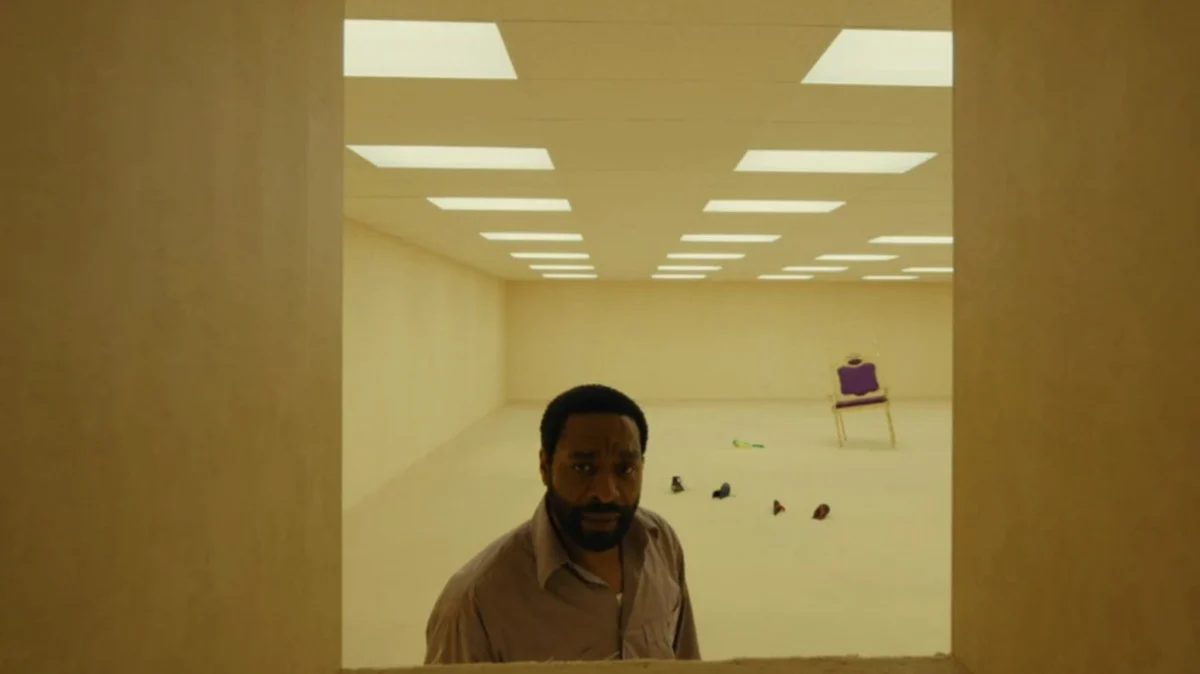
The cinematic adaptation of Kane Parsons’ Backrooms has arrived, and with it, a profound investigation into the nature of reality, memory, and the digital subconscious. As the film makes significant waves at the box office, signaling a major victory for independent horror, audiences are left grappling with the most persistent question regarding the franchise: Why does this place look the way it does?
The Backrooms—a sprawling, seemingly infinite labyrinth of yellow-tinted offices, decaying wallpaper, and buzzing fluorescent lights—has transitioned from a viral 4chan creepypasta into a cornerstone of modern "liminal horror." As the A24-backed feature film clarifies, the aesthetic of "The Complex" is not merely a design choice; it is a narrative mechanism that explores the frailty of human perception.
The Genesis of the Complex: From 4chan to Cinema
To understand the film, one must understand the provenance of the image that sparked a global obsession. In 2019, an anonymous user on 4chan posted a grainy, unsettling photograph of a liminal space: an empty, carpeted room with monochromatic yellow walls and a fluorescent glare.
The image struck a chord, triggering a collective, primal response. Internet sleuths eventually tracked the original location to a HobbyTown retail store in Oshkosh, Wisconsin, circa 2003—a space that, decades prior, had been a furniture store in the 1970s. This revelation serves as the spiritual bedrock for Kane Parsons’ film. By setting the story in 1990, Parsons taps into the specific anxiety of the pre-internet age—a time when information was tangible yet easily lost to the erosion of time.
The film posits that the Backrooms are a "parasitic" reality, a mirror dimension that captures fragments of our world and attempts to reconstruct them. However, like a digital file compressed too many times, the data becomes corrupted.
The Mechanics of the Uncanny: The "Mistranslation" Theory
Within the narrative of the film, the character Clark (portrayed by Chiwetel Ejiofor), a furniture store owner who becomes ensnared in the labyrinth, offers a chilling explanation for the architecture of the void. He compares the Backrooms to a person who has never seen a dog being asked to draw one from memory.
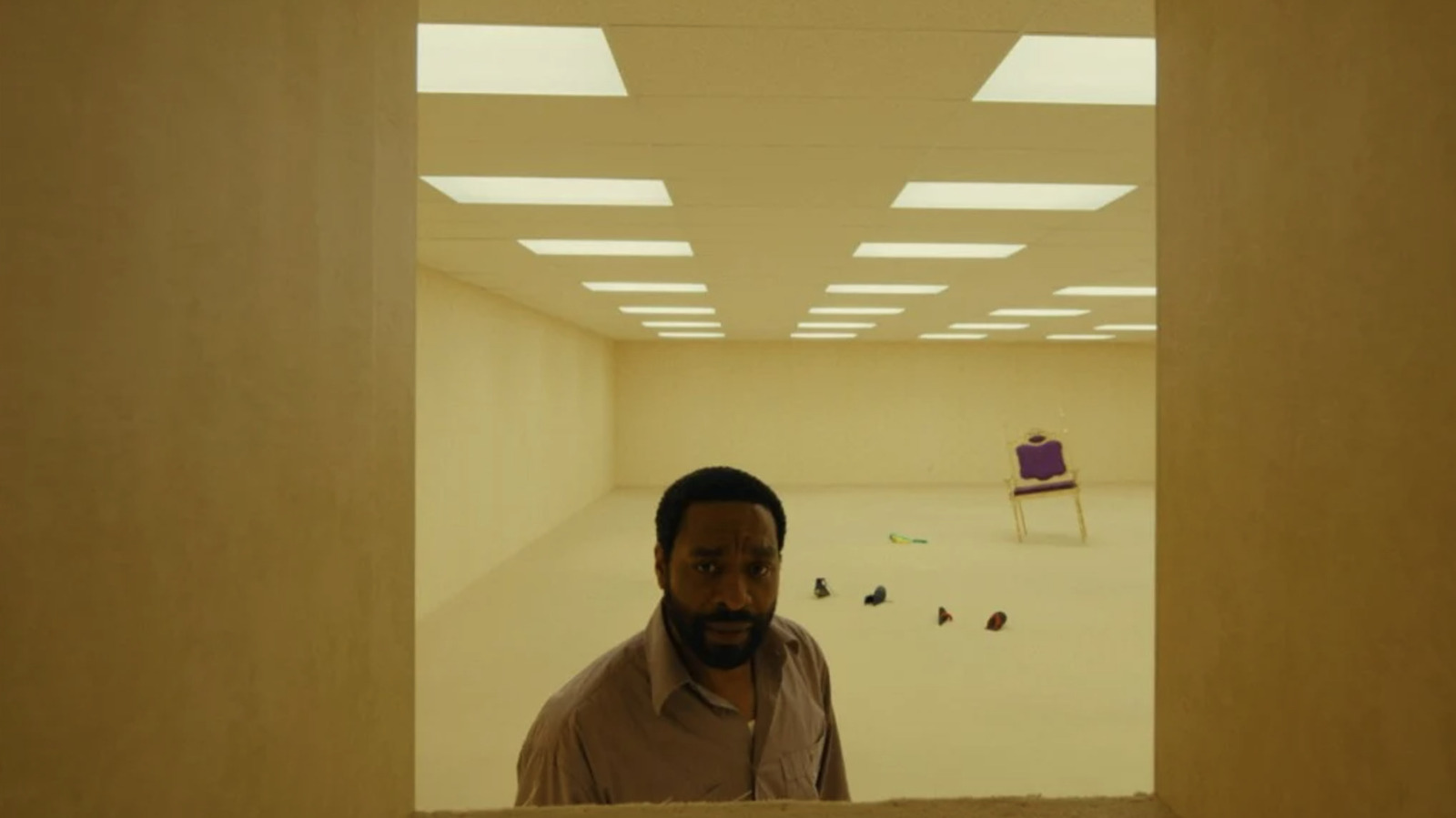
"They’ll get the general shape," Clark posits, "but the details—the texture of the fur, the specific geometry of the snout, the way the eyes catch the light—will be fundamentally, hauntingly wrong."
This "mistranslation" theory provides the horror with its engine. The Backrooms are not built; they are remembered by a consciousness that lacks the nuance of human experience. This is why the rooms feel familiar yet fundamentally repulsive. It is the architectural equivalent of the "Uncanny Valley," where the brain recognizes the object as human-adjacent but identifies a fatal flaw that triggers a survival-based dread.
Chronology: The Evolution of the Liminal Trend
The rise of the Backrooms phenomenon is not an isolated event but the culmination of a decade-long shift in horror sensibilities.
- 2019: The original image appears on 4chan, sparking the "no-clipping" mythology—a term borrowed from video game glitches where a player passes through solid geometry into an unintended "out-of-bounds" area.
- 2020-2022: Kane Parsons (known online as Kane Pixels) begins his YouTube series. His meticulous world-building, incorporating VHS-style filters and analog horror aesthetics, elevates the concept from a meme to a sophisticated narrative universe.
- 2023-2024: The development of the feature film is fast-tracked, with A24 securing the rights, recognizing that the "liminal" trend represents a new frontier in psychological horror.
- 2026 (The Present): The film premieres, achieving critical success for its ability to transform mundane corporate architecture into a manifestation of existential dread.
The Impermanence of Memory and "Still Life" Clones
The horror of the Backrooms is deeply intertwined with the fear of oblivion. The film introduces "Still Life" entities—distorted, humanoid clones that appear to be attempts by the Backrooms to replicate human beings.
These entities serve as a metaphor for the degradation of memory. As we age, our recollections of people and places become "editorialized." We lose the sharp edges of truth and replace them with subjective impressions. The Still Life creatures, with their warped features and aggressive behavior, represent what happens when the "storage" of a human soul is corrupted.
This mirrors the philosophical inquiries of Akira Kurosawa’s Rashomon, which challenged the notion of objective truth. In the Backrooms, truth is mutable. The environment reacts to the observer, shifting and folding based on the observer’s own fractured recollections.
Supporting Data: Why "Liminality" Resonates
Psychologically, the success of the film can be attributed to the "liminal space" phenomenon. A liminal space is a threshold—a transition zone like an airport terminal at 3:00 AM, a school hallway during summer break, or a vacant office suite.
Research into spatial psychology suggests that these environments cause discomfort because they strip away the "social cues" we rely on to navigate reality. In a crowded room, we define ourselves by our relation to others. In an empty, repetitive space like the Backrooms, that identity evaporates.
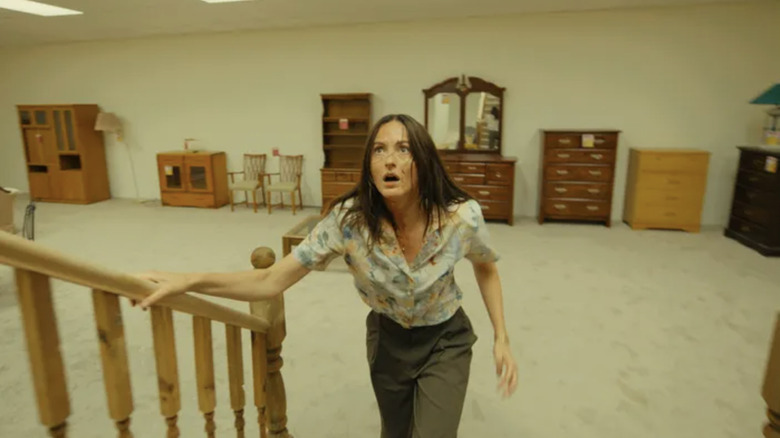
The film leverages this by placing its protagonists in settings that are inherently transitional. By removing the purpose of the space—a furniture store without customers, a lobby without receptionists—Parsons forces the audience to confront the "cultural id." The Backrooms are a manifestation of our collective loneliness, a digital purgatory for a species that is increasingly detached from the physical world.
Official Perspectives and Creative Intent
In interviews, Kane Parsons has described the Backrooms as a "living repository of lost history." He emphasizes that the aesthetic was chosen to evoke a specific era—the late 20th century—because that was the last period where the physical world felt solid and finite.
"We wanted the audience to feel that, if they looked hard enough, they could find a piece of their own childhood in these walls," Parsons noted during the film’s press tour. "But we also wanted them to realize that the moment they find it, it’s already been corrupted. The Backrooms don’t preserve things; they cannibalize them."
Critics have praised the production design for its commitment to the "analog" aesthetic, noting that the choice to avoid hyper-modern CGI in favor of tactile, "worn-out" textures creates a sense of dread that modern blockbusters often lack. The focus is not on jump scares, but on the suffocating weight of the environment itself.
Implications: The Future of Horror Cinema
The success of Backrooms signals a shift in the horror landscape. We are moving away from the "supernatural monster" trope and toward "existential architecture."
The implication is that the most terrifying thing in the world is not a ghost or a slasher, but the realization that reality itself might be a flawed, glitchy simulation. By exploring the concept of "no-clipping" as a metaphor for mental illness, trauma, and the fragmentation of the self, the film elevates the source material into a profound study of human vulnerability.
Ultimately, the movie asks us to consider the rooms we walk through every day. If we were to look away, if we were to let our attention slip, would the office, the school, or the home remain as we left it? Or would it, like the Backrooms, begin to stretch into an infinite, yellow-lit void, mimicking our lives while slowly erasing the people we used to be?
As the credits roll and the hum of the fluorescent lights fades from the theater speakers, the film leaves the audience with a singular, lingering thought: We are all, in some way, already lost in the Backrooms. The only difference is whether or not we realize the walls are closing in.









No comments yet. Be the first to join the conversation!