Pevita Pearce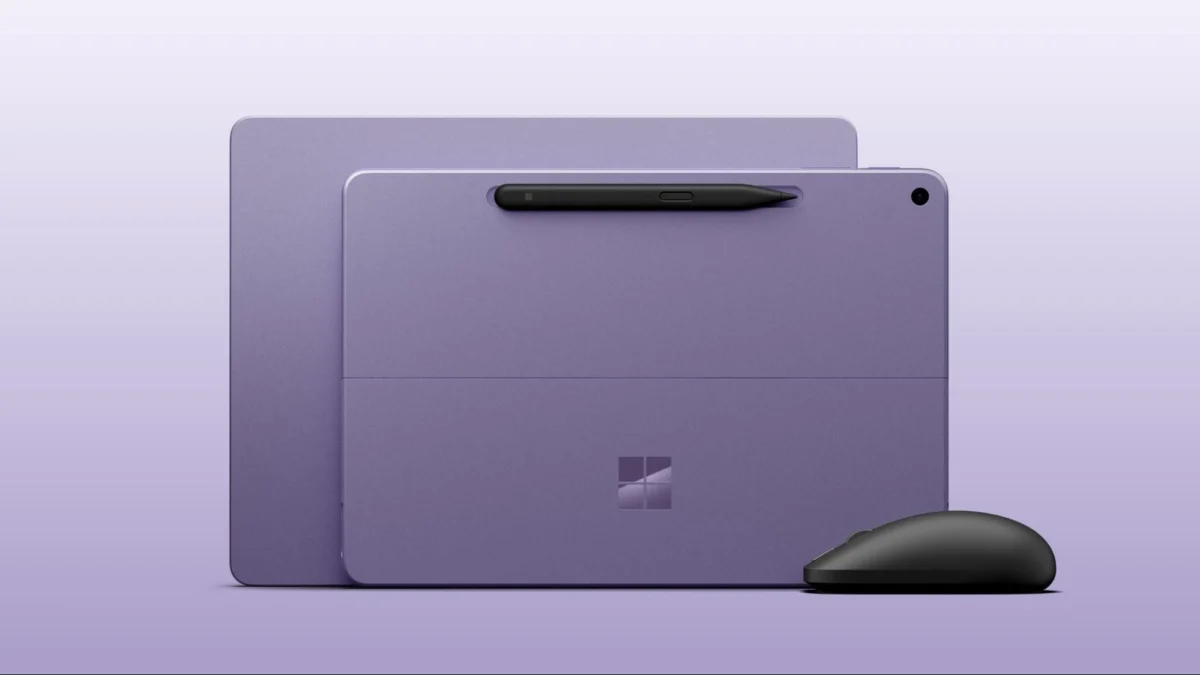
Microsoft has officially signaled a major shift in its hardware strategy, announcing significant hardware refreshes for its entry-level portable computing segment. The company confirmed on September 23, 2026, that it is upgrading the 13-inch Surface Laptop and the 12-inch Surface Pro with Qualcomm’s latest silicon: the Snapdragon X2 Plus processor.
This move, timed precisely to coincide with Qualcomm’s annual Snapdragon Summit, represents more than just a spec bump. It signifies a doubling down on the "Copilot+ PC" architecture, with the new chips boasting an 80 TOPS (trillion operations per second) Neural Processing Unit (NPU). However, this leap in performance comes at a cost, as Microsoft has simultaneously introduced a substantial pricing hike that positions these machines firmly in the premium category, moving away from their historical "entry-level" billing.
The Core Upgrade: Snapdragon X2 Plus and the AI Push
The centerpiece of this announcement is the transition from the first-generation Snapdragon X Plus to the X2 Plus. While the previous iteration laid the groundwork for Windows on Arm’s resurgence, the X2 Plus is designed to tackle the growing demands of on-device artificial intelligence.
The inclusion of an 80 TOPS NPU is a significant milestone. To put this into perspective, current industry standards for "AI PC" requirements often hover around the 40–45 TOPS mark. By hitting 80 TOPS, Microsoft is ensuring that its Surface devices remain "future-proof" for the next wave of local LLM (Large Language Model) execution, real-time translation, and advanced generative AI tasks within the Windows 11 ecosystem.
Industry analysts suggest that this hardware choice is a direct response to the performance benchmarks set by Apple’s M-series chips. By leveraging the Snapdragon X2 Plus, Microsoft is aiming to achieve a "best-of-both-worlds" scenario: the sustained battery life typical of Arm-based architectures paired with the raw computing power required for professional-grade productivity.
Chronology of the Surface Evolution
To understand the magnitude of this release, one must look at the rapid-fire progression of the Surface line over the last 24 months:
- Late 2024: Microsoft leans heavily into the Qualcomm Snapdragon X Elite and X Plus, marking a pivot away from Intel/AMD dominance for its flagship mobile devices.
- Early 2025: The first-generation Snapdragon X Plus devices (Surface Pro and Laptop) launch at aggressive price points of $799 and $899, respectively, aiming to capture the mid-range market.
- Mid-2026: Competition from both Apple’s M4/M5 updates and the emergence of ultra-efficient x86 chips forces Microsoft to reconsider its silicon strategy.
- September 23, 2026: Microsoft officially announces the second-generation Surface Pro and Laptop, utilizing the Snapdragon X2 Plus, confirming the shift in pricing strategy.
- October 13, 2026: The official retail launch date for both devices.
This timeline highlights Microsoft’s agility in hardware development. By moving to a near-annual cadence for its silicon refreshes, Microsoft is attempting to normalize the Windows hardware experience as something that evolves alongside mobile technology, rather than the multi-year stagnation often seen in the laptop industry.
Supporting Data: Performance and Market Positioning
The performance delta between the first-gen X Plus and the new X2 Plus is expected to be roughly 25-30% in multi-core workloads, according to preliminary leaks and industry expectations. However, the true story lies in the NPU efficiency.
Technical Specification Comparison
| Feature | Surface (2025) | Surface (2026) |
|---|---|---|
| Processor | Snapdragon X Plus (Gen 1) | Snapdragon X2 Plus |
| NPU Power | ~45 TOPS | 80 TOPS |
| Starting Price | $799 (Pro) / $899 (Laptop) | $1,149 (Pro) / $1,199 (Laptop) |
| Architecture | Arm64 | Arm64 (Optimized) |
The pricing increase is the most contentious element of the announcement. A $300 to $350 jump in starting price effectively removes these devices from the "budget-friendly" segment. This suggests that Microsoft is repositioning the Surface brand. Rather than competing with budget laptops from Acer or ASUS, Microsoft is now positioning the 12-inch and 13-inch models as "premium compact workstations."
Official Responses and Strategic Intent
In its official blog post, Microsoft emphasized the "seamless integration" between the Snapdragon X2 Plus and the latest Windows 11 AI features.
"With the Snapdragon X2 Plus, we aren’t just increasing clock speeds," a Microsoft spokesperson noted. "We are enabling an environment where AI is pervasive. From real-time meeting transcription and background blurring to local image generation that doesn’t ping a cloud server, the 80 TOPS NPU is the heartbeat of this new generation."
The silence from Microsoft regarding the price hike is telling. While the company has not explicitly addressed the consumer backlash, industry observers note that the rising costs of advanced AI-capable silicon and the high-end OLED panel requirements for the new displays likely necessitated the shift. Microsoft is betting that the productivity gains afforded by the NPU and the superior battery life of the X2 chip will justify the higher barrier to entry for professional users and enterprise clients.
Implications for the Industry
The "AI PC" Standardization
Microsoft’s move sets a new floor for the industry. By equipping its "lowest-end" computers with 80 TOPS of NPU power, Microsoft is signaling to developers that there is a massive installed base of devices capable of running heavy-duty AI tasks locally. This will likely accelerate the development of local AI applications, as developers no longer have to worry about whether a user’s machine can handle the inference load.
Impact on the Competitive Landscape
The shift in pricing creates a void in the $700–$900 market. With Microsoft vacating this space, competitors like Lenovo and HP are positioned to capture the value-conscious consumer. However, these competitors will likely rely on previous-generation hardware to hit those price points, potentially creating a "performance gap" where Microsoft’s offerings are seen as the high-end standard for Windows.
The Future of Windows on Arm
The success of these devices is a litmus test for Windows on Arm. If the 13-inch Surface Laptop and 12-inch Surface Pro prove to be reliable, high-performance machines that don’t suffer from compatibility issues (thanks to advancements in Microsoft’s Prism emulation layer), it could finally signal the end of the x86-only era for mainstream laptops.
Enterprise Adoption
For corporate IT departments, the decision is now more complex. The increased cost of the Surface line will force companies to re-evaluate their fleet management. If the 80 TOPS NPU can genuinely reduce the need for cloud-based AI subscriptions—by handling data processing locally—the higher upfront cost could be amortized over time through reduced software-as-a-service (SaaS) expenses.
Conclusion: A High-Stakes Bet on AI
As we approach the October 13 launch date, the narrative surrounding Microsoft’s hardware is clear: the company is willing to trade accessibility for power. The 2026 iterations of the 13-inch Surface Laptop and 12-inch Surface Pro are not designed for the casual student or the budget-conscious home user. They are calculated, premium tools built for an era where AI processing is a primary requirement rather than an optional add-on.
Whether the market will accept this new price floor remains to be seen. However, by aligning itself so closely with Qualcomm and pushing the limits of on-device AI, Microsoft has staked its claim on the future of mobile computing. The question is no longer whether these devices can run Windows, but whether they can redefine the very definition of a "standard" PC in an AI-first world.
For the average consumer, the message is stark: the entry-level price for a premium Microsoft experience has fundamentally changed, and the "AI PC" era is officially here—at a premium.


 Suro Senen
 Sagoh
Sagoh