

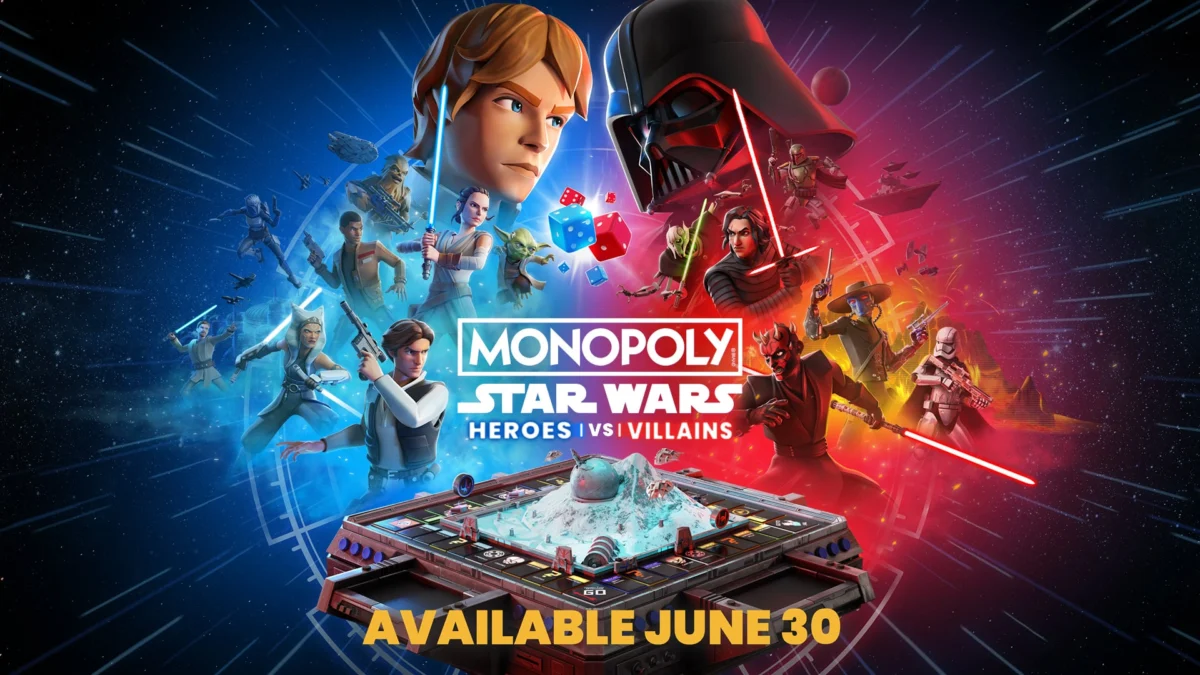
Paris, France – May 22, 2026 – Fans eager to dive into a galaxy far, far away through the iconic board game Monopoly will have to wait just a little longer. Ubisoft, in collaboration with developer Behaviour Interactive, has announced a slight delay for their highly anticipated title, Monopoly: Star Wars Heroes vs. Villains. Originally slated for a June 11 release, the digital board game will now launch on June 30, 2026. This minor adjustment pushes back the release by just under three weeks, impacting players across multiple platforms including PlayStation 5, Xbox Series X|S, the upcoming Nintendo Switch 2, the current Nintendo Switch, and PC via Steam and the Epic Games Store.
The announcement, made via Ubisoft’s official social media channels, was concise, offering no specific rationale for the postponement. While short delays are a common occurrence in the video game industry, this move nonetheless shifts expectations for one of the more intriguing cross-franchise titles of the year. Combining the strategic property acquisition of Monopoly with the timeless conflict of the Star Wars saga, Heroes vs. Villains promises a unique experience for both board game enthusiasts and Star Wars loyalists. The delay, though brief, provides an opportunity to reflect on the development process, the challenges of multi-platform launches, and the ever-evolving landscape of licensed video games.
Chronology of a Galactic Rollout
The journey of Monopoly: Star Wars Heroes vs. Villains has been one met with considerable interest since its initial reveal. The game’s development and subsequent marketing efforts have followed a predictable, yet carefully orchestrated, timeline.
The Initial Announcement: March 2026
The excitement for Monopoly: Star Wars Heroes vs. Villains first ignited in March 2026 when Ubisoft officially unveiled the project. The announcement detailed an ambitious cross-platform release strategy, targeting not only the current generation consoles – PlayStation 5 and Xbox Series X|S – but also both the existing Nintendo Switch and the then-rumored, now confirmed, Nintendo Switch 2, alongside PC platforms. This broad approach immediately signaled Ubisoft’s intent to reach the widest possible audience, leveraging the immense popularity of both the Monopoly brand and the Star Wars universe.
Initial promotional materials hinted at a game that would allow players to choose their allegiance, aligning with either the noble Heroes of the Rebellion/Resistance or the formidable Villains of the Empire/First Order. Speculation quickly mounted regarding which iconic characters, starships, and planets would be featured as properties, utilities, and chance cards within the game’s unique Star Wars-themed board. The promise of a June 11 launch date set a clear target for eager fans and provided a focal point for the game’s marketing campaign. The collaboration between Ubisoft, a publishing giant known for its diverse portfolio, and Behaviour Interactive, a studio with a strong track record in licensed adaptations, further bolstered confidence in the project’s potential.
Pre-Order Availability: April 2026
Following the initial announcement, Ubisoft swiftly moved to open pre-orders for Monopoly: Star Wars Heroes vs. Villains in April 2026. This phase is crucial for gauging early consumer interest and securing initial sales ahead of launch. Pre-order campaigns often include incentives such as exclusive in-game tokens, character skins, or unique board designs, designed to entice early adopters. While specific pre-order bonuses for this title were not widely detailed in the initial delay notice, the availability of pre-orders across all target platforms indicated a high degree of confidence in the game’s development progress at that time.
The period between pre-order availability and the initial launch date is typically used for final polish, bug fixing, and the complex certification process required by console manufacturers. For a game launching on as many diverse platforms as Monopoly: Star Wars Heroes vs. Villains, including a brand-new console like the Switch 2, this certification phase can be particularly demanding, often involving rigorous testing to ensure stability, performance, and adherence to platform-specific guidelines.
The Delay Announcement: May 2026
The news of the delay arrived on May 22, 2026, just weeks before the previously announced launch. Ubisoft’s official Twitter account was the chosen medium for the brief statement, informing followers that the game would now arrive on June 30. The lack of a detailed explanation is typical for minor delays, often attributed generically to "further polish" or "ensuring the best possible experience." While such statements are boilerplate, they generally imply that the development team requires additional time to address unforeseen issues, optimize performance, or perhaps even incorporate last-minute enhancements to meet the high quality standards expected by both the publisher and the discerning Star Wars fanbase.
The new release date places the game firmly at the end of June, potentially positioning it to avoid the immediate rush of early June releases and giving it a clearer window to capture player attention as the summer gaming season begins to pick up pace. This strategic repositioning, even for a few weeks, can sometimes make a significant difference in market visibility and initial sales performance.
Supporting Data and Context: A Confluence of Giants
The development and eventual release of Monopoly: Star Wars Heroes vs. Villains is not an isolated event but rather a product of converging forces within the entertainment and gaming industries. Understanding these underlying currents provides valuable context for the game’s potential impact and the significance of even a short delay.
The Enduring Appeal of Monopoly in Video Games
The Monopoly board game, a staple of family game nights for nearly a century, has seen numerous digital adaptations. Ubisoft itself has been a key player in this space, having published several successful Monopoly video games across various platforms. These digital iterations often enhance the traditional experience with customizable rules, faster gameplay, online multiplayer, and dynamic visuals that are difficult to achieve with a physical board.
The transition to video games allows for creative interpretations that go beyond the physical limitations of the original. Special editions, like this Star Wars crossover, thrive in the digital realm, where unique assets, animations, and sound effects can bring the theme to life in ways a static board cannot. The success of previous digital Monopoly titles suggests a healthy market for these adaptations, particularly when they are combined with other beloved intellectual properties. Players appreciate the convenience of digital play, the elimination of setup and cleanup, and the ability to play with friends remotely.
The Vast Universe of Star Wars in Gaming
The Star Wars franchise holds an unparalleled position in pop culture, and its presence in video games dates back decades. From classic titles like TIE Fighter and Knights of the Old Republic to modern blockbusters such as Jedi: Fallen Order and Battlefront II, Star Wars games have explored nearly every genre imaginable. The licensing of Star Wars games, once exclusively held by Electronic Arts, has recently broadened, with Lucasfilm Games partnering with multiple publishers and developers, including Ubisoft. This diversification signals a new era for Star Wars gaming, promising a wider variety of experiences for fans.
Monopoly: Star Wars Heroes vs. Villains taps into the core conflict that defines the saga: the eternal struggle between light and dark, good and evil. This thematic richness provides fertile ground for a Monopoly adaptation, allowing for factions, iconic characters like Luke Skywalker, Darth Vader, Rey, and Kylo Ren, and famous locations such as Tatooine, Coruscant, Hoth, and Endor to be integrated into the game’s properties and mechanics. The promise of playing as a hero or villain, accumulating galactic credits, and dominating the cosmos through real estate, is a potent draw for fans who appreciate both the strategic depth of Monopoly and the epic narrative of Star Wars.
Ubisoft and Behaviour Interactive: A Track Record of Adaptation
Ubisoft’s role as publisher is significant. The company has a long history of developing and publishing licensed games, often taking well-known franchises and adapting them to various gaming genres. Their experience in managing large-scale, multi-platform releases is extensive, making them a suitable partner for a project like Monopoly: Star Wars Heroes vs. Villains. Ubisoft’s commitment to quality, even if it necessitates short delays, often reflects a desire to protect their brand reputation and ensure a positive player experience.
Behaviour Interactive, the developer, brings its own specialized expertise to the table. Known for titles such as Dead by Daylight, the studio has also worked on numerous licensed properties, demonstrating a proficiency in translating existing IPs into compelling interactive experiences. Their involvement suggests a careful approach to integrating Star Wars lore and Monopoly mechanics in a way that feels authentic and engaging. Developing for a range of platforms, including the new Switch 2, demands considerable technical skill and resources, making the collaboration between these two entities crucial for the project’s success. The challenges of ensuring consistent performance and visual fidelity across such a diverse array of hardware cannot be overstated, and often contribute to the need for additional development time.
Technical Complexities of Multi-Platform Development
Launching a game simultaneously on PlayStation 5, Xbox Series X|S, Nintendo Switch 2, Nintendo Switch, and PC is an ambitious undertaking. Each platform has its own unique architecture, technical specifications, and certification requirements. Developers must optimize the game for each system, ensuring smooth performance, stable frame rates, and consistent visual quality. The inclusion of the Nintendo Switch 2, a console expected to offer significantly enhanced capabilities over its predecessor, further complicates this process. It necessitates separate development tracks, or at least highly optimized scaling solutions, to ensure the game looks and plays great on both the current and next-generation Switch hardware.

The certification process, where platform holders (Sony, Microsoft, Nintendo) review the game for compliance with their technical standards, can be a major bottleneck. Even minor bugs or performance inconsistencies can lead to rejection and require further development time, directly impacting release schedules. Given the short duration of the delay, it is plausible that a minor issue was identified late in the certification process, or that the development team simply needed a few extra weeks to iron out some lingering kinks across the numerous versions.
Official Responses and Speculation
The nature of the delay announcement – a brief social media post from Ubisoft – provides limited direct insight into the specific reasons behind it. However, industry standards and common practices allow for informed speculation regarding the rationale and the reactions from various stakeholders.
Ubisoft’s Concise Statement
Ubisoft’s decision to announce the delay with a terse message on Twitter, without elaborating on the "why," is a standard corporate communication strategy for minor postponements. Providing detailed reasons can sometimes open a company up to further scrutiny or create unnecessary expectations. A generic statement about "ensuring the best possible experience" or "additional polish" is often sufficient to convey the message without revealing sensitive development information or potential internal challenges. This approach maintains a professional front and keeps the focus on the eventual quality of the product rather than the specific hurdles encountered during its creation.
Behaviour Interactive’s Implied Role
As the developer, Behaviour Interactive would be at the forefront of any technical or development-related challenges necessitating a delay. While Ubisoft, as the publisher, handles the public announcement, the decision to push back the release would undoubtedly stem from feedback and requests from the development team. Behaviour Interactive’s silence on the matter is expected, as publishers typically manage all public-facing communications. However, their implicit involvement underscores the idea that the extra time is likely being utilized to refine the game’s code, optimize performance, or address any remaining bugs identified during the final testing phases.
Fan Reaction: A Mix of Disappointment and Understanding
Initial fan reactions on social media would likely be a mix of mild disappointment tempered with understanding. For a game as highly anticipated as a Star Wars adaptation of Monopoly, any delay, no matter how short, can be frustrating for those eagerly awaiting its launch. However, the gaming community has become increasingly accustomed to delays, often viewing them as a necessary evil to ensure a higher quality product. Many players prefer a polished game released later rather than a buggy, rushed title. Comments would likely include sentiments such as:
- "Bummer, but I’d rather have a finished game!"
- "Only a few weeks? I can wait."
- "Hope it means they’re adding more Star Wars content!"
- "Guess I’ll have to play more Monopoly GO! while I wait."
There might also be a segment of fans speculating wildly about the reasons, from major technical issues to last-minute content additions or even strategic moves to avoid clashes with other major game releases.
Industry Analyst Commentary: Minor Blip or Strategic Move?
Industry analysts would likely view a short, three-week delay as a relatively minor event. For a company like Ubisoft, with a vast release schedule, such adjustments are often part of the normal course of business. Analysts might interpret the delay in a few ways:
- Positive Interpretation: The delay signifies a commitment to quality. Ubisoft and Behaviour Interactive are prioritizing a smooth launch and a positive player experience, which can build long-term trust and brand loyalty. This is generally seen as a healthy development practice.
- Neutral Interpretation: A standard occurrence. Development is complex, and unforeseen issues are common. The short duration suggests nothing fundamentally broken, but rather minor refinements.
- Strategic Interpretation: The new June 30 date might offer a slightly better market window. Perhaps another high-profile game shifted its release, or Ubisoft saw an opportunity to capitalize on a less crowded late-June slot. This is less likely for such a short delay but always a possibility.
Most analysts would agree that a brief delay is preferable to launching a product that is not ready, as a problematic launch can have far more damaging long-term consequences for sales and reputation.
Speculating on the Reasons for the Delay
While official communication was sparse, several common reasons for game delays can be considered:
- Final Polish and Bug Fixing: This is the most frequently cited and often the most accurate reason. In the final weeks of development, teams are typically in a "crunch" period, identifying and squashing bugs, refining user interfaces, and ensuring overall stability. Even minor issues can impact the player experience significantly.
- Multi-Platform Optimization: As highlighted earlier, ensuring optimal performance across five distinct platforms, including two versions of the Switch, is a monumental task. The extra time could be dedicated to fine-tuning frame rates, loading times, and visual fidelity on one or more of these systems.
- Certification Challenges: Passing certification with platform holders can be a bottleneck. If a game fails to meet specific technical requirements or contains unapproved content, it must be resubmitted, adding weeks to the schedule. The inclusion of Switch 2 might have introduced new certification hurdles.
- Marketing and Launch Strategy Adjustments: While less common for such a short delay, a minor shift could allow for better alignment with marketing campaigns, partner promotions, or to slightly reposition the game within a competitive release schedule.
- Minor Content Integration: Sometimes, a small but impactful feature or piece of content might be slightly behind schedule, and a short delay allows for its proper integration without compromising the overall launch.
Given the brevity of the delay, it is most probable that the decision was driven by the need for additional refinement and optimization, ensuring that Monopoly: Star Wars Heroes vs. Villains delivers a seamless and enjoyable experience from day one.
Implications for Players and the Industry
The delay of Monopoly: Star Wars Heroes vs. Villains, though minor, carries various implications for the gaming community, the involved companies, and the broader industry landscape.
For Players: Patience Rewarded with Polish
For the dedicated player base, the primary implication is a slightly extended wait. However, this inconvenience is generally perceived as a trade-off for a more polished and stable game. A well-optimized launch avoids the frustration of bugs, crashes, and performance issues that can mar the initial experience and sour public perception. Players who have pre-ordered the game will simply see their expected download or activation date shift. Most digital storefronts automatically update release dates, minimizing logistical hassle for consumers. Ultimately, the extra few weeks could translate into a smoother, more enjoyable gaming experience, validating the decision to delay.
For Ubisoft and Behaviour Interactive: Prioritizing Quality
For Ubisoft and Behaviour Interactive, the delay reflects a commitment to product quality. In an industry where rushed releases can severely damage a game’s reputation and lead to negative reviews and poor sales, prioritizing polish is a strategic imperative. A smooth launch can foster positive word-of-mouth, encourage stronger initial sales, and build confidence in future projects. While there might be minor financial implications due to the shifted revenue recognition, these are typically negligible for such a short delay. The reputational benefit of delivering a high-quality product often outweighs the short-term cost of a brief postponement. This decision also underscores Ubisoft’s ongoing efforts to rebuild trust with its player base after some past launches that faced criticism.
For the Licensed Game Market: Challenges and Opportunities
The delay also highlights the inherent challenges and opportunities within the licensed game market. Adapting a beloved intellectual property like Star Wars to another established franchise like Monopoly requires meticulous attention to detail, ensuring that both brands are respected and authentically represented. The complexity of securing approvals from IP holders (Disney/Lucasfilm Games) alongside the technical demands of development can often lead to unforeseen delays.
However, the immense popularity of both Star Wars and Monopoly ensures a broad appeal. Successful licensed games can be significant revenue drivers, attracting audiences who might not typically engage with a particular genre. This delay, therefore, serves as a reminder that even for seemingly straightforward adaptations, the pursuit of perfection is a critical component of market success and brand integrity.
Future Outlook: A Solid Foundation
Looking ahead, a successful launch of Monopoly: Star Wars Heroes vs. Villains on June 30 could lay a solid foundation for potential future content. Depending on player reception and sales figures, Ubisoft and Behaviour Interactive might consider post-launch support in the form of new character tokens, themed boards based on different Star Wars eras (e.g., The High Republic, Old Republic), or even new game modes. The initial delay, if it results in a more robust and enjoyable game, can only bolster the chances of such future expansions and maintain player engagement for the long term.
In conclusion, while the slight delay of Monopoly: Star Wars Heroes vs. Villains may cause a momentary pause for fans, it is a largely positive sign. It underscores the development team’s dedication to delivering a polished, high-quality experience across all platforms. As the galactic real estate battle draws near, players can anticipate a well-crafted digital board game that honors both the strategic depth of Monopoly and the epic scope of the Star Wars universe, now arriving on June 30, 2026.











No comments yet. Be the first to join the conversation!