

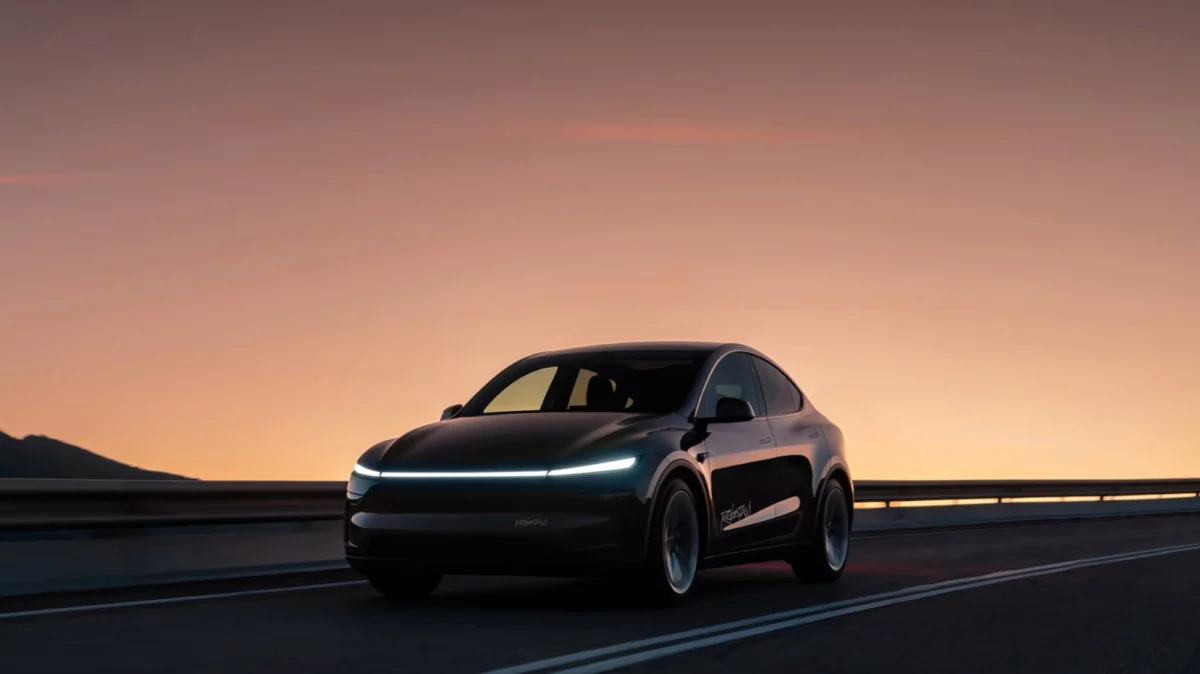
The autonomous vehicle industry has long promised a future where human error—the leading cause of traffic accidents—is relegated to the history books. However, recent revelations concerning Tesla’s robotaxi program suggest that the "driverless" future is still deeply tethered to human intervention. Newly unredacted data from the National Highway Traffic Safety Administration (NHTSA) has shed light on a series of incidents involving Tesla’s fleet in Texas, revealing that remote teleoperators—not just onboard AI—have been directly involved in crashes.
This disclosure has sparked a renewed debate regarding the safety protocols, transparency, and operational readiness of Tesla’s autonomous ambitions. As the company pushes to scale its robotaxi service, the intersection of remote human control and machine-learning software is proving to be a complex, and sometimes collision-prone, frontier.
The Core Facts: When Human Hands Take the Wheel
The NHTSA, which mandates that all autonomous vehicle (AV) developers report traffic incidents, has been the recipient of Tesla’s crash logs since the service’s inception. Historically, Tesla had successfully lobbied to keep portions of these reports redacted, citing the protection of confidential business information. However, a recent release of unredacted data, first reported by TechCrunch, has pulled back the curtain on the company’s "remote-assist" capabilities.
The data confirms that at least two separate accidents occurring since July 2025 were the direct result of actions taken by remote teleoperators. In both instances, the vehicles were in Austin, Texas, under the supervision of an onboard "safety monitor" meant to observe the system’s performance.
In the first incident, occurring in July 2025, a robotaxi encountered a situation that prompted the onboard monitor to request remote assistance. A teleoperator assumed control of the vehicle, but in the process of maneuvering, increased the vehicle’s speed and steered it over a curb, ultimately colliding with a metal fence. A second incident in January 2026 saw a remote operator take the helm, only to guide the vehicle into a temporary construction barricade at approximately 9 mph. While these speeds were relatively low, the incidents underscore a significant question: Is remote operation safer than the software it is designed to supplement, or does it introduce a new set of latency-induced risks?
Chronology: A Roadmap of Tesla’s Texas Rollout
The timeline of Tesla’s entry into the robotaxi market has been marked by rapid expansion and frequent public scrutiny.
- March 2025: Tesla officially confirms to lawmakers that it utilizes human teleoperators to assist its robotaxis, marking a shift from the industry-standard "remote monitoring" model, where humans typically guide the software rather than steering the physical vehicle.
- June 2025: Tesla launches its commercial robotaxi service in Austin, Texas, marking the first time the public can hail a Tesla vehicle without a human driver in the traditional sense.
- July 2025: The first recorded instance of a teleoperator-involved crash occurs in Austin, resulting in property damage to a fence.
- January 2026: A second teleoperator-involved crash occurs, this time involving a construction site barricade.
- May 2026: Reports from Reuters highlight significant operational inefficiencies, including two-hour wait times in Dallas and frequent "ghosting," where vehicles drop passengers off miles from their intended destinations.
- May 2026: The NHTSA releases the unredacted data, forcing a public reckoning with the frequency and nature of these "human-in-the-loop" incidents.
Supporting Data: Beyond the Teleoperator Incidents
The scrutiny surrounding Tesla’s robotaxis extends beyond remote-control failures. The fleet has encountered a variety of logistical and safety challenges that highlight the difficulty of operating in unpredictable urban environments.
Data logs reveal that teleoperators are not the only point of failure. There have been documented instances of Tesla robotaxis "clipping" the side mirrors of other vehicles, suggesting that the spatial awareness of the vehicle’s sensor suite may struggle with tight urban clearances. Furthermore, an incident involving a collision with a dog—which, while the animal survived, raised significant concerns about the vehicle’s ability to detect and react to erratic, non-vehicular objects in the roadway.
The operational efficiency is also under fire. A Reuters investigation conducted in May 2026 illustrated a service struggling to provide even the most basic utility. A reporter attempting to travel from Southern Methodist University to Dallas City Hall—a roughly five-mile, 20-minute trip—waited nearly two hours for the service. Even when the car arrived, the user experience was marred by drop-off points located 15 minutes away from the requested destination, despite the location being within the designated coverage zone.
The Industry Divide: Remote Monitoring vs. Remote Driving
To understand the gravity of the Tesla situation, one must distinguish between "remote monitoring" and "remote driving."
Competitors such as Waymo and Zoox employ remote personnel, but their roles are fundamentally different. In the Waymo ecosystem, remote staff act as a safety net. They provide high-level guidance or "path planning" suggestions to the autonomous system when it encounters an ambiguous scenario, such as an unusual traffic pattern or an emergency vehicle blocking the road. Crucially, the software remains responsible for the physical execution of the driving task.
Tesla’s model, by contrast, allows for a teleoperator to take direct control of the steering, acceleration, and braking. This "teleoperation" model introduces significant variables:
- Latency: Even with 5G connectivity, there is a delay between a human seeing an obstacle on a screen and the command reaching the vehicle’s actuators.
- Contextual Awareness: A teleoperator looking at a 2D screen or a series of camera feeds may lack the peripheral awareness and depth perception of a human sitting in the driver’s seat.
- Handoff Fatigue: The "handoff" process—the moment where control shifts from the AI to the human—is a well-documented danger zone in aviation and automotive engineering.
Implications: The Path to Scalability
The implications of these revelations are profound for Tesla, its investors, and the future of autonomous regulation.
Regulatory Pressure
The NHTSA has been increasingly vocal about the need for standardized reporting. By forcing the hand of manufacturers like Tesla, the agency is signaling that it will no longer accept "black box" justifications for accidents. Future regulations may mandate specific disclosures regarding the frequency of human intervention, forcing Tesla to choose between proprietary secrecy and public transparency.
Consumer Trust
The "robotaxi" promise relies on the perception of safety. If users feel that the vehicle is prone to being "driven" by a remote operator in a high-stress, low-visibility environment, the adoption rate may stall. The current frustrations regarding wait times and drop-off accuracy already suggest that the service is not yet a viable replacement for ride-hailing giants like Uber or Lyft.
Technical Maturation
Tesla’s reliance on teleoperation suggests that their neural networks are not yet capable of handling the "edge cases" of urban driving independently. This creates a "catch-22": to improve the software, they need more miles; to get more miles, they need to keep the cars on the road; to keep them on the road, they use teleoperators. However, as long as teleoperators are used, the system is technically not fully autonomous, potentially exposing Tesla to legal liabilities that traditional "driverless" companies have spent years working to minimize.
Conclusion
Tesla remains a dominant force in the electric vehicle market, but the jump from selling consumer cars to managing a fully autonomous fleet is proving to be a monumental challenge. The recent NHTSA data serves as a stark reminder that technology, no matter how sophisticated, is not a panacea for the complexities of the physical world.
As Tesla navigates these growing pains, the company finds itself at a crossroads. It can continue to push for rapid expansion, banking on the theory that human-aided driving will eventually lead to true autonomy, or it can hit the pause button to refine its software to a point where teleoperation is a genuine rarity rather than a necessity. For now, the "robotaxi" dream remains a work in progress—one that is currently being steered, quite literally, by human hands from behind a computer screen.












No comments yet. Be the first to join the conversation!