

For marketing teams, the perennial struggle remains: how do you translate "likes," "shares," and "impressions" into the language of the boardroom? While social media reach is a vital indicator of brand health, it is often dismissed by stakeholders as a "vanity metric" if it cannot be directly tied to the bottom line.
As we move through 2026, the disconnect between social media metrics and tangible business impact is shrinking. Armed with advanced analytics, multi-touch attribution models, and a deeper understanding of platform-specific consumer behavior, marketers are finally moving beyond simple engagement tracking to prove their true contribution to revenue.
The State of Social ROI: Defining the Baseline
Before diving into the numbers, it is essential to establish what constitutes a "good" return. Across most industries, a 3:1 return is considered the baseline standard for social media marketing. For paid campaigns specifically, a 5:1 return is the hallmark of a high-performing strategy.

However, these figures are not absolute ceilings. They are conversation starters. A 5:1 return on a B2B SaaS product carries a vastly different weight than the same return on a low-cost consumer good. Your performance must be viewed through the lens of your specific target audience and industry benchmarks.
The Hierarchy of Platforms: Where the Money Moves
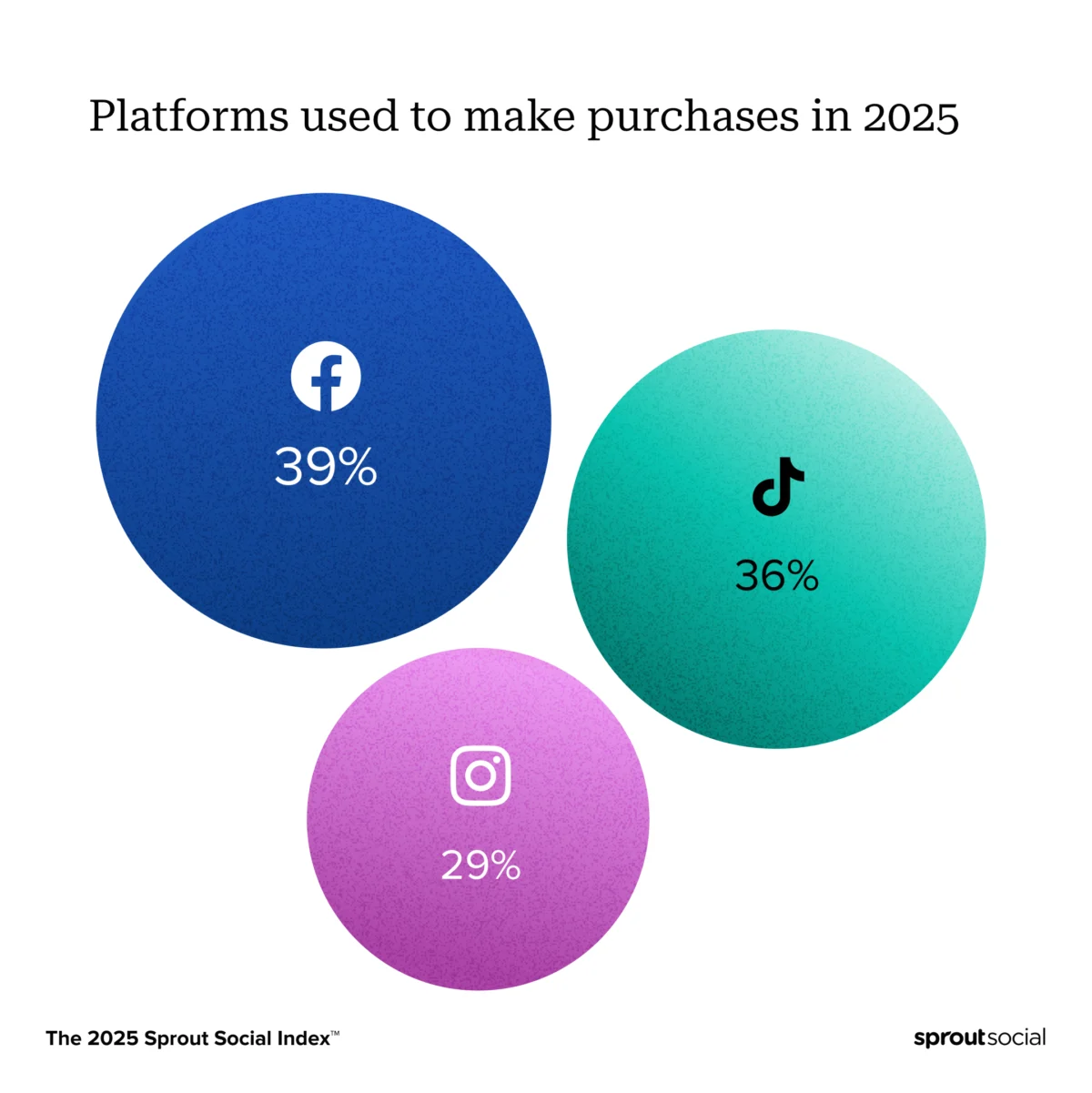
According to the 2025 Sprout Social Index™, consumer behavior has solidified into clear patterns, helping marketers allocate their budgets with greater precision.
Facebook: The Titan of Commerce
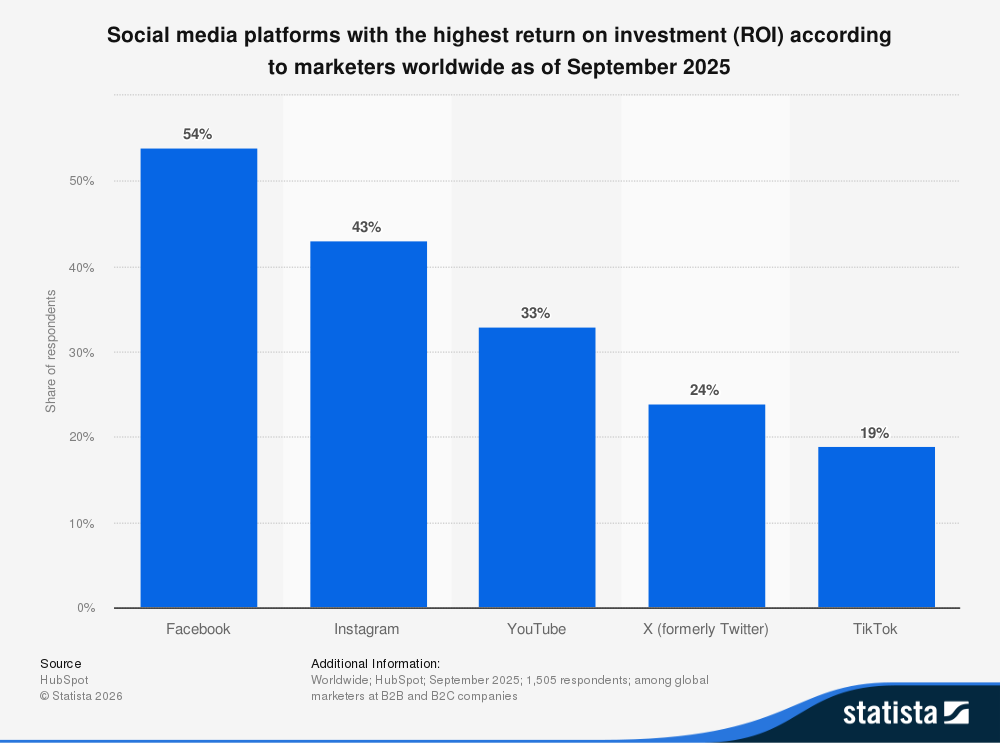
Despite the rise of newer, flashier platforms, Facebook remains the undisputed heavyweight for both product discovery and final conversion. Data indicates that 39% of consumers turn to Facebook first when they are ready to make a purchase. For 70% of marketers, Facebook provides the strongest overall impact on their business. Furthermore, a global survey from late 2025 confirmed that 54% of marketers see Facebook as their highest ROI channel, followed by Instagram (43%) and YouTube (33%).
The Gen Z Shift: TikTok’s Dominance
While Facebook wins with the broader population, the demographic tide is turning. For Gen Z, TikTok is the primary engine of social commerce. The platform has proven its financial potency; TikTok’s own research with Dentsu highlights an impressive short-term ROI of 11.8, with an average long-term ROI of 4.5.
LinkedIn: The B2B Powerhouse
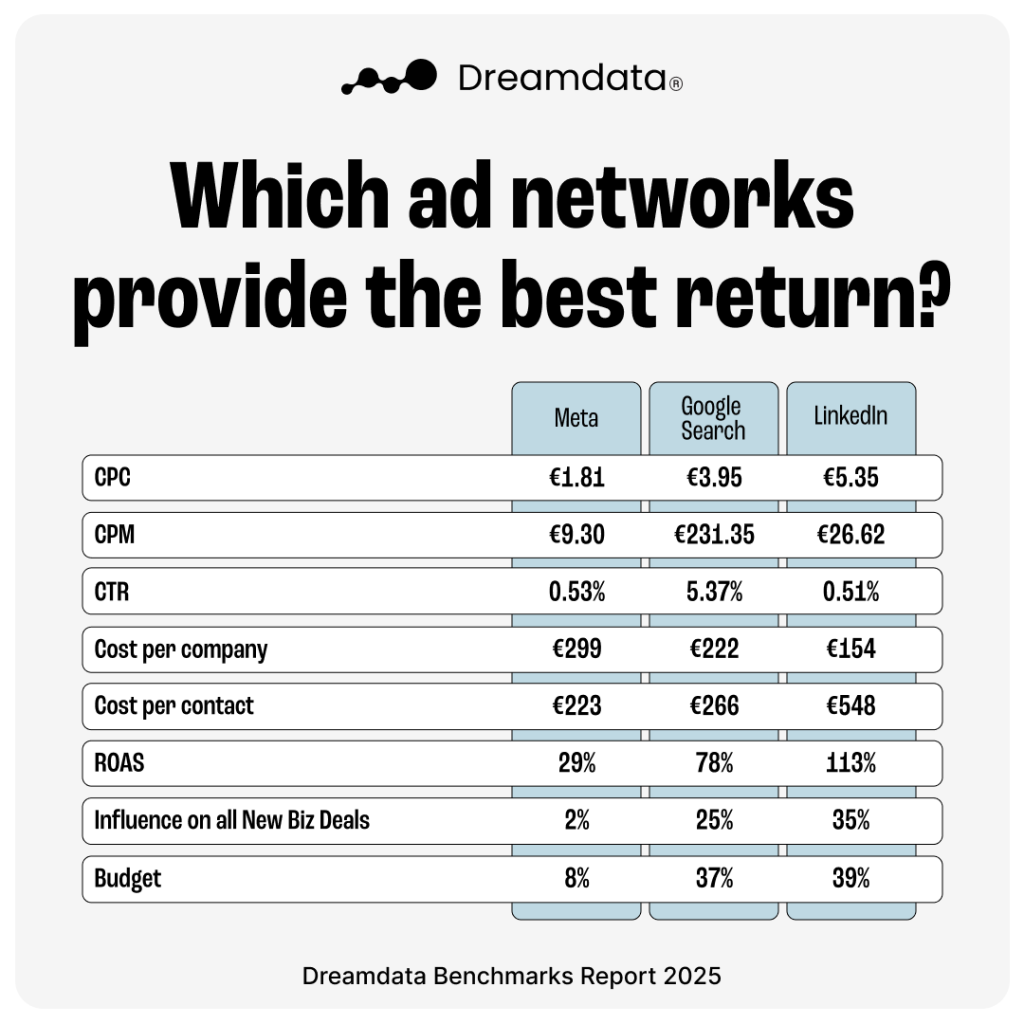
For B2B marketers, the strategy shifts toward professional credibility and long-cycle sales. LinkedIn continues to outperform its peers in terms of trust and high-ticket conversion. Recent analysis from Dreamdata found that LinkedIn ads deliver a 113% Return on Ad Spend (ROAS), significantly outpacing the 29% ROAS often seen on Meta platforms. This is attributed to the platform’s high-intent environment, where brand-building campaigns are proven to have four times the bottom-line impact compared to purely tactical ads.
Strategic Execution: Why "How" Matters More Than "Where"
The data suggests that the platform itself is secondary to the quality of execution. A well-executed campaign on a "secondary" channel will almost always outperform a poorly executed one on a platform with higher theoretical reach.
The Power of Creative and Format
Visual storytelling is the bridge between discovery and purchase. Meta and Analytic Partners report that simply making your logo visible within the first two seconds of an ad can increase ROI by up to 5X on Facebook.
On Instagram, the shift toward video is non-negotiable. Reels and video-based ads see 38% higher engagement and ROI than static images. Furthermore, the use of user-generated content (UGC) provides the "social proof" necessary to lower the barrier to entry for new customers, with Instagram ads featuring UGC driving 29% higher conversion rates than branded creative.
The Full-Funnel Approach
One of the most dangerous traps for modern marketers is focusing solely on bottom-funnel conversion ads. Research from Think with Google reveals that awareness-level content is responsible for 28% of conversion assists. By prepping the audience with high-quality awareness content, marketers create a more receptive environment for conversion-focused ads later in the cycle.

2026 Trends: The Future of Revenue Attribution
As we look toward the remainder of 2026, the landscape of social ROI is being reshaped by three primary factors: social commerce, human-led content, and AI-powered intelligence.
The Rise of Social Commerce
Social networks are no longer just referral engines; they are becoming retail storefronts. In 2026, social platforms accounted for 15.2% of all online sales globally. With the social commerce sector expected to hit the $1 trillion mark by 2027, the friction between discovery and checkout is disappearing.
The Human-Centric Mandate
Despite the ubiquity of AI-generated assets, consumer demand for "human-led" content is at an all-time high. The 2026 Social Media Content Strategy Report highlights that brands that prioritize human connection and personalized service are the ones seeing the highest returns. Automation should be used to handle the heavy lifting of data, not to replace the voice of the brand.
The AI Disconnect
There is currently a massive gap in how marketers utilize AI. While 50% of marketing leaders prioritize AI for content creation, only 40% are leveraging it for performance reporting and analysis. This represents a significant competitive advantage for the teams that choose to focus on the latter. By using AI-powered tools to identify real-time audience trends, teams can pivot their strategy instantly, moving away from "gut-feeling" marketing and toward data-backed agility.
Implications for the Modern Marketing Team
The transition from an "engagement-first" team to a "revenue-first" team is not just a change in tools—it is a cultural shift.
Moving Beyond Simple Metrics
"Expert" social teams, as defined by The CMO’s Social Media Planning Guide for 2026, distinguish themselves by abandoning vanity metrics. They prioritize:

- Revenue metrics: Direct tracking of sales generated from social touchpoints.
- Efficiency metrics: Analyzing the cost-per-acquisition across different content formats.
- Multi-touch attribution: Moving away from "last-click" models to understand the full customer journey.
When the team at Sprout Social implemented a multi-touch attribution model, they observed a staggering 5,800% increase in measurable pipeline impact. This is the difference between reporting on "reach" and reporting on "revenue."
Conclusion: Turning Data into Strategy
Proving social media ROI is no longer a guessing game. It is a rigorous process of tracking the right data, telling the right story, and aligning social efforts with broader business goals.
The path forward is clear:
- Stop treating social as a silo. Integrate your content, care, and commerce strategies into a cohesive, full-funnel experience.
- Invest in the right tools. Use platforms that offer real-time analytics to bridge the gap between ad spend and business outcomes.
- Respect the human element. Even as AI handles the reporting, ensure your creative remains grounded in human empathy and authenticity.
The social media landscape will continue to evolve, but the core requirement remains constant: the ability to demonstrate that every dollar spent on social is a dollar invested in the growth of the business. By focusing on these benchmarks and shifting toward a revenue-centric mindset, marketers can ensure they are not just part of the conversation—they are driving the bottom line.












No comments yet. Be the first to join the conversation!