The landscape of modern prestige television is increasingly defined by the pursuit of intellectual property (IP) that possesses both cultural ubiquity and a distinct stylistic identity. Netflix, having firmly established its dominance in the streaming wars, is currently doubling down on one of its most ambitious acquisitions to date: the works of Roald Dahl. Following the recent buzz surrounding the unconventional reality series The Golden Ticket, Netflix has officially greenlit an untitled, six-part anthology series that promises to explore the darker, more peculiar corners of Dahl’s short story canon.
This latest venture, written by acclaimed screenwriter Danny Brocklehurst (Fool Me Once), represents a strategic pivot for the streamer—moving away from straightforward adaptations of children’s classics and toward a more mature, atmospheric exploration of the author’s adult-oriented vignettes.
The Premise: A Twist on the Familiar
According to initial reports, the upcoming series will not be a singular narrative, but rather a thematic exploration of Dahl’s iconic, and often unsettling, short stories. The logline released by the studio describes a "deliciously twisted tale" that centers on a young couple trapped in a fading, purgatorial seaside town. As they fight to escape their surroundings, they are forced to contend with a menagerie of archetypal Dahl characters: predatory conmen, calculating adulterers, murderous mothers, and enigmatic snake charmers.
The structure suggests a narrative device where individual stories are woven into the broader journey of the protagonists, blurring the lines between anthology and serialized drama. With production beginning this month, the project is already signaling a high-budget, prestige approach to material that has long been a staple of dark, psychological fiction.
An Impressive Ensemble Cast
The strength of the series, beyond the writing, lies in a staggering assembly of talent. The cast list reads like a "who’s who" of British and international acting heavyweights, suggesting that Netflix is positioning this project as a major awards contender.
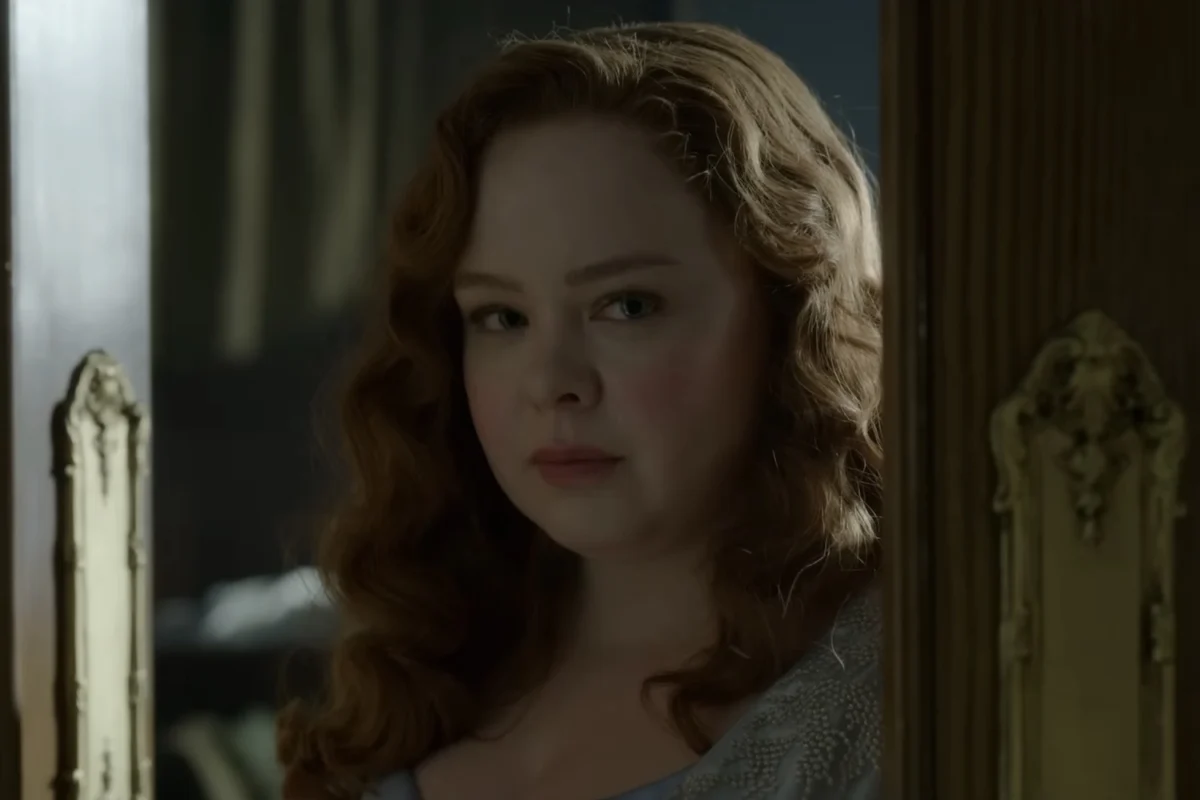
Leading the ensemble is Nicola Coughlan, whose meteoric rise via Bridgerton has made her one of the most bankable stars in television. She is joined by the venerable Imelda Staunton (Paddington, The Crown) and the inimitable Dominic West (The Wire, The Affair). The supporting cast is equally robust, featuring Naomi Scott (Aladdin), the versatile character actor Toby Jones (Infamous), Carmen Ejogo (The Penguin), Josh Finan (The Gentlemen), Michael Socha (Chernobyl), and Clarke Peters (The Boroughs). This collective pedigree suggests a series that will lean heavily into the psychological complexity and moral ambiguity that define Dahl’s writing.
A Chronology of the Roald Dahl Empire
To understand the significance of this new project, one must examine the rapid acceleration of Netflix’s "Dahl Universe." Since 2019, the streamer has systematically acquired the rights to the author’s bibliography, culminating in a total buyout of the Roald Dahl Story Company in 2021.
- 2019: The Foundation: Netflix announces a collaborative partnership with the Roald Dahl Story Company, aiming to create a cross-platform universe that spans film, television, gaming, and live theater.
- 2021: Total Acquisition: The company completes its purchase of the Story Company, granting it full control over the creative output of the Dahl estate.
- 2022: Musical Success: The release of Matilda the Musical provided a critical and commercial proof-of-concept, demonstrating that Netflix could successfully modernize Dahl’s work for a global audience.
- 2023: The Anderson Effect: Wes Anderson’s string of short-film adaptations—most notably The Wonderful Story of Henry Sugar—marked a shift toward high-concept, auteur-driven interpretations.
- 2024: Animation Expansion: The streamer introduced an animated take on The Twits, signaling that the IP would be utilized across multiple visual mediums.
- 2027 (Upcoming): Charlie vs. the Chocolate Factory: The studio has confirmed an animated sequel to the original Charlie and the Chocolate Factory narrative, featuring Taika Waititi as an incarcerated Willy Wonka.
Supporting Data: Why Dahl?
The financial and cultural logic behind this massive investment is sound. Roald Dahl’s work possesses a unique "stickiness"—it appeals to multiple generations, carries inherent brand recognition, and offers a vast library of settings and characters that can be remixed indefinitely.
Data analysts often refer to this as the "franchise-building model." By securing the rights to a catalog that contains dozens of short stories and novels, Netflix essentially creates a perpetual content machine. Whether it is a dark anthology series for adults or an animated feature for families, the "Roald Dahl" brand serves as a seal of quality that reduces the marketing friction typically associated with launching original properties.
Official Responses and Creative Direction
While the Roald Dahl Story Company has remained largely behind the scenes, Netflix executives have consistently described their acquisition as a "unique universe." The creative mandate, according to internal sources, is to honor the "mischievous, subversive spirit" of the original works while updating the pacing and narrative structure for a streaming-first audience.
Danny Brocklehurst, in his capacity as the series writer, faces the challenge of adapting stories that were written in a different era. The "twisted" nature of the vignettes requires a delicate balance; they must retain the bite of the original source material without alienating the broader, more sensitive demographics of the modern streaming landscape.
Implications for the Future of IP
The development of this series carries several implications for the future of streaming television:
1. The Death of the "Single Adaptation"
Netflix is no longer interested in one-off adaptations. By viewing the Dahl catalog as an interconnected universe, they are prioritizing long-term brand equity over individual project success. This strategy creates a "halo effect" where interest in one project (like Matilda) naturally feeds into interest in the next (the untitled anthology).
2. The Rise of "Prestige Anthology"
Anthology series have historically struggled to maintain audience retention. By using a narrative "wrapper"—a young couple navigating the vignettes—Netflix is attempting to solve the biggest hurdle of the anthology format: the lack of consistent character arcs. This narrative bridge ensures that viewers have a reason to return for every episode.
3. The "Wonka" Problem
The announcement of Charlie vs. the Chocolate Factory has sparked debate among fans and critics. The concept of a sequel in which Willy Wonka is an ex-con, while potentially fascinating, risks diluting the original magic of the IP. However, Netflix’s strategy has proven that audiences are willing to engage with "reimagined" versions of classics, provided the production values are sufficiently high.
4. A Shift Toward Darker Themes
By hiring Brocklehurst and assembling a cast known for dramatic, often gritty, roles, Netflix is signaling a clear intent to explore the darker side of Dahl. This move may be a reaction to the saturation of family-friendly content, as the streamer seeks to recapture the attention of an older demographic that grew up with the darker, more cynical elements of Dahl’s short stories.
Conclusion: The Horizon of the Dahl Universe
As production begins on this latest, untitled anthology, the industry will be watching closely. If successful, it will prove that the "Roald Dahl" brand is not merely a collection of children’s stories, but a versatile, malleable foundation for prestige television.
The strategy is clear: acquire, expand, and diversify. From the whimsy of Matilda to the incarceration-centered narrative of the upcoming Charlie sequel, Netflix is betting everything on the idea that the world still has a ravenous appetite for the twisted, imaginative, and deeply human storytelling of Roald Dahl. Whether this "unique universe" will eventually suffer from fatigue remains to be seen, but for now, the machinery is in full, profitable motion.