

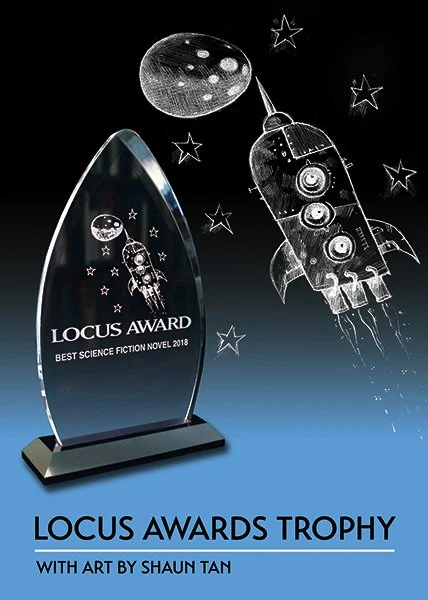
On May 30, 2026, the global speculative fiction community turned its collective gaze toward the Bay Area, as the prestigious Locus Awards—often considered the "people’s choice" of the science fiction and fantasy genre—revealed its annual winners. Hosted in conjunction with the renowned Bay Area Book Festival, the ceremony marked a high-water mark for the industry, honoring the voices, visions, and publishers that defined the literary landscape over the past year.
As the industry navigates a transformative era defined by the rise of AI-assisted writing, a surge in international translations, and a renewed focus on independent publishing, the 2026 Locus Awards serve as a vital snapshot of what readers truly value. The ceremony, characterized by its characteristic warmth and inclusivity, reinforced the Locus Award’s standing as one of the most significant honors for authors and creators working in science fiction, fantasy, horror, and beyond.
The Main Facts: A Landmark Announcement
The Locus Awards, administered by Locus Magazine, have long been distinguished by their unique voting process. Unlike many industry honors that rely on small committees, the Locus Awards are voted upon by thousands of readers worldwide. This creates an environment where the winners are not necessarily those favored by critics or academic institutions, but those who have most deeply resonated with the heartbeat of the genre’s community.
This year’s event in the Bay Area provided a physical anchor for the digital enthusiasm surrounding these books. The awards spanned 17 distinct categories, ranging from the foundational "Science Fiction Novel" and "Fantasy Novel" to more specialized honors for short fiction, editing, and art. The selection of the Bay Area Book Festival as the host venue underscored the event’s mission: to move beyond insular genre circles and engage with the broader literary public.
Chronology of the 2026 Season
The path to the May 30 ceremony was a months-long journey that began with the announcement of the preliminary reading list in early January. Following a period of intense public discourse—during which fans and critics debated the merits of various titles across social media platforms and book blogs—the final ballot was finalized in April.
- January 2026: The preliminary eligibility list is released, prompting a global conversation regarding the year’s standout releases.
- April 2026: The official shortlist is finalized. This year’s list reflected a marked increase in diversity, with a significant number of debut authors sharing space with genre legends.
- May 1–25, 2026: The voting period. Readers cast ballots, with Locus Magazine ensuring the integrity of the process through a rigorous verification system.
- May 30, 2026: The winners are announced during the Bay Area Book Festival. The ceremony was broadcast live, allowing international fans to participate in the celebration.
Supporting Data: Trends in the 2026 Ballot
A comprehensive analysis of this year’s data reveals several compelling trends that suggest where the genre is headed in the latter half of the decade.
The Rise of Translated Fiction
One of the most noticeable shifts in the 2026 cycle is the prominence of translated works. As the global marketplace becomes increasingly interconnected, readers are accessing narratives from non-English speaking origins at an unprecedented rate. The "Translated Novel" category, in particular, saw a record number of submissions this year, suggesting that the "internationalization" of speculative fiction is no longer a peripheral movement, but a core component of the industry.
The Dominance of Independent Presses
While the "Big Five" publishing houses continue to command significant market share, the 2026 winners list highlights the agility and influence of independent presses. Smaller houses, such as those specializing in experimental fiction and niche subgenres, have secured a larger footprint than in previous years. This shift indicates that readers are actively seeking out "curated" voices that might not fit the mass-market formulas of larger conglomerates.
The Persistence of Short-Form Fiction
Despite the trend toward sprawling series and massive epic fantasy, the categories for "Novelettes" and "Short Stories" remain the most fiercely contested. This reinforces the idea that the short story remains the engine room of speculative fiction—a place where authors test radical concepts and stylistic innovations before scaling them up to novel length.
Official Responses and Industry Sentiment
The atmosphere at the Bay Area Book Festival was one of collegiality and celebration. Locus Magazine publisher Liza Trombi noted in her opening remarks that the strength of this year’s ballot reflects the resilience of the speculative community.
"The Locus Awards have always been about the relationship between the reader and the writer," Trombi stated during the ceremony. "In an era of algorithm-driven discovery, the fact that thousands of readers still take the time to deliberate and vote for their favorites is a testament to the enduring power of the human connection in storytelling."
Authors and editors expressed a collective sense of relief and optimism. Many noted that the 2026 season was particularly challenging due to the rapid technological changes affecting the industry. Winners frequently thanked their translators, their small-press editors, and the independent bookstores that have become the frontline of genre advocacy.
Implications: The Future of Speculative Fiction
The results of the 2026 Locus Awards carry significant implications for the future of the literary field.
1. The Challenge of AI
The presence of works that push the boundaries of traditional authorship—and the absence of AI-generated content on the final ballot—suggests that readers are actively prioritizing "human-centric" narratives. The industry is currently in a defensive posture regarding intellectual property, and these awards serve as a reinforcement of the value of human creative labor.
2. The Global Canon
The shift toward international representation is not merely a trend; it is a structural change. Publishers are now scouting talent in non-traditional markets (such as Southeast Asia and Latin America) with a fervor previously reserved for the Anglo-American market. The 2026 winners suggest that the "canon" of science fiction is expanding to become truly planetary in scope.
3. The Re-emergence of Hopepunk and Utopianism
Interestingly, the 2026 ballot showed a slight pivot away from the "grimdark" aesthetic that dominated the early 2020s. Readers appeared to lean toward works that explored themes of reconstruction, community, and ecological restoration. This "hope-oriented" speculative fiction suggests that, in a world of geopolitical uncertainty, readers are looking to literature to provide models for survival and cooperation.
Conclusion: A Community in Motion
As the confetti settles in the Bay Area and the industry turns its attention to the upcoming fall season, the 2026 Locus Awards remain a vital touchstone. They remind us that speculative fiction is not a static genre, but a living, breathing ecosystem. Whether it is through the exploration of new dimensions in a short story or the reimagining of historical narratives in a debut novel, the authors recognized this year have successfully captured the zeitgeist of a rapidly changing world.
For those who follow the industry, the 2026 winners list is more than just a roll call of honor—it is a reading list for the future. As we look ahead to 2027, the success of this year’s ceremony ensures that the Locus Awards will continue to serve as the most democratic and vibrant barometer for excellence in the field. The books celebrated in the Bay Area represent the best of what we are: creative, global, and deeply invested in the power of the imagination to define our shared reality.
For a full breakdown of the nominees and the complete statistical analysis of the voting, readers are encouraged to subscribe to the monthly print and digital editions of Locus Magazine.











No comments yet. Be the first to join the conversation!